


Outside Wall Tiles Design: Ideas for Modern Exterior Spaces
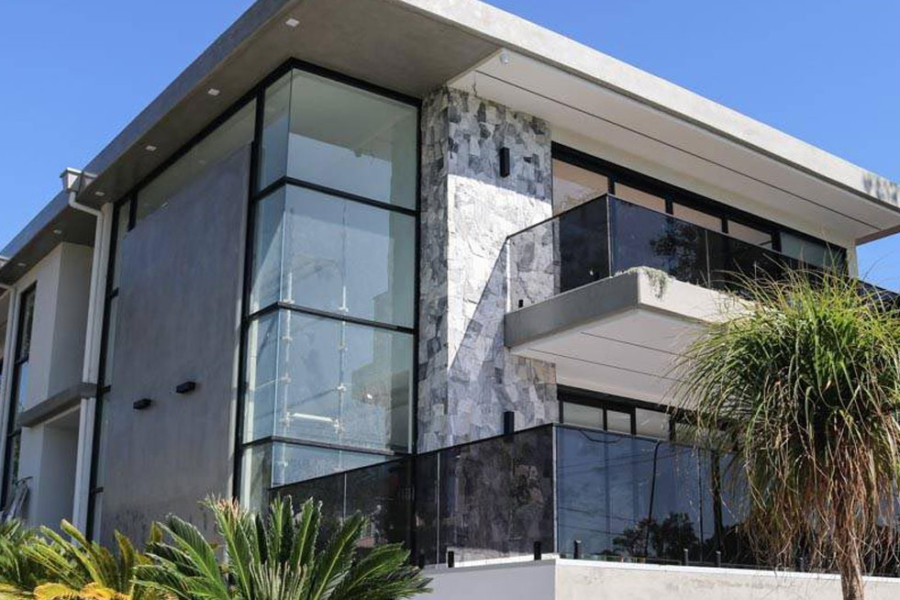
Exterior walls can shape how an outdoor space is framed, connected and experienced. With outside wall tiles design, Showtile helps bring texture, scale and material character into courtyards, garden walls, alfresco areas and architectural features so each surface feels integrated with the landscape and surrounding architecture.
How Should Outside Wall Tiles Be Planned Across an Exterior?
Exterior tiles work best when walls are organised by visual importance. One wall can act as the primary feature, secondary surfaces can provide continuity, and quieter finishes can allow landscaping and architecture to remain balanced.
Which Exterior Wall Should Become the Main Feature?
A strong feature position might include:
- A courtyard focal wall
- An alfresco backdrop
- An outdoor kitchen wall
- An entry return
- A garden wall visible from inside
- A wall adjoining a pool or terrace
The feature wall should usually correspond with an important sightline rather than simply the largest available surface.
A wall seen from the living room, dining room or main outdoor seating area often has more visual value than an isolated side elevation.
How Many Wall Materials Should an Exterior Use?
A simple material hierarchy keeps the exterior controlled:
- One dominant architectural finish
- One supporting surface
- One accent material
Too many equally expressive surfaces can weaken the overall composition. Render, timber, metal, stone and tile should be treated as parts of one exterior palette rather than separate decorative decisions.
Why Should Wall Tiles Be Planned With Landscaping?
Planting changes how exterior tiles are perceived.
Warm stone tones often sit comfortably beside timber and greenery, while mineral grey surfaces can create a stronger backdrop for structured planting. The relationship between tile, paving, garden beds and landscape lighting should therefore be reviewed before the final wall material is selected.
Which Outside Wall Areas Benefit Most From Tile?
Not every exterior wall needs tile. Tiled surfaces are most useful where material depth, easier visual definition or a stronger architectural transition can improve the space.
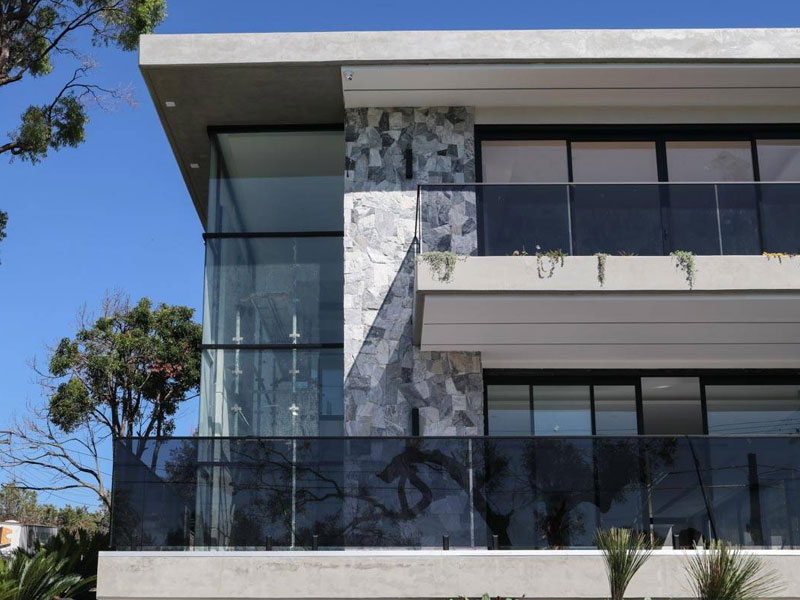
Refined surfaces for modern outdoor walls
How Can Courtyard Walls Use Tile Effectively?
Courtyard walls are often experienced at close range, making surface texture particularly noticeable.
Suitable directions include:
- Stone-look porcelain
- Natural stone cladding
- Brick-format tiles
- Textured linear surfaces
A courtyard wall can also become a visual endpoint when viewed through large windows or sliding doors.
This makes material quality and pattern repetition more important than on a distant façade.
What Works on Garden and Boundary Walls?
Garden and boundary walls benefit from surfaces that visually anchor planting.
Natural textures can soften large areas of masonry, while quieter porcelain surfaces can create a more contemporary backdrop. The key is to avoid turning the entire perimeter into one continuous feature wall.
A tiled section around a seating zone or key planting area is often more effective than covering every boundary surface.
How Should Outdoor Kitchen Walls Be Treated?
An outdoor kitchen wall should coordinate with the benchtop, cabinetry and adjacent paving.
Tile can provide a clear backdrop behind cooking or preparation zones, but the selected material should also be appropriate for the specific exposure and installation conditions. Strong pattern is rarely necessary when cabinetry, appliances and landscaping already provide visual detail.
For a broader discussion of exterior vertical surfaces, the guide to outdoor wall tile design can support material decisions across other exposed architectural areas.
Should Outside Wall Tiles Match Outdoor Flooring?
Wall and floor tiles should relate, but they do not need to match exactly. A more refined scheme often changes one characteristic while maintaining a shared material language.
When Does Matching Create Better Continuity?
Closer matching works particularly well in:
- Compact courtyards
- Minimalist outdoor rooms
- Narrow side passages
- Indoor-outdoor living zones
Using related tones can make the boundaries of a small exterior area feel less fragmented.
When Should the Wall Contrast With the Floor?
Contrast is useful when the wall needs greater visual weight.
For example, a pale paving surface may be paired with a deeper mineral wall, or a quiet floor can support a more textured vertical surface.
The strongest contrast usually comes from changing one element:
- Colour
- Texture
- Format
- Material depth
Changing all of these simultaneously can make the transition too abrupt.
How Can Pool Areas Be Connected to Exterior Walls?
Walls around a pool should be considered alongside coping, paving, water colour and landscaping.
Rather than repeating the pool finish on every nearby surface, use related undertones or material references. The design principles explored in pool tile designs can help coordinate water-facing surfaces with the broader outdoor palette without making the entire area visually uniform.
Why Are Stone-Look Tiles Effective on Exterior Walls?
Stone-look porcelain can introduce natural character while maintaining a more controlled surface than irregular natural stone.
What Makes a Stone-Look Wall Feel Refined?
Look for:
- Low-contrast movement
- Natural tonal variation
- Multiple surface faces
- Restrained veining
- Matt or textured character
The objective is to let the surface read as a material rather than an obvious repeating graphic.
A collection such as Twilight can support this direction where a stone-inspired surface is needed across connected architectural areas.
Which Stone Colours Work Well Outside?
Versatile exterior directions include:
- Limestone white
- Ivory
- Warm beige
- Greige
- Mineral grey
- Charcoal
The best colour depends on roof tone, render, timber, landscaping and orientation.
Why Should Stone Movement Be Reviewed Across a Larger Sample?
One tile cannot represent an entire wall.
When a large exterior area is involved, review several faces or pieces together. This helps identify whether veining, tonal shifts and pattern repetition will create the intended rhythm across the complete elevation.
When Does Natural Stone Cladding Create More Depth?
Natural stone is valuable when authentic texture and irregularity are central to the exterior design.
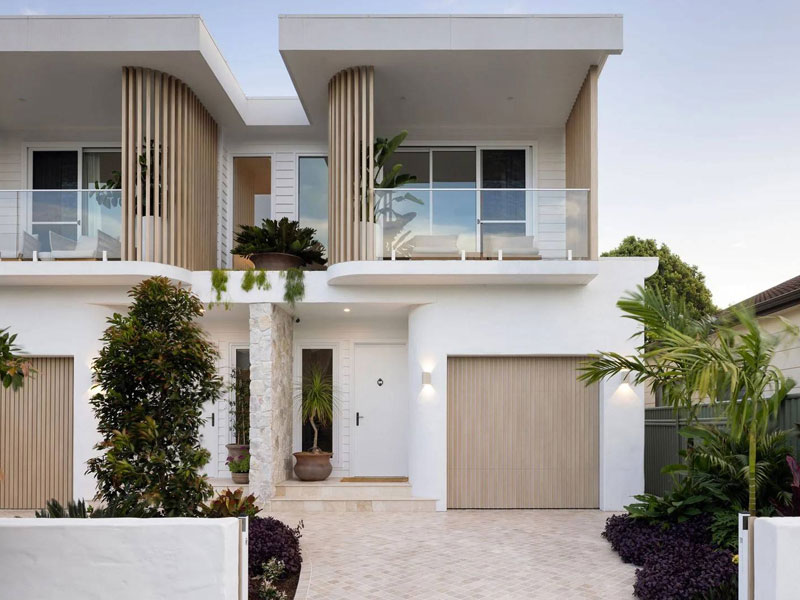
Textured finishes add depth to exterior spaces
Why Does Natural Stone Work Well Vertically?
Vertical stone surfaces respond strongly to directional daylight.
Texture creates:
- Shadow
- Tonal variation
- Material depth
- Irregular edges
- Stronger connection with landscaping
This makes natural stone especially effective where the wall is visible from several angles.
Where Should Natural Stone Cladding Be Concentrated?
Good positions include:
- Courtyard feature wall
- Entry wall
- Garden backdrop
- Outdoor fireplace surround
- Architectural column
- Selected boundary wall
Cloudy Grey Wall Cladding can be considered when the design calls for a more organic, dimensional stone surface.
Why Should Natural Stone Remain Selective?
Heavy cladding across several walls can overwhelm both architecture and planting.
Using natural stone as an anchor allows adjacent render, porcelain or timber surfaces to provide visual relief.
How Can Travertine-Look Tiles Create a Warmer Exterior?
Travertine-inspired surfaces work naturally within warm modern, Mediterranean-influenced and resort-style outdoor spaces.
Why Does Travertine Pair Well With Exterior Materials?
Travertine tones coordinate easily with:
- Pale render
- Timber
- Bronze
- Cream masonry
- Warm paving
- Green planting
The material introduces movement without requiring strong colour contrast.
Where Should Travertine-Look Wall Tiles Be Used?
Strong applications include:
- Alfresco walls
- Courtyard backdrops
- Outdoor kitchens
- Covered terraces
- Entry returns
Classico Travertine provides a useful material direction where the exterior needs softer stone character and greater continuity between wall and surrounding hard surfaces.
How Can Travertine Avoid Feeling Too Repetitive?
Use changes in texture, orientation or format rather than adding unrelated colours.
A textured feature section beside a quieter stone-look field can create enough variation while maintaining one coherent palette.
Why Can Brick-Format Tiles Work on Outside Walls?
Brick proportions provide rhythm at a smaller scale than broad stone-look surfaces.
What Does Brick Format Add to an Exterior?
Brick-format tile creates:
- Linear movement
- Visible joint rhythm
- Finer surface detail
- Stronger directional pattern
The format can give a compact exterior wall more character without the physical depth of loose stone cladding.
Where Do Brick-Format Tiles Work Best?
Consider brick proportions for:
- Entry walls
- Courtyard features
- Planter walls
- Outdoor kitchen surrounds
- Narrow architectural returns
Nosa Brick can support this type of application where a slimmer porcelain format suits the scale of the feature.
How Can Brick Walls Stay Contemporary?
Keep other design variables controlled.
A restrained colour, consistent grout joint and simple laying pattern usually feel more architectural than introducing multiple colours or complex layouts.
How Should Texture Be Used on Outside Walls?
Texture is especially powerful outdoors because daylight changes throughout the day.
Why Does Directional Light Matter?
Morning and afternoon sun can create deeper shadows across ridged, split or irregular surfaces.
As the light angle changes, a single material may appear lighter, darker or more dimensional without any change in colour.
Which Walls Benefit Most From Texture?
Texture works particularly well on walls that are:
- Viewed from an angle
- Close to outdoor seating
- Illuminated by landscape lighting
- Positioned near planting
Flat walls viewed directly from a long distance may gain less from intricate relief.
Why Should Textured Surfaces Be Limited?
If paving, landscaping, furniture and architecture already provide substantial detail, too much wall texture can create visual competition.
Use texture as emphasis rather than background noise.
How Should Tile Scale Respond to Exterior Wall Size?
Tile format should reinforce the proportion of the wall.
When Do Large-Format Tiles Work Best?
Large formats suit:
- Broad courtyard walls
- Minimalist architectural surfaces
- Larger alfresco zones
- Long horizontal elevations
Fewer joints can create a quieter, more monolithic appearance.
When Are Smaller Formats More Effective?
Smaller formats suit:
- Narrow wall returns
- Planter walls
- Compact courtyards
- Detailed feature zones
Scale should respond to viewing distance as well as wall dimensions.
Why Should Cutting Patterns Be Planned Early?
An attractive tile can lose impact if the finished wall has thin cuts around windows, doors or corners.
Layout planning should consider:
- Openings
- Wall centre lines
- External corners
- Structural joints
- Adjacent materials
These details influence the finished composition as much as tile selection.
How Should Outside Wall Colours Respond to Sunlight?
Exterior colour needs to be reviewed under real daylight rather than showroom lighting alone.
Why Do Colours Change Outdoors?
Direct sunlight can make pale tones feel brighter and stronger.
Shade can make:
- Beige appear cooler
- Grey feel deeper
- Texture become less visible
- Charcoal appear heavier
Samples should ideally be viewed in the orientation where the tile will be installed.
When Can Dark Wall Tiles Work?
Dark surfaces can provide a strong backdrop to greenery or pale architecture.
They are particularly effective when used on:
- Recessed walls
- Smaller features
- Covered outdoor zones
- Landscaped courtyards
The proportion of the dark surface should remain balanced against the rest of the exterior.
How Can Exterior Walls Connect With Indoor Materials?
Indoor-outdoor continuity does not require exact repetition.
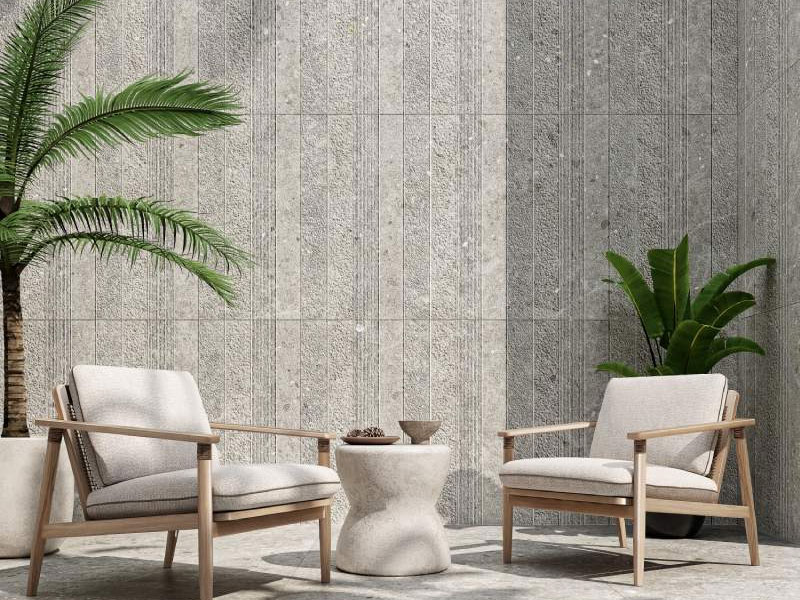
Balanced materials create a cohesive outdoor setting
What Creates a Strong Material Connection?
Coordinate:
- Undertone
- Surface character
- Format
- Grout
- Material warmth
A living-room stone floor, for example, can transition toward a related exterior wall tone without using the identical product.
The same principle is useful when studying modern bathroom tile design, where related surfaces create continuity without making every plane identical.
Where Should Material Changes Occur?
Align transitions with architectural boundaries such as:
- Door frames
- Columns
- Corners
- Ceiling changes
- Structural returns
Avoid ending tile arbitrarily in the middle of a visually important wall.
Which Outside Wall Direction Fits Each Exterior Style?
| Exterior Style | Wall Direction | Supporting Materials | Overall Effect |
| Contemporary | Large stone-look porcelain | Render + metal | Clean and architectural |
| Warm modern | Travertine look | Timber + beige paving | Soft and refined |
| Organic modern | Natural stone cladding | Planting + timber | Textural and grounded |
| Minimalist | Low-contrast porcelain | Neutral paving | Calm and continuous |
| Mediterranean | Warm stone or brick format | Render + warm tones | Relaxed and tactile |
| Urban | Mineral grey surface | Black metal | Structured |
| Courtyard-led | Textured feature wall | Soft landscaping | Layered |
| Resort-inspired | Light stone direction | Timber + greenery | Open and relaxed |
Which Outside Wall Designs Are More Likely to Age Well?
The most durable exterior schemes usually reference established materials rather than short-lived decorative motifs.
Which Directions Have Better Longevity?
More enduring choices include:
- Limestone-inspired surfaces
- Travertine
- Natural stone
- Restrained brick formats
- Neutral porcelain
- Low-contrast texture
These materials can adapt as furniture, planting and surrounding finishes change.
Which Designs Can Date More Quickly?
Be cautious with:
- Extreme geometric patterns
- Multiple unrelated wall textures
- Very saturated colours across broad elevations
- Strong grout contrast
- Decorative motifs repeated everywhere
Exterior walls occupy large visual areas, so an intense trend becomes difficult to ignore.
How Can New Design Ideas Be Used More Carefully?
Use current ideas through material depth, format or texture rather than covering the whole exterior in one fashionable pattern.
The same approach applies to interior wet areas. The guide to latest bathroom tile design shows how current surfaces can be introduced selectively without allowing a trend to dominate an entire room.
What Technical Details Matter for Outside Wall Tiles?
Appearance should be considered alongside exposure and installation.
Why Must Exterior Application Be Confirmed?
A tile suitable for an internal wall is not automatically appropriate for every exposed exterior condition.
Confirm:
- Intended application
- Substrate
- Exposure
- Installation method
- Manufacturer requirements
Why Do Wall Weight and Fixing Matter?
Natural stone and heavier cladding systems require appropriate support.
The wall construction, adhesive or fixing method and site conditions should be assessed before installation begins.
Why Are Corners and Junctions Important?
Plan details around:
- External corners
- Window returns
- Wall caps
- Render junctions
- Door openings
- Paving interfaces
Precise transitions make premium materials feel integrated into the architecture rather than applied afterward.
What Should Be Checked Before Selecting Outside Wall Tiles?
Before ordering, review:
- Wall location and exposure
- Primary and secondary wall hierarchy
- Tile format
- Colour in natural light
- Texture under directional light
- Relationship with paving
- Landscaping palette
- Adjacent render or timber
- Corners and returns
- Substrate
- Installation requirements
- Variation between tile faces
- Maintenance
- Wastage allowance
The tile should be selected as part of the entire exterior system.
Explore Exterior Material Directions with Showtile
The broader Showtile collection gives architects, builders and homeowners the flexibility to compare exterior surfaces by material character, scale, texture and application rather than selecting each wall independently.
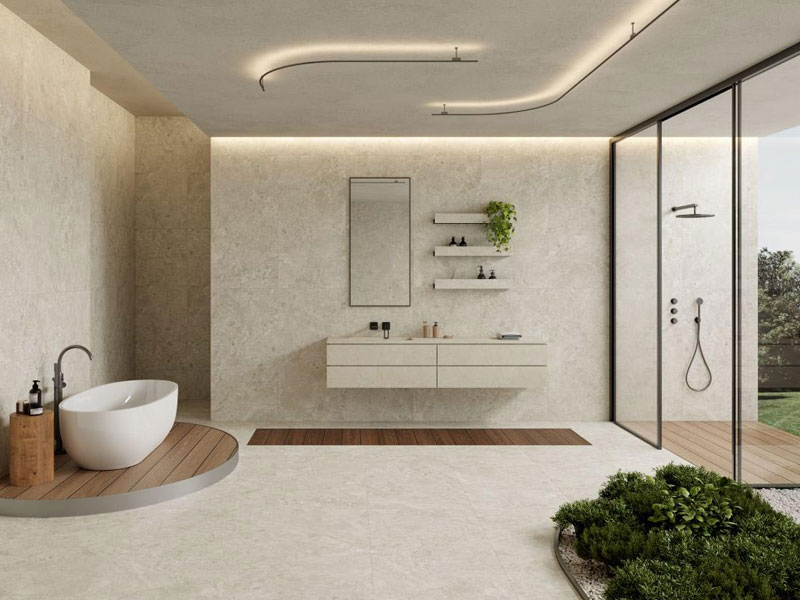
Showtile brings refined tile solutions to contemporary exterior spaces.
Stone-inspired porcelain can create cleaner architectural continuity, while natural stone and textured surfaces can introduce greater depth around courtyards, garden walls and outdoor living areas. Smaller formats can then provide controlled detail where the scale of the architecture requires a more articulated surface.
The strongest exterior result comes from considering tiles alongside paving, planting, render, timber and adjoining interior finishes. At Showtile, these material relationships can be explored as part of one broader design language, helping exterior walls feel integrated with both the architecture and landscape.
Contact Showtile
📍 Showroom: 65 Canterbury Road, Bankstown NSW 2200, Australia
📞 Phone: +61 2 9709 5836
✉️ Email: sales@showtile.com.au
🌐 Website: https://showtile.com.au/



