


Latest Bathroom Tiles Design: Modern Trends to Know
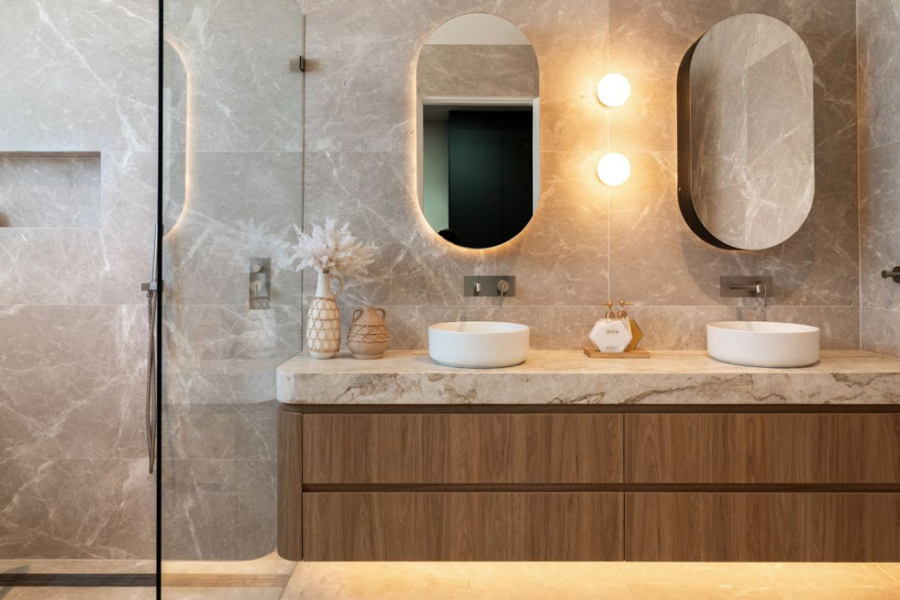
Bathroom design is shifting away from purely decorative tile choices toward surfaces that shape how the room feels and functions as a whole. With latest bathroom tiles design, Showtile highlights how scale, texture, finish and material transitions can define shower zones, vanity areas and open wet spaces while keeping the overall composition visually controlled.
What Defines the Latest Bathroom Tile Trends?
Current bathroom design is becoming more material-focused and less decorative. Rather than combining several unrelated feature tiles, designers are increasingly creating one dominant material language and adding contrast through texture, scale or a carefully positioned accent.
Why Are Bathrooms Becoming More Material-Focused?
Contemporary bathrooms frequently reference natural materials such as:
- Travertine
- Limestone
- Soft mineral stone
- Terrazzo
- Handmade ceramics
- Natural stone mosaics
The emphasis is on material character, subtle variation and surfaces that complement architectural elements rather than competing with them.
This approach also gives furniture, tapware and lighting more space to contribute to the overall interior.
Why Are Fewer Competing Tile Designs Being Used?
Too many tile patterns can fragment a bathroom into separate visual zones.
A more controlled contemporary scheme might use:
- One principal floor surface
- One related wall tile
- One smaller feature material
- A restrained grout palette
The bathroom then reads as one coordinated space rather than a collection of individual features.
Why Are Warm Neutrals Becoming More Important?
Warm beige, sand, ivory, greige and limestone tones are increasingly replacing stark white-and-grey combinations.
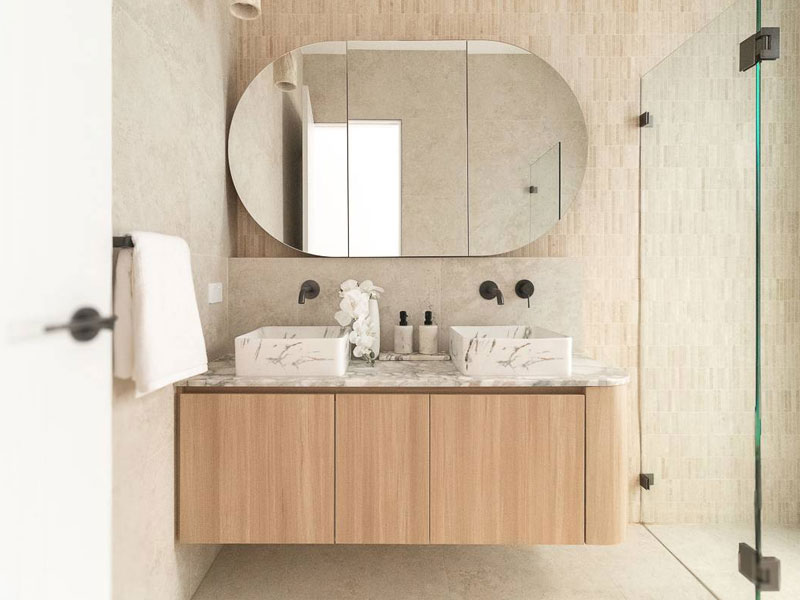
Contemporary surfaces for a refined bathroom
These warmer colours coordinate naturally with oak, walnut, brass, brushed nickel and cream cabinetry, helping create a softer transition between tiled surfaces and bathroom furniture.
Why Are Travertine-Look Tiles Leading Contemporary Bathrooms?
Travertine-inspired surfaces are particularly relevant because they combine natural movement with a calmer visual character than many high-contrast marble designs.
Why Does Travertine Work With Current Interior Styles?
Travertine works naturally with:
- Timber vanities
- Curved furniture
- Cream benchtops
- Brushed metals
- Textured plaster
- Warm white walls
This makes the material suitable for quiet luxury, Mediterranean-inspired and spa-like bathrooms.
The broader principles behind modern bathroom tile design can help position travertine within a complete contemporary bathroom rather than treating the tile as a decorative surface alone.
How Can Larger Travertine Formats Create a Calmer Space?
Larger formats reduce the number of visible grout joints and allow linear stone movement to extend across broader surfaces.
Showtile’s Travertine 4D is a porcelain stone-look collection in a honed 600×1200 format for wall and floor applications, providing a useful example of this large-scale travertine direction.
When Should Travertine Texture Become a Feature?
More pronounced travertine texture works best on selected surfaces such as:
- Vanity wall
- Shower wall
- Bath backdrop
- Architectural return
Using stronger texture selectively allows the main surfaces to remain calm.
Why Are Stone-Look Bathroom Tiles Becoming More Realistic?
Stone-look porcelain is becoming more convincing through restrained veining, tonal variation and multiple surface faces.
What Makes Stone-Look Porcelain Feel Natural?
A convincing stone-inspired tile should avoid obvious repeated graphics.
Look for:
- Multiple tile faces
- Subtle mineral shifts
- Low-contrast veins
- Organic colour variation
- Matt or softly tactile finishes
The goal is to create a continuous material field rather than a clearly printed pattern.
Which Stone Colours Feel Most Current?
Current bathroom palettes favour:
- Pale limestone
- Warm sand
- Soft greige
- Mineral grey
- Creamy stone
Yosemite combines Moon and Sand colour directions with a matt 600×1200 porcelain format, illustrating the move toward softer grey and warm beige stone palettes.
Why Does Surface Variation Matter Across Large Walls?
When the same material covers a shower wall, main wall and floor, repeated graphics become easier to notice.
Reviewing several faces before installation helps distribute movement naturally and prevents obvious repetition.
Are Large-Format Bathroom Tiles Still Trending?
Yes. Large-format tiles remain central to contemporary bathroom design because fewer joints can create greater visual continuity.
Why Do Large Tiles Feel More Architectural?
Large formats create:
- Fewer grout interruptions
- Cleaner visual lines
- Stronger stone realism
- More continuous floor-to-wall relationships
A 600×1200 format can work particularly well on shower walls and full-height wall applications.
When Do Large Tiles Work Best?
Large-format porcelain performs especially well in:
- Medium-to-large bathrooms
- Walk-in showers
- Floor-to-ceiling wall schemes
- Broad vanity walls
The same format should not automatically be used everywhere, however.
When Can a Large Format Become Impractical?
Review:
- Shower falls
- Drain positions
- Niches
- Doorways
- Corners
- Substrate flatness
A bathroom floor with complex drainage may need a smaller format than the main walls.
The same scale-versus-installation principle also applies beyond bathrooms; the guide to current floor tile design trends explores how format and material direction affect larger interior floors.
Why Are Tonal Bathroom Schemes Replacing Strong Contrast?
Current bathroom design frequently uses related shades instead of strong black-and-white or light-versus-dark contrast.
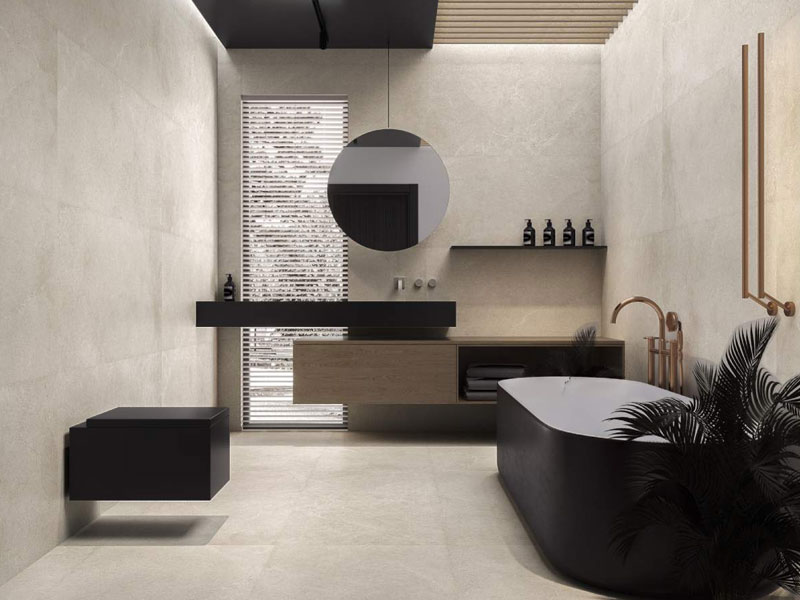
Balanced finishes create a calm interior
What Is a Tonal Bathroom Scheme?
A tonal scheme could combine:
- Pale beige wall tile
- Slightly deeper beige floor
- Cream grout
- Oak vanity
- Brushed nickel tapware
The surfaces are not identical, but the undertones remain connected.
Why Does Low Contrast Feel More Refined?
Lower contrast allows:
- Stone movement
- Joinery
- Lighting
- Fixtures
- Architectural form
to become more visible.
Grout lines become part of the background rather than forming a strong visual grid.
Does Tonal Design Require One Tile Everywhere?
No.
Variation can come from:
- Tile size
- Surface finish
- Pattern direction
- Texture
- Tonal depth
Using related materials rather than identical materials usually creates more depth.
Why Are Matt and Honed Finishes Becoming More Popular?
Bathroom surfaces are moving toward softer reflectivity and more tactile material character.
Why Does Matt Tile Feel Contemporary?
Matt surfaces create:
- Lower glare
- Softer colour
- More natural stone character
- Better visual balance with timber
Matt finishes are especially useful when a bathroom already includes polished metals or reflective mirrors.
When Does Honed Tile Work Better?
A honed finish introduces gentle reflectivity without the mirror-like appearance of polished tile.
This can suit:
- Travertine-inspired walls
- Luxury shower areas
- Stone-led bathrooms
- Feature surfaces
Is Polished Tile Still Relevant?
Yes.
Polished surfaces remain effective for:
- Marble-look walls
- Formal bathrooms
- Selected vanity areas
The current direction is simply more selective rather than eliminating polished tile altogether.
Why Is Terrazzo Still Relevant in Current Bathrooms?
Terrazzo remains contemporary because newer applications often use quieter aggregate and more neutral backgrounds.
How Is Contemporary Terrazzo Changing?
Current terrazzo tends toward:
- Smaller or more balanced chips
- Beige backgrounds
- White backgrounds
- Soft grey
- Restrained colour combinations
This allows terrazzo to work across larger surfaces without dominating the bathroom.
Where Does Terrazzo Work Best?
Terrazzo can be effective on:
- Main bathroom floor
- Shower floor
- Vanity wall
- Bath surround
- Feature zone
New Terrazzo is a porcelain range offered in Latte, Silver, White and Beige, with matt 300×600 and 600×600 formats.
When Does Real Terrazzo Make Sense?
Real terrazzo can be appropriate when authentic material composition is part of the design brief.
Showtile’s Vera Terrazzo uses real terrazzo in a honed 600×600 format with several colour directions.
Why Are Textured Bathroom Walls Becoming More Selective?
Texture remains important, but current bathrooms often concentrate stronger relief in one architectural zone.
Where Should Textured Tiles Be Used?
Suitable locations include:
- Vanity backdrop
- Bath wall
- Shower feature
- Recessed niche
One textural surface generally creates a clearer focal point than several unrelated textured walls.
Why Should Texture Be Balanced With Quieter Tiles?
Strong texture creates shadow, movement and visual weight.
Pairing a tactile wall with a calmer floor or adjacent wall surface prevents the bathroom from becoming visually crowded.
How Can Natural Stone Add More Depth?
The Roman Travertine range uses genuine travertine in mosaic and subway formats for feature-wall applications, including arch, finger, herringbone and concave forms.
Natural variation makes this type of material particularly suitable for smaller feature areas.
Why Are Handmade-Look Tiles Still Used in Contemporary Bathrooms?
Small-format ceramic tiles create useful scale contrast against large-format stone surfaces.
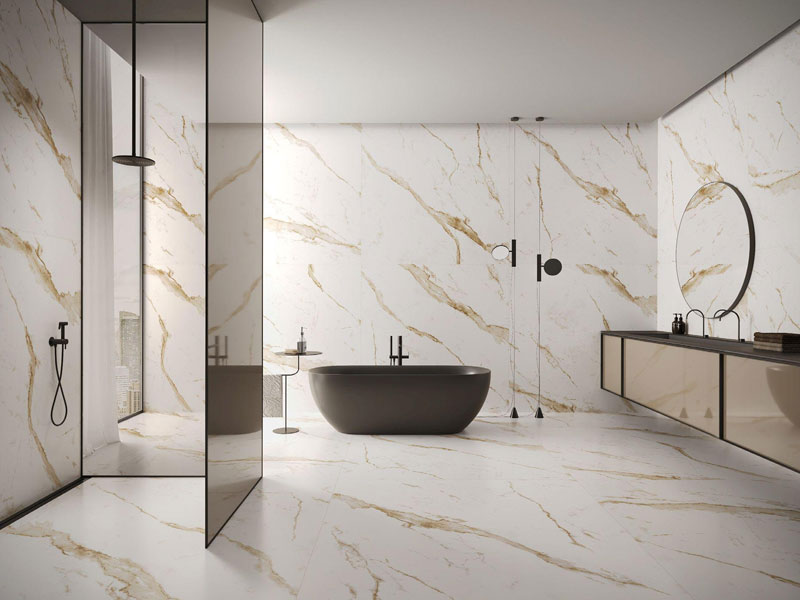
Subtle details bring depth to the space
What Makes Handmade-Look Tiles Feel Current?
Contemporary versions often include:
- Irregular edges
- Subtle glaze movement
- Tonal variation
- Surface texture
- Softer colour
The slight imperfection creates visual character without requiring a bold graphic pattern.
Where Should Small-Format Tiles Be Used?
Good locations include:
- Vanity splashback
- Shower feature
- Powder room wall
- Half-height wall
- Niche
Use the small tile as a deliberate accent rather than automatically repeating the format across the entire bathroom.
How Are Bathroom Floors and Walls Becoming More Connected?
Current bathrooms increasingly treat horizontal and vertical surfaces as part of one coordinated material system.
Should Bathroom Floors and Walls Match Exactly?
No.
Useful approaches include:
- Same collection in different formats
- Same stone family in different tones
- Related colours with different texture
- Similar material appearance with application-specific finishes
This creates continuity without making every plane identical.
How Can Floor-to-Wall Continuity Be Balanced?
Introduce controlled contrast through:
- Timber vanity
- Metal tapware
- Lighting
- Mirror frame
- Small accent tile
For projects where flooring extends into adjoining spaces, the principles covered in kitchen floor tile design can also help coordinate durability, layout and visual continuity between wet and open-plan zones.
Which Current Bathroom Tile Trend Fits Each Interior Style?
| Bathroom Style | Tile Direction | Supporting Detail | Overall Effect |
| Quiet luxury | Warm travertine look | Timber + brushed metal | Soft and refined |
| Contemporary | Large stone-look porcelain | Black or nickel | Architectural |
| Organic modern | Warm beige stone | Oak + cream | Natural and calm |
| Boutique | Restrained terrazzo | Brass + dark joinery | Expressive but controlled |
| Minimalist | Tonal large-format tile | Matching grout | Seamless |
| Mediterranean modern | Travertine + texture | Warm timber | Relaxed and tactile |
| Soft industrial | Mineral grey porcelain | Black metal | Structured |
| Artisan | Handmade-look ceramic | Neutral stone floor | Layered and characterful |
Which Bathroom Tile Trends Are More Likely to Last?
Not every visual trend has the same longevity.
Which Current Directions Are More Timeless?
More enduring choices include:
- Natural stone references
- Travertine
- Warm neutrals
- Restrained terrazzo
- Matt porcelain
- Balanced large formats
These designs are based on established materials rather than novelty decoration.
Which Trends Can Date Faster?
More trend-sensitive approaches include:
- Extreme geometric pattern
- Highly saturated colour across every wall
- Multiple feature tiles
- Strong novelty shapes throughout the bathroom
These can still work, but they need greater restraint.
How Can a Current Trend Be Used Without Dating the Bathroom?
Use trends through:
- Undertone
- Surface texture
- Finish
- Material character
- Tile scale
Keep broad surfaces calmer and introduce stronger personality in smaller zones.
How Should Current Trends Be Adapted to Bathroom Size?
Which Trends Work Best in Smaller Bathrooms?
Compact bathrooms often benefit from:
- Tonal stone surfaces
- Fewer material changes
- Warm pale neutrals
- Controlled grout
- One clear feature
Large tiles can still work if the layout produces sensible cuts.
Which Trends Work Best in Larger Bathrooms?
Larger bathrooms can support:
- Deeper stone tones
- Larger formats
- Stronger travertine movement
- Feature-wall texture
- More expressive terrazzo
Scale allows additional material variation without immediately making the room feel busy.
What Technical Details Should Be Checked Before Selecting a Trend-Led Tile?
Contemporary appearance should never replace technical suitability.
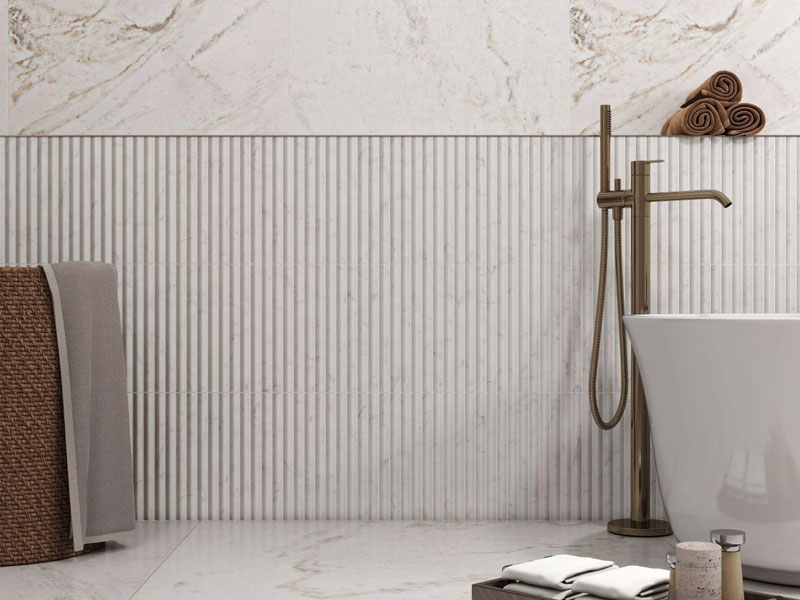
Modern bathroom design with a cohesive feel
Check:
- Wall or floor application
- Wet-area compatibility
- Slip performance
- Surface finish
- Tile thickness
- Shower falls
- Drainage
- Grout width
- Batch consistency
- Face variation
- Sealing requirements
- Installation method
- Wastage allowance
For example, Showtile’s Roma Stone is a porcelain travertine-look collection available in 300×600 and 600×600 matt formats, with multiple face designs that can create greater natural variation across a bathroom surface.
A specialist designer tile company can also help assess material, format and application together rather than treating visual trend as the only selection criterion.
Mình viết lại hai phần này theo hướng CTA về brand và collection, không đi sâu vào sản phẩm cụ thể, đồng thời giảm lặp ý giữa hai H2:
Explore Current Bathroom Tile Directions with Showtile
The broader Showtile collection gives designers, builders and homeowners the flexibility to compare different surface directions within one bathroom concept. Rather than selecting each tile independently, the collection can be explored by colour, format, finish and application to create a more consistent material language.
The most effective bathroom schemes consider how floor and wall surfaces interact with the vanity, benchtop, tapware and lighting. Comparing these elements together makes it easier to control contrast, texture and visual continuity across the entire space.
Bring the Bathroom Design Together with Showtile
A contemporary bathroom feels more resolved when every surface has a clear role. Large areas can provide visual calm, while texture, colour or smaller formats can introduce character where the design needs greater emphasis.
At Showtile, premium bathroom surfaces can be selected according to room proportion, wet-area requirements and the wider interior palette. This approach helps create a bathroom that feels current while remaining adaptable beyond short-term design trends.
Contact Showtile
📍 Showroom: 65 Canterbury Road, Bankstown NSW 2200, Australia
📞 Phone: +61 2 9709 5836
✉️ Email: sales@showtile.com.au
🌐 Website: https://showtile.com.au/



