


Outdoor Wall Tiles Design: A Guide to Refined Exteriors
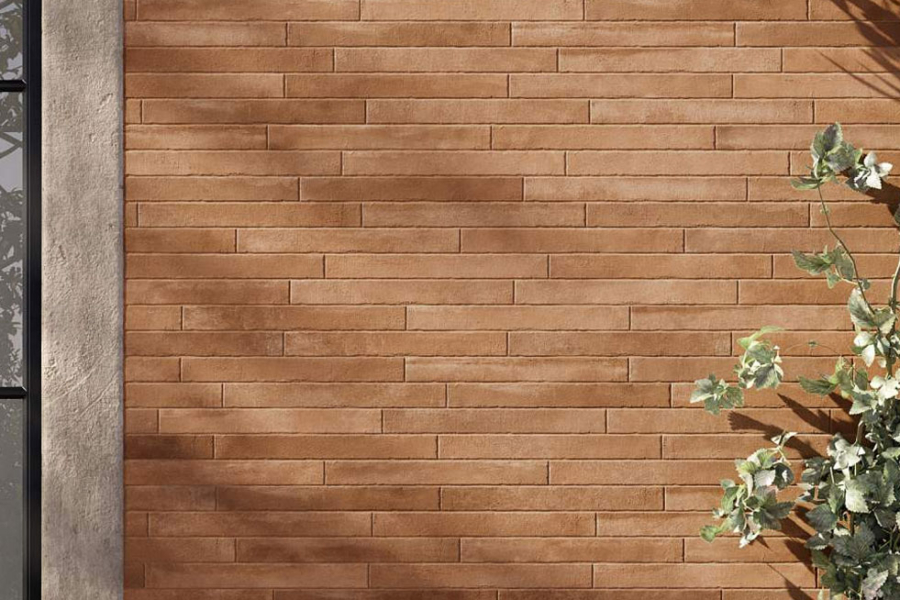
A successful outdoor wall tiles design should do more than decorate an exterior surface. The right tile needs to respond to architecture, daylight, weather exposure and surrounding materials while creating a clear relationship between the building and landscape.
For premium residential and commercial projects, Showtile offers a curated range of porcelain, stone-look and exterior surface options designed to support refined architectural outcomes. Rather than treating the exterior wall as an isolated feature, designers can use outdoor wall tiles to connect entrances, courtyards, pools, alfresco areas and adjoining indoor spaces into one considered architectural composition.
What Makes a Successful Outdoor Wall Tile Design?
A successful exterior wall begins with architecture rather than a single decorative tile. The colour, format and texture should support the proportions of the building while connecting visually with paving, timber, render, metalwork and landscaping.
How Should Outdoor Wall Tiles Relate to the Architecture?
Contemporary architecture often benefits from large-format tiles, restrained stone movement and minimal grout lines. These surfaces create broad visual planes that allow the building form to remain dominant.
Homes with warmer or more organic architecture may suit tumbled stone, travertine-inspired surfaces or textured formats. Mediterranean and coastal schemes can also work well with pale limestone tones, warm beige surfaces and earthy material accents.
The same design thinking applies to interiors. Homeowners comparing designer tiles Melbourne can use exterior surfaces to extend the material character established inside the home rather than treating the garden or courtyard as a separate visual zone.
Why Is Material Continuity Important Outdoors?
Material continuity does not mean using one tile everywhere. A more refined approach is to repeat tone, texture or stone character across different surfaces.
A warm stone-look floor, for example, can be paired with a slightly more textured wall tile in the same colour family. Timber doors, planting and dark metal detailing can then create contrast without introducing another competing surface.
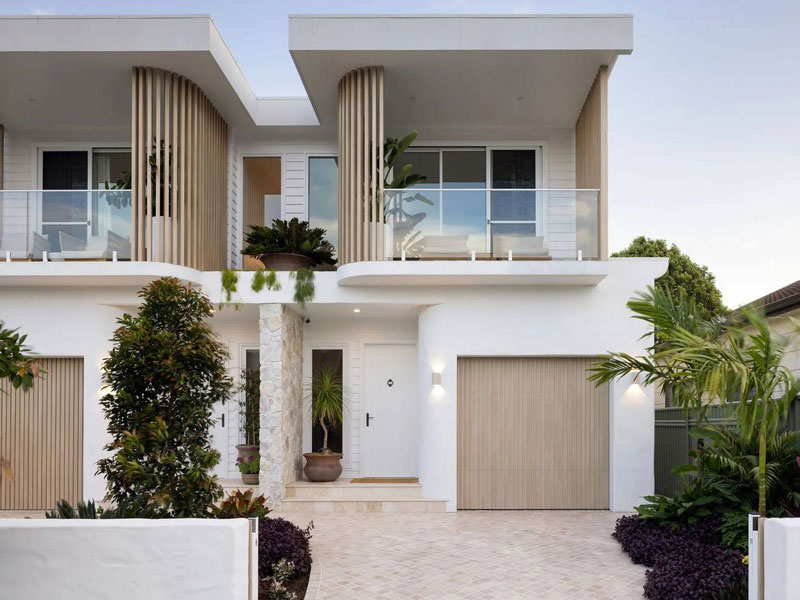
Square Tumbled Tiles add natural depth with a handcrafted stone look
The result is an exterior palette that feels layered but controlled.
Which Tiles Work Best on Outdoor Walls?
Porcelain, selected natural stone and wall tiles specifically suitable for external applications are strong options. The correct material depends on exposure, maintenance expectations, wall construction and the desired architectural effect.
Are Porcelain Tiles Suitable for Exterior Walls?
Porcelain tiles offer useful design flexibility because colour, scale and stone movement can be more controlled than many natural materials. Certain porcelain collections are also available in external finishes, allowing designers to coordinate indoor and outdoor zones more closely.
The Cast collection combines a subtle stone-inspired appearance with wall and floor formats, while selected formats are also offered in an external finish. Its quiet natural tones suit minimalist courtyards, covered outdoor areas and contemporary feature walls.
Porcelain should still be specified according to the exact wall location and installation system rather than assuming every porcelain finish is appropriate for every external wall.
When Do Stone-Look Tiles Work Particularly Well?
Stone-look tiles are useful when a project requires natural character without excessive visual variation. They can complement concrete, render, timber and planting while maintaining a controlled architectural palette.
The Twilight collection uses a stone-inspired porcelain surface and includes wall applications as well as finishes intended for outdoor environments. Its Ivory, Silver, White and Coal tones provide options for both light coastal schemes and stronger contemporary palettes.
For projects that continue similar materials from bathrooms to exterior zones, the design principles used with bathroom wall design tiles can also be useful: control the palette, avoid unnecessary pattern competition and allow one dominant material to establish the visual language.
When Is Natural Stone Texture More Appropriate?
Natural stone offers irregularity that porcelain intentionally controls. Tumbled edges and variations in colour can create an older, more tactile character that works especially well with landscaped courtyards, Mediterranean-inspired homes and smaller architectural details.
The Square Tumbled collection includes natural stone formats suitable for internal and external applications, with both wall and floor use listed by Showtile. The small-format construction makes the collection particularly useful where designers want more joint rhythm and texture rather than a large monolithic wall.
Natural stone generally requires greater attention to installation, sealing and ongoing care than porcelain.
Where Can Outdoor Wall Tiles Create the Most Impact?
Outdoor tiles are most effective when they define a purposeful architectural zone. Covering every exterior wall is rarely necessary; a carefully positioned outdoor feature wall can often create stronger visual impact.
How Can Tiles Improve an Outdoor Feature Wall?
Feature walls work well behind an outdoor lounge, along a courtyard boundary or at an entry where the surface is visible from inside the house.
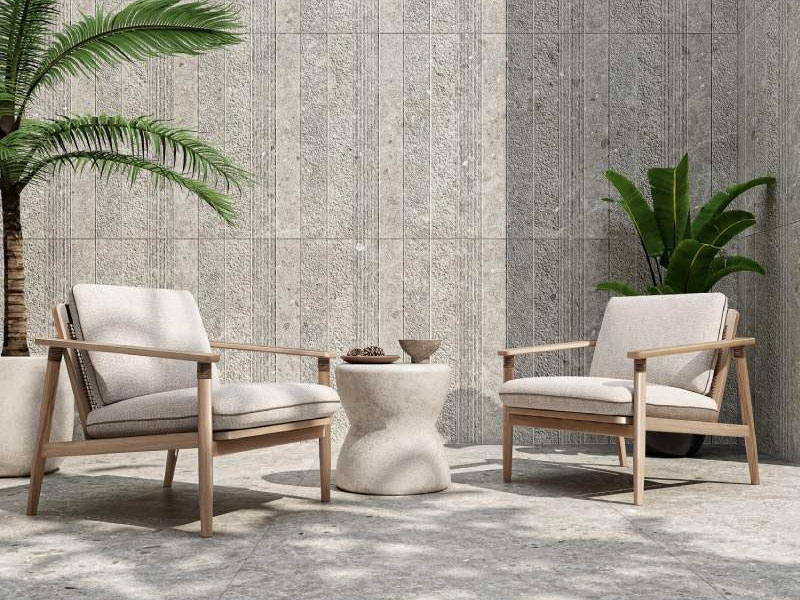
Twilight Tiles create a refined, contemporary stone-inspired finish
The tile should have enough texture or tonal variation to remain interesting in natural light without overwhelming surrounding materials. Stone-look porcelain works particularly well when the same visual language appears elsewhere in the floor, entry or interior.
Outdoor lighting can further emphasise texture after sunset, especially when light grazes rather than directly floods the wall.
What Works Best Behind an Outdoor Kitchen?
An outdoor kitchen wall is usually surrounded by several materials: cabinetry, stainless steel appliances, stone benchtops, paving and sometimes timber structures.
A restrained wall surface helps prevent the area from becoming visually busy. Pale stone looks can soften dark cabinetry, while charcoal or grey porcelain can create a more architectural result behind lighter joinery.
The wall finish should also be selected with cleaning, exposure and the particular cooking area in mind.
How Should Poolside and Courtyard Walls Be Designed?
Pool and courtyard walls need to relate to the complete landscape composition. Pool water, coping, paving, greenery and wall finishes are all visible together, so introducing unrelated tile colours can fragment the space.
The New Valley collection is particularly useful for this type of coordinated approach. The stone-look porcelain range includes floor and wall applications together with in-and-out, external, paver and coping options, allowing several surrounding surfaces to share a consistent stone language.
The same coordination principle also applies when planning washroom floor tiles design inside the home: visual continuity becomes stronger when wall, floor and adjoining materials are considered together rather than selected independently.
How Should Colour, Texture and Tile Size Be Selected?
Colour, texture and scale should respond to architecture, natural light and the size of the outdoor space. There is no single best exterior tile; successful specifications depend on the complete setting.
Which Colours Work Well in Australian Outdoor Spaces?
Warm beige, limestone and soft greige tones create an understated connection with timber and landscaping. Pale colours can also feel appropriate around pools and bright courtyards because they reflect the relaxed character associated with many Australian outdoor spaces.
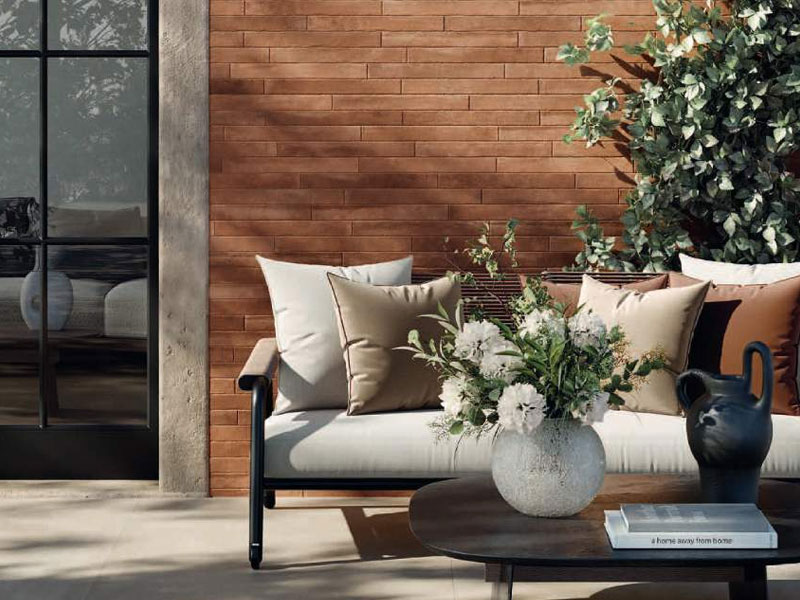
Nosa Brick brings warm texture and character to feature walls
Grey and charcoal tiles create stronger architectural definition and can complement concrete, steel and dark window frames.
Terracotta and warmer stone tones introduce more personality but should normally be balanced with quieter surrounding surfaces.
Should Exterior Wall Tiles Be Smooth or Textured?
Textured wall tiles create stronger shadow and material depth. They can make a courtyard wall or entrance feel more substantial, particularly when sunlight changes across the surface during the day.
Smoother matt surfaces create a cleaner result. They suit buildings where geometry and proportion should remain the main visual focus.
Texture should therefore be chosen for architectural purpose rather than simply because a heavily textured tile appears more decorative.
Do Large-Format Tiles Make Exterior Walls Look More Refined?
Large formats can create a sophisticated exterior because fewer grout lines interrupt the surface. They work particularly well across wide feature walls and large contemporary façades.
Smaller tiles are more suitable when the design requires rhythm, craft or detail. Brick formats and tumbled stone can add interest to a compact courtyard, column or smaller feature area.
| Design Direction | Suitable Tile Approach | Ideal Application | Visual Effect |
| Contemporary minimal | Large-format stone-look porcelain | Entry or courtyard | Clean and restrained |
| Organic modern | Textured stone-look tile | Garden feature wall | Soft and natural |
| Coastal | Pale beige or limestone look | Poolside wall | Light and relaxed |
| Mediterranean | Tumbled natural stone | Courtyard | Warm and tactile |
| Industrial | Grey or charcoal porcelain | Outdoor kitchen | Strong and architectural |
The table should be treated as a design starting point. Architecture, exposure and neighbouring materials should ultimately determine the specification.
How Should Outdoor Walls Coordinate With Floors and Landscaping?
Outdoor walls should complement floors and landscape materials without becoming exact copies. Matching every surface can make an exterior appear flat, while too many unrelated finishes create visual noise.
Should Wall Tiles Match Outdoor Floor Tiles?
Walls and floors can share a colour family while using different textures or scales. A quieter floor, for example, can support a more tactile feature wall.
A stone-look porcelain collection with multiple finishes can also help create a stronger indoor-outdoor transition, particularly when the same underlying tone continues through internal living areas, patios and landscaped zones.
Homeowners working with a premium designer tiles company can benefit from selecting the entire surface palette together, allowing tile size, grout, timber, joinery and landscape finishes to be reviewed as one composition.
How Should Tile Work With Timber, Concrete and Render?
Timber pairs naturally with beige, sand and soft grey stone looks because the combination balances warmth and mineral texture.
White or pale render can support stronger charcoal tiles, while dark façades often benefit from lighter stone surfaces that create definition.
Concrete already carries strong mineral character, so a heavily patterned tile may compete with the architecture. A controlled natural stone look is often more successful.
Planting should also be part of the palette. Green foliage tends to work particularly well against warm limestone, muted greige and subdued natural stone tones.
What Should Be Checked Before Selecting Exterior Wall Tiles?
Exterior tile selection needs more than colour and format. Product suitability, substrate conditions, exposure and installation details should all be confirmed before specification.
Is the Tile Approved for the Intended Exterior Application?
Always check whether the selected tile and finish are appropriate for the exact application. A collection may contain several versions intended for different uses, so the presence of an external floor finish does not automatically make every format suitable for an exterior wall.
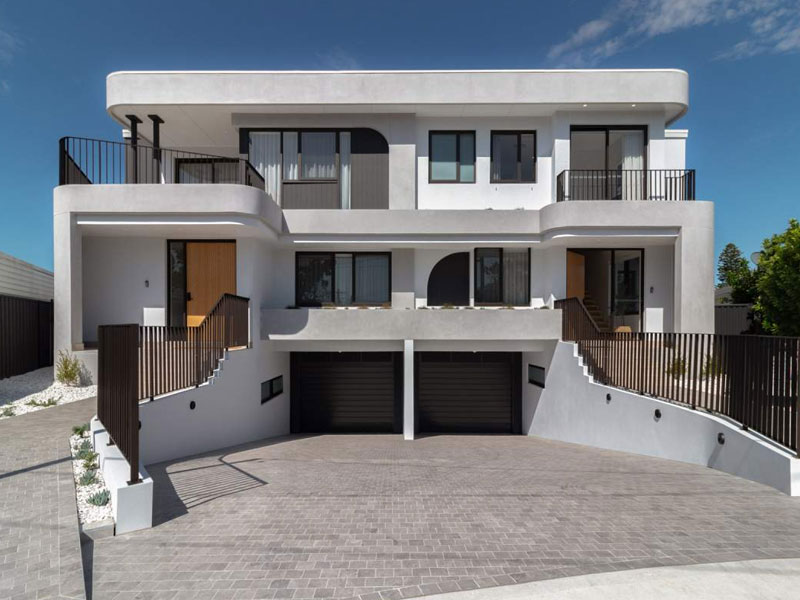
New Valley Tiles support seamless indoor–outdoor design continuit
The project team should confirm:
- Wall application suitability
- External or sheltered exposure requirements
- Substrate preparation
- Correct adhesive and fixing system
- Movement joint requirements
- Tile weight and format
- Grout selection
- Waterproofing where required
- Manufacturer installation guidance
How Do Sun, Rain and Exposure Affect Tile Selection?
A sheltered alfresco wall experiences different conditions from a fully exposed boundary wall. Coastal homes may also face salt exposure, while west-facing façades can receive intense afternoon sunlight.
Natural light changes how tile colour and texture are perceived. A sample that appears soft indoors may show much greater contrast under direct sunlight.
Viewing samples in the actual project environment can therefore provide a more reliable indication of the final appearance.
How Can Showtile Help With Premium Outdoor Wall Selection?
Showtile curates architectural tiles for residential and commercial projects where material quality, proportion and design continuity are important. Rather than selecting an exterior feature tile in isolation, homeowners, architects, designers and builders can compare wall surfaces alongside complementary floor, paver and interior finishes.
Showtile’s broader tile collections include stone-look porcelain, natural stone, wall tiles, textured formats and outdoor surfaces that can support a range of contemporary architectural styles.
For premium projects, the strongest outcome usually comes from reviewing tile samples alongside actual timber, render, cabinetry, pool finishes and landscape materials before making the final specification.
Contact Showtile
📍 Showroom: 65 Canterbury Road, Bankstown NSW 2200, Australia
📞 Phone: +61 2 9709 5836
✉️ Email: sales@showtile.com.au
🌐 Website: https://showtile.com.au/



