


Latest Tiles Design for Floor: What’s Trending in Modern Interiors
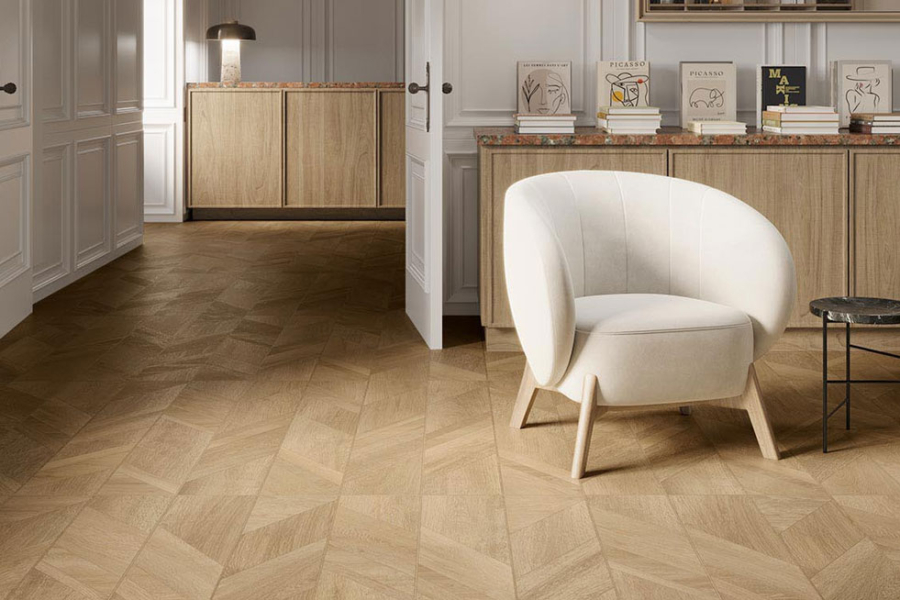
The latest tiles design for floor trends favour natural-looking materials, warmer neutrals and cleaner visual continuity. Showtile brings together stone-look porcelain, travertine-inspired surfaces, terrazzo, timber-look tiles and large formats that help create contemporary floors with refined texture, balanced colour and lasting architectural appeal.
What Defines the Latest Floor Tile Trends?
Current flooring is becoming less decorative and more architectural. Rather than using strong pattern across an entire floor, designers are favouring natural-looking materials, subtle tonal variation and finishes that allow furniture, joinery and lighting to remain visually dominant.
Why Are Natural-Looking Surfaces Becoming More Important?
The strongest contemporary floors reference familiar natural materials:
- Limestone
- Travertine
- Soft mineral stone
- Timber
- Terrazzo
- Concrete
Advanced porcelain surfaces can reproduce stone movement and timber grain while maintaining controlled sizing and finish consistency.
The result feels less like a decorative tile pattern and more like an architectural surface.
Why Are Floor Patterns Becoming Quieter?
Large floors amplify pattern.
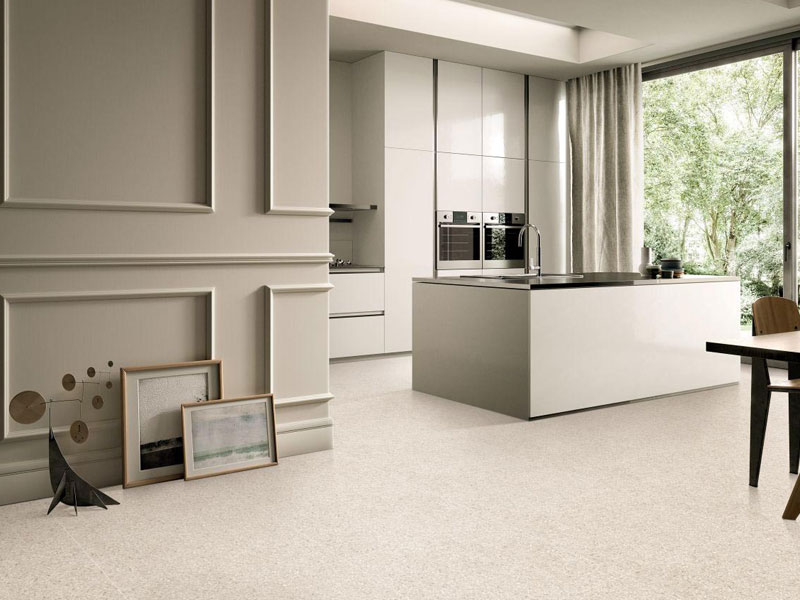
Modern floor tiles for refined interiors
A dramatic vein or repeated graphic motif that looks attractive on one sample can become visually dominant across an open-plan interior. Current design therefore favours:
- Low-contrast veining
- Tonal mineral movement
- Fine terrazzo aggregate
- Softer timber grain
- Restrained colour shifts
Quiet floors also adapt more easily when furniture or interior colours change later.
Why Are Warm Neutrals Becoming More Prominent?
Beige, sand, ivory, warm greige and limestone tones work particularly well with current interior materials such as oak, walnut, plaster finishes and natural textiles.
Cool grey remains relevant, but warmer mineral tones create a softer transition between flooring and timber furniture.
Why Are Stone-Look Floor Tiles Still Leading Current Design?
Stone-look porcelain remains one of the strongest flooring directions because it combines visual depth with a restrained material character. Current stone interpretations also use more faces and subtler tonal movement, reducing obvious repetition across broad surfaces.
What Makes New Stone-Look Tiles Feel More Realistic?
A convincing stone-look floor should include:
- Multiple tile faces
- Subtle vein changes
- Mineral variation
- Tonal movement
- Matt or gently tactile finishes
A current example is Urban Extra, a Showtile new arrival using porcelain with Bianco, Cotton, Grigio and Nero colour directions. Depending on format, the collection includes multiple face designs, helping reduce visual repetition across a larger floor.
Which Stone Colours Feel Most Current?
There is no single dominant colour.
Current directions include:
- Pale limestone
- Warm ivory
- Soft greige
- Mid grey
- Deep mineral black
The more important trend is controlled undertone rather than extreme colour contrast.
Where Do Stone-Look Floors Work Best?
Stone-inspired flooring is particularly adaptable across:
- Living rooms
- Kitchens
- Hallways
- Open-plan interiors
- Premium commercial spaces
For room-specific planning, the guide to floor tiles design for living room explores format, grout and furniture relationships in greater detail.
Why Is Travertine-Look Flooring Becoming More Prominent?
Travertine offers warmth and directional stone movement without the stronger visual contrast associated with many marble patterns.
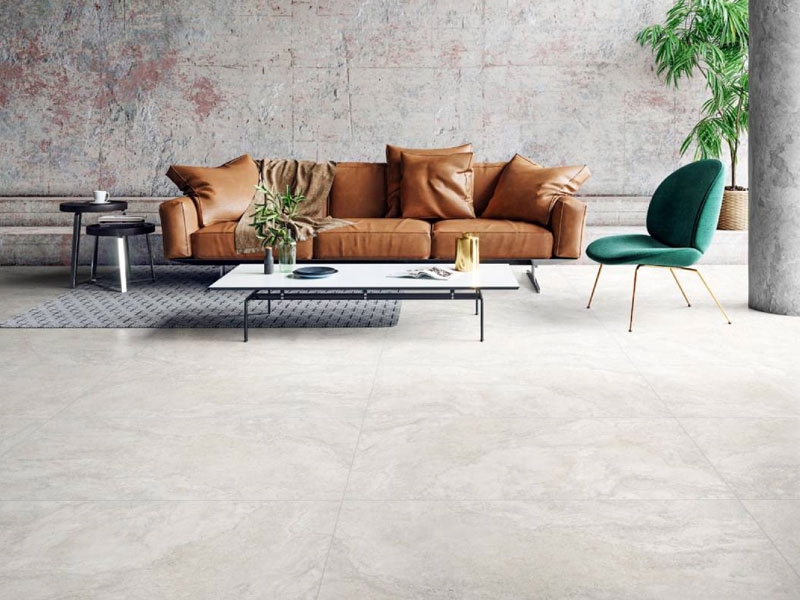
Warm neutral floors bring timeless elegance
Why Does Travertine Suit Current Interiors?
Travertine works naturally with:
- Timber furniture
- Curved upholstery
- Warm plaster
- Cream textiles
- Bronze or brass
- Organic architecture
This makes travertine especially relevant to quiet-luxury, Mediterranean-modern and resort-inspired interiors.
How Can Travertine 4D Support This Direction?
This warmer material direction is reflected in Travertine 4D, a current Showtile porcelain collection with a honed 600×1200 format designed for wall and floor applications. The larger rectangular format and natural-stone interpretation align closely with the current move toward broad, quieter floor surfaces.
Should Travertine-Look Floors Be Used Across Large Areas?
They can work particularly well across open-plan spaces when the vein movement remains restrained.
Low-contrast grout and consistent tile orientation help the surface read as one continuous stone field rather than a collection of individual tiles.
Are Large-Format Tiles Still a Major Flooring Trend?
Yes. Large formats remain important, although current design is less focused on simply choosing the biggest tile available.
Why Do Large Tiles Still Feel Contemporary?
Large-format tiles reduce the number of visible joints and allow stone or marble movement to appear across broader surfaces.
This can create:
- Better visual continuity
- Cleaner sightlines
- Fewer grout interruptions
- Stronger architectural scale
The overall effect suits open-plan homes and larger contemporary interiors.
When Do Oversized Formats Work Best?
Large formats are particularly effective in:
- Wide living areas
- Kitchen-dining zones
- Entry halls
- Large commercial spaces
- Homes with long sightlines
For smaller or highly irregular rooms, a more moderate tile size may provide cleaner cuts and a better-balanced grid.
When Can Very Large Tiles Become Impractical?
Potential issues include:
- Narrow perimeter cuts
- Complex doorway cuts
- Difficult handling
- More demanding substrate preparation
Tile format should respond to the room rather than trend alone.
Why Is Terrazzo Returning in Contemporary Flooring?
Terrazzo remains relevant, but current versions often move away from highly graphic retro patterns toward quieter aggregate and more neutral bases.
What Does Modern Terrazzo Look Like?
Contemporary terrazzo commonly uses:
- Smaller or more balanced chips
- Soft beige
- Grey
- White
- Warm neutral backgrounds
This makes terrazzo easier to use across larger areas.
When Does Terrazzo Work Best?
Terrazzo is particularly useful for:
- Bathrooms
- Kitchens
- Entry areas
- Hospitality spaces
- Contemporary residential interiors
For a softer contemporary interpretation, New Terrazzo is a porcelain collection available in Latte, Silver, White and Beige, with 300×600 and 600×600 formats and a P4 matt finish. The restrained palette shows how the terrazzo aesthetic is being adapted for more refined contemporary interiors..
Is Real Terrazzo Still Relevant?
Yes.
For projects that favour genuine material character, Vera Terrazzo is currently listed by Showtile as a new arrival and uses real terrazzo in honed 600×600 formats, including beige, white and green directions..
Why Are Timber-Look Porcelain Tiles Becoming More Refined?
Timber-look flooring is becoming less exaggerated and more natural.
What Makes Timber-Look Tile Feel Contemporary?
Current timber interpretations emphasise:
- Subtle grain
- More realistic colour variation
- Longer plank proportions
- Softer tonal transitions
The goal is to create warmth without obvious printed repetition.
Which Timber Tones Feel Current?
Popular directions include:
- Pale oak
- Warm mid-brown
- Neutral timber
- Smoked finishes
These tones pair easily with warm stone, linen and neutral joinery.
Showtile currently lists Miro Timber and Oken Timber among its New Arrivals, while the broader timber-look category includes additional plank-inspired porcelain collections.
Which Floor Colours Are Trending Now?
Current flooring palettes are becoming warmer and less stark.
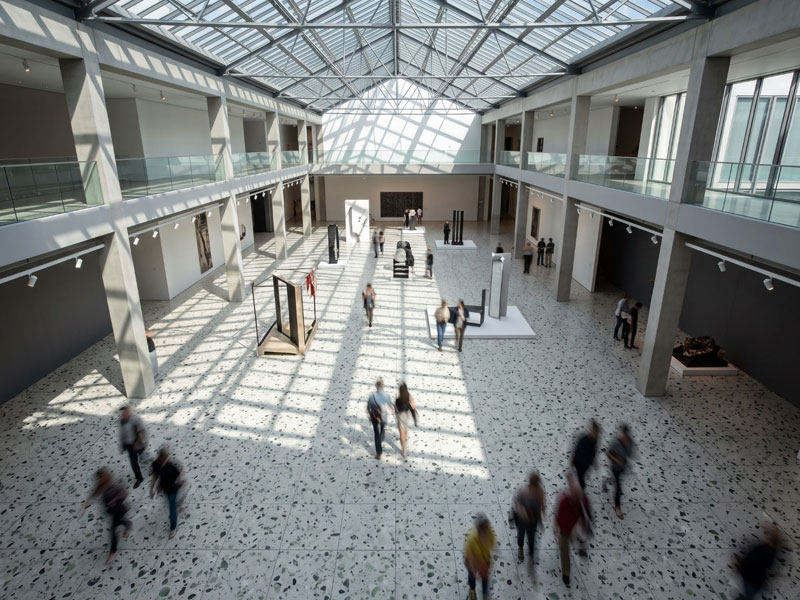
Natural textures shape contemporary flooring
Why Are Beige and Warm Greige Becoming Stronger?
Warm neutrals support many current interior materials, including:
- Oak
- Walnut
- Cream upholstery
- Natural plaster
- Brass
- Linen
These colours also provide a quieter background than strong white-and-black contrast.
Is Grey Flooring Still Relevant?
Yes, but softer mineral greys often integrate more naturally than blue-based cool grey.
Grey remains particularly effective in:
- Contemporary apartments
- Concrete-inspired interiors
- Commercial spaces
- Interiors with black metal
When Do Dark Floors Make Sense?
Dark mineral surfaces can create depth in:
- Large rooms
- Hospitality spaces
- Well-lit interiors
- Dramatic residential schemes
The surrounding furniture and wall palette should provide enough contrast.
Which Surface Finishes Feel Most Current?
Finish is becoming just as important as colour.
Why Is Matt Becoming the Default Contemporary Finish?
Matt flooring creates:
- Lower glare
- Softer colour
- More natural stone character
- Easier coordination with timber and textiles
Urban Extra, for example, uses a matt finish across its current stone-look formats.
When Does Honed or Satin Work Better?
Honed surfaces create gentle reflectivity and suit interiors that need more refinement than a completely matt surface without becoming highly polished.
Travertine 4D currently uses a honed finish, while Vera Terrazzo is also offered honed.
Is High Gloss Becoming Less Dominant?
Across broad contemporary floors, yes.
Polished finishes still work for marble-inspired or formal interiors, but matt and honed surfaces generally fit current natural-material palettes more easily.
How Are Indoor and Outdoor Floor Tiles Becoming More Connected?
Modern homes increasingly use a related material language across living rooms, courtyards and terraces.
Why Is Material Continuity Important?
Related surfaces can visually connect:
- Living areas
- Dining rooms
- Courtyards
- Terraces
- Pool surrounds
The relationship does not require identical finishes.
Should Indoor and Outdoor Tiles Match Exactly?
No.
A better approach is often:
- Same colour family
- Related stone character
- Different application-specific finish
This preserves visual continuity without ignoring performance requirements.
For projects that need visual continuity between interior and exterior areas, Terra Terrazzo is currently available in matt, honed and external finishes, supporting related applications within one terrazzo language.
Which Current Floor Tile Trend Best Fits Each Interior Style?
| Interior Direction | Current Tile Trend | Best Application | Overall Effect |
| Quiet luxury | Warm stone-look porcelain | Open-plan interiors | Calm and refined |
| Contemporary | Soft grey stone look | Living / kitchen | Architectural |
| Mediterranean modern | Travertine look | Living / dining | Warm and natural |
| Mid-century | Subtle terrazzo | Entry / living | Graphic but controlled |
| Organic modern | Timber-look porcelain | Living areas | Warm and tactile |
| Minimalist | Large-format neutral tile | Broad floors | Seamless |
| Dramatic luxury | Dark mineral tile | Large interiors | Bold and sophisticated |
The same material logic can then be adapted by room. For example, the colour-balancing principles covered in bathroom tiles designs and colours are useful when translating broader flooring trends into smaller wet-area palettes.
Which Floor Tile Trends Are More Likely to Last?
Not every new look has the same design longevity.
Which Trends Have Timeless Material References?
More durable directions include:
- Limestone-inspired porcelain
- Travertine
- Natural timber references
- Soft terrazzo
- Neutral stone surfaces
These designs reference established natural materials rather than novelty graphics.
Which Trends Can Date More Quickly?
More trend-sensitive choices include:
- Highly saturated colours across large floors
- Extreme geometric patterns
- Artificial-looking marble
- Novelty shapes used throughout an entire interior
These can still work, but they are more dependent on a specific design moment.
How Can a Trend Be Used Without Making the Floor Feel Temporary?
Use trends through:
- Undertone
- Texture
- Finish
- Scale
Keep large floor surfaces relatively restrained, then introduce more expressive colour through furniture, rugs or smaller tiled zones.
For broader premium-flooring principles beyond trend-led selection, the guide to floor designer tiles provides a useful reference for material character, format and architectural continuity.
How Should Current Floor Trends Be Adapted to Different Rooms?
Different spaces need different interpretations of the same trend.
Which Trends Work Best in Living Areas?
Large-format stone, travertine and warm neutral porcelain are particularly effective because the floor occupies a broad visual area.
For complete room coordination beyond flooring alone, design tiles for living room explores the relationship between surfaces, furniture, feature walls and lighting.
Which Trends Work Best in Bathrooms?
Useful directions include:
- Restrained terrazzo
- Small stone formats
- Matt porcelain
- Tonal neutral palettes
The tile still needs to meet the technical requirements of the specific wall or floor application.
Which Trends Work Best in Commercial Interiors?
Stone-look porcelain, terrazzo and lower-pattern floors work well where larger areas need visual continuity and durability.
How Can Showtile’s Current Floor Collections Support Different Design Directions?
Showtile’s tile collection provides several ways to interpret current flooring trends without forcing every project into the same aesthetic.
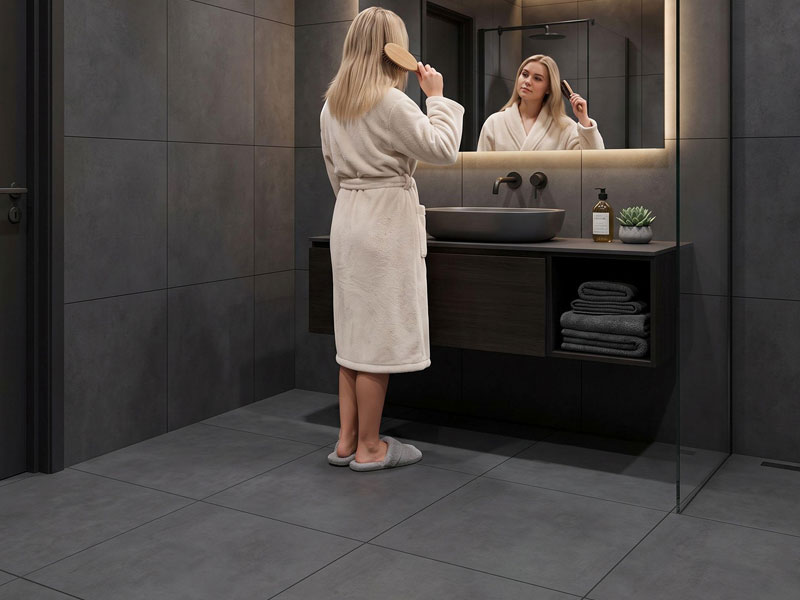
Large-format tiles create seamless visual flow
Urban Extra suits quieter stone-led interiors, while Travertine 4D introduces warmer linear movement. New Terrazzo provides a more graphic but controlled floor, and current timber-look collections such as Miro Timber offer another route for interiors that need greater warmth. Showtile’s New Arrivals currently includes all of these broader material directions, alongside other stone, timber and terrazzo ranges.
Rather than choosing a collection because it is new, compare the surface with the room scale, furniture palette and long-term material strategy. Working with a specialist designer tiles company can also help evaluate new products within the wider architectural scheme rather than treating trend selection as an isolated decision.
Use Current Trends as a Material Direction, Not a Formula
The strongest contemporary floors do not look current simply because they follow a specific colour or format. They feel relevant because scale, texture, finish and material character support the architecture around them.
At Showtile, current stone-look, travertine, terrazzo and timber-inspired ranges can be compared across different design directions. Using new collections as a starting point rather than a rigid trend formula makes it easier to create flooring that feels current now while remaining visually resolved as the interior evolves.
Contact Showtile
📍 Showroom: 65 Canterbury Road, Bankstown NSW 2200, Australia
📞 Phone: +61 2 9709 5836
✉️ Email: sales@showtile.com.au
🌐 Website: https://showtile.com.au/



