


Design Tiles for Living Room: How to Create a Refined Interior
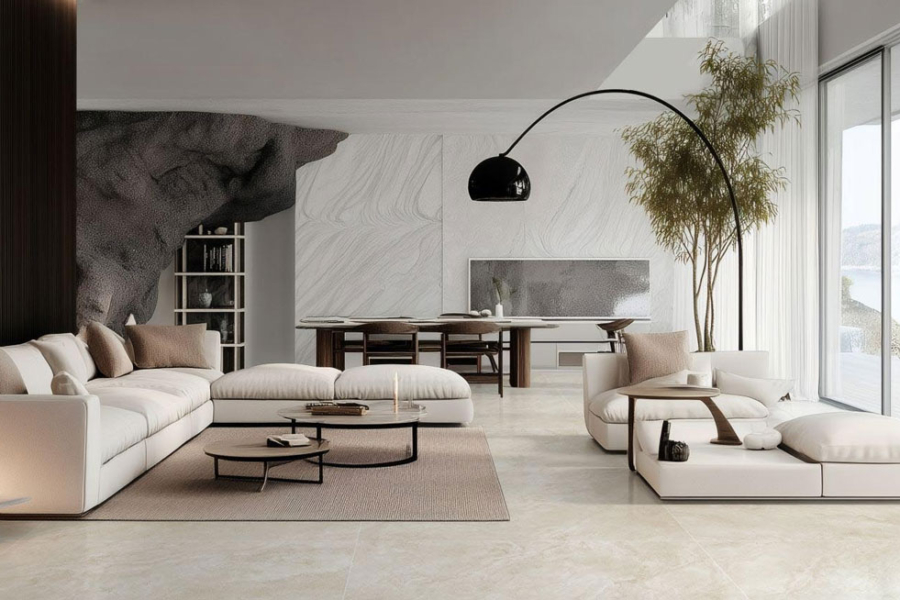
The right design tiles for living room can influence how the entire space feels, from the way furniture sits within the room to how light moves across floors and feature walls. Showtile brings together stone-look, marble-inspired and large-format surfaces that help create living areas with stronger proportion, material contrast and architectural character.
What Makes a Living Room Tile Scheme Feel Refined?
A refined living room needs a clear material hierarchy. The floor should usually create continuity, while stronger visual character can be reserved for a fireplace, TV wall or architectural feature.
Why Should Flooring Act as the Visual Base?
The floor occupies one of the largest visible surfaces in a living room, so excessive movement or contrast can influence the entire interior.
A successful base usually has:
- Controlled pattern
- Consistent undertone
- Appropriate tile scale
- Low-contrast grout
- A finish that works with the available light
Stone-look porcelain, restrained terrazzo and softer marble effects can all provide a calm platform for furniture and artwork.
The role of the floor is not to compete with every other element. A quiet floor allows the sofa, rug, lighting and joinery to create layers without making the room feel busy.
Where Should Stronger Tile Character Be Used?
More expressive surfaces work best where the architecture naturally creates a focal point.
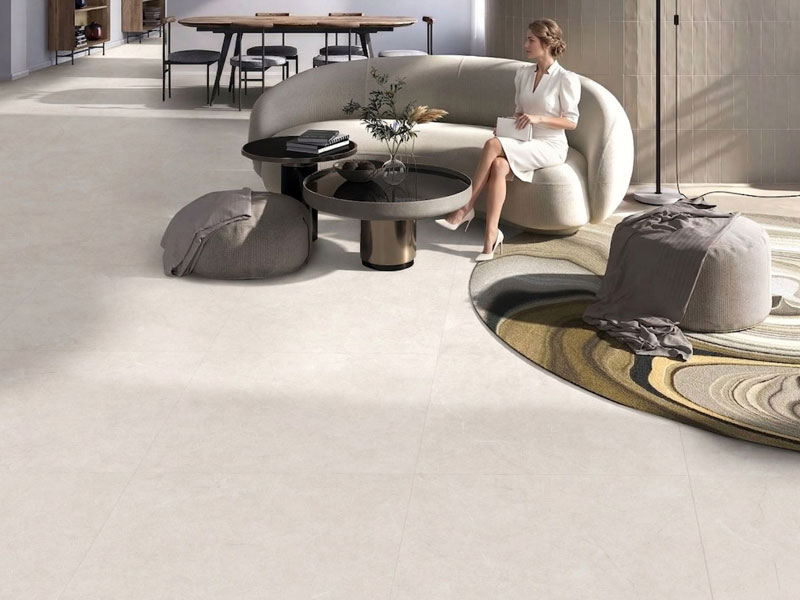
Valencia offers a calm stone-inspired finish
Suitable locations include:
- Fireplace wall
- TV wall
- Double-height wall
- Architectural niche
- Column or blade wall
Using a dramatic floor and an equally dramatic feature wall together can create visual conflict. A stronger feature usually works better against a quieter floor.
How Many Tile Materials Should a Living Room Use?
A simple formula works well:
One main floor + one feature surface + one supporting material
For example:
- Warm stone-look floor
- Marble-look fireplace
- Timber joinery
This keeps the material language clear and allows each surface to have a defined role.
Which Tile Materials Work Best in a Living Room?
Material choice should reflect the atmosphere of the interior rather than a single trend.
When Do Stone-Look Porcelain Tiles Work Best?
Stone-look porcelain tiles are versatile because they can support contemporary, minimalist and natural interiors.
Valencia is a useful example. The current range includes 600×600 and 600×1200 formats in Matt P3 and Silk finishes, with Ivory, Bianco and Mist colour directions.
Stone-look flooring works particularly well with:
- Timber furniture
- Neutral sofas
- Soft rugs
- Black or bronze metal
- Warm white walls
A subtle stone surface can add material depth without making the room feel visually heavy.
When Does Marble-Look Tile Create a Stronger Statement?
Marble-inspired porcelain creates more visible movement and works best when the rest of the room remains controlled.
Marvel X includes Calacatta, Fior Di Bosco and Grey Cloud references across matt, polished and slab formats.
Marble-look surfaces are particularly effective for:
- Fireplace surrounds
- TV feature walls
- Formal living areas
- Tall wall planes
- Statement zones
Strong veining should be treated as a focal design element rather than repeated across every surface.
When Does Terrazzo Work Better?
Terrazzo brings a more graphic, contemporary character.
A quieter terrazzo with a restrained aggregate can work across larger floor areas, while stronger chips and colour contrast are better suited to feature applications.
Terrazzo pairs especially well with:
- Mid-century furniture
- Timber joinery
- Sculptural lighting
- Curved furniture
- Neutral walls
When Can Timber-Look Tile Work in a Living Room?
Timber-look porcelain can create warmth where the practicality of tile is preferred.
The plank direction should respond to the room proportions and main sightline. Long planks can visually extend the space when aligned with the primary circulation axis.
Should Living Room Tiles Be Used on the Floor, Walls or Both?
Tile can work on both horizontal and vertical surfaces, but each surface should perform a different visual role.
When Should Tile Cover the Entire Living Room Floor?
Full-floor tiling is especially effective in:
- Open-plan homes
- Large family rooms
- Living and dining combinations
- High-traffic interiors
- Homes connecting directly to outdoor areas
One continuous surface reduces visual interruptions and can make connected spaces feel larger.
For broader guidance on premium flooring materials and scale, the principles in floor designer tiles can help inform material selection across adjoining rooms.
When Does a Tiled Feature Wall Work Better?
A feature wall can introduce texture or pattern without changing the entire room.
Strong applications include:
- Fireplace wall
- TV surround
- Double-height volume
- Wall behind shelving
The floor should remain calmer when the feature wall has strong marble veining, texture or colour.
Can Floor and Wall Tiles Be Different?
Yes.
Effective combinations include:
- Stone floor + marble wall
- Beige porcelain + textured wall tile
- Grey floor + warm feature wall
- Matt floor + polished slab feature
Contrast should come from material character rather than several unrelated colours.
How Should a TV or Fireplace Wall Be Tiled?
TV and fireplace walls are among the most natural places to use a feature tile because the architecture already creates a focal point.
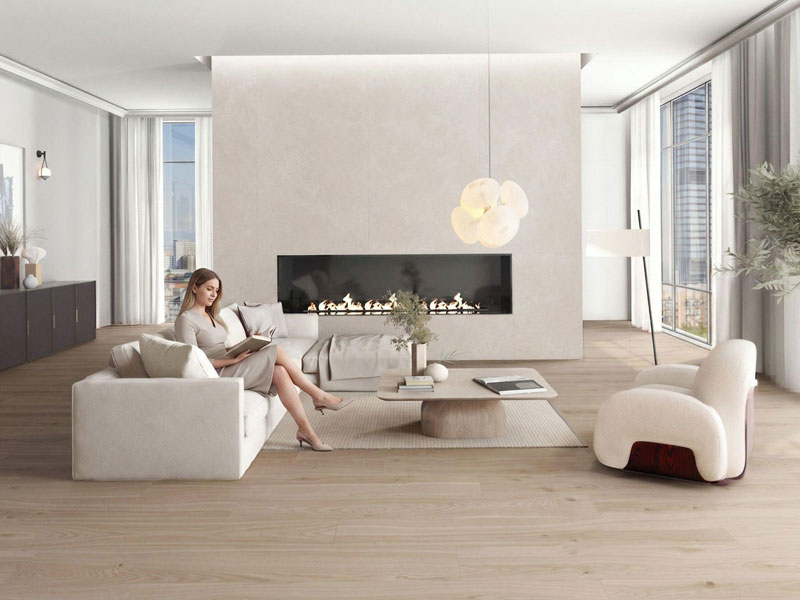
Miro Timber brings natural warmth and texture
Which Tiles Work Best Behind a TV?
Low-glare surfaces are generally easier to integrate behind a television.
Suitable options include:
- Matt stone-look porcelain
- Soft concrete looks
- Subtle textured tile
- Darker neutral tones
Highly reflective surfaces can produce stronger light reflections around a screen, especially in rooms with large windows.
When Does Marble Work on a Fireplace Wall?
Marble-look porcelain works particularly well when the fireplace has simple proportions and the surrounding furniture is restrained.
Large-format or slab surfaces can reduce visible joints and make the fireplace read as one architectural element rather than a tiled patch.
The vein direction should be reviewed before installation so the movement feels intentional around the opening.
How Should Tile Joints Align With Joinery?
Joint lines should relate to:
- TV cabinet edges
- Fireplace opening
- Shelving divisions
- Vertical wall panels
- Built-in joinery
Careful alignment creates a more custom architectural appearance.
Which Tile Colours Work Best in a Living Room?
Colour selection should respond to light, furniture and adjacent rooms.
Why Do Beige and Warm Neutrals Work Well?
Beige, sand, ivory and warm greige create a softer base than stark white or cool grey.
These colours pair naturally with:
- Oak
- Walnut
- Linen
- Cream upholstery
- Brass
- Bronze
Warm neutrals are particularly useful where the living room needs to feel relaxed rather than formal.
When Do Grey Tiles Work Better?
Grey works well in more architectural interiors.
Grey stone surfaces pair effectively with:
- Black window frames
- Charcoal sofas
- Stainless steel
- Dark joinery
- Cool white walls
The undertone should still be checked carefully, because blue-grey and warm grey can produce very different results beside timber.
Can Dark Tiles Work in Living Rooms?
Yes, especially in larger rooms with strong natural light.
Dark charcoal or deep stone floors can create a dramatic base, but lighter walls, rugs and upholstery help prevent the room from feeling visually heavy.
How Should Tile Finish Be Chosen for a Living Room?
Finish influences both appearance and the way light moves across the room.
When Is Matt the Better Choice?
Matt finishes generally create a softer, quieter look.
Matt surfaces work well in:
- Contemporary interiors
- Natural material palettes
- Informal living rooms
- High-light environments
Lower reflectivity also helps furniture and artwork remain visually dominant.
When Does Polished Tile Work Well?
Polished surfaces can suit formal and more expressive interiors.
They reflect natural and artificial light more strongly, which can make a large room feel brighter and more luxurious.
However, reflections and visible marks should be considered before using a polished finish across a large family living area.
When Does a Silk or Honed Finish Make Sense?
Silk and honed finishes sit between matt and polished.
They can provide gentle reflectivity without producing a mirror-like effect, which works well for quiet luxury interiors.
How Does Tile Size Change the Living Room?
Tile scale influences how continuous or segmented the floor appears.
Do Large-Format Tiles Make a Living Room Feel Bigger?
Large formats can reduce grout lines and create a calmer visual plane.
Common formats such as 600×1200 work especially well in open-plan living areas because the tile proportion feels architectural without becoming difficult to integrate with furniture.
When Does 600×600 Work Better?
600×600 is a useful format for:
- Medium-sized rooms
- More regular room geometry
- Modular layouts
- Areas with several doorways
The grid remains controlled without visually dominating the interior.
When Should Porcelain Slabs Be Used?
Porcelain slabs are particularly effective on walls rather than across conventional residential floors.
Good uses include:
- Fireplace walls
- TV walls
- Tall architectural panels
- Feature surrounds
Marvel X, for example, currently includes 1200×2780 porcelain slab formats alongside conventional tile sizes.
How Should Tile Layout Relate to Furniture?
The tile grid should follow the architecture rather than individual pieces of furniture.
Should Tile Lines Follow the Sofa or Room Axis?
The longest room axis or strongest architectural sightline is usually the better reference.
A sofa or rug may move over time, while walls, glazing and joinery remain fixed.
Why Should Cuts Be Planned Around Built-In Joinery?
Poorly placed narrow cuts can become visually noticeable beside:
- TV cabinets
- Fireplaces
- Sliding doors
- Columns
- Built-in shelving
Early set-out helps keep perimeter cuts more balanced.
How Should Living Room Tiles Work With Furniture and Joinery?
Tile colour and movement should support the furniture rather than compete with it.
Which Tiles Work Best With Timber Furniture?
Timber pairs naturally with:
- Limestone-look porcelain
- Warm grey stone
- Beige surfaces
- Subtle terrazzo
The natural grain of timber already adds visual movement, so a quieter floor is usually easier to coordinate.
Which Tiles Work With Dark Furniture?
Black or charcoal furniture benefits from a lighter floor.
Useful choices include:
- Ivory stone
- Pale greige
- Light grey
- Soft marble looks
The contrast helps maintain definition between furniture and flooring.
How Should Rugs Work With Tile Floors?
Rugs add acoustic softness and define seating zones.
A rug can also introduce pattern or colour without requiring the tile itself to become decorative.
How Should Open-Plan Living and Dining Areas Use Tile?
Open-plan interiors usually benefit from material continuity.
Should Living and Dining Areas Use the Same Tile?
In most cases, yes.
A continuous floor:
- Connects spaces visually
- Reduces thresholds
- Makes the room feel broader
- Simplifies material hierarchy
Furniture and lighting can create zoning without changing flooring.
How Can Different Zones Be Defined Without Changing Tiles?
Use:
- Rugs
- Pendant lights
- Sofa orientation
- Dining table placement
- Ceiling details
- Joinery
This maintains continuity while still giving each zone a distinct function.
How Can Living Room Tiles Connect With Outdoor Areas?
Indoor-outdoor relationships are especially important in contemporary Australian homes.
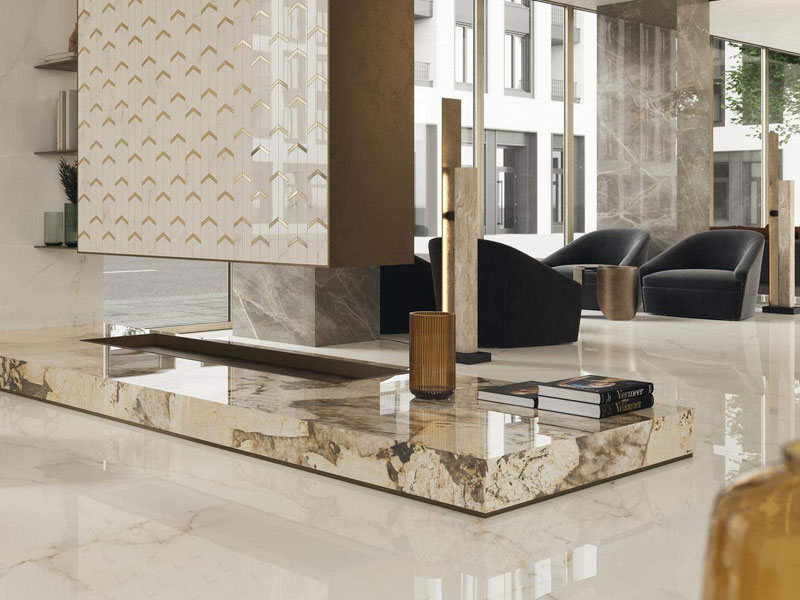
Marvel X creates a refined marble statement
When Does an Indoor-Outdoor Tile Family Help?
Twilight is a stone-look porcelain family available in P3 Matt and P5 External Paver formats, and Showtile lists living areas and outdoor spaces among its suitable applications.
Using related indoor and outdoor surfaces can create stronger visual continuity through large sliding doors.
The external finish should still be selected according to outdoor performance requirements rather than simply matching the interior appearance.
Should Indoor and Outdoor Tiles Be Identical?
Not necessarily.
A better approach is often:
- Same colour family
- Similar stone character
- Related format
- Application-specific finish
The same principle applies when coordinating interiors with the material language established through modern front wall tiles design: continuity should come from undertone and character rather than repeating the exact same surface everywhere.
Which Living Room Tile Style Best Fits the Interior?
| Interior Direction | Recommended Surface | Best Use | Overall Effect |
| Quiet luxury | Soft stone-look porcelain | Main floor | Calm and refined |
| Contemporary | Grey stone-look tile | Floor / wall | Clean and architectural |
| Formal luxury | Marble-look porcelain | Feature wall | Elegant and expressive |
| Mid-century | Terrazzo-look tile | Main floor | Graphic and characterful |
| Warm modern | Beige stone-look tile | Open-plan floor | Soft and inviting |
| Minimalist | Large-format porcelain | Main floor | Seamless and restrained |
| Statement interior | Porcelain slab | TV / fireplace wall | Bold and premium |
What Technical Details Matter When Choosing Living Room Tiles?
Visual design should be supported by careful installation planning.
Why Does Substrate Preparation Matter?
Large-format tiles need a sufficiently flat substrate to support a clean finished surface.
The installation strategy should consider:
- Substrate preparation
- Adhesive
- Movement joints
- Tile format
- Joint width
Why Should Grout Colour Be Selected With the Tile?
Low-contrast grout creates stronger visual continuity.
Higher contrast grout makes the tile grid more visible and may suit intentionally graphic schemes.
Why Should Samples Be Viewed Under Living Room Lighting?
Tile appearance can change under:
- Daylight
- Warm downlights
- Floor lamps
- Evening lighting
Samples should be viewed beside furniture, timber and joinery materials whenever possible.
For homes where several rooms need to share one coordinated material language, working with a specialist designer tiles company can help compare scale, finish and undertone across the wider interior rather than selecting the living room independently.
What Should Be Checked Before Ordering Living Room Tiles?
Before ordering, confirm:
- Main flooring material
- Feature wall location
- Tile size
- Surface finish
- Furniture palette
- Joinery colour
- Lighting conditions
- Grout colour
- Tile orientation
- Fireplace alignment
- TV wall set-out
- Open-plan transitions
- Indoor-outdoor relationship
- Wastage allowance
- Spare tiles
If the living room opens directly onto an upper terrace or entertaining deck, the separate guide to rooftop tiles design covers drainage, outdoor finishes and paver considerations more specifically.
How Can Showtile Materials Be Curated for Different Living Room Moods?
The Showtile tile collection includes stone-look, marble-look, terrazzo, timber-look and large-format surfaces, allowing the material choice to follow the interior mood rather than one fixed style.
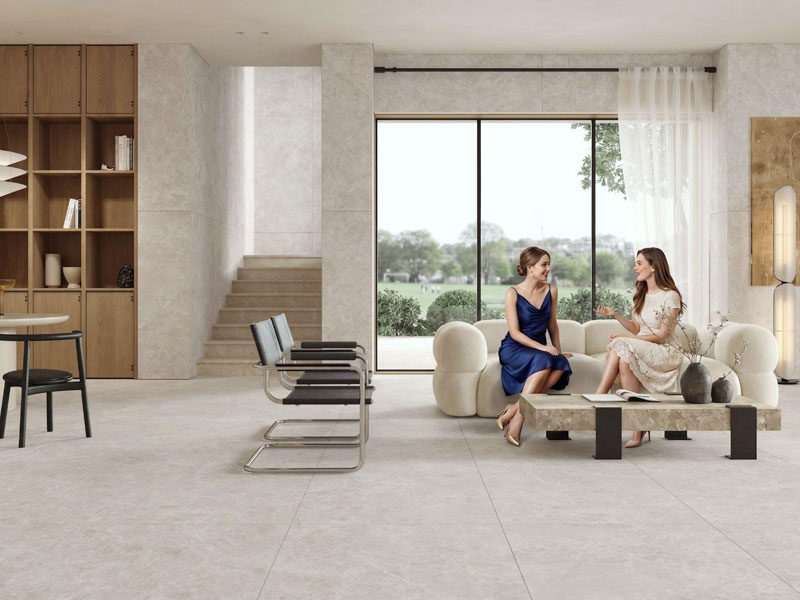
Midnight adds bold depth to modern living spaces
For a calm contemporary room, Valencia offers a restrained natural-stone character in warm and grey tones. For a stronger focal point, Marvel X provides marble-inspired surfaces and slabs suitable for feature walls.
Where the living room needs a closer relationship with the landscape, Twilight can connect indoor and outdoor material language. New Valley is another stone-look porcelain option with coordinated indoor and exterior formats, including P4 and P5 finishes and 20 mm pavers.
Rather than using the most dramatic tile available, compare each surface against the sofa, rug, joinery, daylight and adjoining rooms. A well-resolved living room often depends more on the relationship between materials than on any individual product.
How Can the Right Tile Choice Strengthen a Living Room Interior?
A well-designed living room feels balanced when the floor, walls, furniture and architectural details support the same visual direction. Tile should contribute to that structure through scale, tone and surface character rather than becoming the only feature in the room.
Showtile offers stone-look porcelain, marble-inspired finishes and large-format surfaces that can be matched to different interior moods, from quiet contemporary spaces to more expressive feature-led schemes. Selecting the tile alongside joinery, upholstery, lighting and adjoining finishes helps create a living room with stronger visual continuity and a more resolved overall character.
Contact Showtile
📍 Showroom: 65 Canterbury Road, Bankstown NSW 2200, Australia
📞 Phone: +61 2 9709 5836
✉️ Email: sales@showtile.com.au
🌐 Website: https://showtile.com.au/



