


Floor Tiles Design for Living Room: How to Choose the Right Surface
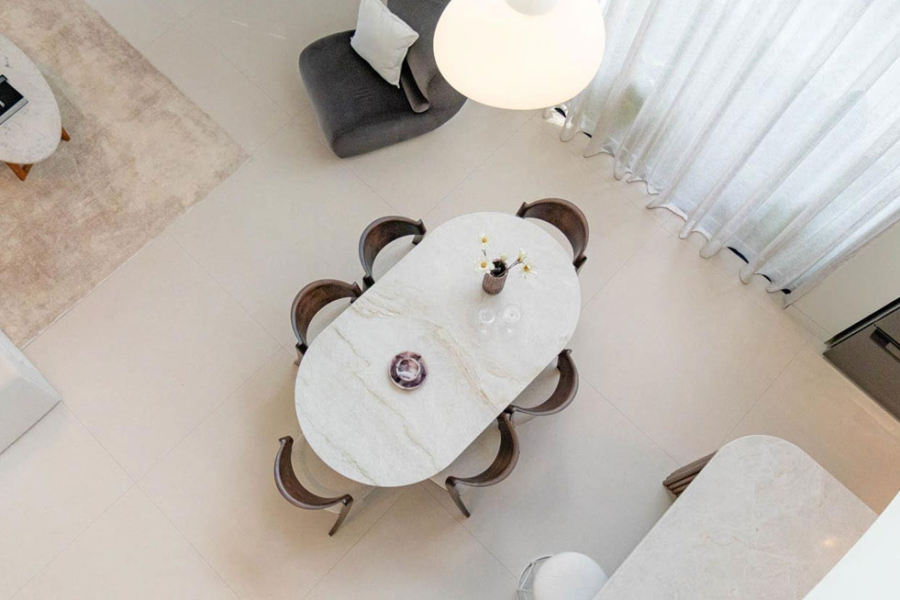
The right floor tiles design for living room can shape the way the entire space feels, from visual scale and furniture placement to open-plan flow. Showtile offers premium stone-look, marble-inspired and timber-look surfaces that help create living room floors with stronger continuity, balanced proportions and a more considered finish.
What Makes a Living Room Floor Tile Scheme Work Well?
A refined living room floor creates visual continuity without becoming monotonous. Tile pattern, colour and joint layout should support the room’s scale while leaving enough visual space for furniture, rugs, artwork and joinery.
Why Should the Floor Act as the Main Visual Base?
The floor connects almost every element within the living room. Sofa placement, dining furniture, circulation paths and built-in cabinetry all sit within the same visual plane.
A strong flooring base usually has:
- Controlled pattern
- Consistent undertone
- Appropriate scale
- Restrained grout
- A finish suited to available light
Stone-inspired surfaces are particularly effective because they provide enough natural variation to create depth without competing with furnishings.
How Much Pattern Is Too Much on a Living Room Floor?
Pattern intensity should generally increase as the amount of visible floor decreases.
A large open-plan living room usually benefits from subtle movement because broad surfaces amplify every vein or aggregate. A smaller room can accommodate stronger marble veining or terrazzo character when furniture covers more of the floor.
The floor should still feel cohesive when viewed from the entry or adjoining dining area.
Why Should Tiles Be Compared With Furniture Samples?
Undertones can create problems even when individual materials look attractive on their own.
Compare floor samples directly with:
- Sofa fabric
- Timber veneer
- Rug colours
- Wall paint
- Metal finishes
- Curtains
This makes warm-versus-cool differences easier to identify before ordering.
Which Floor Tile Material Works Best in a Living Room?
Different materials create different visual effects. Stone-look porcelain is highly adaptable, marble-look porcelain creates more drama, while timber and terrazzo references can bring warmth or stronger personality.
When Do Stone-Look Porcelain Tiles Work Best?
Stone-look floor tiles are one of the most versatile choices for contemporary living rooms.
Valencia offers stone-inspired porcelain in formats including 600×600 and 600×1200, making the collection suitable for both medium-sized rooms and larger open-plan spaces.
Stone-look flooring works well with:
- Timber cabinetry
- Linen or boucle sofas
- Neutral rugs
- Black metal
- Warm white walls
- Natural stone accessories
The restrained surface movement creates a premium appearance without locking the room into one specific interior style.
When Does Marble-Look Flooring Make Sense?
Marble-look floor tiles suit interiors where the floor is intended to feel more formal or expressive.
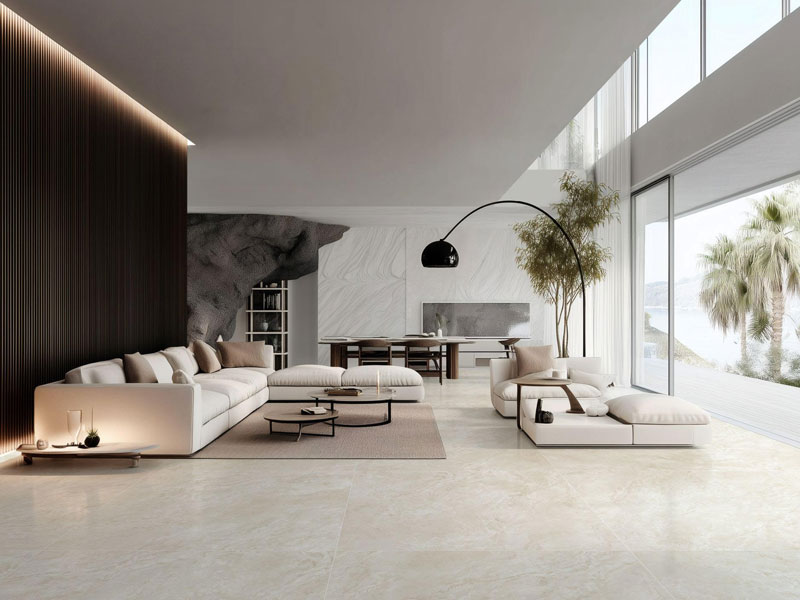
Balanced tile choices for a cohesive interior
Marvel X offers Calacatta, Fior Di Bosco and Grey Cloud marble interpretations across several porcelain formats.
Marble-look flooring works especially well in:
- Larger living rooms
- Formal entertaining spaces
- Minimal interiors
- Rooms with restrained furniture
- Luxury open-plan homes
Strong veining should be reviewed across several tiles because repeated marble movement becomes much more noticeable over a broad floor.
When Does Timber-Look Tile Work Better?
Timber-look porcelain can soften a room visually while retaining a tiled surface.
This direction works particularly well in:
- Family living rooms
- Warm contemporary interiors
- Organic modern schemes
- Rooms with pale walls
Showtile’s Timber Look Tiles include options such as Miro Timber and other plank-inspired surfaces.
Plank orientation should follow the strongest room axis rather than individual furniture placement.
When Can Terrazzo Flooring Work Well?
Terrazzo suits living rooms that need more character.
A fine or medium aggregate works best across larger areas because the floor retains visual texture without appearing excessively busy.
Terrazzo can pair effectively with curved furniture, warm timber, sculptural lighting and mid-century-inspired interiors.
Which Floor Tile Colour Works Best in a Living Room?
Colour influences how open, warm or dramatic a living room feels. The best choice depends on natural light, furniture tone and adjoining spaces.
Why Do Beige and Greige Floors Work So Well?
Beige, ivory, limestone and warm greige create an adaptable neutral base.
These tones coordinate naturally with:
- Oak
- Walnut
- Cream upholstery
- Linen
- Brass
- Bronze
- Warm white walls
Warm neutrals are especially effective when the living room needs to feel relaxed rather than highly formal.
When Do Grey Floor Tiles Work Better?
Grey works well in more architectural interiors.
Grey flooring can support:
- Black frames
- Charcoal furniture
- Stainless steel
- Dark joinery
- Concrete-inspired finishes
Always distinguish warm grey from blue-grey. The wrong undertone can make adjacent timber or upholstery appear disconnected.
Can Dark Floor Tiles Work in Living Rooms?
Yes, particularly in large rooms with generous daylight.
Dark flooring creates stronger contrast and can make lighter sofas, rugs and walls stand out. The visual weight should be balanced carefully so the room does not feel unnecessarily heavy.
What Tile Size Works Best for a Living Room Floor?
Tile size should respond to the dimensions of the room rather than follow a rule that larger is always better.
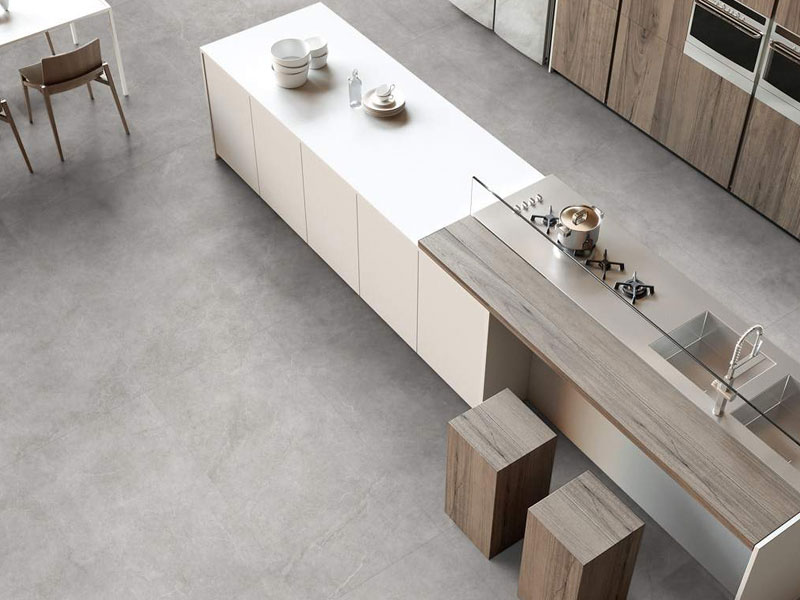
Refined flooring for modern living spaces
When Does 600×600 Work Best?
600×600 is a flexible format for:
- Medium living rooms
- Regular room shapes
- Areas with several doorways
- Modular floor grids
The square format creates a predictable layout and can reduce awkward cuts in more complex rooms.
When Does 600×1200 Create a Better Result?
600×1200 works particularly well in:
- Large open-plan rooms
- Long living-dining areas
- Spaces with broad glazing
- Homes with strong linear architecture
Fewer grout joints create a calmer surface and make stone-look patterns read more naturally across the room.
Valencia is useful for this type of planning because the collection supports both 600×600 and 600×1200 formats.
Do Very Large Tiles Always Make a Room Feel Bigger?
No.
Oversized tiles can create awkward cuts around:
- Columns
- Doorways
- Stair edges
- Kitchen islands
- Built-in cabinetry
A slightly smaller format may produce better proportions if it aligns more cleanly with the architecture.
How Should Living Room Floor Tiles Be Laid Out?
Tile layout should relate to permanent architectural elements rather than movable furniture.
Should Tile Direction Follow the Longest Room Axis?
Usually, yes.
The strongest references are:
- Longest sightline
- Main glazing
- Hallway connection
- Kitchen axis
- Room geometry
Furniture may change over time, while the architectural axis remains fixed.
How Should the Floor Grid Relate to Doors and Joinery?
A premium floor should avoid unnecessary sliver cuts.
Before installation, review the tile grid around:
- Sliding doors
- Built-in cabinets
- Fireplace edges
- Columns
- Kitchen joinery
- Hallway openings
Moving the starting line slightly can often produce more balanced cuts at both sides of the room.
Should Large Tiles Use a Straight Grid?
A straight grid often works well with modern stone-look and large-format porcelain because the layout feels calm and architectural.
Offsets can also work where appropriate, but the final pattern should follow product and installation recommendations.
How Should Grout Be Chosen for Living Room Floors?
Grout affects the way the entire tile surface is perceived.
Why Does Low-Contrast Grout Create Better Continuity?
Low-contrast grout reduces the visual prominence of the tile grid.
For beige stone-look tiles, choose a grout tone close to the tile background. For grey surfaces, a related warm or cool grey can produce the same effect.
This approach is especially useful with large-format porcelain.
When Does Contrast Grout Work?
Contrast grout suits intentionally graphic schemes, small formats or decorative terrazzo.
For quiet luxury interiors, strong grout contrast can introduce more grid than the room needs.
How Wide Should Grout Joints Be?
Joint width should follow the tile specification, substrate conditions, installation standards and project requirements.
Avoid selecting joint width purely for visual reasons.
Which Tile Finish Works Best on a Living Room Floor?
Finish affects reflection, tactility and the way artificial light appears across the room.
Why Is Matt a Strong Default Choice?
Matt floor tiles are versatile because they reduce glare and work naturally with timber, textiles and soft furnishings.
Matt finishes suit:
- Contemporary homes
- Casual living rooms
- Natural palettes
- High-light environments
When Does Silk or Honed Look More Premium?
Silk and honed finishes introduce subtle reflection without the stronger shine of polished porcelain.
These surfaces work well in quiet luxury interiors where the floor should feel tactile and refined.
When Can Polished Flooring Work?
Polished flooring can suit formal living rooms and brighter luxury schemes.
Before selecting polished surfaces, consider:
- Window reflections
- Evening lighting
- Cleaning expectations
- Visibility of marks
The finish should reinforce the intended atmosphere rather than simply appear more luxurious in isolation.
How Should Floor Tiles Work With Sofas, Rugs and Joinery?
A strong floor gives furniture enough contrast to remain visually distinct.
Which Floors Pair Best With Timber Furniture?
Useful combinations include:
- Warm beige porcelain + oak
- Limestone look + walnut
- Greige stone + pale timber
- Soft grey + darker timber
The floor should complement the timber undertone instead of competing with the grain.
Which Floor Colours Pair With Dark Sofas?
Charcoal, black or dark brown sofas generally benefit from lighter flooring such as:
- Ivory
- Pale stone
- Soft beige
- Light greige
The contrast helps define the seating area.
How Should Rugs Sit on a Tiled Floor?
Rugs introduce acoustic softness and define the seating zone.
The floor remains the permanent architectural base, while the rug can carry more colour or pattern and can be replaced as the interior evolves.
For a broader discussion of flooring, walls and furniture as one complete room composition, the guide to design tiles for living room explores the wider material relationship beyond the floor itself.
How Should Open-Plan Living and Dining Floors Be Designed?
Open-plan spaces usually benefit from one continuous floor rather than several material changes.
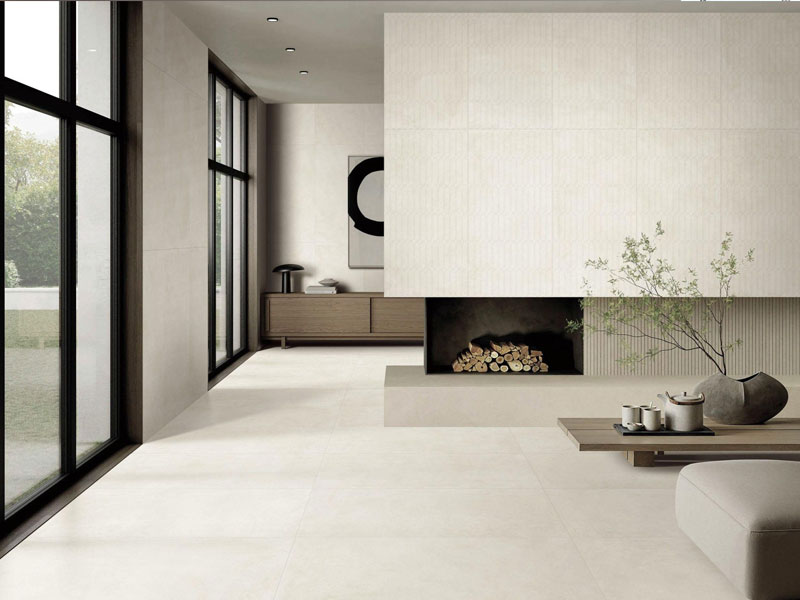
Clean surfaces that enhance everyday living
Should Living and Dining Areas Use the Same Tile?
In most cases, yes.
One surface can:
- Create stronger continuity
- Reduce thresholds
- Make the plan feel larger
- Simplify furniture zoning
The dining zone can still be defined through pendant lighting, furniture position or a rug.
Should the Kitchen Continue the Same Tile?
A shared floor can work well when the living, dining and kitchen zones are directly connected.
This creates a stronger architectural field and prevents each area from feeling like a separate room.
How Can Zones Be Defined Without Changing Flooring?
Use:
- Rugs
- Pendant lights
- Furniture orientation
- Kitchen island
- Ceiling treatments
- Joinery
Material continuity often feels more refined than changing tiles between every function.
How Can Living Room Flooring Connect With Hallways and Entry Areas?
Flooring continuity should extend beyond the living room when the architecture supports it.
Should the Same Tile Continue Into the Hallway?
Often, yes.
Continuing the same tile can:
- Strengthen circulation
- Reduce visual breaks
- Make the ground floor feel broader
- Simplify thresholds
How Should Flooring Transition Near Bedrooms or Stairs?
Material changes should occur at logical architectural boundaries such as:
- Door lines
- Stair edges
- Corridor thresholds
The transition should feel deliberate rather than resulting from tile availability.
How Can Entry Flooring Lead Into the Living Room?
Using the same floor from the entrance into the living room creates a clear visual journey through the home.
Projects aiming for a more premium material language can also draw on principles discussed in luxury tiles Melbourne, particularly around surface scale, material restraint and coordination with surrounding finishes.
Which Living Room Floor Style Best Fits the Interior?
| Interior Direction | Recommended Floor | Best Format | Overall Effect |
| Quiet luxury | Warm stone-look porcelain | 600×1200 | Calm and refined |
| Contemporary | Grey stone-look porcelain | 600×600 / 600×1200 | Clean and architectural |
| Formal luxury | Marble-look porcelain | Large format | Elegant and expressive |
| Warm modern | Timber-look porcelain | Plank format | Soft and inviting |
| Mid-century | Terrazzo-look porcelain | Medium-large format | Graphic and distinctive |
| Minimalist | Low-pattern porcelain | Large format | Seamless and restrained |
What Technical Details Matter for Living Room Floor Tiles?
A premium material still depends on careful installation.
Why Does Substrate Flatness Matter?
Large-format tiles require a sufficiently flat base.
Uneven substrates can make alignment more difficult and reduce the clean visual effect that large porcelain formats are intended to create.
Why Do Movement Joints Matter?
Flooring systems experience movement from structural conditions and temperature changes.
Movement joints should be integrated into the installation strategy rather than treated as an afterthought.
Why Should Different Tile Faces Be Mixed During Installation?
Stone-look porcelain often includes several face variations.
Mixing tiles from different boxes and reviewing the arrangement before fixing helps prevent repeated patterns from appearing too close together.
Where a project involves several connected rooms, working with a specialist designer tiles company can make it easier to coordinate format, undertone and finish across the wider floor plan.
What Should Be Checked Before Ordering Living Room Floor Tiles?
Before confirming an order, review:
- Tile material
- Colour undertone
- Surface finish
- Room dimensions
- Tile format
- Main sightline
- Layout direction
- Grout colour
- Sofa and rug samples
- Joinery finish
- Living-dining continuity
- Entry and hallway transitions
- Substrate condition
- Movement joint requirements
- Wastage
- Spare tiles
Reviewing these elements together reduces the risk of making individual selections that do not work as one floor system.
How Can Showtile Flooring Be Matched to Different Living Room Styles?
The wider Showtile tile collection provides several flooring directions, allowing the material to be selected according to room proportions, interior mood and adjoining finishes.
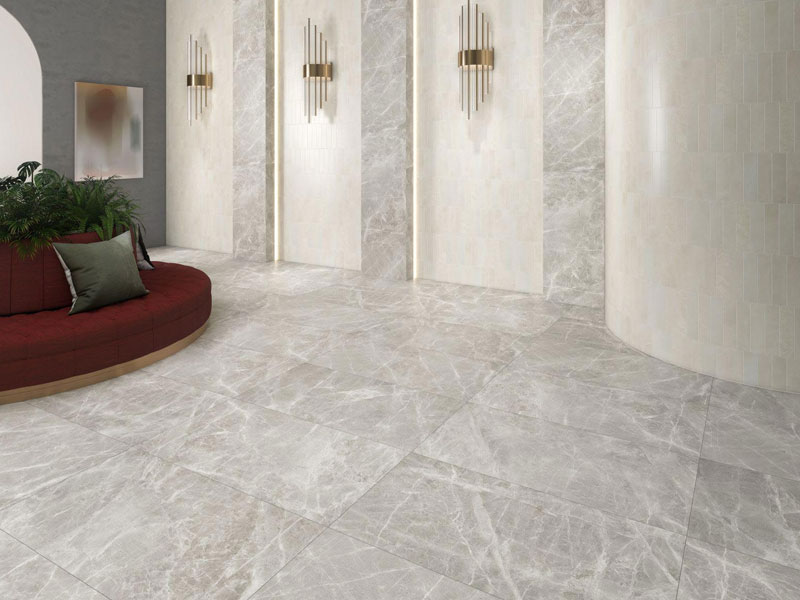
Elegant floor finishes with timeless appeal
For soft architectural interiors, Valencia provides a restrained stone-inspired base that works well with neutral upholstery and timber. Marvel X offers a stronger marble direction for more formal living areas, while timber-look collections can introduce warmer linear character.
Rather than choosing the most dramatic tile sample, compare each option across a larger floor area. Scale, repetition, grout and furniture coverage often change the way a surface is perceived once installed.
Choose the Floor as Part of the Whole Interior
A successful living room floor is not simply a background surface. Format, finish, layout and colour influence how furniture is arranged, how adjoining spaces connect and how the room responds to natural and artificial light.
At Showtile, stone-look porcelain, marble-inspired surfaces, timber-look collections and other premium flooring options can be compared according to the role the floor needs to perform. Selecting the surface as part of the wider interior helps create a living room that feels balanced, practical and visually resolved.
Contact Showtile
📍 Showroom: 65 Canterbury Road, Bankstown NSW 2200, Australia
📞 Phone: +61 2 9709 5836
✉️ Email: sales@showtile.com.au
🌐 Website: https://showtile.com.au/



