


Designer Tiles Rockdale NSW: Premium Surfaces for Distinctive Projects
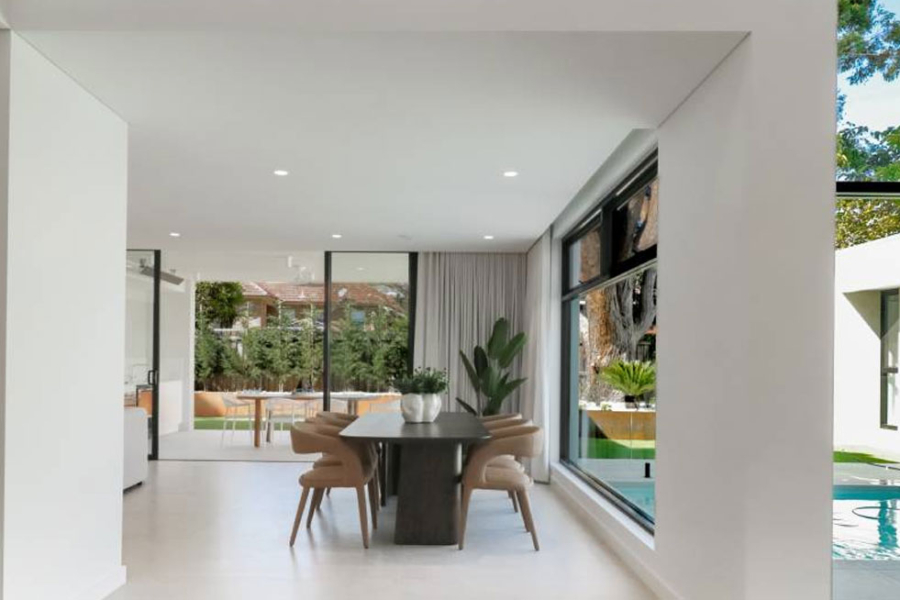
Creating a refined residential or commercial space begins with selecting surfaces that balance appearance, durability and architectural context. For homeowners, builders, architects and interior designers comparing design tiles Rockdale NSW, Showtile offers a curated range of premium porcelain slabs, natural stone, mosaics, wall tiles and outdoor surfaces for distinctive Sydney projects.
Each tile should be assessed according to the room, lighting, maintenance requirements, slip resistance and relationship with surrounding materials. Rockdale customers can browse Showtile’s collections online, request samples and visit the Bankstown showroom to compare colours, textures and formats before placing an order.
Where can Rockdale homeowners find premium designer tiles?
Rockdale homeowners can browse premium tile collections online and visit Showtile’s Sydney showroom in Bankstown for a closer look at finishes, textures and formats. This approach allows customers to shortlist suitable products before making decisions about quantities, layouts and installation.
A premium tile supplier should provide more than individual products. Customers also need clear information about:
- Tile size and thickness
- Surface finish
- Shade and pattern variation
- Recommended applications
- Slip resistance
- Cleaning requirements
- Product availability
- Sample options
- Project quantities
Showtile provides a curated range for renovations, new homes, apartment developments and commercial interiors. The collection is suitable for customers who value considered design, material quality and coordinated architectural finishes.
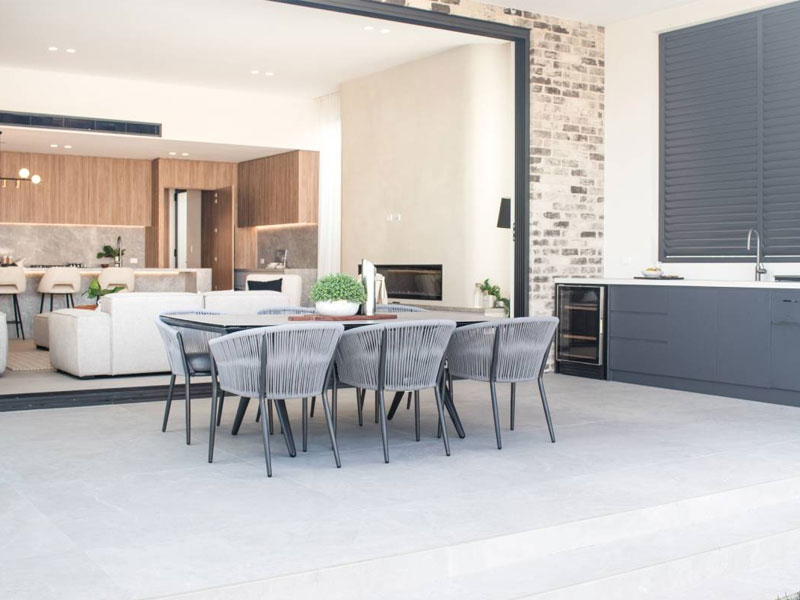
Premium designer tiles for refined Rockdale interiors
Rockdale customers can begin with the Showtile homepage before reviewing specific product categories and project inspiration.
Which designer tiles suit homes and apartments in Rockdale?
The most suitable tiles for Rockdale homes depend on the architectural style, available daylight, room proportions and relationship between indoor and outdoor spaces. Contemporary apartments may benefit from restrained surfaces, while larger homes can accommodate stronger veining, texture and decorative detail.
Which tiles create a calm contemporary interior?
Neutral stone-look porcelain tiles work well in interiors where continuity and visual balance are important. Limestone, travertine, ivory and warm-grey tones can create a refined base without overwhelming furniture, joinery or artwork.
Large tile formats may also make a room feel more continuous because fewer grout lines interrupt the surface. This approach is particularly effective in open-plan living rooms, apartment entrances and connected kitchen areas.
Popular contemporary surface directions include:
- Limestone-look porcelain
- Travertine-look porcelain
- Soft concrete-look finishes
- Warm off-white tiles
- Subtle terrazzo-look surfaces
- Matt large-format floor tiles
A neutral tile does not need to feel plain. Fine texture, controlled tonal variation and realistic surface movement can add depth while preserving a calm interior.
Which tiles add character to kitchens and bathrooms?
Mosaics, subway formats and textured wall tiles introduce detail on a smaller scale. These products are especially useful for splashbacks, shower niches, vanity walls and other areas that need a defined focal point.
Suitable decorative choices include:
- Kit Kat mosaics
- Stacked rectangular tiles
- Handmade-look wall tiles
- Marble mosaics
- Fluted surfaces
- Geometric mosaics
- Small-format feature tiles
Decorative tiles should support the wider palette rather than compete with every other finish. A strong mosaic generally works best when the surrounding floor, walls, cabinetry and benchtop remain visually controlled.
Customers comparing coordinated bathroom surfaces can also review Showtile’s guide to tiles design for washroom for further design direction.
Which tiles are best for a luxury bathroom in Rockdale?
A luxury bathroom should be planned as a complete surface composition. Wall tiles, floor tiles, shower details, vanity finishes and metal fixtures should create one clear visual direction rather than appear as unrelated selections.
A balanced premium bathroom often combines:
- One primary wall surface
- One practical floor finish
- One controlled feature material
- Coordinated grout colours
- A consistent warm or cool undertone
What tiles work well on bathroom walls?
Large-format porcelain is a practical option for expansive bathroom walls because the larger dimensions reduce visual interruption from grout lines. Stone-look porcelain can create a refined appearance while offering more predictable maintenance than some natural materials.
Porcelain slabs can also be considered for:
- Shower walls
- Feature walls
- Vanity surrounds
- Bath backdrops
- Large wet-area surfaces
Customers can explore porcelain slab tiles for surfaces that create stronger visual continuity.
Natural stone may also suit luxury bathrooms where authentic veining, texture and material variation are central to the design. However, natural stone should be assessed carefully for sealing, maintenance and wet-area suitability.
View the natural stone tile collection when comparing marble, travertine and other architectural stone options.
What tiles should be used on bathroom floors?
Bathroom floors need to balance appearance with practical wet-area performance. A tile that looks suitable on a wall may not provide the required grip or finish for a shower floor.
Important considerations include:
- Slip resistance
- Surface texture
- Drainage requirements
- Tile size
- Grout joint layout
- Cleaning routine
- Substrate preparation
Smaller mosaics are often useful in shower zones because additional grout joints can assist with grip and allow the surface to follow the floor fall. Larger matt tiles may suit the main bathroom floor where fewer cuts are required.
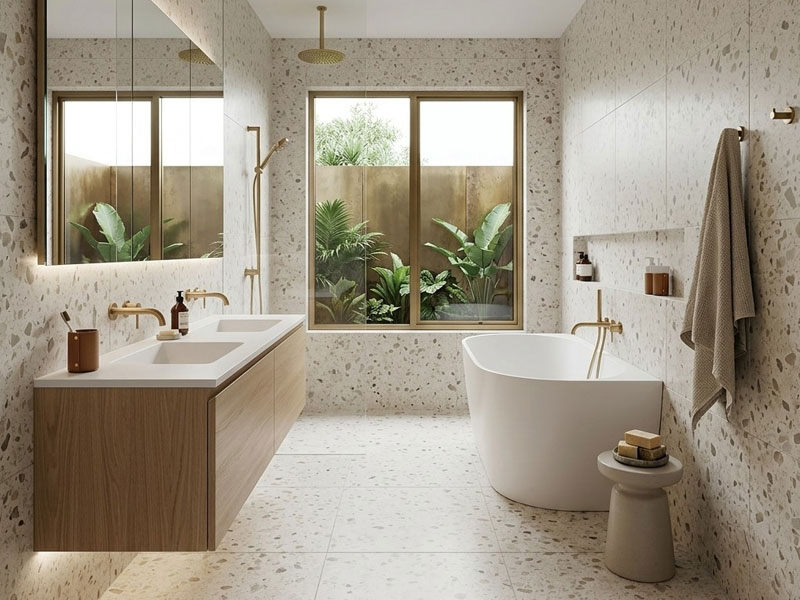
Large-format surfaces create a seamless modern look
Customers should confirm the appropriate slip classification with the builder, installer, architect or certifier before ordering. Showtile’s P4 tile collection provides a useful starting point for areas where slip performance is an important consideration.
How can tiles highlight a freestanding bath?
A freestanding bath can become the visual centre of the room when the surrounding wall uses a distinctive stone, porcelain slab or restrained decorative tile. The surface should frame the bath without making the room feel visually crowded.
Suitable approaches include:
- Extending one stone-look tile from floor to wall
- Using a bookmatched porcelain slab behind the bath
- Creating a narrow mosaic panel
- Continuing the vanity material onto the bath wall
- Selecting one textured tile in a tonal colour
Showtile’s guide to bathtub tiles design explains how scale, placement and surrounding materials influence the final result.
How should Rockdale homeowners choose kitchen tiles?
Kitchen tiles should be selected according to their position and function. Splashbacks, floors and large feature surfaces have different requirements, so one tile type may not suit every part of the kitchen.
| Kitchen area | Main requirement | Suitable tile direction |
| Splashback | Easy cleaning and visual detail | Mosaic, subway or decorative wall tile |
| Floor | Durability and simple maintenance | Porcelain or stone-look tile |
| Island backdrop | Strong architectural statement | Large-format porcelain |
| Open-plan zone | Continuity with living areas | Neutral large-format tile |
| Feature wall | Texture and depth | Natural stone or structured wall tile |
Are porcelain slabs suitable for kitchen splashbacks?
Porcelain slabs can create a seamless splashback with fewer grout joints than small-format tiles. The large surface allows marble-look veining, concrete textures or stone patterns to remain visually uninterrupted.
Porcelain slabs may work particularly well behind:
- Cooktops
- Long kitchen benches
- Butler’s pantry work areas
- Integrated shelving
- Kitchen islands
- Open-plan dining zones
The selected slab should coordinate with the benchtop, cabinetry, flooring and surrounding wall colour. A dramatic vein can become the focal point, while a quieter slab can support timber or coloured joinery.
Which mosaics create a distinctive kitchen feature?
Mosaics provide scale and texture in compact areas. They are often effective where the kitchen needs a decorative element without introducing a second dominant surface across the whole room.
Showtile product options include:
The final selection should consider grout colour as carefully as tile colour. Contrasting grout emphasises the pattern, while tonal grout produces a quieter and more continuous finish.
Which tiles work for outdoor areas in Rockdale NSW?
Outdoor tiles should be selected according to exposure, drainage, traffic and installation conditions. Appearance remains important, but technical suitability must guide the final decision.
Outdoor tile applications may include:
- Courtyards
- Balconies
- Entry paths
- Pool surrounds
- Alfresco dining areas
- Garden steps
- Commercial entrances
What should homeowners check before choosing outdoor tiles?
Customers should confirm whether a product is suitable for the exact installation rather than assuming every porcelain or stone tile can be used outdoors.
Key checks include:
- Required slip rating
- Tile or paver thickness
- Substrate condition
- Drainage and fall
- Edge and coping requirements
- Exposure to rain and direct sunlight
- Pool chemical exposure
- Cleaning and sealing requirements
A visual connection between indoor and outdoor tiles can make a home feel larger. However, the outdoor finish may need greater texture or a different specification, even when the colour and pattern remain similar.
Can natural stone be used in outdoor areas?
Natural stone can provide organic variation and architectural depth in courtyards, entries and landscape areas. Each stone type performs differently, so porosity, sealing, weather exposure and maintenance must be reviewed before installation.
Natural stone should not be selected solely from a small image. Samples allow customers to assess variation, texture and colour under natural light.
What should architects, builders and designers confirm before specifying tiles?
Professional projects require early coordination between design intent, technical performance and product availability. A tile may suit the visual concept but still create complications if thickness, lead time, substrate or batch requirements are not checked.
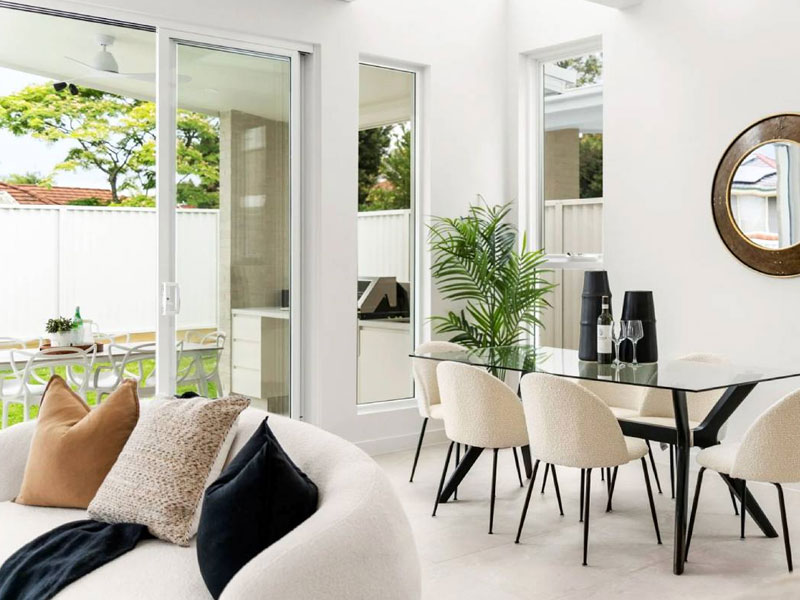
Natural stone textures add depth and character
Before specification, project teams should confirm:
- Nominal and actual tile dimensions
- Thickness
- Finish
- Shade variation
- Edge profile
- Slip classification
- Suitable applications
- Batch availability
- Lead time
- Installation requirements
- Cleaning and sealing instructions
Working with a designer tiles company can help project teams compare architectural surfaces within a broader material palette rather than selecting every product independently.
Why should tile samples be viewed under project lighting?
Tile colour changes under different lighting conditions. Warm artificial light, cool LEDs and direct daylight can each alter the perceived undertone of white, beige, grey, green or natural stone surfaces.
A sample should ideally be viewed:
- Near the intended window
- Beside cabinetry samples
- Against the selected wall paint
- Next to benchtop materials
- Under daytime and evening lighting
Large surfaces with veining or pattern movement may require more than one sample. A single small piece may not represent the full visual range of the product.
Why does batch planning matter?
Tiles produced in separate batches can vary slightly in tone, pattern or calibre. Ordering enough material at the beginning of a project reduces the risk of noticeable variation when additional stock is required later.
Project quantities should include an appropriate allowance for:
- Cutting
- Breakage
- Pattern matching
- Future repairs
- Unusual room shapes
- Diagonal or complex layouts
The installer or project manager should calculate the final allowance according to the tile format and layout.
How can tiles be coordinated across an entire Rockdale property?
A whole-home tile palette should create continuity while responding to the requirements of each room. The goal is not to use the same product everywhere, but to repeat related colours, textures and material cues.
| Space | Primary surface | Supporting feature |
| Entrance | Stone-look porcelain | Textured wall tile |
| Living area | Large-format neutral tile | Natural stone detail |
| Kitchen | Durable porcelain floor | Mosaic splashback |
| Bathroom | Coordinated floor and wall tile | Niche or vanity mosaic |
| Balcony | Textured outdoor porcelain | Matching indoor tone |
| Pool area | Pool-suitable surface | Mosaic or coping detail |
A practical whole-home process is:
- Select one dominant neutral surface.
- Establish a consistent undertone.
- Add one or two feature materials.
- Adjust texture according to wet, dry or outdoor use.
- Review every sample together before ordering.
This method prevents individual rooms from feeling disconnected while still allowing each area to have a distinct purpose.
Are premium tiles worth choosing for a Rockdale renovation?
Premium tiles offer the greatest value when material quality, scale, surface realism and project coordination contribute directly to the architecture. Price alone does not make a product suitable for a high-end project.
A premium surface may provide:
- More refined textures
- Greater format choice
- Controlled colour palettes
- Stronger architectural presence
- Realistic stone or concrete detailing
- Coordinated product families
- Better design flexibility
Customers should evaluate the total result rather than selecting tiles according to unit price alone. The cost of installation, preparation and future replacement also makes correct product selection important.
A well-selected tile can remain visually relevant for many years because the surface supports the proportions and character of the property rather than relying on a short-term trend.
Why choose Showtile for a Rockdale project?
Showtile supports residential and commercial projects with a design-led range of porcelain, natural stone, mosaics, wall tiles and architectural surfaces. The collection is suited to homeowners as well as builders, developers, architects and interior designers.
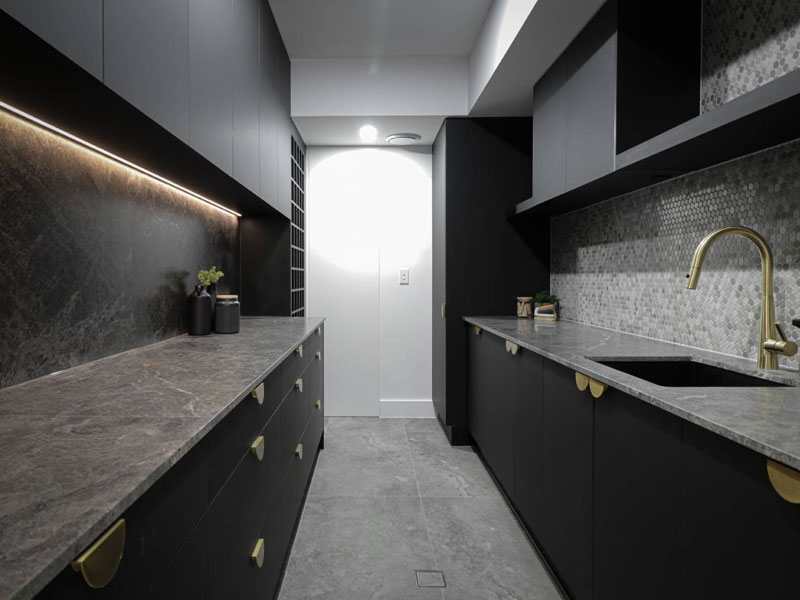
Mosaic details bring personality to kitchens and bathrooms
Customers can use Showtile to:
- Explore curated premium collections
- Compare materials across several applications
- Request samples
- Review product specifications
- Find inspiration for bathrooms, kitchens and outdoor spaces
- Coordinate surfaces for larger developments
- Discuss project quantities and availability
Begin by defining the room, desired style, practical requirements and approximate quantity. Browse the Showtile collection, create a shortlist and compare physical samples alongside cabinetry, paint, stone and lighting selections.
For support with a residential renovation, architectural specification or commercial project, contact the Showtile team to discuss product options, samples and project requirements.
Contact Showtile
📍 Showroom: 65 Canterbury Road, Bankstown NSW 2200, Australia
📞 Phone: +61 2 9709 5836
✉️ Email: sales@showtile.com.au
🌐 Website: https://showtile.com.au/



