


Bathtub Tiles Design: How to Create a Refined Luxury Bathroom
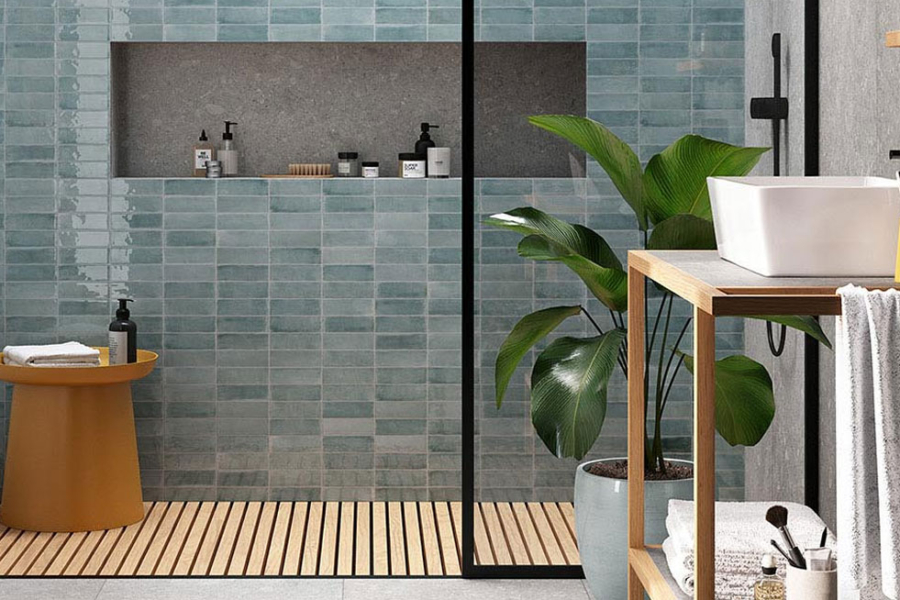
A well-planned bathtub tiles design can transform the bath area into the architectural focal point of a luxury bathroom. Tile colour, format, texture and grout alignment all influence how spacious, calm and cohesive the room feels.
At Showtile, architects, interior designers, builders and homeowners can explore premium porcelain, natural stone, mosaic and feature wall tiles suited to freestanding baths, built-in surrounds and contemporary wet areas. This guide explains how to select the right surface, layout and finish for a refined bathroom that balances visual impact with practical performance.
What Makes a Bathtub Tile Design Feel Luxurious?
A luxurious bathtub area is defined by proportion, material quality and restraint rather than excessive pattern or decoration. Every surface should contribute to a cohesive composition.
Effective luxury bathroom tiles usually share several qualities:
- A controlled colour palette
- Consistent or intentional tonal variation
- Well-planned grout alignment
- A finish that responds softly to light
- A scale suited to the bathtub and room
- A visual connection with the floor, vanity and shower
The position of every grout line matters. Grout joints can align with the edge of the bathtub, recessed niche, vanity, window or shower screen to create a deliberate architectural rhythm.
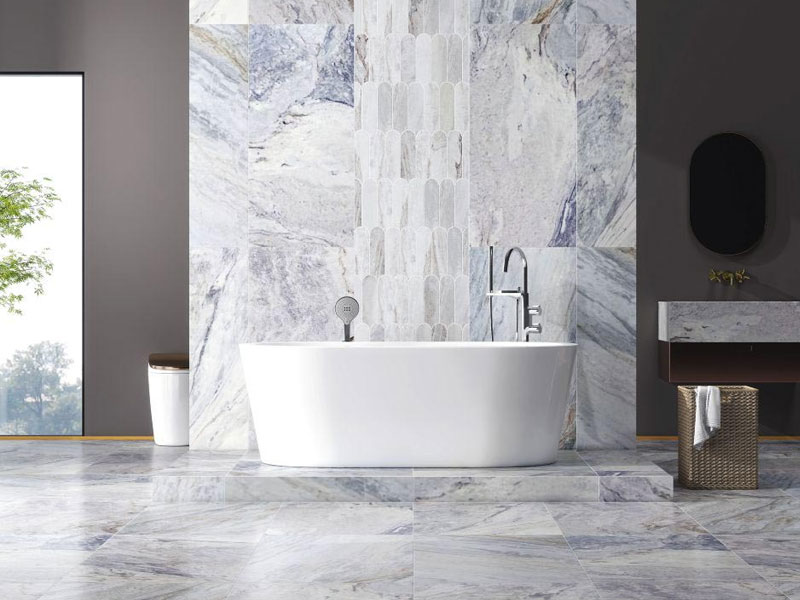
Large-format tiles create a calm bathtub backdrop
Material selection should also consider the surrounding finishes. Warm stone-look tiles may pair naturally with a timber vanity and brushed brass tapware, while mineral-grey porcelain can complement chrome, blackened metal or a contemporary stone benchtop.
Luxury comes from resolving these relationships rather than adding more decorative elements.
Which Tiles Work Best Around a Bathtub?
Porcelain, natural stone, stone-look tiles and mosaics are among the most suitable choices for a premium bathtub area. Each material creates a different visual effect and involves different maintenance considerations.
| Tile type | Design character | Recommended application | Main consideration |
| Porcelain | Refined and consistent | Walls, floors and bath surrounds | Select a suitable finish and format |
| Natural stone | Organic and unique | Feature walls and luxury surrounds | May require sealing |
| Stone-look porcelain | Natural appearance with technical consistency | Floor-to-ceiling applications | Plan the direction of the veining |
| Mosaic | Detailed and tactile | Niches, curves and small feature areas | More grout requires more cleaning |
| Terrazzo-look tile | Contemporary and expressive | Floors and selected walls | Control the scale of the aggregate pattern |
| Textured wall tile | Sculptural and subtle | Wall behind a freestanding bathtub | Consider cleaning near splash zones |
Porcelain is often selected for bathtub surround tiles because the material offers durability, moisture resistance and a wide choice of colours, formats and finishes.
Natural stone introduces individual markings and variation that cannot be completely replicated. However, stone should be assessed according to porosity, sealing requirements and the maintenance expectations of the project.
Designers can compare porcelain slabs, stone-look surfaces, mosaics, natural stone and other premium materials through the Showtile tile collection. Showtile’s range includes multiple surface categories for residential, commercial and hospitality projects.
Should Bathtub Tiles Continue from the Floor to the Wall?
Continuing the same tile from the bathroom floor onto the bathtub wall creates greater architectural continuity. This approach reduces visual interruption and can make a compact bathroom appear wider and more composed.
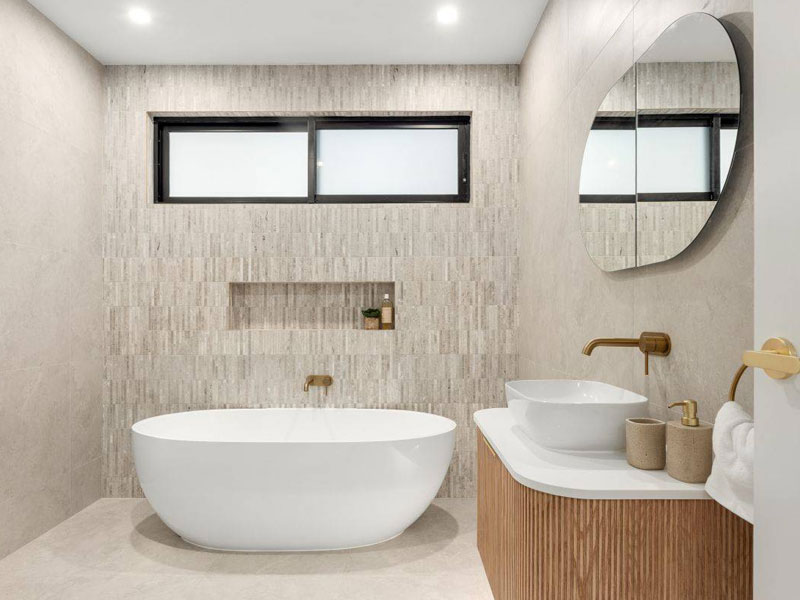
Coordinated tiles connect the bath, shower and floor
Floor-to-wall continuity works especially well in:
- Contemporary ensuites
- Minimalist bathrooms
- Small rooms with limited natural light
- Open bathroom layouts
- Spa-inspired interiors
- Bathrooms with a freestanding bathtub
Using one tile does not mean every surface needs an identical appearance. Designers can use the same colour family in different formats or finishes.
For example, a matt large-format porcelain tile may cover the main floor and walls, while a small mosaic in the same tone can be used inside the shower or recessed niche. The bathroom remains cohesive without becoming visually flat.
A material transition can still be effective when the transition follows a clear architectural boundary. A change behind the bathtub, inside a niche or across a defined shower zone feels more deliberate than an arbitrary break halfway across a wall.
Are Large-Format Tiles Suitable for Bathtub Walls?
Yes. Large-format bathroom tiles are well suited to walls around a bathtub because they reduce the number of grout lines and allow a stone, concrete or mineral-inspired surface to read more clearly.
Large tiles can help:
- Create a calmer visual field
- Make walls appear taller or wider
- Showcase subtle veining
- Reduce visual fragmentation
- Support a refined, gallery-like atmosphere
- Simplify routine grout maintenance
A large-format tile should still be selected according to the proportions of the room. The largest available size is not automatically the best option. Tile cuts, wall dimensions, access restrictions and fixture positions must be studied before ordering.
The installation plan should address:
- The starting point of the tile layout
- The position of the bathtub and tapware
- The placement of windows and niches
- The size of cuts at external corners
- The alignment between walls and floors
- The direction of veins or surface markings
Professional substrate preparation is particularly important because larger tiles require flat, properly prepared walls. Poor surface preparation can affect alignment, edge consistency and the quality of the finished installation.
How Can a Feature Wall Behind the Bathtub Be Designed?
A feature wall behind the bathtub should frame the bathtub without overpowering its form. The most successful feature walls create depth through texture, scale or controlled tonal movement rather than extreme colour contrast.
Stone-look porcelain
A limestone, travertine or marble-inspired porcelain surface creates an elegant backdrop while offering greater consistency and simpler maintenance than many natural materials.
The Showtile stone-look tile collection is curated for designers, architects and builders who want the warmth of natural surfaces with the technical control of architectural porcelain.
Natural stone
Natural stone bathroom tiles give every wall an individual appearance. Limestone, marble and travertine can introduce softness, subtle fossils, mineral markings and variation in tone.
Natural stone is particularly effective when the bathtub wall needs to become the material focal point of the room. Explore Showtile natural stone tiles for premium residential and commercial applications.
Textured wall tiles
Fluted, ribbed, concave or three-dimensional tiles create depth through changing shadow. A textured surface becomes especially effective when paired with concealed lighting or natural light from a side window.
Showtile’s feature wall tiles include surfaces designed to bring rhythm and architectural weight to bathrooms and other interior spaces. Matt, honed and lightly textured surfaces can absorb light softly and create depth without relying on a high-gloss finish.
Mosaic compositions
Mosaic bathroom tiles work best as a controlled accent. Stone mosaics, kit kat tiles, penny rounds and geometric formats can be used behind the bath, inside a niche or around a curved built-in surround.
Limiting mosaic tiles to one carefully selected surface helps preserve visual calm.
What Colours Work Best for Bathtub Tiles?
The best bathtub tile colour depends on the amount of light, the bathtub finish and the surrounding materials. Warm whites, limestone beige, taupe, soft grey, muted green and charcoal are all suitable for premium bathrooms when the undertones are coordinated.
| Colour palette | Effect within the bathroom | Complementary materials |
| Warm white | Soft, bright and timeless | Pale oak, travertine and bronze |
| Limestone beige | Calm and grounded | Timber, cream stone and brushed brass |
| Soft taupe | Warm and sophisticated | Walnut, aged brass and off-white |
| Mineral grey | Contemporary and restrained | Chrome, black metal and concrete |
| Muted green | Natural and restorative | Timber, white porcelain and brushed nickel |
| Deep charcoal | Dramatic and intimate | Pale stone, warm lighting and light joinery |
A warm neutral palette is especially suitable for spa bathroom design because closely related colours reduce visual noise.
White tiles require careful coordination. A cool white bathtub can look disconnected against creamy wall tiles, while a warm white bath may appear yellow beside blue-based porcelain. Tile samples should therefore be viewed next to the actual bath, vanity finish, benchtop and tapware.
Showtile’s current design guidance highlights stone, porcelain and mineral textures with subtle veining, controlled variation and honed finishes as important directions for refined architectural interiors.
How Should Tiles Be Selected for a Freestanding Bathtub?
A freestanding bathtub tiles concept should allow the form of the bathtub to remain visually clear. The tiles create the background, while the bathtub becomes the sculptural focal point.
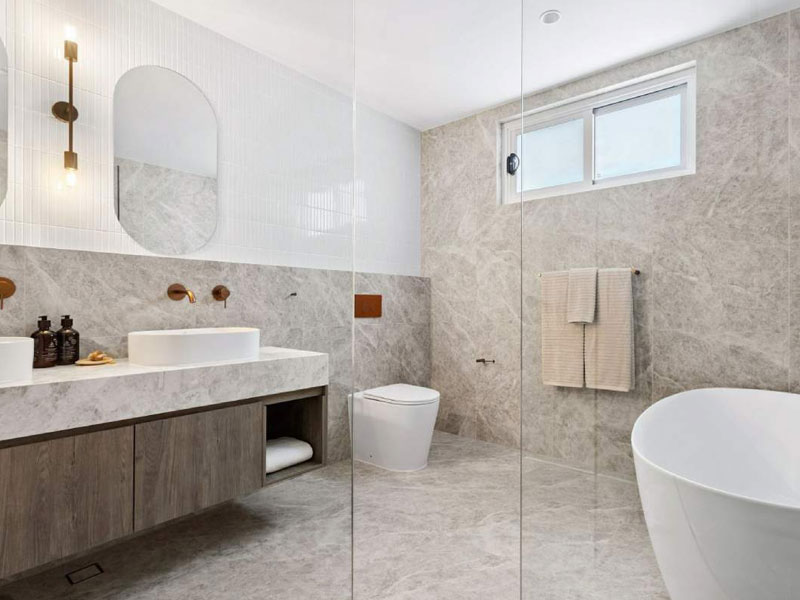
Large-format tiles create a calm bathtub backdrop
Large-format stone-look porcelain, softly textured tiles and natural stone are all effective choices. The surrounding design should consider:
- The distance between the bathtub and wall
- The alignment of floor and wall grout
- The location of floor-mounted or wall-mounted tapware
- Natural light and artificial lighting
- Space for cleaning around the bathtub
- The relationship between the bath, shower and vanity
A heavily patterned wall may compete with a sculptural bathtub. A quieter surface with soft veining, mineral movement or gentle texture usually creates a more balanced result.
For a stronger statement, one material can continue from the floor to the full-height wall behind the bath. This approach visually anchors the bathtub while making the room feel more cohesive.
What Tile Layout Works Best for a Built-In Bathtub?
A built-in bathtub surround should be designed as a complete architectural structure. The front face, top ledge, corners and wall junctions must work together rather than appearing as separate tiled surfaces.
Before installation, determine:
- The finished height of the bath
- The width of the tiled ledge
- The position of an access panel
- The direction of water drainage
- The thickness of tile and adhesive
- The treatment of external corners
- The position of tapware and outlets
The top ledge may function as a practical bath caddy ledge for towels and bath products. However, horizontal surfaces need an appropriate fall so water does not remain against grout lines or wall junctions.
External corners may be resolved with mitred tile edges, a compatible metal trim or a separate stone cap. The chosen detail should correspond with the tapware and other metal finishes in the bathroom.
Narrow tile cuts should be avoided on the most visible faces. The entire surround should be dry-planned before fixing begins.
Can Mosaic Tiles Be Used Around a Bathtub?
Yes. Mosaic tiles are particularly useful on curved surfaces, recessed niches and small feature planes. The smaller format allows the tile sheets to adapt to shapes that would be difficult to cover with large porcelain pieces.
Mosaics can be used for:
- A recessed niche
- A curved bath surround
- A feature panel behind the bathtub
- A half-height wall
- A decorative ledge
- A subtle border between materials
The main practical consideration is grout. A mosaic installation contains more grout lines than a large-format surface, so grout colour, stain resistance and cleaning requirements become more important.
Sheet alignment must also be carefully controlled. Visible lines between mosaic sheets can disrupt the intended pattern and make the finished wall appear uneven.
Mosaic tiles should therefore be treated as a precision detail rather than a simple decorative addition.
Should Bathtub Tiles Match the Shower Tiles?
Bathtub and shower tiles do not need to be identical, but both zones should share at least one recognisable design element. A common undertone, surface texture, material family or grout colour can connect the two spaces.
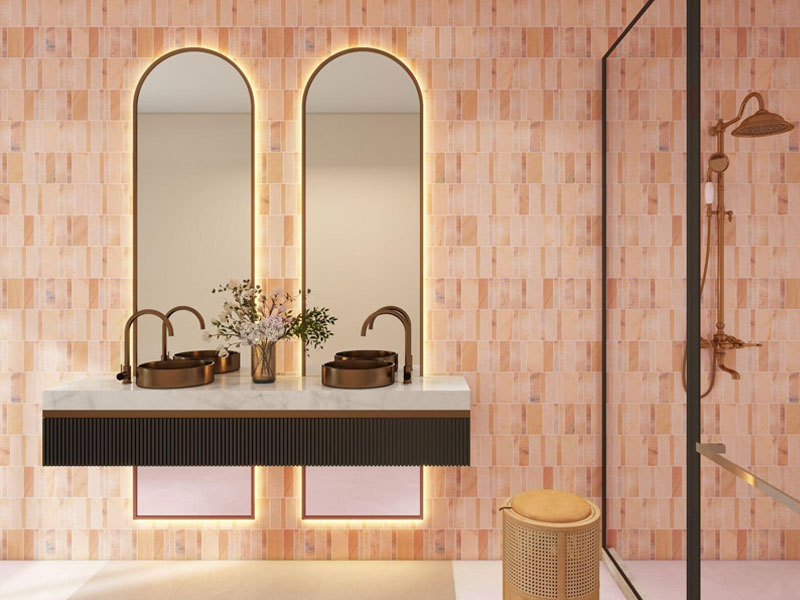
Mosaic details add texture around the bathtub
Three effective strategies include:
Use the same tile in different sizes
Install large porcelain tiles around the bathtub and a coordinating mosaic on the shower floor. The variation in scale defines each zone while maintaining material consistency.
Use the same colour with different textures
A smooth matt tile may surround the bathtub, while a fluted or textured version in a similar shade can define the shower wall.
Combine complementary materials
Stone-look porcelain can form the main surface, while a natural stone mosaic appears inside the shower niche. The materials remain connected through colour and mineral character.
Too many unrelated surfaces can make a premium bathroom feel fragmented. Most bathrooms only require one main tile, one supporting tile and, when necessary, one restrained accent.
What Finish Is Best for Tiles Around a Bathtub?
Matt and honed finishes are popular around bathtubs because they soften reflected light and support a calm, tactile atmosphere. Polished, gloss and textured finishes can also work when used in suitable locations.
| Finish | Suitable application | Visual result |
| Matt finish | Walls and floors | Soft, contemporary and understated |
| Honed finish | Natural stone and feature walls | Smooth, tactile and refined |
| Polished finish | Selected walls | Reflective and dramatic |
| Textured finish | Feature walls and suitable wet floors | Dimensional and tactile |
| Gloss finish | Small wall areas | Bright and light-reflective |
Floor tiles must be assessed separately from wall tiles. The required slip resistance depends on the product, location and conditions of the project.
A tile being suitable for a bathroom wall does not automatically make the same surface suitable for a wet bathroom floor. Product specifications should be reviewed with the architect, builder, supplier or professional tiler before installation.
Why Work with Showtile on a Premium Bathroom Project?
Showtile is a Sydney luxury tile store serving designers, architects, builders and homeowners. The collection includes porcelain slabs, stone-look tiles, concrete-look surfaces, terrazzo-look tiles, natural stone, wall tiles, mosaics and non-slip options for diverse architectural applications.
Working with an experienced designer tiles company can help project teams compare surface character, finish, scale and technical suitability before making a final selection.
Showtile’s curated approach is particularly valuable when a bathroom requires:
- Material consistency across multiple surfaces
- Samples for a design presentation
- Coordination between floor and wall formats
- Controlled colours and tonal variation
- Tiles suited to luxury residential projects
- A clear relationship between aesthetic and technical requirements
Architects, interior designers, builders and homeowners can explore the complete Showtile collection or visit the Showtile website for project inspiration and material guidance.
Contact Showtile
📍 Showroom: 65 Canterbury Road, Bankstown NSW 2200, Australia
📞 Phone: +61 2 9709 5836
✉️ Email: sales@showtile.com.au
🌐 Website: https://showtile.com.au/



