


Bathroom Wall Design Tiles: How to Create a Refined and Practical Bathroom
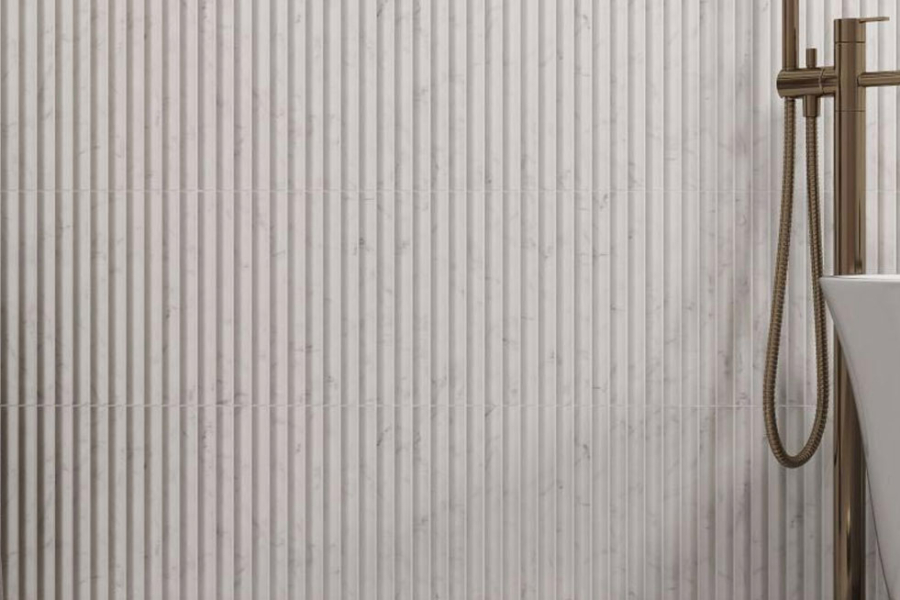
A well-designed bathroom starts with surfaces that balance visual appeal, proportion and everyday practicality. With the right bathroom wall design tiles, homeowners and designers can use colour, texture, format and layout to make the space feel more cohesive and considered. Showtile offers a wide selection of porcelain, stone-look, mosaic and decorative tiles to support everything from calm spa-inspired bathrooms to contemporary feature walls.
What Are Bathroom Wall Design Tiles?
Bathroom wall tiles are surface materials selected not only for wet-area practicality but also for their contribution to the overall interior composition. They can control texture, visual scale, colour balance, light reflection and the transition between different bathroom zones.
They may be used across:
- Shower walls
- Vanity backdrops
- Bath surrounds
- Recessed niches
- Feature walls
- Half-height walls
- Floor-to-ceiling surfaces
A successful bathroom tile design begins by deciding which surface should visually lead the room. If the vanity or natural stone benchtop is already expressive, the wall tile may need to remain restrained. If cabinetry and fixtures are simple, the tiled wall can carry more texture, colour or pattern.
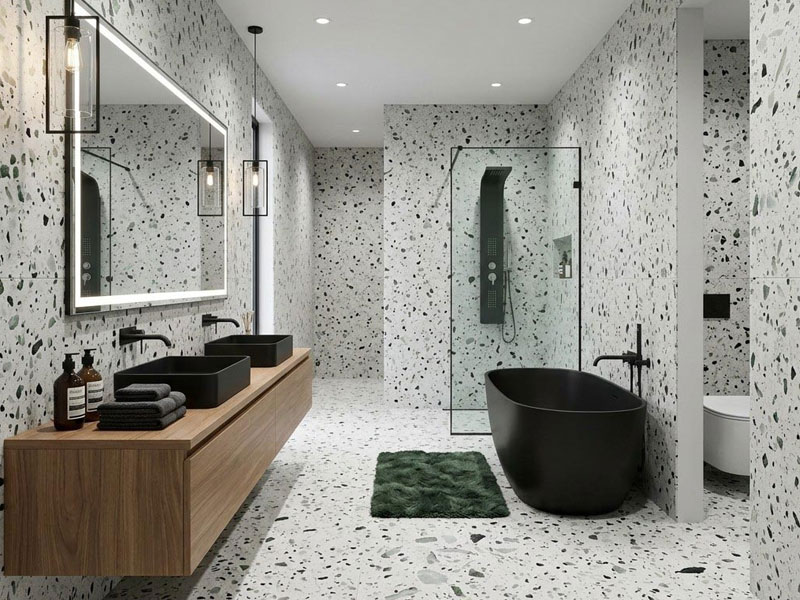
Refined bathroom walls start with the right tile choice
The wider architectural palette should also be considered. Showtile presents porcelain slabs, stone-look surfaces, terrazzo, natural stone, subway tiles, mosaics and other architectural finishes that can be coordinated across residential spaces.
Which Tiles Work Best on Bathroom Walls?
The best material depends on the location, scale of the wall, desired appearance and maintenance expectations. Porcelain tiles are versatile for expansive wet areas, while ceramic wall tiles, mosaics and natural stone can introduce more specialised visual effects.
Porcelain Tiles
Porcelain works particularly well when the design calls for clean, continuous surfaces. It is available in stone, concrete, terrazzo and marble-inspired finishes and can be used in formats large enough to reduce the number of grout joints.
Large-format porcelain is particularly useful for:
- Full-height shower walls
- Bath backdrops
- Vanity walls
- Larger wet areas
- Minimal contemporary bathrooms
Large surfaces also allow veining and tonal movement to remain more visually continuous instead of being divided into many small pieces.
Ceramic Wall Tiles
Ceramic tiles are well suited to decorative applications where surface character matters. Glazed finishes, handmade effects and smaller rectangular formats can introduce subtle variation without making the bathroom feel excessively patterned.
They work especially well around vanities, niches and selected feature areas.
Mosaic Tiles
Mosaic tiles allow greater detail at a smaller scale. They can be useful when the surface itself needs to become a focal point or when a compact area requires a clear visual distinction.
Typical applications include:
- Shower niches
- Vanity splash zones
- Feature strips
- Curved surfaces
- Small shower areas
The key is restraint. A strong mosaic generally has greater impact when surrounded by quieter wall surfaces.
Stone and Stone-Look Surfaces
Natural stone introduces genuine variation in veining, tone and texture, while stone-look bathroom tiles provide a more controlled interpretation of materials such as limestone, marble and travertine.
Showtile notes that its stone-look porcelain combines the appearance of natural stone with the consistency and performance of architectural porcelain.
What Bathroom Wall Tile Size Should You Choose?
Tile dimensions should respond to wall proportions, fixtures and grout alignment rather than being chosen according to bathroom size alone. A small bathroom does not automatically require small tiles.
Large Formats Create Visual Continuity
Large format bathroom tiles reduce the number of grout lines crossing the wall, which can make the overall surface appear quieter and more continuous.
They are particularly effective when:
- Extending tiles from floor to ceiling
- Repeating one material around the shower
- Creating a stone-inspired bathroom
- Using dramatic marble-style veining
- Designing a minimal printer
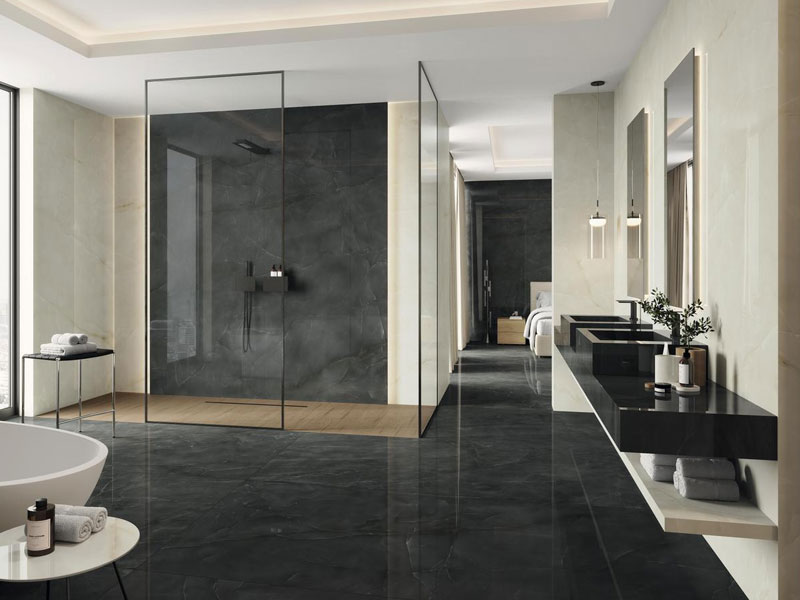
Large-format tiles create a clean, seamless look
Before installation, the tile layout should be coordinated with niches, shower screens, vanity edges and tapware positions. Poorly placed cuts can weaken an otherwise refined surface.
Medium Formats Offer Flexibility
Rectangular and medium-format tiles work well when wall dimensions require greater flexibility. They can align comfortably with vanities or shower screens while retaining a relatively calm visual rhythm.
Small Formats Add Detail
Subway tiles, Kit Kat mosaics, penny rounds and other smaller formats introduce repetition and pattern. They are most effective when the grout pattern is considered as part of the design rather than treated as an afterthought.
Which Bathroom Wall Tile Colours Work Best?
The best bathroom tile colours respond to natural light, room proportions, cabinetry and fixtures. White remains useful, but warm mineral shades, soft greys, greens and stone-inspired neutrals can create equally timeless interiors.
White and Warm White
White bathroom wall tiles can make a space feel clear and luminous. Gloss finishes increase reflection, while matt or handmade-look whites create a softer surface with more visible tonal variation.
Pair white tiles with timber vanities, pale stone or restrained metal finishes when the goal is warmth rather than a stark monochrome appearance.
Beige, Sand and Travertine Tones
Warm neutral bathroom tiles create a calmer, more natural mood and work particularly well in bathrooms influenced by spa and resort interiors.
They coordinate naturally with:
- Oak cabinetry
- Warm white paint
- Travertine references
- Brushed brass
- Cream stone
- Soft ambient lighting
Grey and Concrete-Inspired Colours
Grey does not need to make a bathroom feel cold. Warm-grey and greige surfaces can create a restrained architectural base, particularly when combined with timber or warm lighting.
Green, Blue and Earthy Accents
Colour often works best when concentrated rather than spread across every surface. A muted green vanity wall or blue-grey shower feature can add personality while neutral surrounding tiles maintain visual balance.
Should Bathroom Walls Use Matt, Gloss or Textured Tiles?
Surface finish changes how the bathroom responds to light. Matt bathroom tiles create a softer architectural effect, gloss increases reflection, and textured bathroom tiles introduce shadows and tactile depth.
| Finish | Visual effect | Suitable applications |
| Matt | Soft and restrained | Main wall surfaces |
| Gloss | Bright and reflective | Compact rooms and decorative walls |
| Honed-look | Natural and refined | Stone-inspired schemes |
| Textured | Creates depth and shadow | Feature walls |
| Handmade-look | Organic variation | Vanity and accent areas |
Gloss tiles can be effective when a small wall needs movement and reflection. Matt finishes are generally quieter across expansive surfaces.
Texture should be controlled carefully. If every wall is highly structured, the bathroom can lose the visual hierarchy that allows individual materials to stand out.
How Can You Create a Bathroom Feature Wall with Tiles?
A bathroom feature wall does not need a dramatic colour or complicated pattern. A change in scale, texture, surface movement or material can create enough contrast to establish a focal point.
Good locations include:
- Behind a freestanding bath
- Behind the vanity
- On the principal shower wall
- Inside a recessed niche
For example, a tonal fluted tile can sit beside smooth large-format porcelain without introducing a completely different colour. Likewise, a marble mosaic can create concentrated detail while the remaining walls stay visually quiet.
One useful rule is:
One dominant surface + one supporting surface + one controlled accent.
This keeps the material palette clear while still allowing the room to develop character.
Which Tile Layout Makes a Bathroom Wall Look Better?
The layout affects perceived width, height and movement. The same rectangular tile can create very different results depending on whether it is stacked vertically, horizontally or arranged in a directional pattern.
| Layout | Visual effect | Good application |
| Vertical stack | Emphasises height | Compact bathrooms |
| Horizontal stack | Reinforces width | Long walls |
| Straight stack | Clean and ordered | Contemporary rooms |
| Brick bond | Familiar rhythm | Subway tiles |
| Herringbone | Adds movement | Feature areas |
| Chevron | Creates strong direction | Vanity or shower wall |
Vertical stacking can make a low wall feel taller, while horizontal layouts reinforce the width of the room.
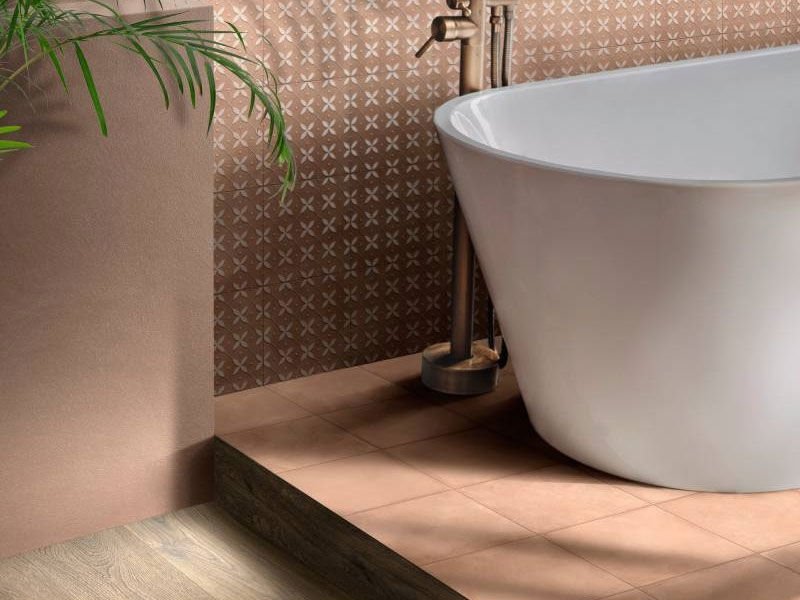
Brick-look tiles add texture, warmth and character to bathroom walls
Ringtone and chevron should usually be reserved for selected surfaces because their directional movement naturally attracts attention.
Should You Tile Bathroom Walls from Floor to Ceiling?
Floor-to-ceiling tiling can create a more complete architectural envelope, particularly around showers and baths. Partial tiling remains appropriate where paint, plaster or other wall finishes form part of the design.
Floor-to-ceiling tiles are useful when the objective is:
- Greater visual continuity
- A hotel or spa-inspired appearance
- Reduced transitions between finishes
- Stronger material repetition
Partial-height tiling can work particularly well in powder rooms or outside primary wet zones.
A hybrid approach is also effective: use full-height tiles around the shower and bath, then simplify less exposed walls.
How Should Bathroom Wall Tiles Coordinate with Floor Tiles?
Wall and floor tiles do not need to match exactly. A stronger approach is to establish a relationship through colour temperature, material reference or texture.
Several combinations work particularly well:
- Stone-look floor + matching wall tile in another size
- Neutral porcelain floor + coloured ceramic feature wall
- Terrazzo floor + simple white wall tile
- Warm-grey floor + limestone-inspired wall
- Large-format floor + small mosaic shower detail
Floor selection also has different technical priorities because grip, drainage and surface suitability become particularly important in wet areas. Showtile’s guide to tiles on floor design explores how format, finish and surrounding architecture affect broader flooring decisions.
What Bathroom Wall Tile Designs Suit Contemporary Australian Interiors?
Current bathroom design is moving toward calmer material palettes where texture and natural references provide interest rather than excessive decoration.
Strong directions include:
- Stone-inspired porcelain
- Warm mineral tones
- Soft matt surfaces
- Tonal wall and floor combinations
- Large-format installations
- Handmade-look ceramics
- Textured feature surfaces
- Natural stone accents
Rather than applying several trends at once, select one clear material direction and repeat it carefully.
Project location can also influence specification, availability and the way homeowners compare materials in person. For customers considering design tiles Rockdale NSW, Showtile recommends assessing room proportions, daylight, maintenance, finish and the relationship between surrounding materials before finalising selections.
What Are the Most Common Bathroom Wall Tile Design Mistakes?
Many unsuccessful bathrooms do not fail because of the individual tiles. Problems usually occur because too many elements compete or because the layout is not resolved before installation.
Common mistakes include:
- Using too many different tile styles
- Selecting tile size without considering wall dimensions
- Creating awkward cuts around niches and corners
- Ignoring grout alignment
- Using strong patterns across too many surfaces
- Choosing tiles only from online images
- Forgetting how bathroom lighting changes colour
- Treating every wall as a feature
- Failing to coordinate floor and wall undertones
Samples are especially valuable because colour, surface texture and variation are easier to assess under the actual lighting conditions of the project.
Working with an experienced designer tiles company can also help architects, designers, builders and homeowners assess tile dimensions, finishes, applications and material relationships before installation begins.
How Can You Create a Spa-Like Bathroom with Wall Tiles?
A spa-like bathroom design relies more on restraint and continuity than on decorative complexity.
Start with a controlled palette of warm neutrals, limestone tones or soft stone references. Use larger surfaces where possible, minimise abrupt colour changes and allow texture to provide subtle variation.
A calm bathroom may combine:
- Warm stone-look walls
- Tonal porcelain flooring
- A timber vanity
- One restrained textured surface
- Soft lighting
- Minimal grout contrast
The objective is not to remove all visual interest. It is to make each material feel related to the next.
Where Can You Explore Bathroom Wall Tiles for a Complete Design Scheme?
Choosing bathroom surfaces is easier when wall tiles, floor materials, mosaics and feature finishes can be considered together instead of as isolated products.
Showtile provides collections across porcelain slabs, natural stone, stone-look porcelain, terrazzo, subway tiles, mosaics and other architectural surfaces for residential and commercial applications. Its website also includes project inspiration, sample options and visualisation resources for comparing materials.
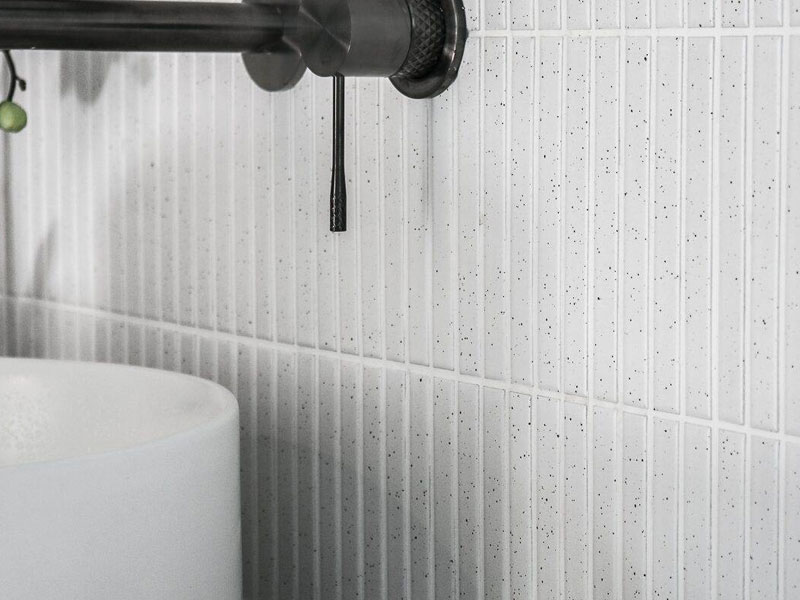
Showtile brings refined tile solutions to modern bathroom design
Homeowners, designers, architects and builders can explore the Showtile tile collection to compare formats, colours, materials and surface directions that can be coordinated into a complete bathroom palette.
The strongest choice is rarely the most decorative tile on its own. It is the material that works naturally with the room’s scale, lighting, fixtures and surrounding surfaces.
Frequently Asked Questions About Bathroom Wall Design Tiles
What type of tile is best for bathroom walls?
Porcelain and ceramic are both practical choices. Porcelain works particularly well for large wet-area surfaces and stone-inspired schemes, while ceramic allows greater flexibility with decorative colours, gloss finishes and small wall formats. Mosaics and natural stone can then be introduced selectively for added texture or detail.
Can large tiles be used in a small bathroom?
Yes. Large tiles can work effectively in compact bathrooms because fewer grout joints create a less interrupted surface. The important factor is the layout. Tile cuts, vanity dimensions, niches and shower screens should be planned before installation so the larger format feels intentional rather than oversized.
Should bathroom floor and wall tiles match?
They do not need to be identical. Coordinating colour temperature, material reference or texture is usually enough to connect them visually. Using the same stone-inspired surface in different formats can create continuity, while a neutral floor combined with a smaller decorative wall tile provides more contrast.
What colour tiles make a small bathroom feel larger?
Light whites, warm neutrals, pale greys and softer stone shades can help create visual openness, particularly when combined with good lighting and limited contrast. However, layout and grout colour also matter. A darker bathroom can still feel spacious when surfaces remain continuous and the material palette is restrained.
Are matt tiles suitable for bathroom walls?
Yes. Matt finishes are particularly effective across large wall areas because they reduce strong reflection and create a softer architectural appearance. Gloss finishes can be introduced where additional light reflection or decorative detail is desired, while textured finishes are usually best reserved for controlled feature applications.
Should bathroom walls be tiled to the ceiling?
Full-height tiling works well in showers, around baths and in bathrooms designed for strong material continuity. It is not mandatory throughout the entire room. Outside wet areas, partial tiling combined with paint or another wall finish can create useful contrast while reducing the amount of tile required.
Contact Showtile
📍 Showroom: 65 Canterbury Road, Bankstown NSW 2200, Australia
📞 Phone: +61 2 9709 5836
✉️ Email: sales@showtile.com.au
🌐 Website: https://showtile.com.au/



