


Wood Design Tiles for Floor: A Guide to Refined Timber-Look Flooring
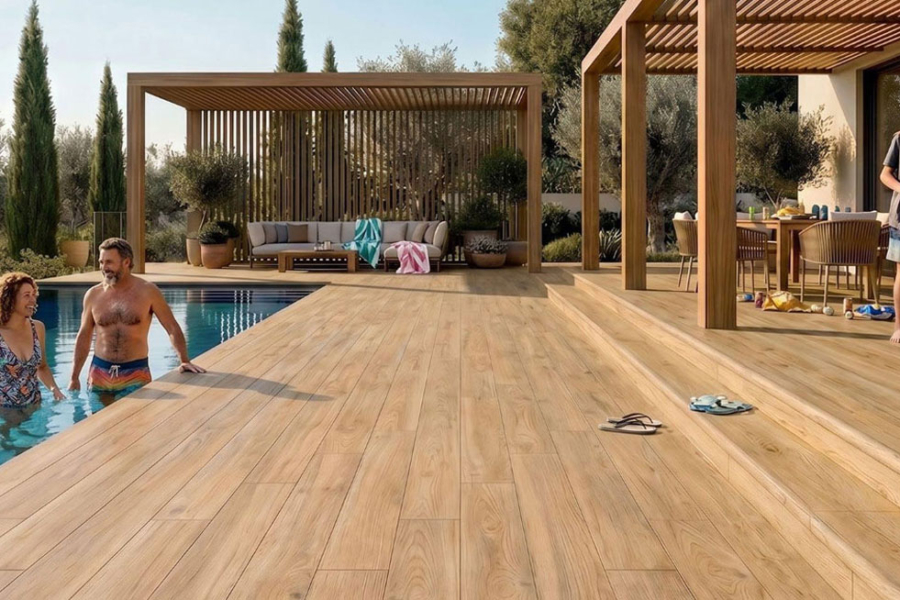
Timber-inspired flooring can bring warmth and visual direction into an interior without making the floor feel overly decorative. With wood design tiles for floor, Showtile helps designers, builders and homeowners consider grain variation, plank proportion, tone and layout as part of a wider material palette for living spaces, kitchens and connected interiors.
What Gives Timber-Look Flooring a Convincing Wood Character?
A natural-looking tiled floor needs controlled variation. Real timber boards differ from one another, so a convincing porcelain interpretation should avoid obvious repetition while keeping grain and colour movement consistent enough to form one continuous surface.
How Does Grain Variation Affect the Finished Floor?
Wood grain tiles should show enough variation to prevent repeated motifs from becoming noticeable.
Look for:
- Different grain movements
- Subtle knots
- Changes in plank tone
- Multiple printed faces
- Controlled variation between boards
Excessive contrast can be just as distracting as too little variation. Strong knots and dramatic colour changes may suit rustic interiors, while quieter grains generally work better in minimalist and contemporary spaces.
Why Should Several Tile Faces Be Viewed Together?
One sample cannot show how the complete floor will read.
A collection such as Kootenai uses an elongated 200 × 1200 mm porcelain format with 18 faces, helping reduce obvious repetition across broader floors.
Before final selection, several boards should be placed together to assess:
- Grain repetition
- Tonal balance
- Dark-to-light variation
- Overall rhythm
When Can Wood Variation Become Too Strong?
Highly varied timber effects can make compact interiors feel fragmented.
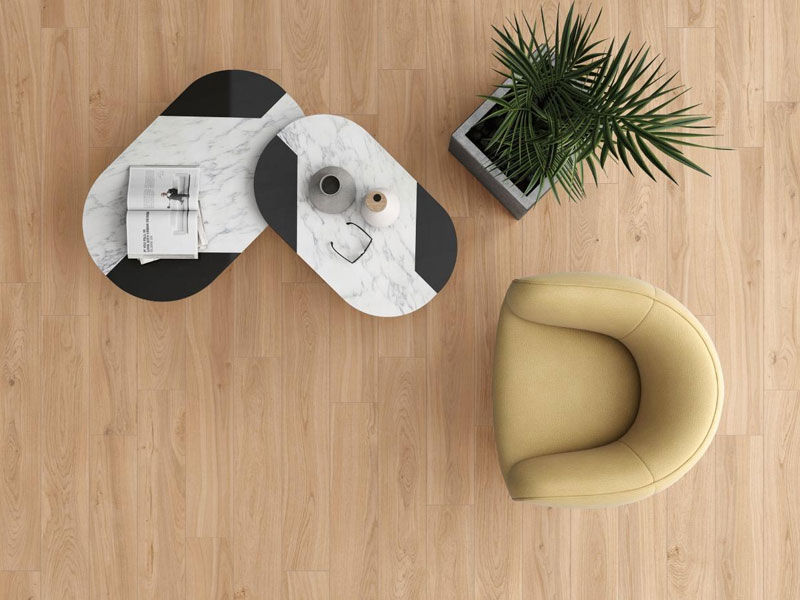
Natural timber character for modern interiors
More restrained timber-look flooring is often easier to coordinate when a room already includes expressive marble, detailed joinery or patterned furniture.
How Should Timber Colour Be Chosen for the Room?
Wood tone should respond to the complete palette rather than being selected as a standalone colour.
What Do Pale Timber Tones Add to an Interior?
Pale oak, ash and washed timber directions can visually lighten a room.
These tones work particularly well with:
- Soft whites
- Limestone
- Light grey
- Pale timber joinery
- Neutral upholstery
- Brushed metal
Lighter timber directions can also reduce visual weight in compact apartments and rooms with limited natural light.
Where Do Mid-Tone Wood Floors Work Best?
Mid-tone timber is one of the most flexible directions because the colour provides warmth without becoming too dominant.
Warm neutral timber can coordinate with:
- Travertine
- Beige stone
- Cream cabinetry
- Olive accents
- Natural fabrics
- Bronze finishes
A balanced brown or oak tone can therefore move comfortably between contemporary, organic modern and transitional interiors.
When Does Dark Timber Make Sense?
Dark timber can anchor large, bright interiors.
Deep brown, walnut-inspired or smoked tones usually work best with:
- Generous natural light
- Pale walls
- Open floor plans
- Lighter furniture
- Strong architectural proportions
In smaller rooms, a dark floor should be balanced carefully so the flooring does not visually compress the space.
How Can Timber Undertones Work With Stone and Joinery?
The undertone of the timber floor is often more important than its overall lightness or darkness.
What Happens When Warm Wood Meets Warm Stone?
Warm timber and warm stone can create a particularly cohesive palette.
Consider pairing natural timber tones with:
- Travertine
- Beige limestone
- Warm terrazzo
- Cream marble
- Soft plaster finishes
Repeating similar undertones creates continuity without requiring the materials to look alike.
Can Wood-Look Tiles Work With Cooler Grey Materials?
Yes. Choose timber with neutral, taupe or slightly grey undertones rather than strong orange or red colouring.
A cooler timber direction can sit comfortably beside:
- Concrete-look surfaces
- Grey cabinetry
- Blackened metal
- Cool stone
- Charcoal accents
How Should Wood-Look Flooring Be Paired With Marble?
One material should usually remain quieter.
If marble contains dramatic veins, use a more restrained timber grain. If the floor contains strong knots and tonal movement, choose a calmer stone surface so both materials do not compete for attention.
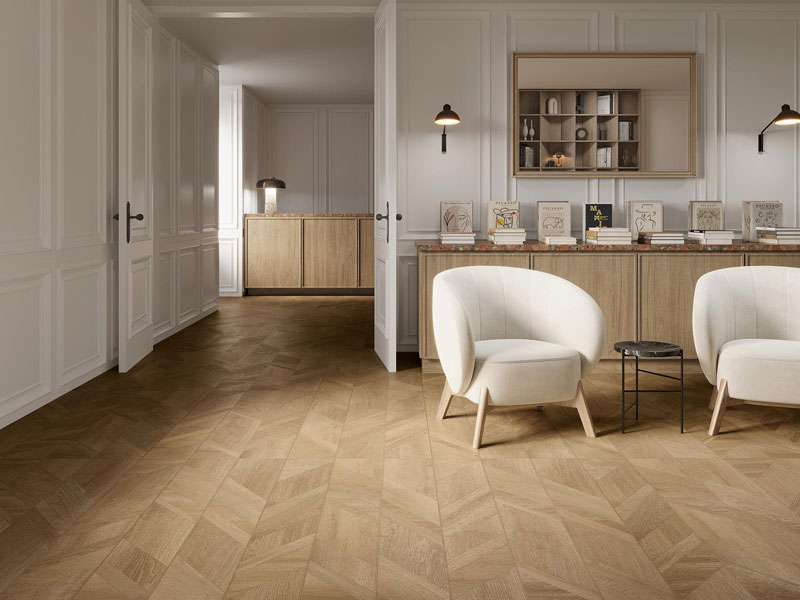
Warm flooring creates a refined atmosphere
This type of whole-project coordination is also important when comparing designer tiles in Australia, where material character, scale and finish need to support the wider architectural concept rather than function independently.
What Plank Proportion Makes Timber-Look Tiles Feel More Natural?
The dimensions of a tile influence how closely the floor resembles conventional timber boards.
Why Do Longer Planks Create Stronger Direction?
Long plank tiles produce extended lines through the room.
Longer formats can:
- Reinforce important sightlines
- Reduce visual interruptions
- Add length to open-plan spaces
- Create a stronger timber reference
An elongated plank format is particularly effective in living, dining and circulation areas where the floor can be read across a longer distance.
When Are Shorter Formats More Appropriate?
Shorter formats can make sense in:
- Small rooms
- Entries
- Detailed layouts
- Herringbone compositions
- Areas with numerous floor transitions
The correct proportion depends on both room geometry and desired pattern.
Can Timber Effects Work Without a Conventional Plank?
Yes. Timber character can also be interpreted through patterned formats.
For example, Parquet combines timber and marble references in a 600 × 600 mm porcelain format based on a Parquet de Versailles pattern. The result is more decorative than conventional plank flooring and better suited to spaces where the floor is intended to become a feature.
Which Laying Pattern Best Supports the Interior?
Layout controls how strongly the timber floor participates in the architecture.
Why Does a Straight Plank Layout Feel Calm?
A straight layout creates consistent directional movement with limited visual interruption.
Straight planks are particularly suitable for:
- Open-plan living rooms
- Dining spaces
- Hallways
- Minimalist interiors
- Large residential floors
The straightforward geometry allows grain and colour to carry the visual interest.
When Is Herringbone a Better Choice?
Herringbone flooring introduces more pattern and changes how the eye moves across the surface.
Herringbone works well in:
- Entrances
- Boutique interiors
- Formal living rooms
- Defined feature zones
Because the geometry is already expressive, surrounding materials usually benefit from greater restraint.
When Should Decorative Layouts Be Kept Selective?
Chevron, parquet and complex timber patterns are most effective when they have a clear purpose.
Using strong pattern across several connected rooms can weaken visual hierarchy. A feature entry or selected room can carry more detailed flooring while adjoining spaces remain simpler.
Which Direction Should Timber Planks Run Across the Floor?
There is no single correct direction. The floor should respond to room geometry and important architectural sightlines.
Can Planks Follow the Longest Dimension of the Room?
Often, yes.
Running planks along the longest dimension can strengthen the apparent length of:
- Living rooms
- Corridors
- Open-plan zones
The directional lines guide the eye through the space.
Can Natural Light Determine the Laying Direction?
Large windows and glazed doors can also guide the layout.
Aligning planks toward an important opening may draw attention toward:
- Garden views
- Courtyards
- Terraces
- Main windows
Natural light can also reveal the texture and grain variation more clearly.
Should Plank Direction Change Between Connected Rooms?
Avoid unnecessary changes.
In connected kitchen, dining and living zones, one consistent direction usually creates stronger open-plan flooring continuity. Change direction only when a doorway, structural boundary or deliberate design transition provides a clear reason.
How Can Grout Make Timber-Look Tiles Feel More Continuous?
Grout has a major influence on whether the finished floor reads as timber or as a grid of rectangular tiles.
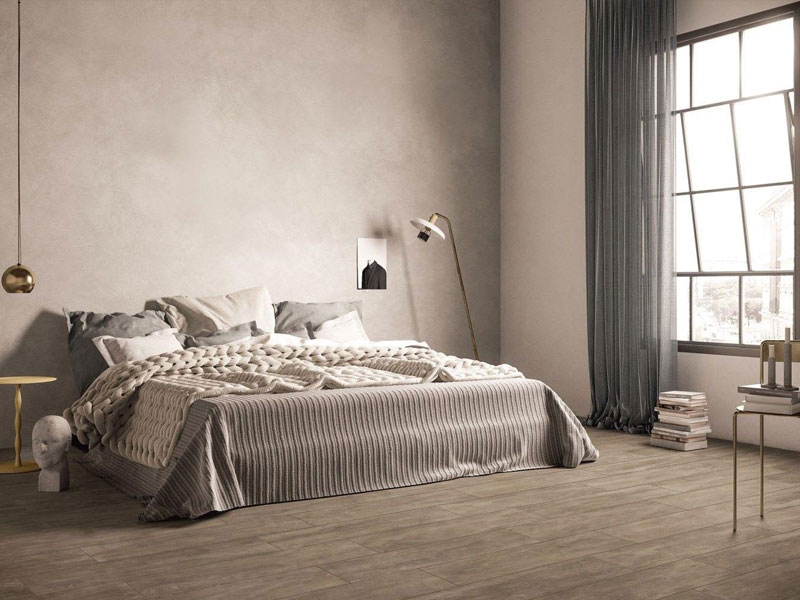
Long plank layouts enhance visual flow
Which Grout Colour Is Usually Most Effective?
A tonal grout is generally the safest choice.
Match grout approximately to:
- The average plank colour
- A darker grain tone
- The edge colour of the tile
The grout should support the board rhythm without becoming the most noticeable line on the floor.
Why Can Strong Grout Contrast Reduce the Timber Effect?
High-contrast grout highlights the dimensions of every tile.
The visual result can shift from continuous wood-effect flooring toward an obvious tiled grid, particularly when plank formats are relatively short.
Should Grout Joints Be Made Extremely Narrow?
Not automatically.
Joint width should follow product specifications, tile rectification, substrate conditions and professional installation requirements. A natural appearance should never depend on reducing grout joints beyond appropriate installation tolerances.
Where Can Timber-Look Flooring Work Most Effectively?
One advantage of porcelain timber surfaces is their ability to introduce wood character across spaces with different functional requirements.
How Can Timber-Look Tiles Ground a Living Area?
Living areas often contain a mix of upholstery, joinery, stone and metal.
A restrained wood-look porcelain floor provides a warm base beneath these materials without demanding another strong pattern.
Timber-inspired flooring is particularly effective in rooms where large stone surfaces or minimal cabinetry would otherwise make the interior feel visually cool.
How Can Wood Character Continue Through a Kitchen?
Open-plan kitchens benefit from flooring continuity.
Using the same floor across the kitchen, dining and living zones can reduce unnecessary material changes. Cabinetry, benchtops, rugs and furniture can then define individual functions without dividing the floor.
Can Timber-Inspired Surfaces Work in Bathrooms?
Where the selected porcelain product is suitable for the intended application, timber character can soften wet-area interiors.
Wood-inspired flooring can be paired with:
- Limestone-look walls
- Travertine
- Soft concrete surfaces
- Neutral mosaics
For bathrooms where tile selection needs to respond to broader current directions, the guide to latest bathroom tile design provides a separate view of scale, texture and material transitions without turning the timber floor into the dominant feature.
How Can One Timber Floor Organise an Open-Plan Interior?
Continuous flooring can become a visual framework for several functions without relying on floor changes.
How Can Furniture Create Different Zones?
Use:
- Rugs
- Sofa orientation
- Dining tables
- Pendant lighting
- Kitchen islands
- Joinery
These elements can establish zones while the timber-look floor tiles continue uninterrupted beneath them.
When Should Another Flooring Material Be Introduced?
A change works best at a clear architectural boundary.
Possible transitions include:
- A doorway
- A level change
- A defined wet area
- A structural threshold
- A separate outdoor zone
Avoid arbitrary floor changes within the centre of an open room.
Can Timber Character Continue Beyond the Interior?
Visual continuity can extend toward terraces, alfresco areas and adjoining exterior surfaces when the selected products meet the requirements of each application.
How Can Indoor and Outdoor Materials Feel Connected?
The exact tile does not always need to continue outside.
Instead, coordinate:
- Timber undertone
- Direction
- Plank proportion
- Adjacent stone
- Exterior paving colour
This provides a visual relationship while allowing different technical finishes to be used.
Why Should Exterior Performance Be Considered Separately?
Showtile notes that timber-look tiles can be used across indoor and outdoor settings when the relevant product has the appropriate specification, including suitable outdoor slip-rated finishes.
Where the project also contains tiled garden walls, courtyards or architectural elevations, outside wall tile design should be planned alongside the flooring palette so vertical and horizontal surfaces relate without being identical.
How Do Timber-Look Porcelain and Natural Timber Differ?
Neither option is automatically better. Each material creates a different floor.
| Design Factor | Timber-Look Porcelain | Natural Timber |
| Material character | Printed wood interpretation | Genuine wood grain |
| Variation | Controlled through multiple faces | Naturally unique |
| Moisture response | High resistance where specified | Depends on timber and system |
| Maintenance | Generally straightforward | May require refinishing |
| Format | Defined porcelain plank sizes | Depends on timber board |
| Wet-area potential | Possible with suitable tiles | More restricted |
| Colour stability | Controlled manufactured surface | Can age and change |
| Surface feel | Porcelain | Natural timber |
| Pattern control | Predictable | Naturally variable |
Natural timber offers genuine warmth and texture. Porcelain provides a different combination of stability, moisture resistance and design control, so the project requirements should determine the better choice.
Which Timber Direction Fits Different Interior Styles?
| Interior Style | Timber Direction | Layout | Visual Result |
| Scandinavian | Pale oak look | Straight plank | Light and calm |
| Organic modern | Warm neutral timber | Long plank | Natural and grounded |
| Contemporary | Balanced mid-tone wood | Straight plank | Clean and refined |
| Coastal | Bleached timber look | Long plank | Soft and open |
| Mid-century | Warm walnut direction | Straight / patterned | Rich and structured |
| Quiet luxury | Soft oak tone | Long plank | Understated |
| Boutique | Deep timber colour | Herringbone | Expressive |
| Industrial | Smoked timber | Straight plank | Strong contrast |
What Should Be Reviewed Before a Timber-Look Floor Is Ordered?
A good sample still needs to work across the full project.
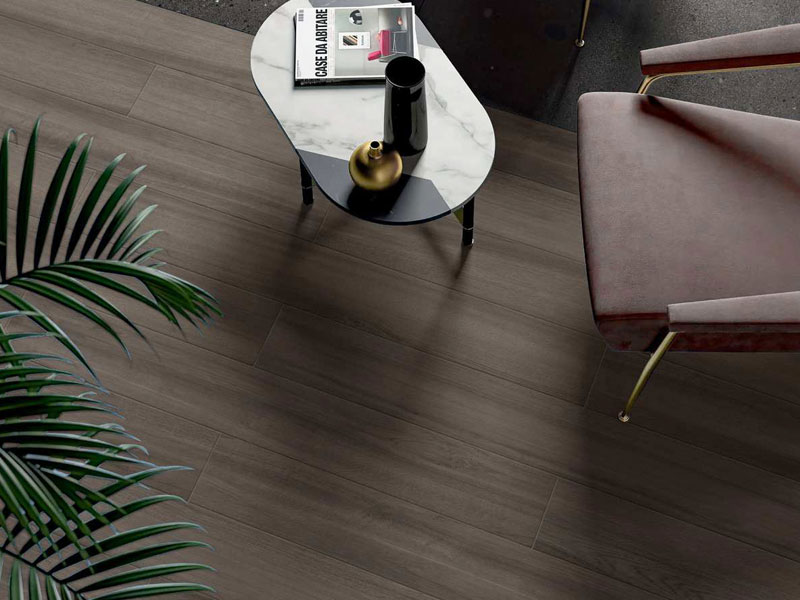
Showtile brings timber-inspired surfaces together
Check:
- Timber undertone
- Grain intensity
- Number of tile faces
- Plank dimensions
- Room proportions
- Laying direction
- Layout pattern
- Grout colour
- Floor suitability
- Wet-area requirements
- Exterior requirements
- Transition points
- Quantity and wastage
- Batch consistency
- Joinery and furniture palette
Reviewing all these factors together reduces the risk of selecting a convincing tile that does not suit the final room composition.
Bring Timber Warmth Into the Material Palette with Showtile
The dedicated Timber Look Tiles category brings together porcelain collections with different timber colours, grains and formats. Current listed ranges include Miro Timber, Oken Timber, Auckland Timber, Kootenai, Living Timber, Concorde Timber and other wood-inspired options. citeturn251760search0
Designers, builders and homeowners can also use the wider Showtile collection to compare timber-inspired flooring with stone, terrazzo, concrete and other architectural surfaces. The collection currently allows filtering across floor, wall, indoor and outdoor applications as well as material, design and finish categories.
At Showtile, timber-look flooring can therefore be considered as part of the complete interior palette rather than as a substitute for timber alone. Grain, colour, plank scale and layout can be assessed alongside stone, joinery and adjoining surfaces so the finished floor contributes warmth while remaining architecturally controlled.
Contact Showtile
📍 Showroom: 65 Canterbury Road, Bankstown NSW 2200, Australia
📞 Phone: +61 2 9709 5836
✉️ Email: sales@showtile.com.au
🌐 Website: https://showtile.com.au/



