


Luxury Tiles Melbourne: Premium Choices for Elegant Spaces
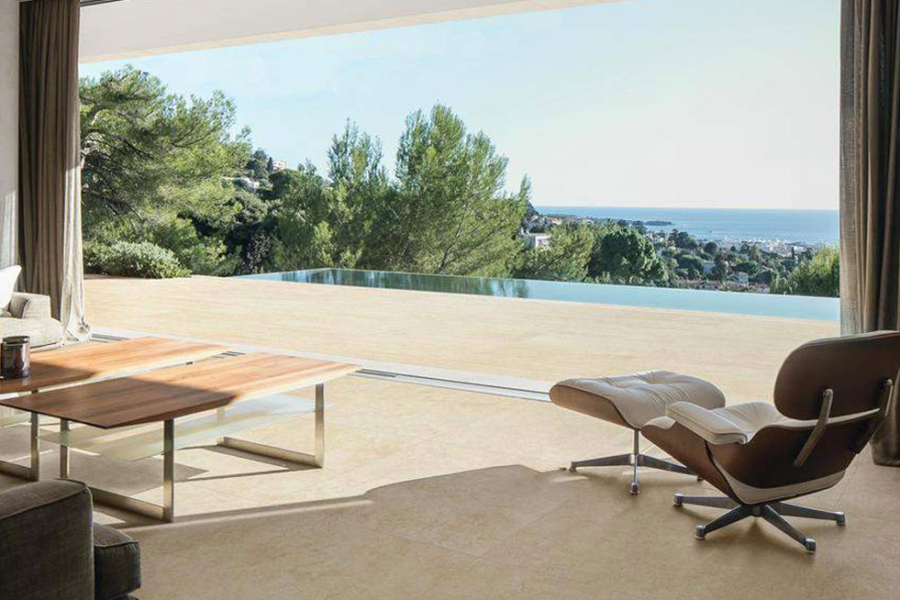
Choosing luxury tiles Melbourne projects can rely on is about more than selecting an expensive surface. A refined result comes from balancing material quality, scale, finish, colour, technical performance and installation detail with the architecture of the space.
For premium homes, apartments, hospitality venues and commercial interiors, Showtile offers porcelain, stone-inspired surfaces, large-format slabs and feature tiles that can support both understated and statement-driven design. The strongest schemes use these materials selectively, creating visual continuity rather than filling every surface with competing patterns.
What Makes Luxury Tiles Different From Standard Tiles?
Luxury tiles distinguish themselves through surface depth, controlled variation, refined finishes, carefully considered formats and suitability for demanding applications. Price alone does not make a tile luxurious. A premium surface should enhance the surrounding architecture while maintaining the durability, maintenance profile and technical qualities required for its location.
Does Premium Material Automatically Create a Luxury Interior?
A premium material is only the starting point. Marble-inspired porcelain, travertine, natural stone or an oversized slab can still feel unresolved when the scale, colour or pattern conflicts with nearby joinery, furniture and lighting.
Successful high-end tiles usually share several characteristics:
- Refined surface texture
- Realistic tonal movement
- Appropriate scale for the room
- Controlled edge and grout detailing
- Suitable durability for the application
- Compatibility with adjoining materials
- A finish that responds well to natural and artificial light
For designers and homeowners developing a complete material scheme, the principles discussed in architectural tiles Melbourne can also help connect tiled surfaces with timber, stone, metalwork and joinery without turning the room into a collection of unrelated finishes.
Why Do Tile Size and Surface Finish Matter?
Tile scale directly affects visual rhythm. Large-format tiles create fewer interruptions across floors and walls, which can make open spaces feel calmer and more expansive. Smaller formats introduce more repetition and texture, making them useful for splashbacks, powder rooms, niches and selected feature surfaces.
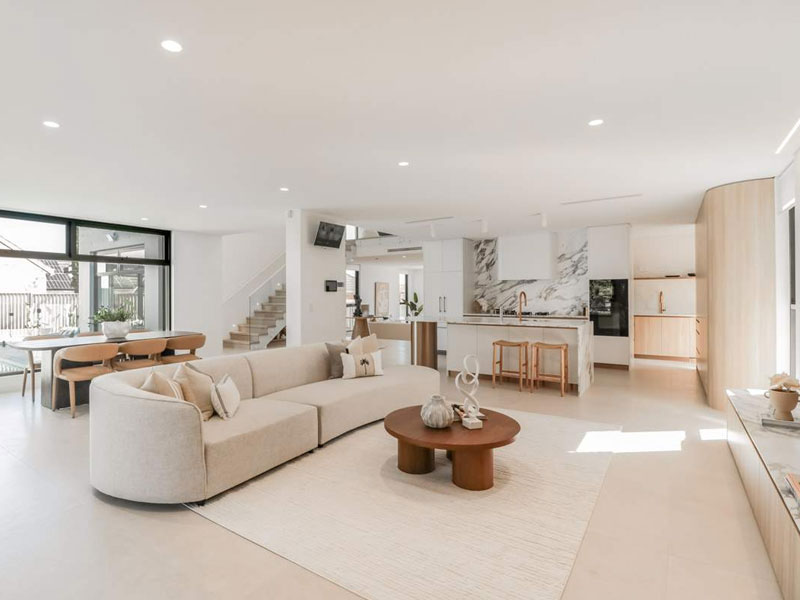
Luxury tiles for refined modern interiors
Finish changes the character just as strongly. Matt tiles absorb more reflection and often feel restrained, while honed tiles create a soft, refined surface. Polished finishes can strengthen light and veining but need to be used selectively so that a room does not become overly reflective.
Luxury comes from choosing the appropriate finish rather than automatically choosing the glossiest option.
Which Technical Qualities Should Premium Tiles Still Meet?
A beautiful surface still needs to perform correctly. Before specifying a product, check:
- Wall or floor suitability
- Indoor or outdoor application
- Wet-area suitability
- Slip resistance where required
- Tile thickness
- Surface finish
- Shade variation
- Cleaning requirements
- Installation method
- Substrate preparation
Technical suitability is particularly important in bathrooms, entrances, kitchens, balconies and pool surrounds. A premium appearance should never replace practical performance.
Which Tile Materials Work Best for Premium Interiors?
There is no single material that defines luxury. Porcelain tiles, natural stone tiles, marble-inspired finishes, travertine references and porcelain slabs each create a different visual effect. The best choice depends on the architecture, desired maintenance level and whether the surface should act as a quiet background or an intentional focal point.
When Are Marble-Look Porcelain Tiles a Good Choice?
Marble-look porcelain tiles suit interiors that require elegant veining without relying exclusively on natural marble. Contemporary manufacturing allows porcelain to reproduce tonal movement and stone detail while providing consistent sizing and practical everyday maintenance.
Marvel X is one example of this approach. The Italian-made collection includes contemporary marble references across matt, polished and slab formats, making the range suitable for bathrooms, living spaces and large wall surfaces.
Marble-inspired tiles work particularly well when paired with:
- Warm timber joinery
- Simple cabinetry
- Brushed metal details
- Restrained wall colours
- Plain surrounding surfaces
The objective is to give the veining enough space to be appreciated instead of surrounding it with other strong patterns.
When Does Travertine Create a Softer Form of Luxury?
Travertine-inspired surfaces provide a warmer and more tactile alternative to high-contrast marble. Cream, sand and soft beige tones can support contemporary Mediterranean, warm minimal and natural interior schemes.
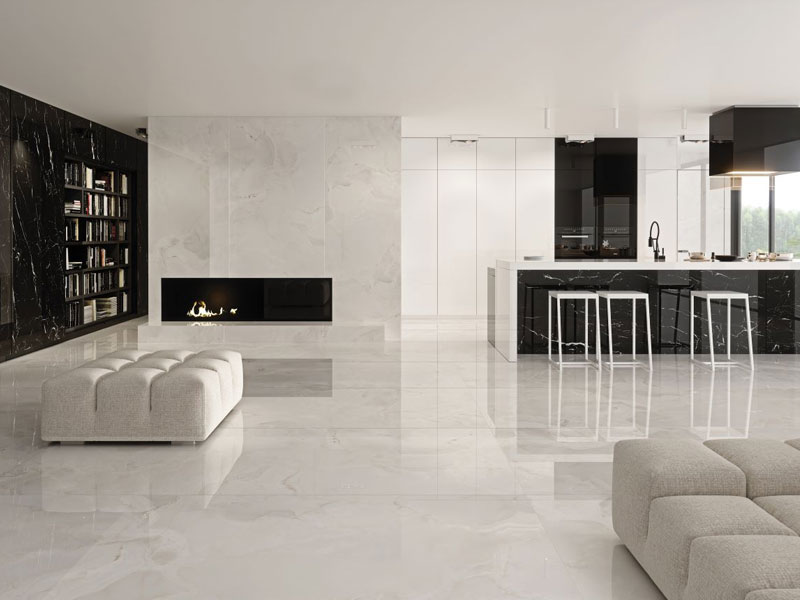
Premium surfaces with timeless appeal
Marvel Travertine offers an Italian porcelain interpretation of travertine with characteristic pores and subtle surface detail. The material works particularly well when the design requires warmth without excessive decoration.
Travertine references also coordinate naturally with oak, walnut, aged metals, limewash-inspired finishes and other warm neutral materials.
When Should Large Porcelain Slabs Be Used?
Porcelain slabs are effective when broad, uninterrupted surfaces are central to the design. Reduced grout frequency can give shower walls, fireplaces and feature walls a more continuous appearance.
For dramatic applications, Onyx combines stone-inspired movement with formats extending to 1600 × 3200 mm slabs. The larger scale is particularly suitable for statement walls where pattern movement should remain visible across a broad surface.
Large slabs work best when cutting, handling, substrate preparation and installation are planned early. Oversized format alone does not guarantee a premium result; detailing around corners, fixtures and openings remains critical.
How Should Luxury Tiles Be Selected for Different Rooms?
Each room presents a different combination of moisture, traffic, lighting and viewing distance. The same tile does not need to appear everywhere. A more considered strategy is to establish a consistent material family and adapt format, finish or texture according to each application.
What Works Best for a Luxury Bathroom?
A refined bathroom often benefits from fewer materials rather than more. Start with one dominant floor or wall surface, then add a secondary tile only when it creates a clear purpose.
Useful combinations include:
- Stone-look floor with a quieter wall tile
- Full-height marble-look porcelain with simple joinery
- Large wall tiles paired with a smaller shower detail
- Travertine-inspired surfaces with warm timber cabinetry
- A restrained base tile with one carefully positioned feature wall
A refined bathroom often benefits from fewer materials rather than more. Start with one dominant floor or wall surface, then introduce a secondary tile only when it serves a clear functional or visual purpose. Explore Showtile’s tile collections to compare porcelain, stone-look and feature surfaces suitable for refined bathroom schemes.
Which Premium Tiles Suit Kitchens and Entertaining Areas?
Kitchen tiles need to relate closely to the benchtop and cabinetry. Strong marble movement on a splashback may be effective when the benchtop is restrained, while a highly figured stone countertop may call for a calmer tiled backdrop.
For flooring, stone-look porcelain can establish a durable visual foundation through the kitchen, dining and living zones. A collection such as Royalstone uses a large 750 × 1500 mm honed format with subtle stone-inspired movement, helping reduce visual interruptions across expansive interiors.
The best combinations usually repeat an undertone rather than matching every surface exactly.
How Should Tiles Work Across Open-Plan Living Areas?
Large open-plan rooms benefit from surfaces that support long sightlines. Repeated changes in colour or pattern can divide the space unnecessarily, while a restrained premium floor tile can connect kitchen, dining and living areas.
For projects that extend this language toward terraces, courtyards or external entertaining spaces, the principles behind outdoor wall tiles design can help coordinate texture, exposure requirements and exterior materials without simply repeating an indoor finish outside.
Consistency should come from related tones, textures and proportions rather than identical products everywhere.
How Can Premium Tiles Create a Cohesive Material Palette?
A luxury interior feels resolved when every material has a clear role. Tile should be reviewed alongside timber, joinery, benchtops, paint, metal finishes and lighting rather than approved as an isolated sample.
How Should Tiles Coordinate With Timber and Stone?
Start by comparing undertones. Warm beige stone references generally coordinate more naturally with warm oak and bronze, while cool grey surfaces may sit more comfortably beside charcoal, stainless steel or cooler timber finishes.
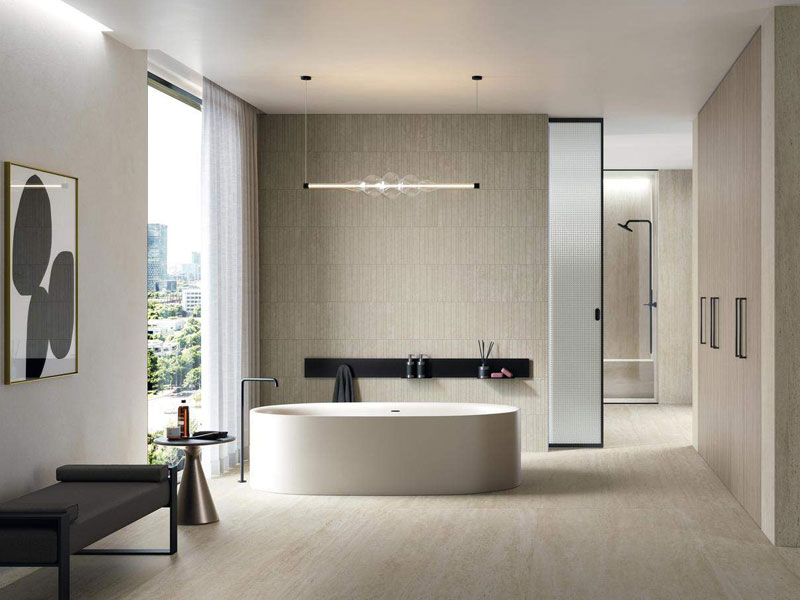
Statement tiles for sophisticated spaces
Samples should be viewed:
- In natural daylight
- Under evening artificial lighting
- Beside the actual cabinetry finish
- Against the selected benchtop
- Next to paint and metal samples
A project developing broader architectural specifications may also benefit from comparing regional design approaches discussed in architectural tiles Sydney, particularly where large formats and stone-inspired surfaces form part of the overall composition.
Should Every Room Use the Same Premium Tile?
No. Design continuity does not require identical surfaces.
A main living floor might use stone-look porcelain, while the bathroom uses a related travertine or marble interpretation. The materials can still feel connected when they share similar warmth, scale or tonal intensity.
This approach gives each room an individual identity without making the project feel fragmented.
How Do Tile Size and Finish Change the Luxury Feel of a Space?
Larger is not automatically better, and polished is not automatically more premium. Format and finish should respond to room proportion, application, lighting and maintenance requirements.
| Tile Choice | Visual Character | Suitable Applications | Key Consideration |
| Large-format porcelain | Calm, expansive | Living areas, bathrooms, entries | Requires careful layout and substrate preparation |
| Matt finish | Soft, understated | Floors, contemporary interiors | Reduces strong reflection |
| Honed finish | Natural, refined | Stone-inspired schemes | Creates balanced surface depth |
| Polished finish | Dramatic, reflective | Feature walls, selected interiors | Best used with controlled lighting |
| Textured tile | Tactile, dimensional | Feature walls, selected external areas | Cleaning and application must be considered |
| Small-format feature tile | Detailed, crafted | Niches, splashbacks, powder rooms | Use selectively to avoid visual clutter |
The most sophisticated interiors usually combine scale strategically rather than applying one format to every surface.
How Much Should Be Budgeted for a Premium Tile Project?
The tile purchase price represents only one part of the final investment. Large formats, natural materials, complicated layouts and detailed edges can increase installation requirements even when the tile quantity remains unchanged.
A useful budgeting formula is:
Total Project Cost = Tile Cost + Wastage + Freight + Preparation + Installation + Cutting + Grout + Finishing + Ongoing Care
Additional budget may be required for:
- Mitred corners
- Large slab handling
- Detailed pattern alignment
- Floor levelling
- Waterproofing
- Natural stone sealing
- Specialist cutting
- Replacement stock
Premium budgets are often best concentrated on high-visibility surfaces such as the main floor, ensuite, kitchen, entrance or feature wall rather than upgrading every tiled surface equally.
What Should Be Checked Before Ordering Premium Tiles?
Final selection should combine design approval with practical verification. Architects, designers, builders and homeowners should confirm the installation conditions before quantities are ordered.
What Should Be Included in a Pre-Order Checklist?
- Confirm floor, wall or external application.
- Check wet-area and slip requirements.
- Confirm size, thickness and surface finish.
- Review shade and pattern variation.
- Calculate required square metres.
- Add appropriate wastage.
- Review grout colour and joint width.
- Confirm substrate preparation.
- Check installation requirements for large formats.
- View samples beside adjoining materials.
- Consider keeping spare tiles for future repairs.
For high-end projects, working with a designer tiles company can also make it easier to compare surface families by application, material, format and finish before the final palette is locked in.
Which Showtile Collections Suit Refined Residential and Commercial Projects?
Showtile’s tile collection includes porcelain, natural stone, large-format slabs, stone-look finishes, mosaics, terrazzo references and feature surfaces for residential and commercial applications.
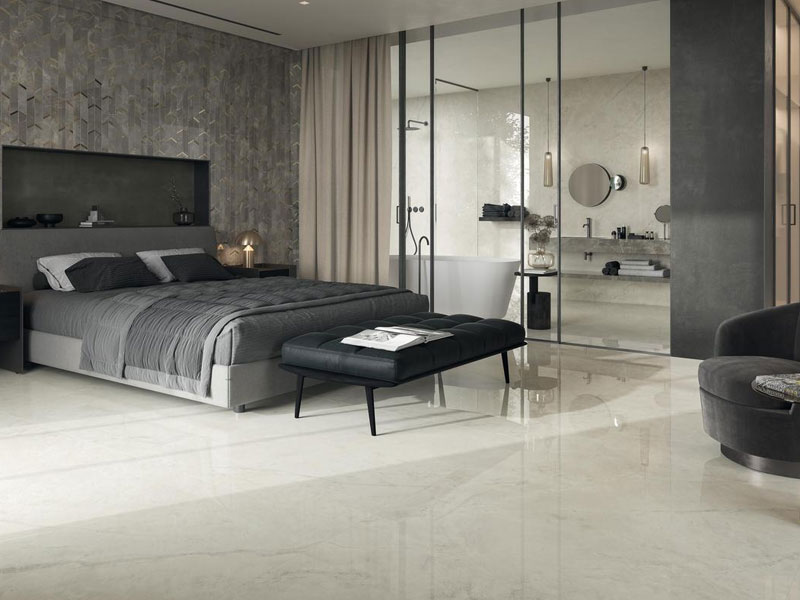
Elegant tile finishes by Showtile
Rather than choosing a collection purely by appearance, shortlist products according to the role each surface needs to play:
- Choose Marvel X when refined marble movement is required.
- Consider Marvel Travertine for warmer, softer material schemes.
- Use Royalstone where broad stone-inspired flooring can establish continuity.
- Explore Onyx where a dramatic large-format wall surface is appropriate.
- Compare porcelain slab options when reduced grout lines are central to the design.
- Introduce mosaics or tactile formats only where additional scale and texture serve a clear purpose.
Showtile collections can therefore support both quiet contemporary interiors and more expressive statement surfaces without requiring every room to follow the same material treatment.
Create a Refined Tile Scheme With Showtile
A successful luxury interior is defined less by how many statement materials it contains and more by how carefully each surface has been selected. Material quality, proportion, finish, lighting, technical suitability and installation detail should work together from the first sample through to the finished project.
By comparing premium porcelain, stone-inspired finishes, natural materials and large-format surfaces according to their actual application, homeowners and design professionals can create interiors that feel refined today while remaining coherent and practical over time.
Contact Showtile
📍 Showroom: 65 Canterbury Road, Bankstown NSW 2200, Australia
📞 Phone: +61 2 9709 5836
✉️ Email: sales@showtile.com.au
🌐 Website: https://showtile.com.au/



