


How to Clean Softec Tiles Without Damaging the Surface
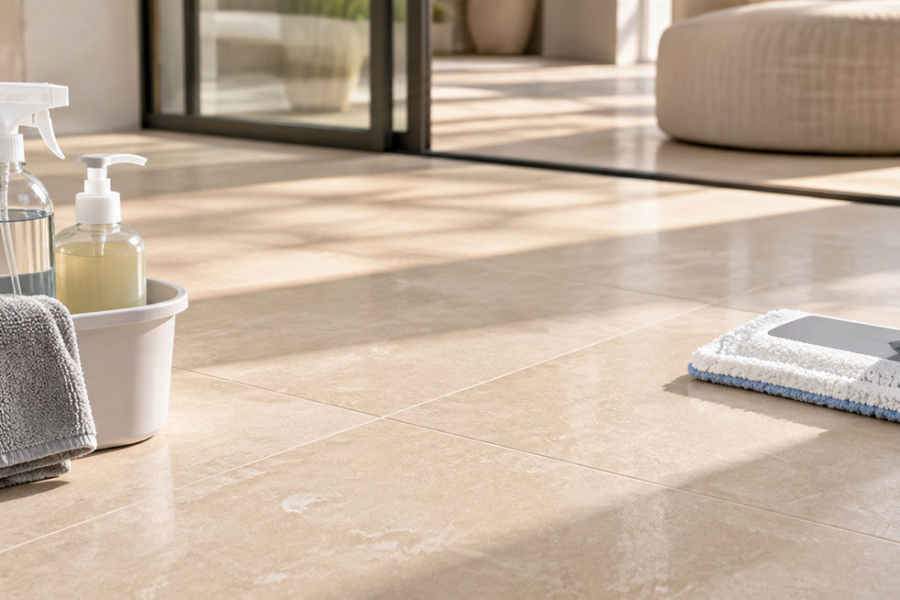
Proper care helps premium tile surfaces retain their appearance and practical performance over time. Show Tile recommends a gentle maintenance approach when considering how to clean Softec tiles, using soft cleaning tools, warm water and suitable pH-neutral products while avoiding unnecessary abrasion and harsh chemicals.
Why Are Softec™ Tiles Designed to Be Easier to Clean?
Softec™ combines a soft matt tactile surface with P3 wet slip resistance and easy-clean performance. The surface technology is designed to provide practical grip without relying on an aggressively coarse texture that may require more effort to maintain.
How Does the Softec™ Surface Affect Cleaning?
The Softec™ surface has a refined matt character inspired by natural stone. A less aggressively textured finish allows microfiber cloths, soft mops and suitable cleaning solutions to maintain better contact with the tiled surface.
That does not mean every mark disappears without cleaning. Dust, bathroom residue, spills and grout contamination still need routine attention.
For readers who want to understand the material before focusing on maintenance, Show Tile’s guide to what is Softec tile technology explains how tactile feel, P3 wet slip resistance, easy-clean performance and three-dimensional design work together within the surface system.
Does Easy-Clean Mean Softec™ Is Maintenance-Free?
No. Easy-clean porcelain tiles still require regular maintenance.
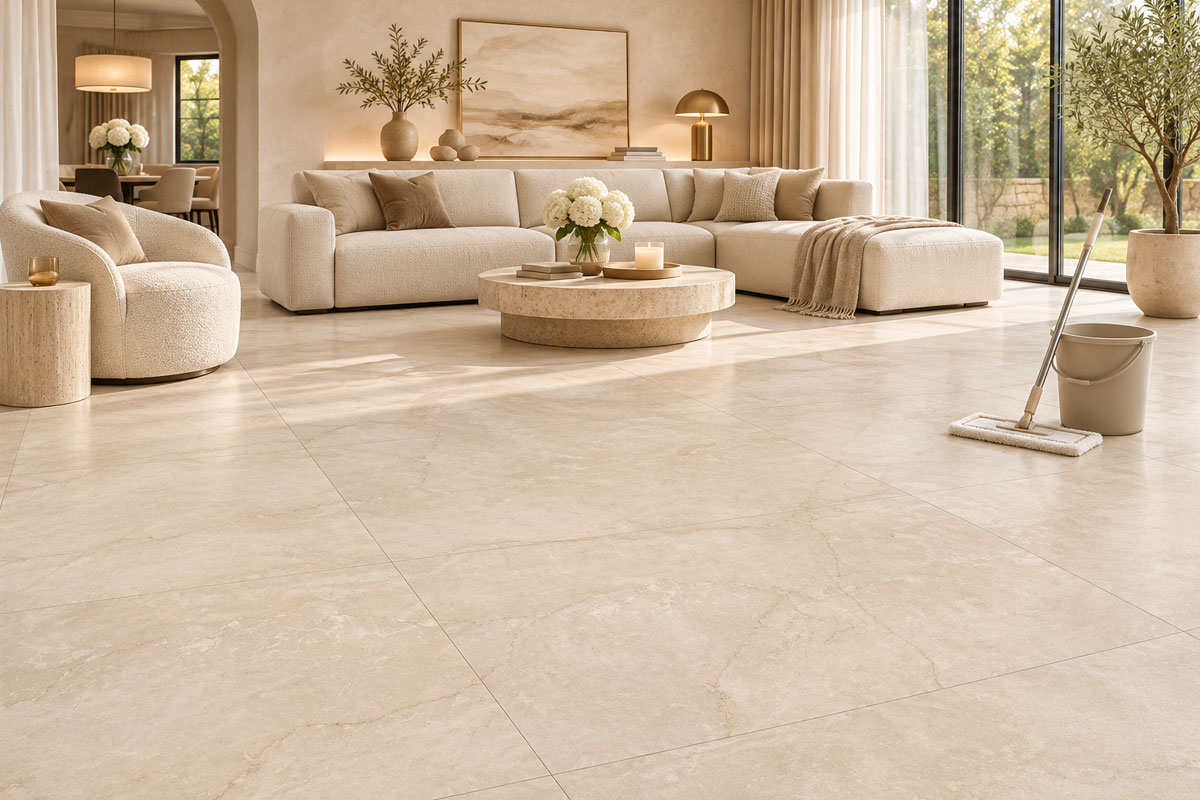
Gentle cleaning helps maintain Softec™ tile surfaces
The main objective is to use simple, surface-appropriate methods rather than relying on aggressive scrubbing or strong chemicals. Removing loose dirt before mopping and cleaning spills before residue accumulates can keep the routine considerably simpler.
What Is the Best Everyday Cleaning Routine for Softec™ Tiles?
The simplest routine is to remove loose debris, damp-mop with warm water and a pH-neutral cleaner, remove remaining residue and let the tiles dry. Soft cleaning tools should be used throughout the process.
Step 1: Remove Dust and Loose Grit
Begin with a soft-bristle broom, microfiber dust mop or vacuum suitable for hard flooring.
Removing loose material before wet cleaning is important because:
- Sand and grit can move across the tile during mopping
- Loose dirt can create muddy residue when mixed with water
- Dust can collect around grout joints
- Clean water remains effective for longer when debris is removed first
High-traffic entries may need more frequent dry cleaning than quieter areas.
Step 2: Mop With Warm Water and a pH-Neutral Cleaner
Use warm water with a pH-neutral tile cleaner suitable for porcelain surfaces.
A microfiber mop is a practical choice because the soft fibres can collect fine residue without relying on abrasive action.
Follow the cleaner manufacturer’s dilution instructions rather than adding extra concentrate. Stronger does not necessarily mean cleaner, and excess product can leave a film behind.
Step 3: Remove Remaining Cleaning Residue
If the cleaner requires rinsing, go over the surface again with clean water.
Cleaning residue can make a matt surface appear streaky or uneven, particularly under directional lighting.
Use clean water rather than repeatedly mopping with the same dirty solution.
Step 4: Allow the Surface to Dry
The floor can usually air-dry after cleaning. A clean microfiber cloth can be used on smaller areas or walls where a faster, streak-free finish is desirable.
Avoid applying unnecessary coatings simply to create shine. Softec™ is designed around a refined matt surface character rather than a polished appearance.
Which Cleaning Tools Are Suitable for Softec™ Tiles?
Soft, non-abrasive tools are the safest starting point for routine Softec™ tile maintenance.
Which Tools Work Well for Everyday Cleaning?
Suitable options include:
- Microfiber mop
- Microfiber cloth
- Soft-bristle broom
- Soft-bristle hand brush
- Vacuum attachment designed for hard floors
Each tool should be clean before use. A dirty mop can simply redistribute grease and residue over the surface.
Which Tools Should Be Avoided?
Avoid starting with:
- Steel wool
- Metal brushes
- Wire scrubbers
- Highly abrasive pads
- Coarse scouring tools
These tools are unnecessary for routine porcelain tile care and may affect the appearance of premium finishes or surrounding grout.
Can a Brush Be Used on Softec™ Tiles?
Yes, but begin with a soft-bristle brush.
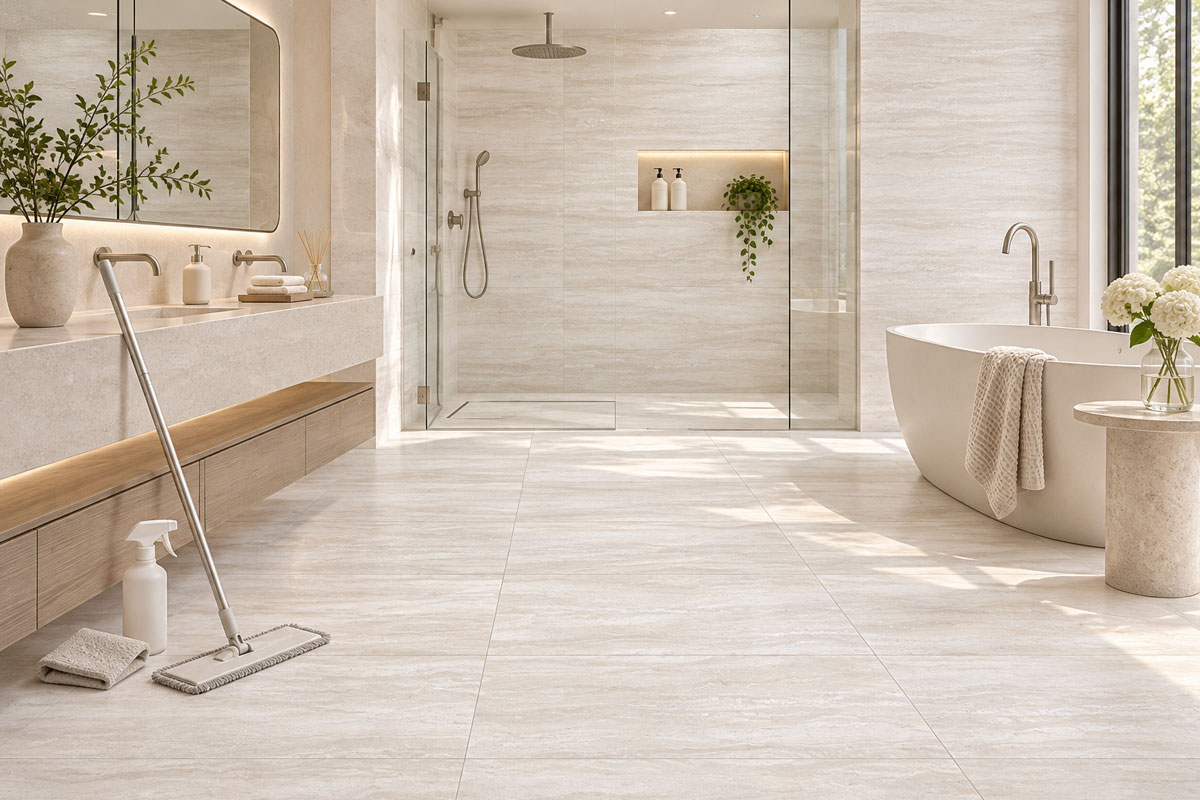
Soft tools support easy everyday tile care
A gentle brush can help loosen residue around textured areas or grout lines without introducing aggressive abrasion.
Hard or metal brushes should not become the default solution for stubborn dirt.
How Should Spills and Everyday Stains Be Cleaned From Softec™?
Spills should be dealt with promptly using a compatible pH-neutral cleaner, soft cloth or brush, followed by clean water where required. Early cleaning usually prevents everyday residue from drying onto the surface.
How Should Coffee and Drink Spills Be Removed?
Use a simple sequence:
- Blot or wipe away excess liquid.
- Apply a correctly diluted pH-neutral cleaner.
- Wipe gently with microfiber.
- Rinse if the cleaner requires it.
- Dry the area with a clean cloth if necessary.
Avoid aggressively scrubbing a fresh spill when gentle cleaning can remove the residue.
How Should Grease and Food Residue Be Treated?
First remove any loose food material without scratching the surface.
A tile-compatible neutral cleaner can then be applied according to its instructions. If gentle agitation is required, use a microfiber cloth or soft brush.
Strong solvent-based degreasers should not be the automatic first choice unless compatibility with the tile and grout has been established.
What Should You Do With Dried-On Dirt?
Dampen the residue first rather than scraping aggressively.
Apply a suitable cleaner and allow the product to remain on the surface for the dwell time specified by the cleaner manufacturer. Gently loosen the residue, then rinse and inspect the surface.
There is no universal five- or ten-minute dwell time for every Softec™ installation.
Can Vinegar Be Used on Softec™ Tiles?
Vinegar should not be treated as the default Softec™ cleaning solution. A pH-neutral porcelain tile cleaner is a safer routine recommendation because vinegar is acidic and may not be compatible with every grout, adjacent material or installation system.
Why Can Acidic Cleaners Create Problems?
The tile is only one component of the installed surface.
Acidic products may interact with:
- Grout
- Natural stone installed nearby
- Sealers
- Metal trim
- Other finishes within the room
A cleaner that appears acceptable for porcelain may still create problems elsewhere in the tiled assembly.
For routine maintenance, a compatible neutral cleaner reduces unnecessary risk.
Can You Use a Steam Mop on Softec™ Tiles?
Steam cleaning should not be assumed to be universally appropriate without checking the tile, grout and installation guidance.
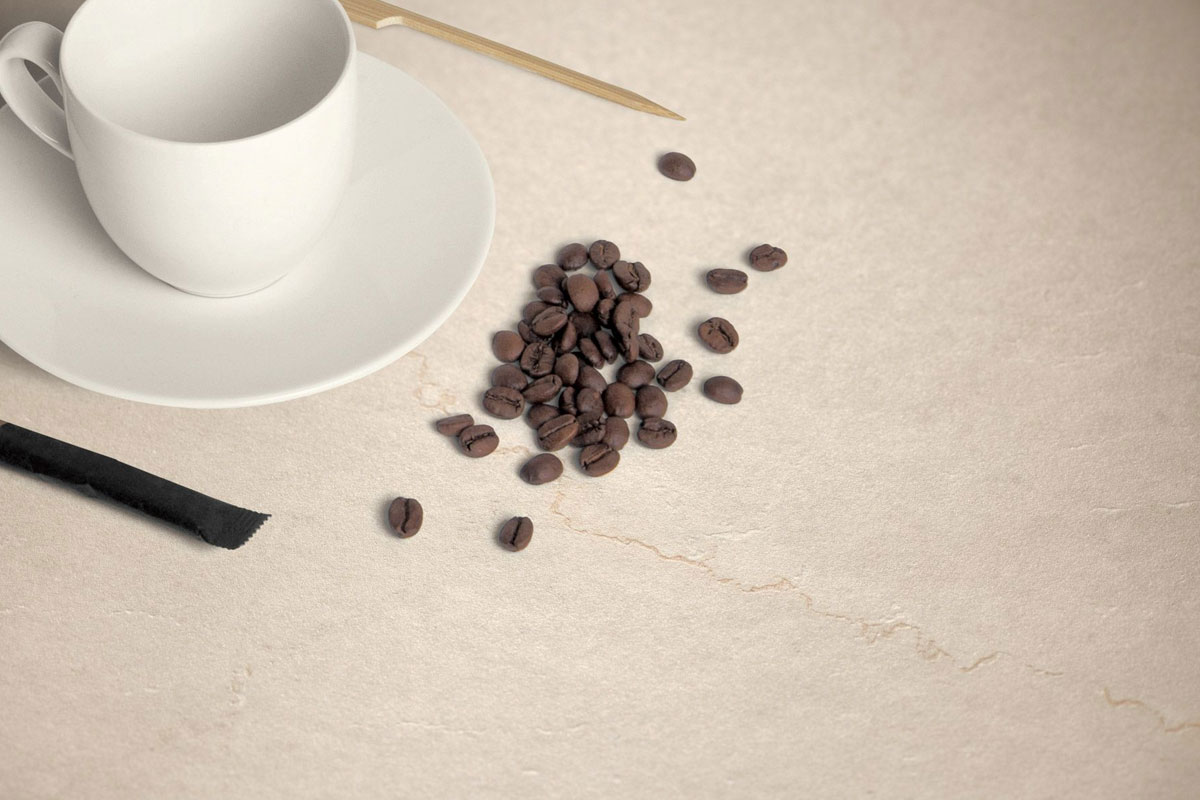
Regular maintenance keeps premium tiles looking refined
A damp microfiber mop with a suitable pH-neutral cleaner is a simpler default method.
Homeowners who specifically want to use a steam mop should confirm compatibility with the selected Softec™ product and surrounding installation materials before making steam part of the regular cleaning routine.
How Should Softec™ Tiles Be Cleaned in Bathrooms and Wet Areas?
Bathroom maintenance should focus on removing soap residue, surface buildup and moisture-related grime without leaving chemical residue behind.
How Can Soap Residue Be Reduced?
Regular light cleaning is generally better than waiting for thick buildup to develop.
Useful habits include:
- Removing visible residue promptly
- Using a pH-neutral bathroom-compatible tile cleaner
- Rinsing surfaces when required
- Allowing wet areas to dry
- Maintaining adequate ventilation
The same routine can help keep grout visually consistent with the tile.
Should Bathroom Softec™ Tiles Be Scrubbed Aggressively?
No. Stronger scrubbing should not be the first response to every mark.
Start with warm water, the appropriate cleaner and a soft cleaning tool. Escalate only when the residue actually requires another approved method.
Can Cleaning Affect Slip Performance?
Cleaning is relevant to practical floor performance because a film of soap, grease or cleaner residue may change how a wet surface feels underfoot.
The objective is therefore not only visual cleanliness. Proper maintenance should also prevent unwanted residue from accumulating on the finished surface.
How Should Grout Around Softec™ Tiles Be Cleaned?
Grout should be maintained alongside the tile, but grout care should not automatically use the same chemicals as porcelain cleaning.
What Is the Safer Approach to Grout Cleaning?
Begin with:
- A grout-compatible mild cleaner
- A soft grout brush
- Clean water for rinsing
- Regular light maintenance
Avoid jumping immediately to strong acids or metal brushes.
Why Does Clean Grout Matter in a Premium Installation?
Grout forms part of the overall visual grid.
Even when the porcelain is clean, heavily soiled joints can make a premium tiled area appear poorly maintained. Maintaining both components helps preserve the intended relationship between tile colour, scale and layout.
What Should You Avoid When Cleaning Softec™ Tiles?
Avoid unnecessary abrasion, strong chemicals and cleaning methods that have not been checked for compatibility with the installed surface.
Key products and practices to avoid as default methods include:
- Steel wool
- Wire brushes
- Highly abrasive scouring pads
- Strong acidic cleaners
- Harsh chemicals without compatibility checks
- Mixing different cleaning chemicals
- Allowing cleaning residue to dry repeatedly
- Applying coatings or sealers without confirming suitability
A more aggressive cleaner should solve a specific cleaning problem, not replace ordinary maintenance.
How Often Should Softec™ Tiles Be Cleaned?
Cleaning frequency should follow the amount of traffic, moisture and residue in the space rather than one fixed schedule.
Which Areas Need More Frequent Attention?
Entries and high-use floors may collect more grit.
Bathrooms may develop soap or moisture residue.
Hospitality and commercial spaces may experience more frequent spills and foot traffic.
The maintenance routine should respond to these conditions.
When Is Deeper Cleaning Needed?
Consider deeper cleaning when:
- Regular damp mopping no longer removes visible buildup
- Grout becomes noticeably discoloured
- Soap or grease film is present
- A dried spill remains after routine cleaning
Use the least aggressive compatible method capable of removing the contamination.
How Should Cleaning Change by Space?
| Space | Common Cleaning Issue | Maintenance Priority |
| Living area | Dust and loose grit | Vacuum or sweep before damp mopping |
| Bathroom | Soap and moisture residue | Regular neutral cleaning and rinsing |
| Entry | Sand and tracked-in dirt | Remove abrasive debris promptly |
| Hospitality space | Traffic and spills | Frequent light cleaning |
| Feature wall | Dust and splash marks | Soft microfiber spot cleaning |
A condition-based approach is more useful than prescribing the same cleaning interval for every room.
Which Cleaning Method Fits Different Types of Dirt?
| Cleaning Situation | First Approach | Recommended Tool | Avoid as a First Step |
| Loose dust | Sweep or vacuum | Soft broom / hard-floor vacuum | Wet mopping over loose grit |
| Light marks | Warm water + neutral cleaner | Microfiber cloth | Abrasive scourer |
| Fresh drink spill | Blot and clean promptly | Soft cloth | Leaving residue to dry |
| Grease | Compatible neutral cleaner | Soft cloth or brush | Unapproved solvent |
| Soap residue | Repeated gentle cleaning | Microfiber mop | Strong acid |
| Dirty grout | Grout-compatible cleaner | Soft grout brush | Steel brush |
This table can be used as a quick reference for day-to-day maintenance.
Do Different Softec™ Collections Need Different Care?
The general cleaning approach can remain similar across Softec™ porcelain products, but texture, format and grout density may change the practical maintenance routine.
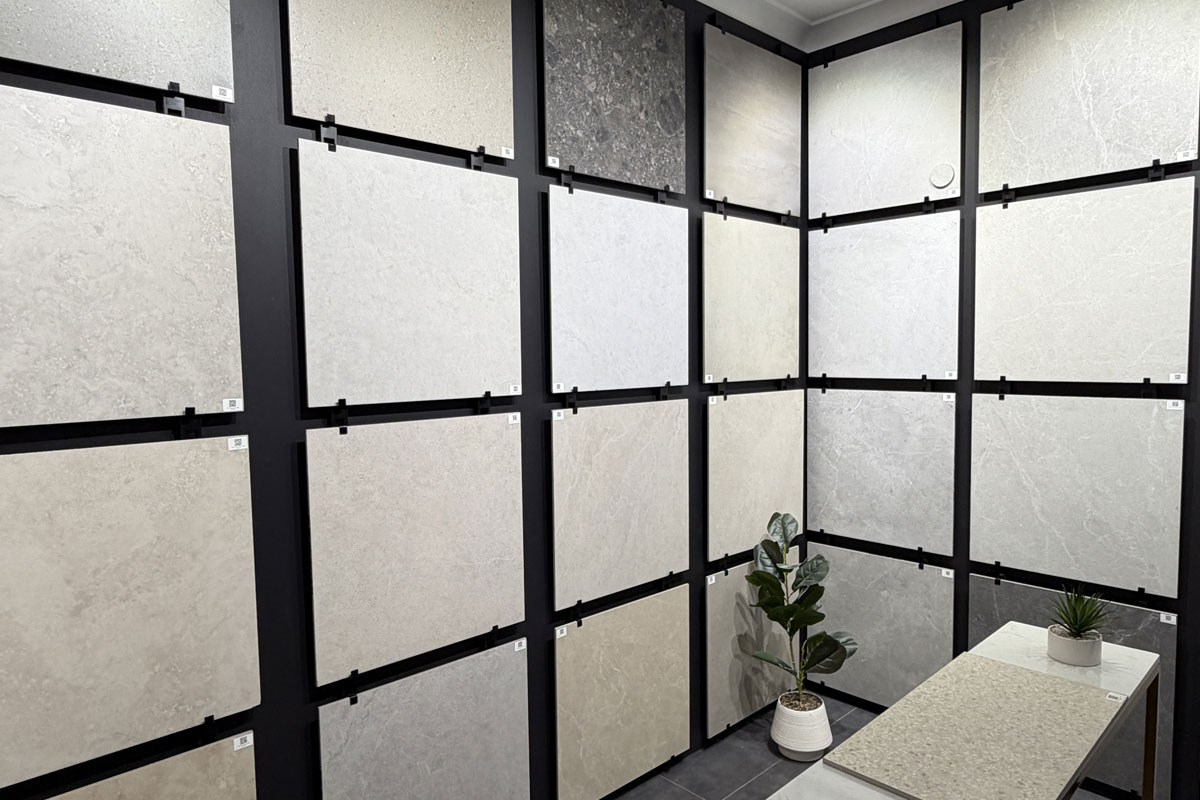
Show Tile Softec™ surfaces are designed for practical upkeep
The current Softec™ tile collection includes stone-inspired surfaces that should still be reviewed individually before installation and maintenance.
How Can Travertino Softec™ Be Maintained?
Travertino Softec™ is a porcelain tile with travertine-inspired visual character.
Because Travertino Softec™ is porcelain, maintenance should not automatically follow the same sealing or chemical rules as natural travertine.
The distinction between porcelain and natural stone is important whenever a cleaning product is being selected.
How Can Bottocino Softec™ Be Maintained?
Bottocino Softec™ includes larger field tiles and narrower strip formats.
Areas with smaller pieces can contain a higher proportion of grout, making grout maintenance more noticeable than on broad large-format surfaces.
The porcelain and the grout should therefore be treated as related but separate maintenance considerations.
How Can Crema Marfil Softec™ Be Maintained?
Crema Marfil Softec™ is another porcelain interpretation of natural stone character.
Crema Marfil Softec™ should not automatically receive the same care treatment as genuine Crema Marfil stone. Product material should always be confirmed before choosing cleaners, sealers or restoration methods.
How Can Softec™ Tiles Stay Consistent Over Time?
A simple maintenance strategy is usually more effective than occasional aggressive cleaning.
Remove Loose Grit Before Wet Cleaning
Dry debris is easier to remove before water is introduced.
This also reduces the chance of dragging sand across the surface during mopping.
Treat Spills Before They Become Buildup
Prompt cleaning can prevent coffee, food residue, soap or grease from drying onto the tile and grout.
Keep Cleaning Products Consistent
Frequently changing between strong cleaners introduces unnecessary variables.
Use a suitable neutral cleaner routinely and only introduce another product when a specific problem requires it.
Follow Product-Specific Guidance
The separate guide to Softec tiles Australia provides broader information about the range, applications and product availability, while the dedicated Softec™ technology page gives more context about the surface itself.
Cleaning decisions should still be based on the exact installed product and the surrounding materials.
What Is the Simplest Softec™ Cleaning Checklist?
For straightforward day-to-day care:
- Remove dust and loose grit first
- Use warm water and a suitable pH-neutral cleaner
- Clean with microfiber or another soft tool
- Treat spills promptly
- Rinse away cleaner residue when required
- Keep grout clean
- Avoid abrasive scrubbers
- Avoid strong acids unless specifically approved
- Check compatibility before using steam or unfamiliar chemicals
- Follow the selected product’s care guidance
This routine keeps maintenance focused on prevention rather than corrective cleaning.
Keep Softec™ Surfaces Performing as Designed
Premium tile care does not need to involve aggressive chemicals or complicated maintenance. A consistent routine based on soft cleaning tools, compatible products and prompt removal of residue can help preserve both the appearance and practical character of Softec™ surfaces.
Show Tile provides Softec™ products for design-led residential and commercial projects, while the dedicated Softec™ range allows homeowners, designers and builders to compare suitable surface options before installation.
The best long-term approach is straightforward: understand the installed material, use the gentlest effective cleaning method and confirm compatibility before introducing a new chemical, tool or maintenance treatment.
Contact Showtile
📍 Showroom: 65 Canterbury Road, Bankstown NSW 2200, Australia
📞 Phone: +61 2 9709 5836
✉️ Email: sales@showtile.com.au
🌐 Website: https://showtile.com.au/



