


What Is Softec Tile Technology and How Does It Work?
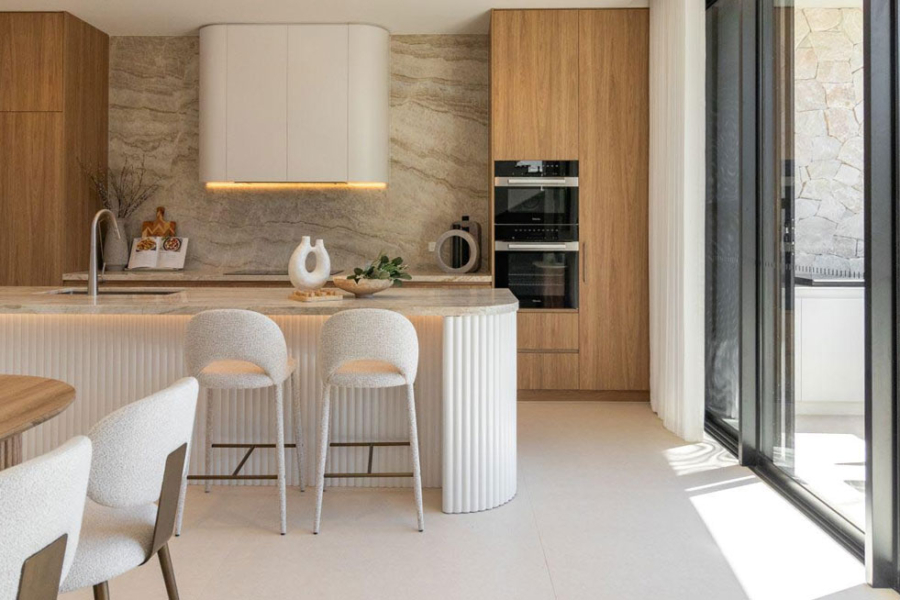
Developed by Show Tile, Softec™ brings tactile comfort, practical performance and stone-inspired design into one porcelain surface system. Understanding what is Softec tile technology helps homeowners, architects and designers see how soft matt feel, P3 slip resistance when wet, easy-clean performance and dimensional texture can work together in residential and commercial interiors.
What Exactly Is Softec™ Tile Technology?
Softec™ is a surface technology applied to selected porcelain tile collections rather than a separate tile material. The porcelain forms the tile body, while Softec™ describes the tactile and performance characteristics engineered into the surface.
Is Softec™ a Material or a Surface Finish?
The distinction is important.
Softec™ products currently shown by Show Tile use porcelain tile as the base material. Softec™ then adds a specific surface approach built around:
- Soft matt tactile character
- P3 slip resistance when wet
- Easy-clean performance
- Stone-inspired appearance
- Three-dimensional visual texture
Current Crema Marfil, Bottocino and Travertino product pages all identify the collections as porcelain products.
Who Developed Softec™?
Softec™ was created by Show Tile as part of the brand’s development of tile materials and surface technologies.
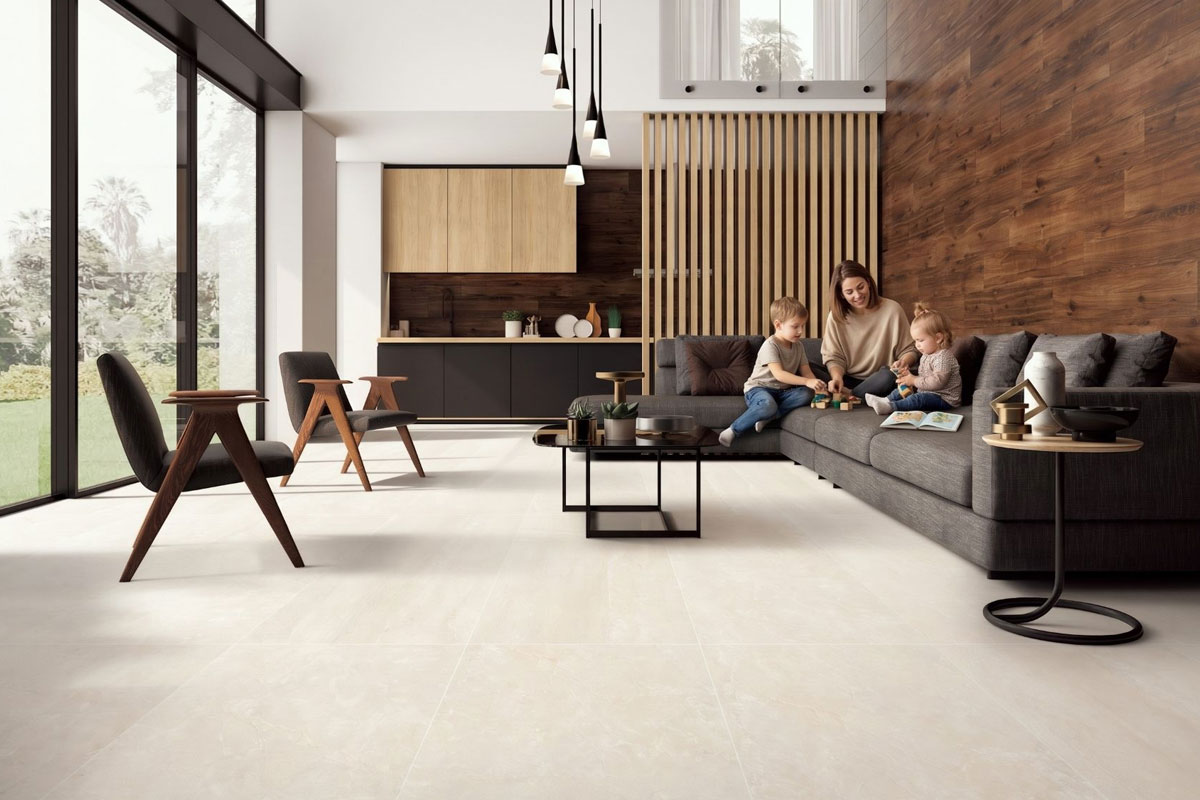
Softec™ combines soft-touch comfort with practical performance
Show Tile states that Softec™ is available exclusively through Show Tile, so the name refers to a proprietary surface concept rather than a generic term for every soft matt tile.
What Does Softec™ Combine in One Surface?
The technology brings together characteristics that are often considered separately during specification:
- Natural-stone-inspired touch
- Matt visual character
- P3 wet slip resistance
- Easier everyday cleaning
- Dimensional surface design
This combination is the central reason Softec™ differs from simply describing a porcelain tile as “matt”.
Why Was Softec™ Developed?
Softec™ was developed to address the tension between tactile comfort, practical grip and everyday maintenance. Some projects need more slip resistance, but homeowners and designers may not want an aggressively textured surface that feels visually or physically utilitarian.
Why Can Anti-Slip Texture Create a Design Challenge?
More pronounced surface texture can be useful where additional grip is required, but deeper or rougher textures may also change:
- How the tile feels underfoot
- How light moves across the surface
- How easily residue can be removed
- How the material fits into a premium interior
Not every slip-resistant tile creates the same experience, so the issue should not be reduced to “rough versus smooth”.
Why Does Tactile Quality Matter in Premium Interiors?
Tile is experienced through both sight and touch.
Surface character affects:
- Perceived material quality
- Barefoot comfort
- Reflection
- Shadow
- Interaction with timber, joinery and stone
- The overall atmosphere of a room
For a designer tiles company, surface technology therefore matters beyond colour and pattern; tactile behaviour can influence how a whole material palette feels when installed. Designer tile selection is strongest when appearance and practical use are considered together.
How Does Softec™ Address This Trade-Off?
Softec™ brings soft touch, P3 wet slip resistance and easy-clean performance into the same surface concept.
Instead of treating grip, feel and maintenance as three unrelated specifications, the technology is designed to let these characteristics coexist within a stone-inspired porcelain finish.
How Does the Softec™ Surface Feel?
“Soft touch” describes the tactile impression of the surface, not a soft or flexible tile body. Softec™ remains porcelain; the softer character refers to how the matt finish feels compared with more visibly coarse surface textures.
Does “Soft Touch” Mean the Tile Is Physically Soft?
No.
Softec™ is not:
- Cushioned
- Flexible
- Rubber-like
- Fabric-like
The term describes a smooth, refined tactile sensation inspired by natural stone.
This distinction should be stated clearly because “soft” can otherwise be interpreted as a structural property rather than a surface characteristic.
Does Softec™ Feel Exactly Like Natural Stone?
Not exactly.
Natural stone is formed geologically and contains inherent variation in colour, veining and texture. Softec™ uses porcelain to interpret a stone-inspired tactile and visual direction with greater manufacturing consistency.
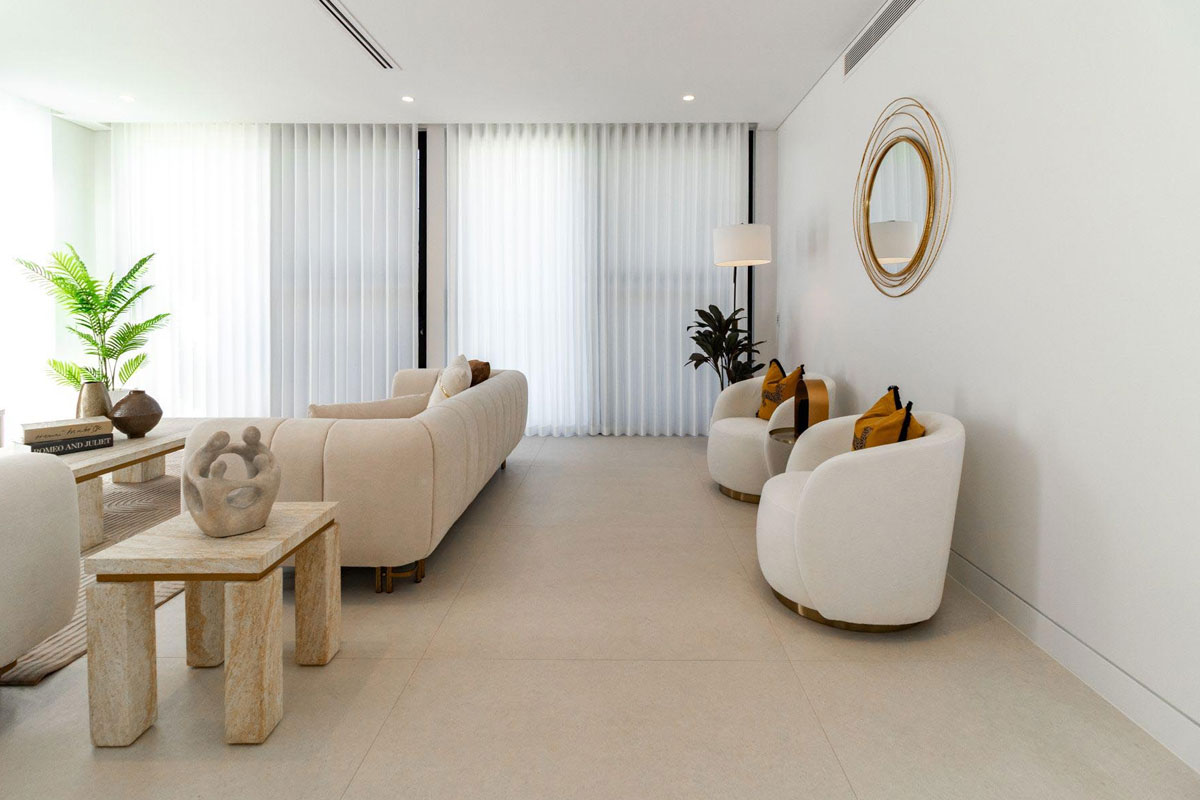
Show Tile brings Softec™ technology to refined spaces
Natural Crema Marfil sold by Show Tile, for example, is an 18 mm natural stone product with a honed finish and requires sealing, while Crema Marfil Softec™ is a porcelain tile system.
Why Should Softec™ Be Viewed as a Physical Sample?
Surface technology is difficult to assess fully on a screen.
A physical sample allows a designer or homeowner to evaluate:
- Tactile feel
- Mattness
- Stone movement
- Surface relief
- Light response
- Colour alongside other finishes
Show Tile currently offers a Softec™ Sample Box Request specifically for designers and architects.
What Does P3 Slip Resistance Mean for Softec™?
Show Tile states that Softec™ has P3 slip resistance when wet. The rating provides a defined reference for wet slip performance, but P3 should not be interpreted as automatic approval for every wet, commercial or high-risk environment.
Can Softec™ Be Used in Bathrooms?
Show Tile specifically identifies bathrooms and wet areas among the intended applications for Softec™ where surface feel, slip resistance and maintenance are relevant.
A bathroom specification should still consider:
- Exact location
- Floor or wall use
- Expected water exposure
- Project requirements
- Installation method
- Relevant professional advice
Does P3 Mean Softec™ Is Suitable for Every Wet Area?
No.
A slip rating is one factor within a wider material specification.
A residential ensuite, hospitality bathroom and highly exposed external area may have different performance requirements even when all three involve moisture.
The correct approach is to begin with the project condition and then determine whether the specific Softec™ product is appropriate.
Why Should Slip Performance Be Considered With Surface Feel?
A floor is not experienced through a rating alone.
Successful specification needs to consider:
grip + tactility + cleaning + visual character
Softec™ is distinctive because these considerations are intentionally brought together within the same surface concept.
How Does Softec™ Support Easier Cleaning?
Softec™ is designed to deliver easy-clean performance without relying on an aggressively rough surface to provide its stated P3 wet slip resistance. This addresses a practical concern for spaces where grip matters but frequent scrubbing of heavily textured finishes is undesirable.
Does Easy-Clean Mean Maintenance-Free?
No.
Softec™ surfaces still require routine care.
Maintenance should include appropriate cleaning practices, attention to grout and prompt removal of residue or spills where necessary.
“Easy-clean” describes the design objective of the surface; it should not be interpreted as stain-proof, maintenance-free or self-cleaning.
Why Does Surface Texture Affect Cleaning?
Texture changes how dirt and cleaning tools interact with the tile.
A deeper surface profile can create more recessed areas, while a smoother profile provides more continuous contact during cleaning.
For premium spaces, the ideal surface is therefore not simply the smoothest or roughest option. Cleaning expectations need to be considered alongside safety and design.
How Does 3D Surface Design Work in Softec™?
Softec™ can incorporate dimensional surface design that creates sculpted relief and varying depths across the tile. Show Tile explains that these changes catch light from different angles, producing additional visual depth and strengthening the natural stone effect.
What Does 3D Relief Add to an Interior?
Dimensional texture can create:
- Subtle shadow
- Changing highlights
- Deeper stone character
- More tactile wall surfaces
- Architectural focal points
The effect becomes particularly visible when directional or natural light moves across the relief.
Where Does 3D Texture Work Best?
Suitable locations can include:
- Vanity walls
- Bathroom feature walls
- Niches
- Living-room feature planes
- Hospitality interiors
- Retail focal areas
A strong 3D surface does not need to cover the entire room.
Should Every Surface Use Dimensional Texture?
Usually not.
A more controlled scheme can pair a quieter Softec™ floor or wall with one related textured feature surface.
This allows material continuity without making the complete interior visually busy.
Where Can Softec™ Tiles Be Used?
Show Tile positions Softec™ for residential and commercial applications where surface feel, slip resistance, durability and maintenance are important. Current guidance includes bathrooms, wet areas, living spaces, hospitality and retail interiors.
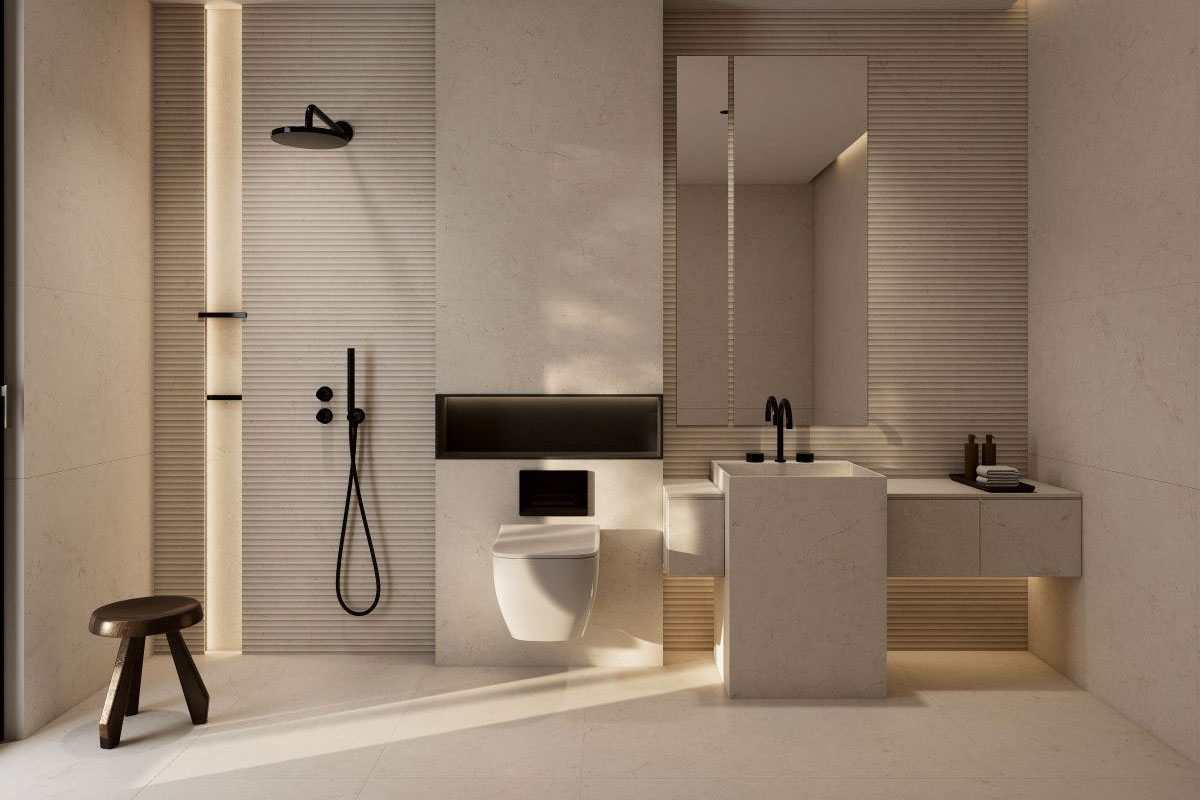
P3 slip resistance supports confident wet-area design
Which Residential Spaces Can Use Softec™?
Potential uses include:
- Bathrooms
- Ensuites
- Living areas
- Entry spaces
- Feature walls
- Connected interior zones
The exact product should still be checked for its listed application.
Can Softec™ Be Used in Commercial Interiors?
Yes. Show Tile identifies hospitality, retail and other contemporary commercial interiors among potential Softec™ applications.
Commercial specification should still consider traffic, moisture exposure and project-specific compliance requirements.
Can Softec™ Be Used on Both Floors and Walls?
Current product pages for Crema Marfil, Bottocino and Travertino all list wall/floor applications for their Softec™ options.
This makes the technology relevant where designers want stronger material continuity between vertical and horizontal surfaces.
How Is Softec™ Different From Standard Matt Porcelain?
| Consideration | Softec™ | Standard Matt Porcelain |
| Surface concept | Purpose-developed soft-touch technology | Conventional matt finish |
| Slip performance | P3 when wet, according to Show Tile | Depends on product |
| Cleaning | Designed for easy-clean performance | Depends on surface |
| Tactile character | Natural-stone-inspired soft matt feel | Varies |
| Dimensional design | 3D surface options available | Product-dependent |
| Availability | Exclusive through Show Tile | Widely available |
Softec™ should not be described as automatically superior to every standard matt porcelain tile. Matt porcelain varies substantially by manufacturer, finish and intended application.
The distinction is that Softec™ deliberately combines a defined set of tactile, slip, cleaning and visual characteristics within one technology.
How Is Softec™ Different From Natural Stone?
The main difference is material origin and consistency rather than simply appearance.
Natural stone offers authentic geological variation, while Softec™ uses porcelain to produce a controlled stone-inspired surface.
When Might Softec™ Be the More Appropriate Direction?
Softec™ may suit projects prioritising:
- Repeatable formats
- Surface consistency
- Porcelain construction
- P3 wet slip performance
- Easier everyday care
- Coordinated stone-inspired visuals
When Might Natural Stone Be Preferred?
Natural stone may be preferred when the design prioritises:
- Authentic geological character
- Unique veining
- Natural variation
- Traditional stone craftsmanship
Neither direction is universally better. The material should reflect project priorities.
Which Softec™ Collections Are Currently Available?
Show Tile’s dedicated Softec™ range currently highlights Travertino, Bottocino and Crema Marfil.
How Does Crema Marfil Use Softec™?
Crema Marfil Softec™ is a stone-look porcelain collection available in Beige and White.
Current Softec™ sizes include:
- 600×600
- 600×1200
The collection also includes a 3D Concave 600×1200 textured option for more dimensional wall treatments.
How Does Bottocino Use Softec™?
Bottocino Softec™ combines stone-look porcelain with larger field formats and narrow strip options.
Current listed formats include:
- 600×600
- 600×1200
- 23×148 mm chips on a 300×300 sheet
- 28×600 mm chips on a 300×600 sheet
The 9 mm collection is listed for wall and floor applications.
How Does Travertino Use Softec™?
Travertino Softec™ interprets travertine through porcelain and provides both Cross and Vein visual directions in White and Beige.
The current Softec™ format is 600×600, with wall and floor applications listed by Show Tile.
How Do the Softec™ Collections Compare?
| Collection | Visual Direction | Format Direction | Design Use |
| Crema Marfil | Creamy stone character | Larger field + 3D Concave | Luxury bathrooms and feature surfaces |
| Bottocino | Warm subtle stone | Field tiles + narrow strips | Layered architectural interiors |
| Travertino | Travertine character | Cross and Vein looks | Warm contemporary schemes |
The broader Softec™ tile range can support product discovery, while individual product pages remain important for checking current formats and applications.
For readers comparing availability, collections and purchasing context rather than the technology itself, the separate guide to Softec tiles Australia covers that commercial intent in more detail.
How Should Architects and Designers Specify Softec™?
Softec™ should be specified by application and performance requirements before colour or visual preference.
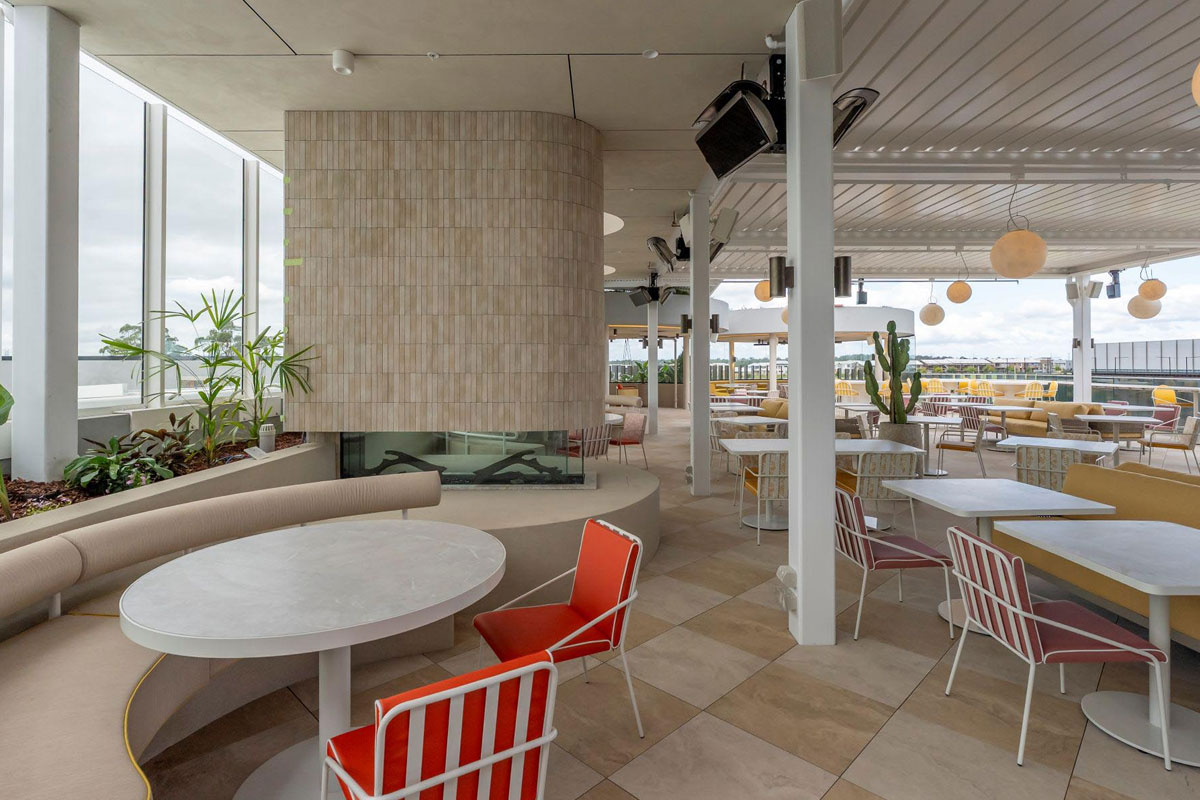
Stone-inspired surfaces bring texture and depth to interiors
Start With the Intended Application
First establish:
- Floor or wall
- Wet or dry area
- Residential or commercial use
- Expected traffic
- Maintenance requirements
Review Slip Performance
P3 is documented by Show Tile, but the project team still needs to determine whether that classification is appropriate for the specific location.
Inspect Physical Samples
Review Softec™ beside:
- Joinery
- Natural stone
- Timber
- Paint
- Metal finishes
- Benchtops
Material relationships are easier to judge when samples are viewed together.
Review Samples Under Project Lighting
Light affects:
- Stone movement
- Surface depth
- Shadow
- 3D relief
- Colour temperature
A tile that looks quiet in diffuse showroom light may read differently under directional wall lighting.
What Should Homeowners Check Before Choosing Softec™?
A practical selection sequence is:
- Identify the room and application
- Confirm floor or wall suitability
- Review moisture conditions
- Check required slip performance
- Compare Softec™ collections
- Select colour and format
- Review a physical sample
- Coordinate grout and surrounding materials
- Check the surface under actual lighting
- Confirm final installation requirements
This process keeps the decision focused on how the surface will perform in the finished space rather than choosing from an online image alone.
What Are the Main Benefits and Considerations of Softec™?
| Area | Main Softec™ Characteristic | What Still Needs to Be Checked |
| Tactility | Soft matt feel | Personal preference and sample |
| Slip | P3 when wet | Project-specific suitability |
| Cleaning | Easy-clean design | Routine maintenance |
| Appearance | Stone-inspired depth | Colour and lighting |
| Texture | 3D options available | Placement and visual intensity |
| Application | Selected wall/floor products | Individual product specification |
| Supply | Exclusive Show Tile technology | Current availability |
The table highlights why Softec™ should be treated as a coordinated specification rather than a single performance claim.
See How Softec™ Performs Beyond the Screen
Surface technology is easier to understand when tactility, colour and dimensional depth can be evaluated together. Show Tile provides access to the Softec™ range for homeowners, architects, interior designers and builders considering the technology for residential or commercial projects.
The dedicated Softec™ collection can be used to explore relevant options, while physical samples help reveal qualities that digital images cannot fully communicate.
Softec™ is ultimately about bringing tactile character, practical surface performance and stone-inspired design into one porcelain system. The strongest specification comes from assessing those qualities against the actual room, lighting, usage and material palette rather than selecting the technology from a single feature alone.
Contact Showtile
📍 Showroom: 65 Canterbury Road, Bankstown NSW 2200, Australia
📞 Phone: +61 2 9709 5836
✉️ Email: sales@showtile.com.au
🌐 Website: https://showtile.com.au/



