


Ceramic Tile and Design: Choosing Premium Tiles
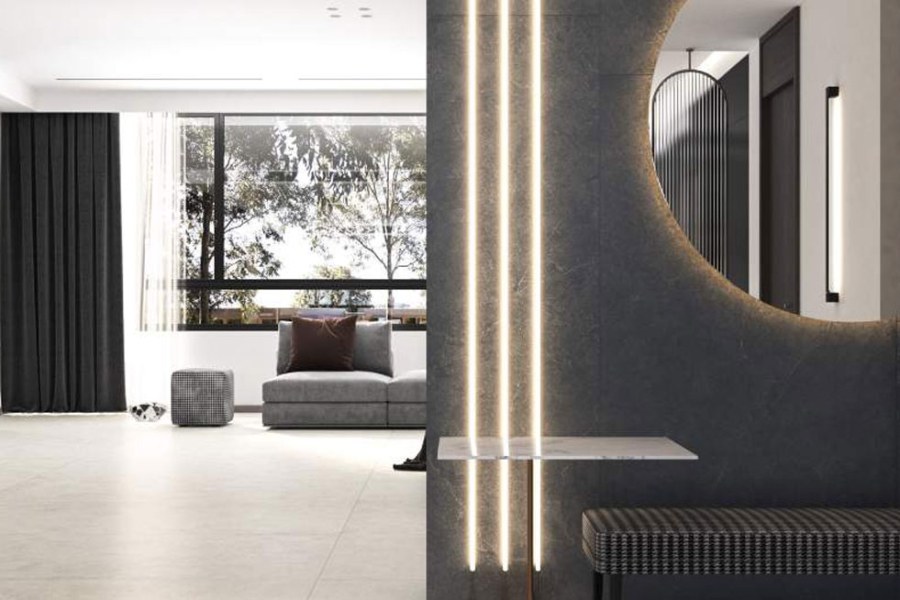
Choosing ceramic tile and design solutions is about more than selecting an attractive surface. Material, format, colour, finish and application all influence how well tiles integrate with the wider interior. Showtile offers design-led tile collections that help architects, designers, builders and homeowners create cohesive spaces with a refined, premium material palette.
What Should You Consider When Choosing Tiles for a Design-Led Project?
A design-led tile scheme should begin with the space, application and surrounding materials rather than with pattern alone. Room scale, natural light, expected use and adjoining finishes provide the framework for selecting the right material, colour, format and surface finish.
Before comparing individual products, consider:
- Tile material
- Floor or wall application
- Room dimensions
- Surface finish
- Colour temperature
- Tonal variation
- Grout colour
- Wet-area requirements
- Slip performance
- Maintenance expectations
- Relationship with cabinetry, timber and stone
This process helps prevent a tile from being selected simply because the sample looks attractive in isolation.
How Does the Material Palette Affect Tile Selection?
Tiles should be reviewed alongside permanent finishes whenever possible. Cabinetry, benchtops, timber flooring, paint, metal finishes and natural stone can reveal undertones that are difficult to see when a tile is assessed alone.
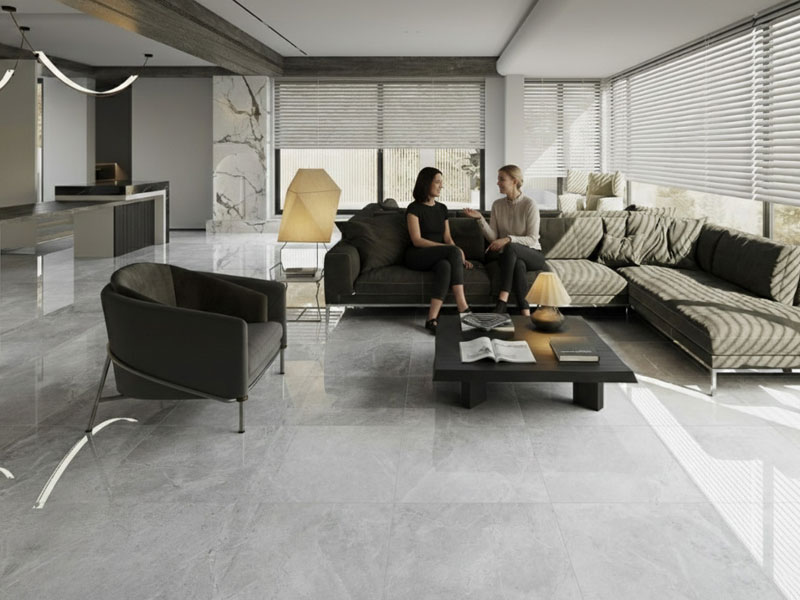
Premium tiles create a refined, cohesive interior
A warm beige tile may appear neutral in a showroom but look unexpectedly grey beside oak cabinetry. A white tile can also reveal blue, yellow or warm undertones once placed beside stone or painted joinery.
Material coordination is therefore as important as the tile itself.
Why Should Application Be Decided Before Colour?
Different surfaces perform different jobs.
Bathroom floors must respond to moisture and appropriate slip requirements. Kitchen splashbacks prioritise cleanability and visual coordination. Living-room floors require durability and scale, while feature walls allow greater freedom with texture, gloss and decorative formats.
Defining the application first narrows the product options and makes colour selection more meaningful.
Which Tile Materials Should You Compare for a Premium Project?
Ceramic, porcelain and natural stone each play a different role in a premium tile scheme. Ceramic offers design flexibility for walls and features, porcelain provides performance and scale for broader applications, while natural stone introduces authentic variation and tactile material character.
Rather than asking which material is universally better, consider which surface best supports the intended architectural role.
How Do Ceramic Tiles Work in Design-Led Interiors?
Ceramic tiles are especially effective when a project needs colour, texture or smaller decorative formats on walls.
Ceramic surfaces work well for:
- Kitchen splashbacks
- Vanity walls
- Powder rooms
- Shower feature walls
- Niches
- Decorative wall zones
- Hospitality features
Gloss, handmade effects, tonal variation and compact formats can introduce visual detail without dominating an entire room.
Ceramic tiles are particularly useful when the floor is already visually strong. A quieter stone-look floor, for example, can be paired with a more expressive ceramic wall surface to create contrast while maintaining a clear visual hierarchy.
When Are Porcelain Tiles a Better Choice?
Porcelain tiles provide greater flexibility when a design requires floor performance, larger formats or continuity across several areas.
Porcelain can reproduce stone, marble, concrete and other material references while maintaining more controlled sizing and variation than many natural materials.
The Yosemite Collection demonstrates how stone-inspired porcelain can support a restrained interior. The larger format and matt surface suit projects where flooring and walls need visual continuity without excessive decoration.
Porcelain can be considered for:
- Living areas
- Bathrooms
- Kitchens
- Commercial floors
- Full-height walls
- Selected outdoor areas
The value of porcelain is not simply durability. Format, finish and controlled material character also make porcelain useful within highly coordinated interiors.
When Does Natural Stone Add More Character?
Natural stone offers variation that manufactured surfaces cannot reproduce exactly. Travertine, limestone, marble and other stones create individual differences in tone, grain and veining.
Natural stone can work particularly well in:
- Entrances
- Bathrooms
- Fireplace surrounds
- Feature floors
- Architectural walls
- Luxury powder rooms
Natural variation should be treated as part of the material rather than as inconsistency.
Samples should be reviewed carefully, especially when large areas are being specified, because natural stone can change significantly from piece to piece.
How Should Floor and Wall Tiles Work Together?
Floor and wall surfaces should have clearly defined visual roles. A refined room usually works better when one surface establishes the base palette, a second material provides support and any decorative tile is limited to a specific focal area.
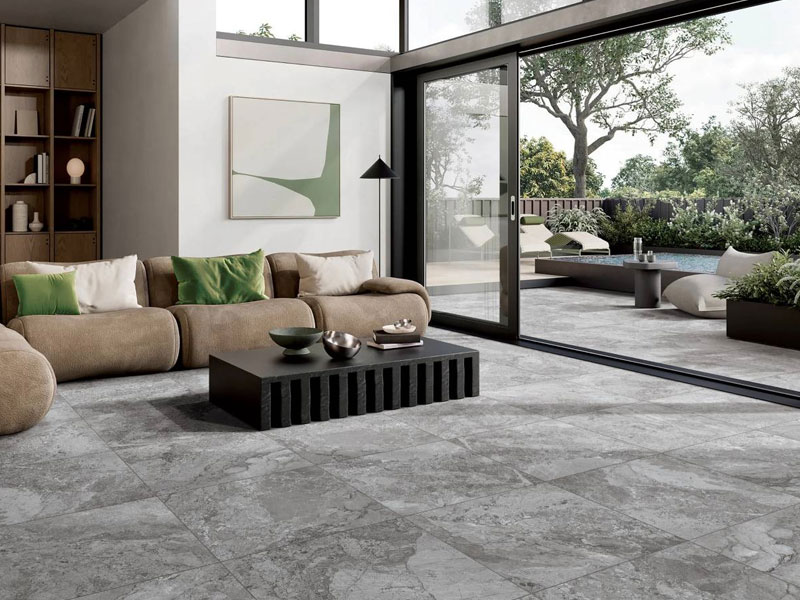
Natural textures add depth to feature surfaces
Using multiple statement tiles within one room can make the design feel fragmented.
What Makes a Good Floor Tile?
Flooring occupies a large visual area and strongly influences how a room feels.
When assessing the latest tiles design for floor, avoid focusing only on novelty or pattern. Consider:
- Tile scale
- Number of grout lines
- Direction of installation
- Tonal variation
- Relationship with furniture
- Maintenance
- Transitions into adjoining rooms
Stone-inspired surfaces are often effective because natural-looking variation can provide depth without introducing a strong repeating pattern.
What Makes a Good Wall Tile?
Walls allow greater design flexibility because wall tiles do not need to perform like heavily trafficked flooring.
Smaller ceramic formats, glazed surfaces, textured porcelain, natural stone and relief tiles can all provide visual interest.
The most successful wall treatments usually respond to architecture already present in the room. A vanity, fireplace, kitchen splashback or reception counter can provide a natural boundary for a feature surface.
When Should You Use a Feature Tile?
A feature tile should have a specific reason for being introduced.
Suitable locations include:
- Behind a bathroom vanity
- Within a shower zone
- Across a kitchen splashback
- Around a fireplace
- On an entrance wall
- Behind a commercial reception desk
If every wall becomes a feature, the hierarchy disappears.
How Do Tile Size and Format Change a Space?
Tile format influences spatial proportion, grout rhythm and the visual weight of a surface. Large tiles generally create broader, calmer fields, while smaller formats introduce stronger repetition and more obvious texture.
Room size alone should not determine tile dimensions.
When Do Large-Format Tiles Work Best?
Large-format tiles are effective when a project calls for continuous surfaces and reduced grout frequency.
Common applications include:
- Open-plan living areas
- Full-height bathroom walls
- Large kitchen floors
- Hotel or retail interiors
- Feature walls
The Taj Mahal Collection provides a useful example of a stone-inspired surface that can create greater visual continuity through larger porcelain formats.
Large formats require careful layout planning. Tile dimensions should relate to wall heights, floor geometry, cabinetry and major architectural lines so that cuts do not undermine the intended appearance.
When Are Smaller Formats More Effective?
Smaller formats can create rhythm and detailed texture.
Brick, subway, square and mosaic formats work especially well in areas where the tiled zone is naturally contained.
Examples include:
- Splashbacks
- Vanity walls
- Niches
- Powder rooms
- Decorative commercial walls
Grout becomes more visually important as tile size decreases, so grout tone should be considered as part of the design rather than as a final technical decision.
How Should Tile Colour and Texture Be Coordinated?
Colour and texture should support the wider material palette rather than compete with every adjoining finish. Premium interiors often rely on controlled differences in tone, texture and reflectivity instead of multiple unrelated patterns.
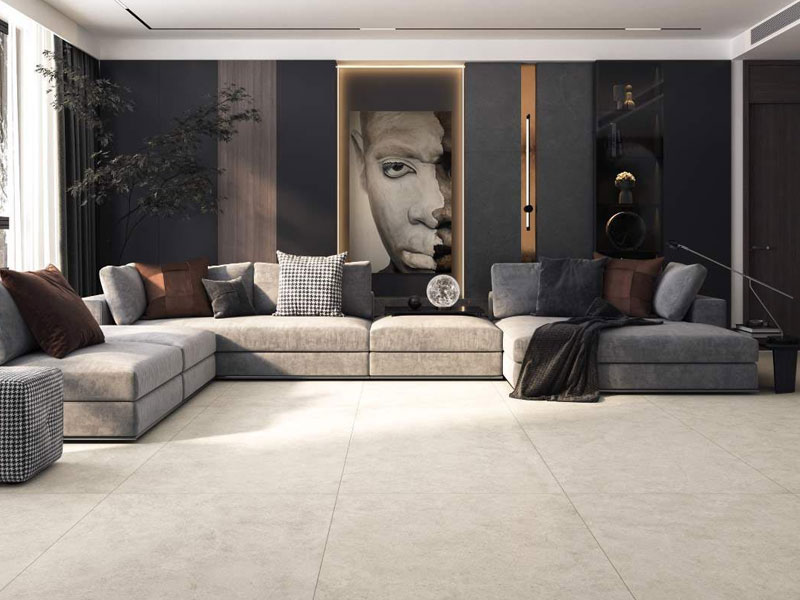
Large-format tiles enhance visual continuity
Useful base tones include:
- Warm white
- Limestone
- Sand
- Travertine
- Taupe
- Greige
- Soft grey
- Clay
- Charcoal
- Muted green
These tones provide flexibility for timber, cabinetry and natural stone.
How Should Bathroom Colours Be Combined?
Effective bathroom tiles designs and colours usually start with one dominant material.
A balanced composition could include:
- A warm stone-look floor
- A related lighter wall surface
- One textured feature area
- Timber or neutral cabinetry
- Restrained metal finishes
This structure creates variation without making the bathroom feel visually crowded.
When Should Strong Stone Veining Be Used?
Strong veining should usually become the focal material.
If a wall tile has dramatic marble movement, the floor, cabinetry and hardware can remain quieter. Conversely, a highly expressive floor usually works best with restrained wall surfaces.
The Desire Collection can support spaces where a stronger stone-inspired visual character is appropriate.
How Much Texture Does a Room Need?
One clearly defined texture is often enough.
Texture may come from:
- Stone movement
- Handmade ceramic surfaces
- Fluted tiles
- Tumbled stone
- Relief
- Brick formats
- Contrasting matt and gloss finishes
A room does not need several textured materials to feel layered.
How Should Tiles Be Selected for Living Rooms, Bathrooms and Kitchens?
Different rooms require different balances of appearance, durability and maintenance. Living areas often prioritise scale and continuity, bathrooms require wet-area performance, and kitchens need close coordination between flooring, splashbacks, cabinetry and benchtops.
The strongest whole-home schemes maintain a consistent material language while adapting the specification to each room.
What Works Well for Living Areas?
Living-room flooring should support furniture, rugs and surrounding architecture rather than overpower the space.
When comparing floor tiles design for living room, consider how the surface continues into hallways, kitchens or dining areas. A floor that works across several connected zones usually produces stronger visual continuity than frequent changes in colour or pattern.
The Valencia Collection offers a stone-inspired direction suitable for interiors where a calm, continuous base surface is preferred.
Large formats can be particularly useful in open-plan areas because fewer grout lines reduce visual interruption.
How Should Bathroom Tiles Be Planned?
Start with the main surface rather than the feature.
A practical sequence is:
- Select the floor
- Establish the primary wall tile
- Coordinate the vanity and stone
- Decide whether a feature tile is necessary
- Finalise grout and metal finishes
Full-height wall tiling can create a highly integrated architectural result when format, fixture placement and wall dimensions are coordinated early.
How Should Kitchen Tiles Relate to Joinery?
Kitchen tile selection should be reviewed together with cabinetry and benchtop samples.
A heavily veined stone benchtop often benefits from a quieter splashback. Simple cabinetry and restrained worktops can support a more textured or colourful ceramic surface.
Kitchen flooring should also connect visually with adjacent living and dining zones.
How Can One Tile Language Connect Several Rooms?
Design continuity does not require using exactly the same product throughout an entire project. Colour temperature, stone reference, finish character and proportions can be repeated while individual products change according to application.
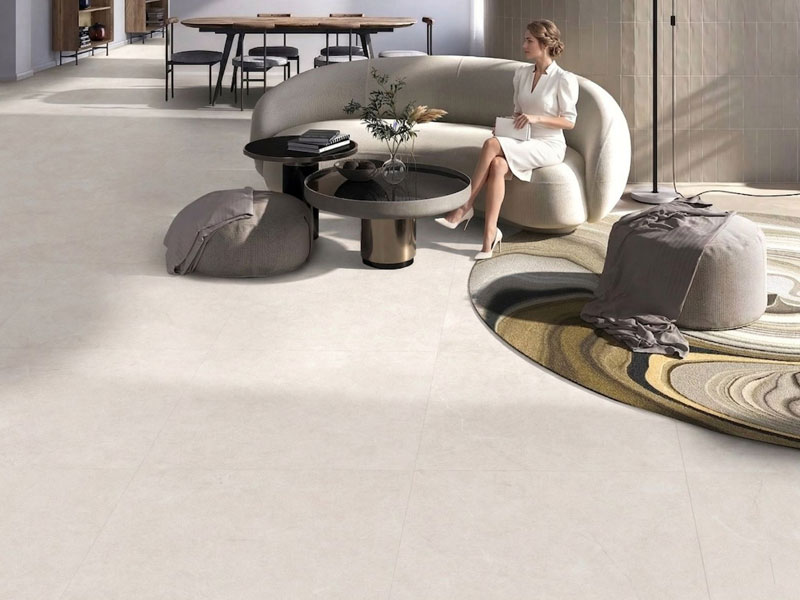
Showtile collections support design-led spaces
This approach gives each room its own identity without making the home feel like a collection of unrelated schemes.
Can One Stone-Look Palette Work Across Several Areas?
Yes.
A stone-inspired floor can establish the material language in living spaces. A related wall tile can then appear in bathrooms, while an external version or complementary paver can carry similar tones into an alfresco area.
The objective is to repeat relationships rather than products.
Should Every Surface Have the Same Finish?
No.
Different finishes can provide both performance and visual hierarchy.
For example:
- Living floor → matt
- Feature wall → textured
- Vanity wall → satin or gloss
- External area → structured finish
The colour family can remain connected even when the surface texture changes.
How Do Common Tile Types Compare?
The table below provides a practical overview for early material selection.
| Tile Type | Suitable Uses | Design Strength | Main Consideration |
| Ceramic tiles | Walls, splashbacks, features | Colour, texture and decorative flexibility | Check application limitations |
| Porcelain tiles | Floors, walls, wet areas | Durability and format versatility | Select suitable finish |
| Natural stone | Floors and feature surfaces | Authentic variation | Maintenance and sealing |
| Stone-look porcelain | Large coordinated areas | Natural aesthetic with controlled performance | Review face variation |
| Large-format tiles | Living areas and full-height walls | Reduced grout frequency | Installation planning |
| Feature tiles | Focal walls and splashbacks | Visual personality | Avoid overuse |
| Outdoor tiles | Alfresco and exterior zones | Interior-exterior continuity | Slip and weather exposure |
No category is universally superior. Material suitability depends on application, maintenance expectations, budget and the role each surface plays within the design.
Why Explore Showtile for a Design-Led Tile Project?
Showtile offers a design-focused range for architects, interior designers, builders and homeowners who want to coordinate tiles as part of a broader interior material scheme.
Rather than choosing a product in isolation, designers can explore the wider Showtile tile collection across different formats, surface characters and applications. The range supports varied design directions, from restrained stone-inspired floors and larger architectural surfaces to more expressive walls and feature areas.
A considered selection process begins with the room, defines the primary materials and then introduces secondary textures only where they add value. Samples can then be compared with cabinetry, timber, stone and lighting before final specification.
This approach allows tile selection to become part of the architecture rather than a decorative decision made at the end of the project.
What Should You Remember When Planning a Tile Scheme?
The best tile schemes combine design clarity, material suitability and practical performance. Ceramic, porcelain and natural stone all have valuable roles, but each material should be selected according to its application and relationship with surrounding surfaces.
Begin with the overall material palette. Establish the dominant floor and wall surfaces, then refine format, texture, grout and colour. When every decision responds to the wider interior, tiles can create a cohesive foundation that supports both everyday use and long-term design quality.
Contact Showtile
📍 Showroom: 65 Canterbury Road, Bankstown NSW 2200, Australia
📞 Phone: +61 2 9709 5836
✉️ Email: sales@showtile.com.au
🌐 Website: https://showtile.com.au/



