


Silk Finish Tiles in Australia: A Guide to Refined Porcelain Surfaces
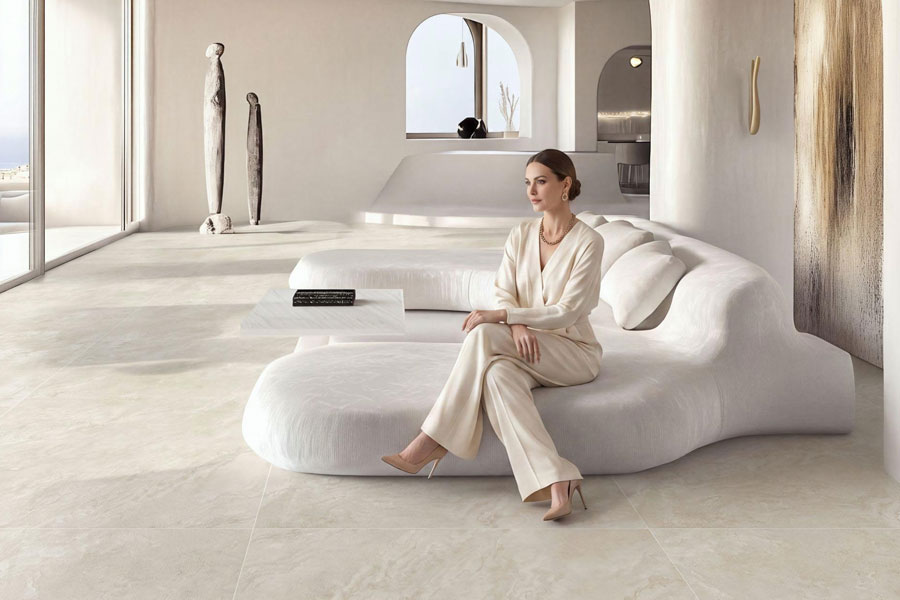
Premium tile finishes can change how colour, veining and light are experienced across a room. Show Tile offers refined porcelain surfaces for architects, designers, builders and homeowners who want more control over sheen and material depth. For projects considering silk finish tiles Australia, this finish provides a balanced alternative between low-reflection matt surfaces and highly polished porcelain.
What Is a Silk Finish Tile?
A silk finish tile has a refined surface treatment that creates subtle reflectivity rather than the flat appearance of some matt surfaces or the strong shine of polished porcelain. “Silk” describes the exposed finish, not the material from which the tile is made.
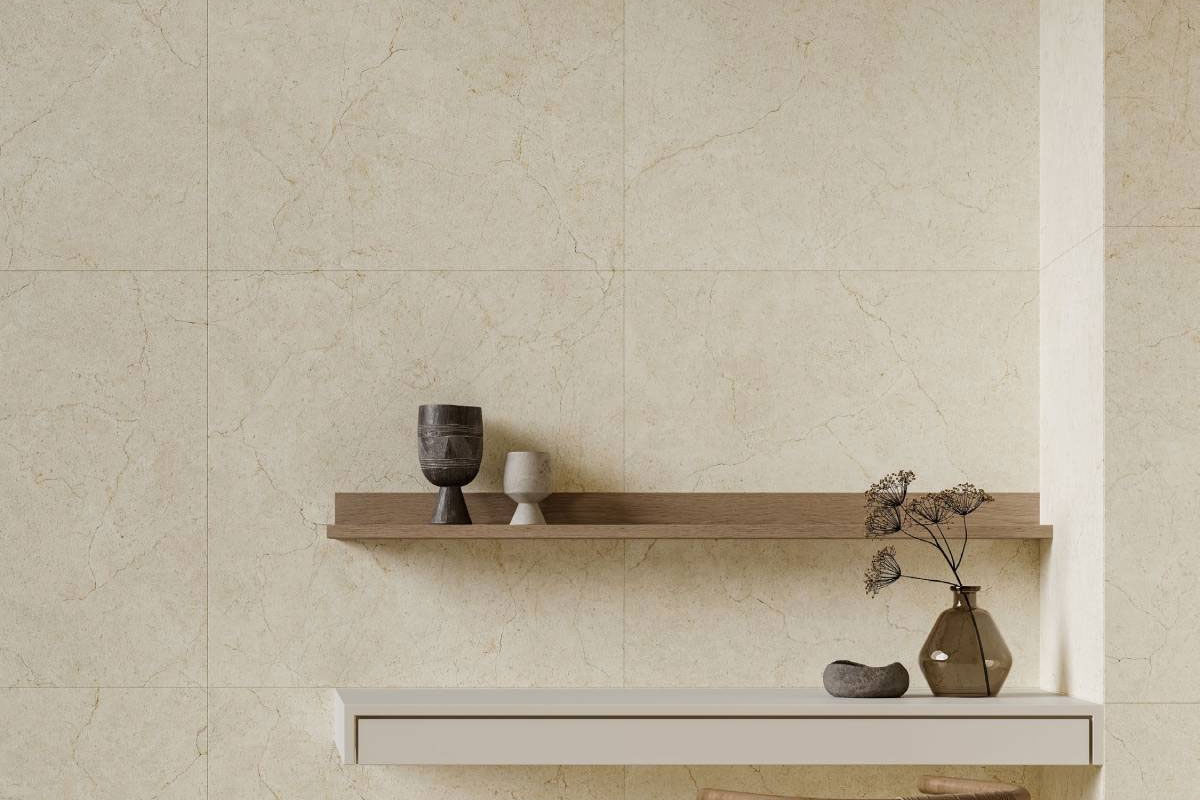
Silk finish tiles bring subtle sheen to refined interiors
Does Silk Describe the Tile Material or the Surface?
Silk is a surface finish. Porcelain or ceramic identifies the tile body, while terms such as silk, matt, polished or honed describe how the exposed surface has been finished.
The distinction matters in specification. A marble-look porcelain tile may have a silk finish, but the product remains porcelain and should be installed, documented and maintained according to the actual material rather than the natural stone it visually references.
What Does a Silk Tile Surface Look Like?
A silk surface usually produces a restrained glow rather than mirror-like reflection. Light can reveal veining and tonal movement without dominating the room through high gloss.
Typical visual characteristics include:
- Controlled surface sheen
- Gentle light reflection
- Smooth visual character
- Clearer veining than some flat matt surfaces
- Refined depth under natural and artificial light
Exact appearance remains collection-specific, so the finish should be assessed from a physical sample rather than from the finish name alone.
How Is Silk Finish Different From Matt, Honed and Polished Tiles?
Silk generally occupies a visual position between a low-reflection matt tile and a highly reflective polished tile. However, silk, satin, honed and semi-polished should not automatically be treated as interchangeable technical terms because finish systems vary between collections.
How Does Silk Compare With Matt Porcelain?
A matt porcelain tile generally creates lower visible reflection and a quiet architectural appearance. Matt finishes can work particularly well where the goal is to minimise glare and keep the material palette restrained.
Silk adds a controlled level of sheen. The difference may appear subtle under diffuse light but become more noticeable when daylight or directional lighting moves across the surface.
How Does Silk Compare With Polished Porcelain?
Polished porcelain reflects more light and can create sharper highlights across marble-inspired veining.
Silk finish offers a more restrained alternative when the project needs visual depth without making reflection a dominant design feature. For premium interiors, that balance can support a quieter material language alongside timber, textiles and brushed metal finishes.
Is Silk the Same as Honed or Satin?
Not necessarily. These finishes may overlap visually, but the terminology should follow the exact product documentation.
A professional schedule should therefore state the manufacturer’s named finish instead of replacing “silk” with “honed” or “satin” because the surfaces look similar in a photograph.
Why Do Silk Finish Tiles Suit Refined Interiors?
Silk porcelain tiles are particularly useful where material richness needs to be expressed through controlled light rather than strong gloss. The surface can reveal marble or stone graphics while remaining visually balanced beside other premium materials.
How Does Silk Finish Respond to Natural Light?
Natural light can reveal subtle changes in surface sheen, veining and tonal variation throughout the day.
In a living room with large windows, for example, silk porcelain may show a soft glow near the light source while appearing more restrained in shaded areas. This changing response can give stone-inspired graphics additional depth without producing the sharp reflection associated with polished surfaces.
How Does Artificial Lighting Affect Silk Surfaces?
Warm downlights can emphasise creamy or beige undertones, while cooler lighting can make pale marble references appear more neutral.
Directional light is especially important for feature walls because small changes in viewing angle can affect perceived sheen. Samples should therefore be reviewed in lighting conditions similar to those planned for the finished project.
Where Can Silk Finish Tiles Be Used?
Silk finish can be suitable for both walls and floors when the specific product is approved for that application. The word “silk” alone does not determine where a tile can be installed.
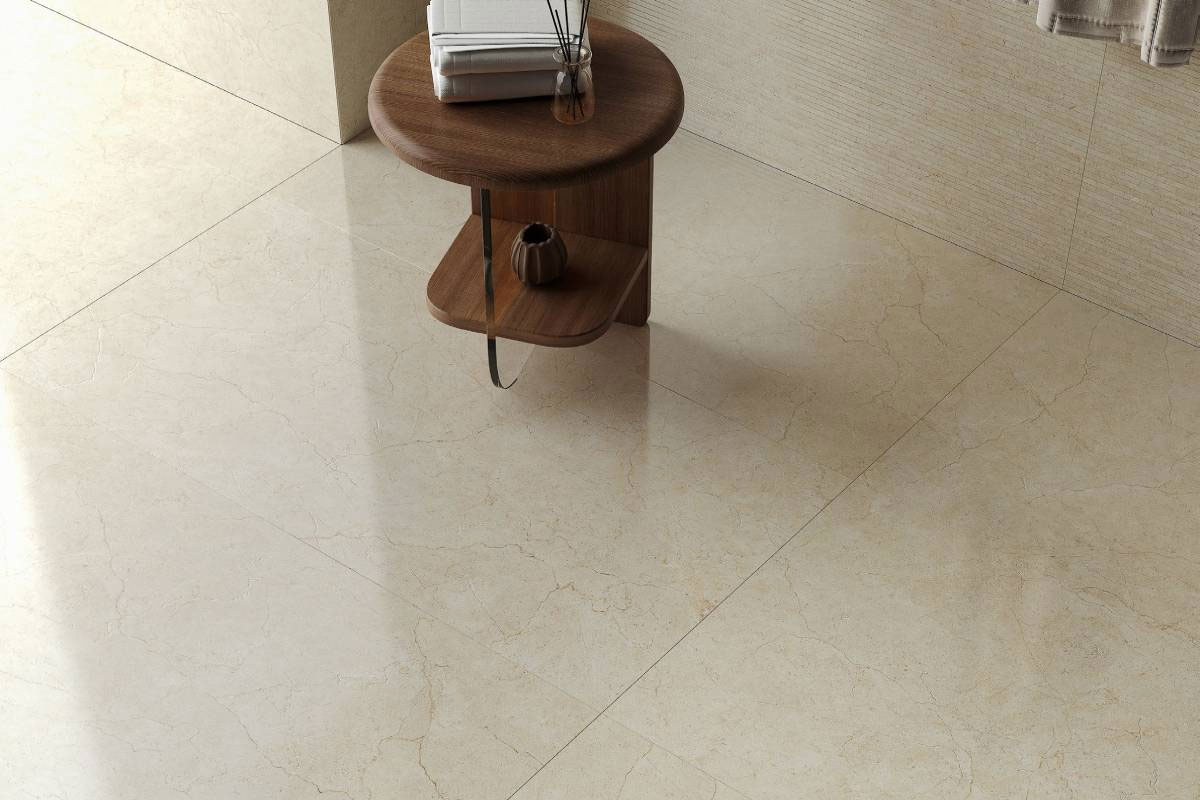
Soft reflectivity adds depth without a highly polished look
Can Silk Finish Tiles Be Used on Floors?
Yes, when the product documentation identifies a floor application.
A current example is Silkstone Ivory porcelain, which Show Tile lists as marble-look porcelain for both wall and floor applications. The collection includes matt and silk finishes, has a 10 mm thickness and offers formats up to 600 × 1200 mm.
Using matt and silk versions within the same collection also gives designers a useful opportunity to compare the effect of finish while keeping colour and marble graphics consistent.
Can Silk Finish Tiles Be Used on Walls?
Wall applications can make effective use of silk finish because controlled reflection can highlight veining without creating an excessively glossy surface.
Potential applications include bathroom walls, vanity zones, living-room features, fireplace surrounds and selected commercial interiors.
Are Silk Tiles Automatically Suitable for Wet Floors?
No. Finish name and slip performance are separate considerations.
A silk surface should not be assumed to meet a particular wet-area requirement simply because the surface looks smooth or slightly matt. Bathroom and other wet-floor specifications should confirm the exact product, application and relevant slip-performance information.
For broader context on how sheen, texture and slip characteristics relate to one another, Show Tile’s guide to tile surface technology Australia explains why surface appearance and technical performance should be assessed independently.
How Does Silkstone Ivory Demonstrate a Silk Finish?
Silkstone Ivory provides a useful real-product example because the same marble-inspired porcelain collection is currently offered in both matt and silk versions. Show Tile describes the tile as having an ivory base with delicate veining and lists 300 × 300, 600 × 600 and 600 × 1200 mm among the available silk formats.
Why Is Comparing Matt and Silk Within One Collection Useful?
Comparing the same design in two finishes reduces other variables.
The project team can assess:
- How much more light the silk surface reflects
- Whether veining appears more pronounced
- How the finish works with joinery and metal
- Whether the room needs a quieter matt surface or a subtle glow
- Which finish better supports the intended architectural mood
This comparison is more useful than judging finish differences between unrelated tile designs.
How Should Silk Finish Be Compared With Softec™?
Silk and Softec™ should be treated as distinct surface directions. Silk primarily relates to controlled sheen and surface appearance, while Softec™ is Show Tile’s proprietary surface technology combining tactile character with specific performance features.
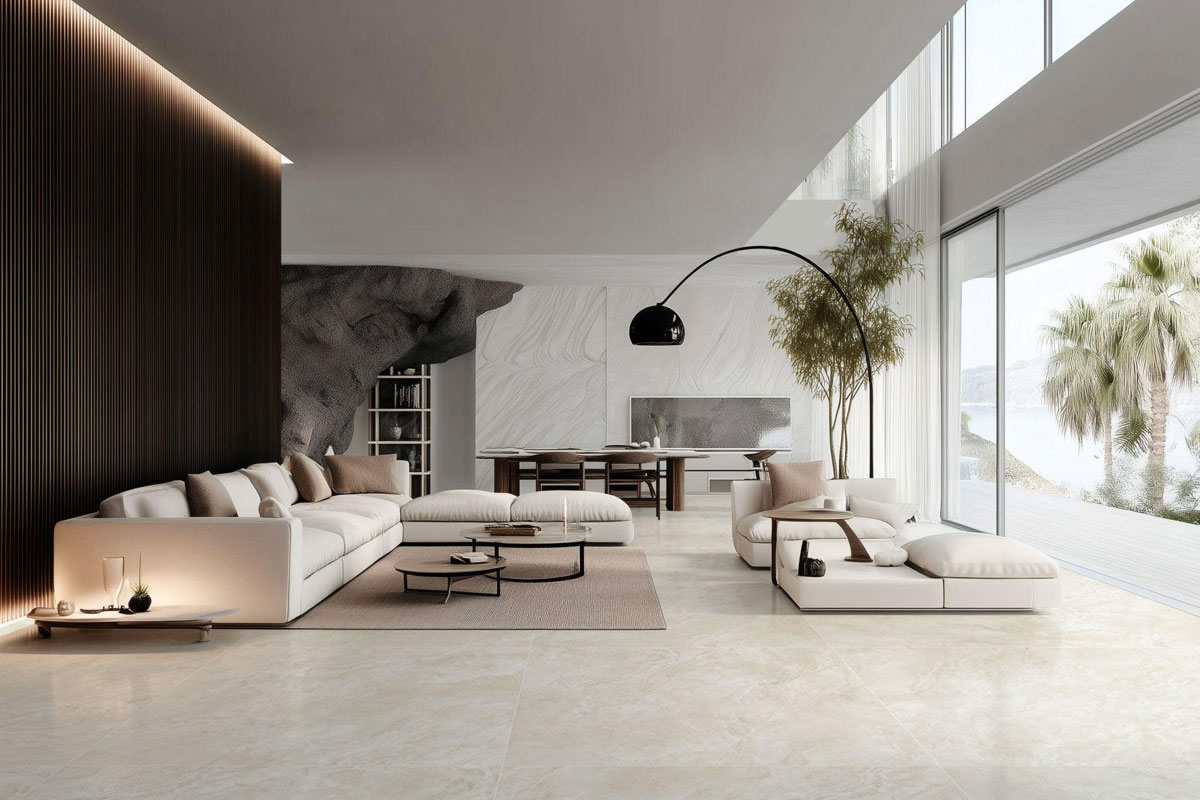
Large-format porcelain creates a calm, seamless surface
Softec™ surface technology currently combines a soft tactile feel, 3D texture, P3 slip resistance when wet and easy-clean performance. Show Tile presents Crema Marfil, Travertino and Bottocino as the current Softec™ collections.
When Does Silk Finish Make More Sense?
Silk may suit a project where the priorities are:
- Refined light reflection
- Marble-inspired depth
- A smoother visual transition between matt and polished
- Quiet-luxury interiors
- Controlled sheen across larger surfaces
When Does Softec™ Make More Sense?
Softec™ may be considered when the project places greater emphasis on a soft matt tactile experience, dimensional texture and documented P3 wet slip resistance.
Readers comparing tactile surfaces rather than reflectivity can refer to Show Tile’s guide to soft touch tiles Australia, which focuses specifically on surface feel rather than silk sheen.
For projects with a stronger Sydney-local selection intent, the article on Softec tiles Sydney covers residential, commercial and showroom considerations without treating Softec™ as a silk finish.
How Do Silk, Matt, Polished and Softec™ Surfaces Compare?
| Surface | Visual Character | Reflection | Main Selection Focus |
| Matt | Quiet and restrained | Low | Reduced glare and architectural simplicity |
| Silk | Smooth and refined | Low to moderate | Gentle sheen and material depth |
| Polished | Bright and expressive | High | Reflection and pronounced veining |
| Honed / Semi-Polished | Understated sheen | Controlled | Balance between natural character and reflection |
| Softec™ | Soft matt and dimensional | Controlled | Tactile character, P3 and 3D surface performance |
The table is a design framework rather than a technical ranking. No single finish is universally superior; the appropriate surface depends on application, lighting, material palette and project requirements.
How Should Architects and Designers Specify Silk Finish Tiles?
A complete tile specification should identify the exact collection, colour, material, finish, format and application. The phrase “silk tile” alone does not provide enough information for accurate procurement.
What Should Be Recorded in the Tile Schedule?
A clear schedule should include:
- Supplier and collection
- Colour
- Silk finish
- Porcelain or other material
- Exact tile format
- Thickness where relevant
- Wall or floor location
- Grout selection
- Technical requirements
- Approved sample reference
Where several finishes exist within one collection, the schedule should identify the selected finish explicitly.
Why Should a Silk Sample Be Reviewed Physically?
Digital screens cannot reliably reproduce exact sheen level, undertone, veining contrast or tactile character.
View the sample from both front and oblique angles. A slight change in viewing direction can reveal reflection that may be almost invisible in a straight-on photograph.
How Should Silk Finish Tiles Be Coordinated With Other Materials?
Silk porcelain works best when the surface is considered within the complete material palette rather than as an isolated tile.
Which Materials Pair Well With Silk Porcelain?
Silk surfaces can coordinate effectively with:
- Warm or natural timber
- Brushed metal
- Neutral joinery
- Stone benchtops
- Soft textiles
- Restrained paint palettes
The goal is not to match every finish. A controlled contrast between silky porcelain, matt timber and brushed metal can give the room greater material depth.
How Does Grout Affect the Finished Surface?
A close grout tone can minimise the visual grid and support continuity across marble-look graphics.
A stronger contrasting grout makes tile format and joint layout more visible. This can work intentionally, but it should be decided during specification rather than after installation begins.
How Does Tile Format Change the Appearance of a Silk Surface?
Larger porcelain formats can make veining and subtle sheen read across broader planes because fewer grout joints interrupt the visual field.
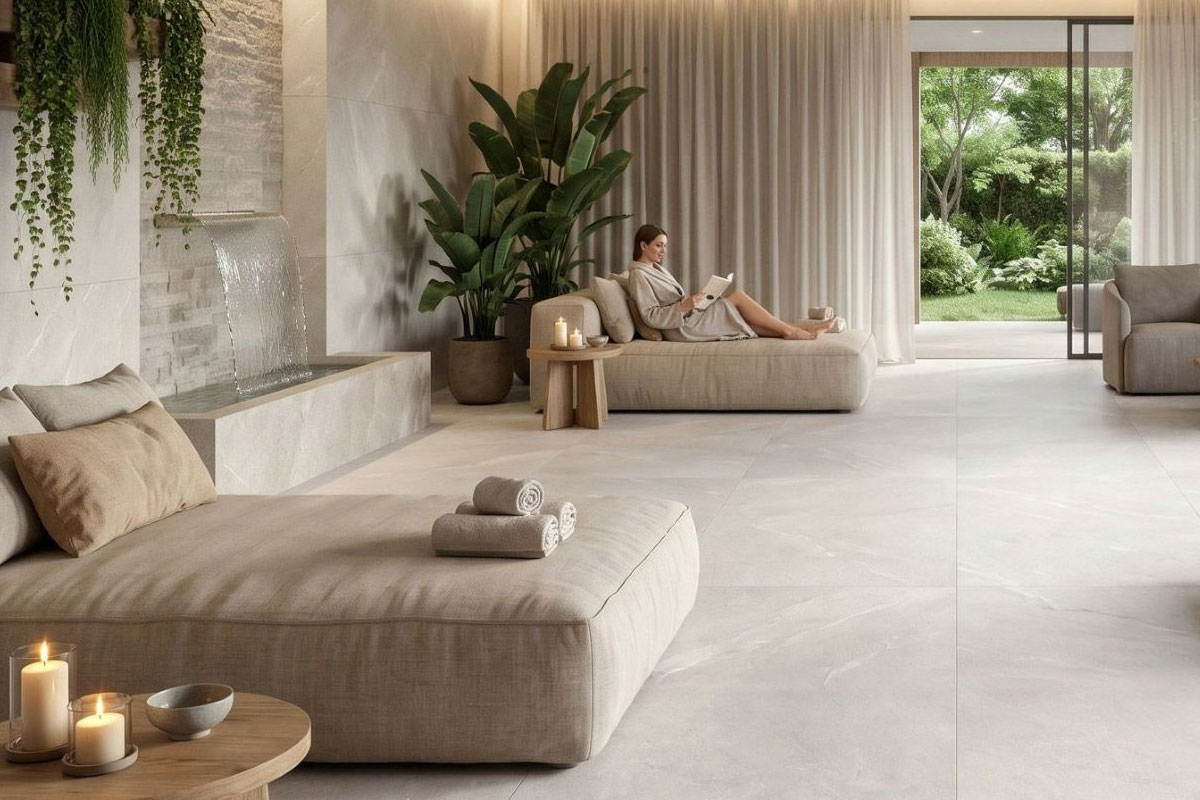
Show Tile offers premium finishes for considered residential and commercial spaces
Show Tile’s large-format porcelain surfaces are designed around expansive tiled planes and reduced joint frequency. Show Tile notes that porcelain slabs can enhance light, material realism and spatial continuity across premium residential and commercial applications.
Large formats also require appropriate substrate preparation, handling and setting-out, so scale should be treated as both a design and installation decision.
What Should Builders Check Before Installing Silk Finish Tiles?
Installation should preserve the approved finish and visual layout.
Before fixing tiles, confirm:
- Substrate flatness
- Tile orientation
- Vein distribution
- Joint alignment
- Edge and transition details
- Approved grout
- Surface protection during construction
For marble-look porcelain, dry-laying or reviewing several tile faces can help prevent awkward clusters of veining and create a more balanced composition.
How Should Homeowners Choose Between Silk and Other Finishes?
Choose the finish according to room lighting, desired reflection, intended application and the surrounding material palette.
Silk may be appropriate when polished porcelain feels too reflective but conventional matt feels visually too subdued. Matt remains useful where minimal sheen is preferred, while Softec™ addresses a different requirement where tactile character and specific surface performance are priorities.
Physical comparison remains the most useful final step.
Explore Premium Tile Finishes With Show Tile
Show Tile brings together refined porcelain, stone-inspired surfaces, large-format slabs and advanced Softec™ technology for premium residential and commercial projects. Through the complete tile collection, architects, designers, builders and homeowners can compare material, finish, format and surface character within one coordinated selection process.
Review silk porcelain under project lighting, compare it with grout and adjoining materials, and confirm the exact finish before specification. By assessing sheen, format, material and application together, Show Tile helps project teams carry a considered surface selection from design approval through to procurement and installation.
Contact Show Tile
📍 Showroom: 65 Canterbury Road, Bankstown NSW 2200, Australia
📞 Phone: +61 2 9709 5836
✉️ Email: sales@showtile.com.au
🌐 Website: https://showtile.com.au/



