


Tile Surface Technology in Australia: A Guide to Modern Tile Finishes
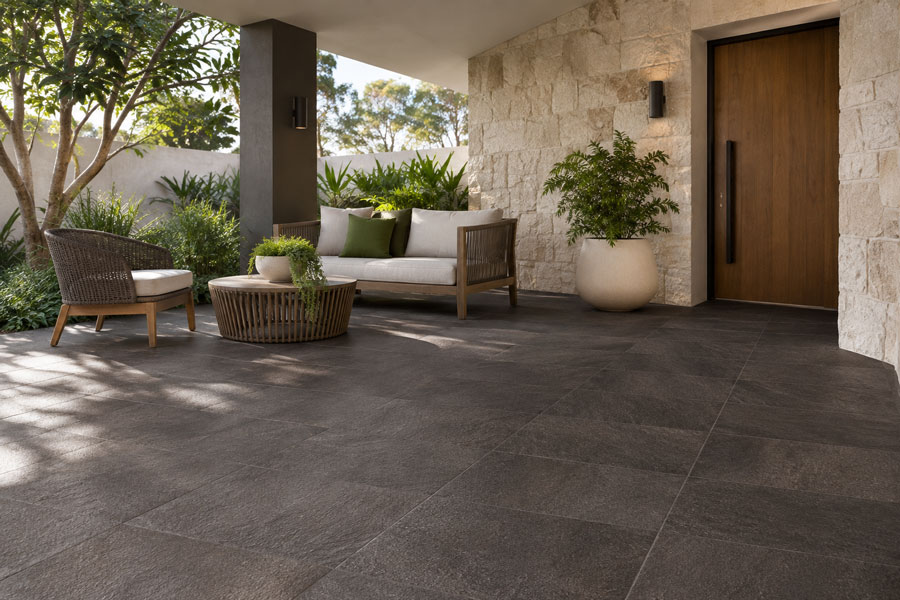
Modern tile selection involves more than colour, pattern or format. Show Tile brings together architectural porcelain, stone-inspired finishes, large-format surfaces, slip-rated options and advanced surface technologies for design-led residential and commercial projects. For anyone researching tile surface technology Australia, understanding how finish, texture, sheen, relief and application requirements work together can lead to a more accurate and practical tile specification.
What Does Tile Surface Technology Mean in Modern Tile Design?
Tile surface technology describes the treatments and manufacturing methods that influence how a tile looks, feels and performs after installation. The term can cover sheen, texture, relief, graphic variation and slip-related surface characteristics, while the tile body remains a separate material specification.
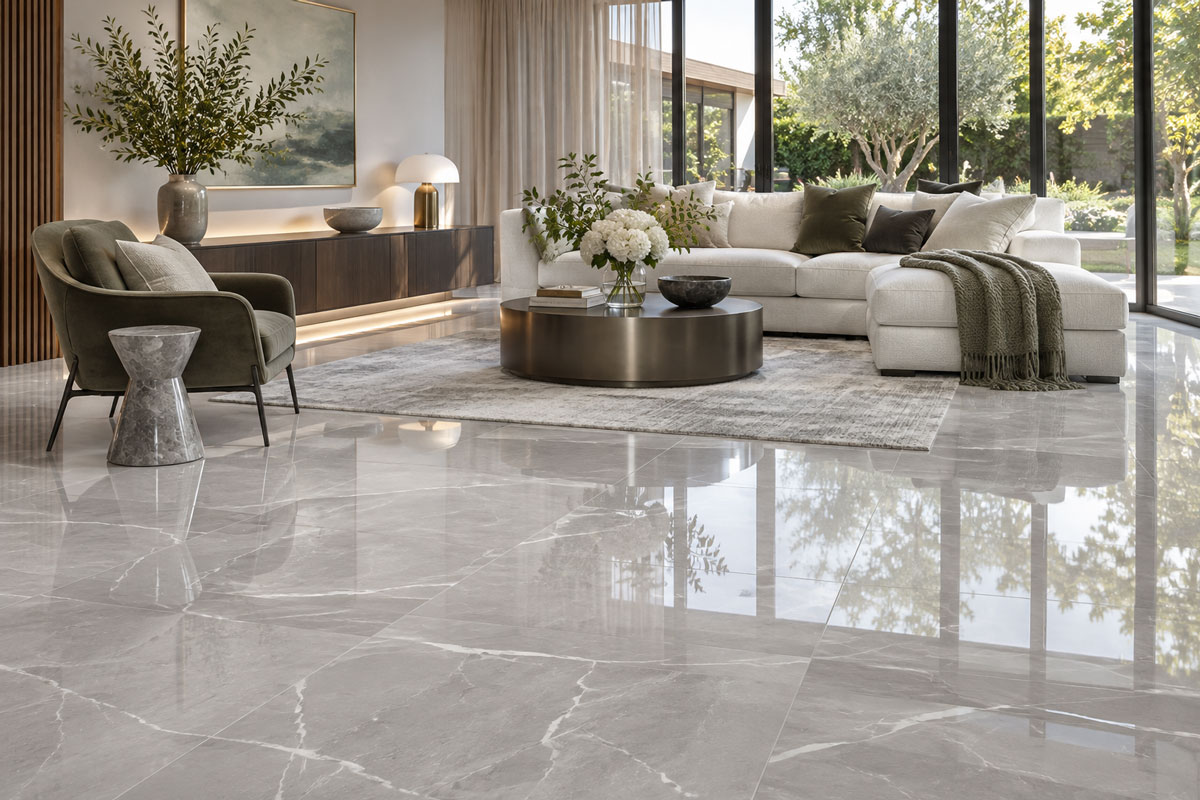
Modern tile surfaces balance finish, texture and practical performance
How Is Surface Technology Different From Tile Material?
Porcelain tile, ceramic tile and natural stone describe the base material. Matt, polished, honed, lappato, textured and other finishes describe the exposed surface.
A stone-look porcelain tile may reproduce marble, limestone or travertine visually, but the material remains porcelain. Maintenance, installation and technical documentation should therefore follow the actual tile body and finish rather than the material being imitated.
Which Characteristics Are Controlled at the Surface?
A tile surface can influence:
- Sheen level and light reflection
- Surface texture and tactile character
- Surface relief and shadow
- Printed pattern, veining and tonal variation
- Slip-related performance where a tested rating applies
For premium projects, these characteristics should be reviewed together rather than as isolated design choices.
Why Does Tile Surface Technology Matter for Australian Projects?
The surface affects more than style. A finish can change light reflection, material realism, tactile response and suitability for a particular wall, floor or wet-area application.
How Does Surface Finish Change the Appearance of a Room?
A matt tile surface generally creates softer reflection and a quieter architectural effect. A polished surface increases reflection, while semi-polished or honed-style finishes sit between those two visual directions.
Texture adds another layer. A flat tile reads differently from a fluted, concave or structured surface because directional light creates stronger highlights and shadows across the relief.
Why Does Surface Texture Matter Beyond Appearance?
Visible texture should not be treated as proof of slip resistance. Show Tile currently separates surface categories including Matt, Polished / Gloss, Semi Polished / Honed / Lappato, External Non Slip and P3, P4 and P5 slip-rated tiles within its collection filters. This distinction helps specifiers separate surface texture from a tested slip rating.
Why Should Architects Specify More Than Colour?
“Beige porcelain tile” is not a complete specification. The document should identify the collection, colour, finish, format, intended location and relevant technical requirements.
A change from matt to polished, flat to dimensional or field tile to strip format can materially change the completed surface.
What Are the Main Tile Surface Types Available in Australia?
Show Tile’s current range covers multiple finish directions, allowing project teams to compare appearance and performance before narrowing the selection.
When Is a Matt Tile Surface Appropriate?
Matt tiles work well when a project needs restrained reflection, a calm palette or a more natural-looking surface. Matt finishes can suit stone-inspired, concrete-inspired and warm neutral interiors.
Matt is still a finish category, not a universal wet-area approval. The relevant product information should confirm application and slip performance.
When Do Polished, Honed or Lappato Finishes Work Better?
Polished or gloss finishes suit interiors where reflection and visual clarity are part of the design intent. Honed, semi-polished and lappato surfaces provide a more controlled sheen between full polish and matt.
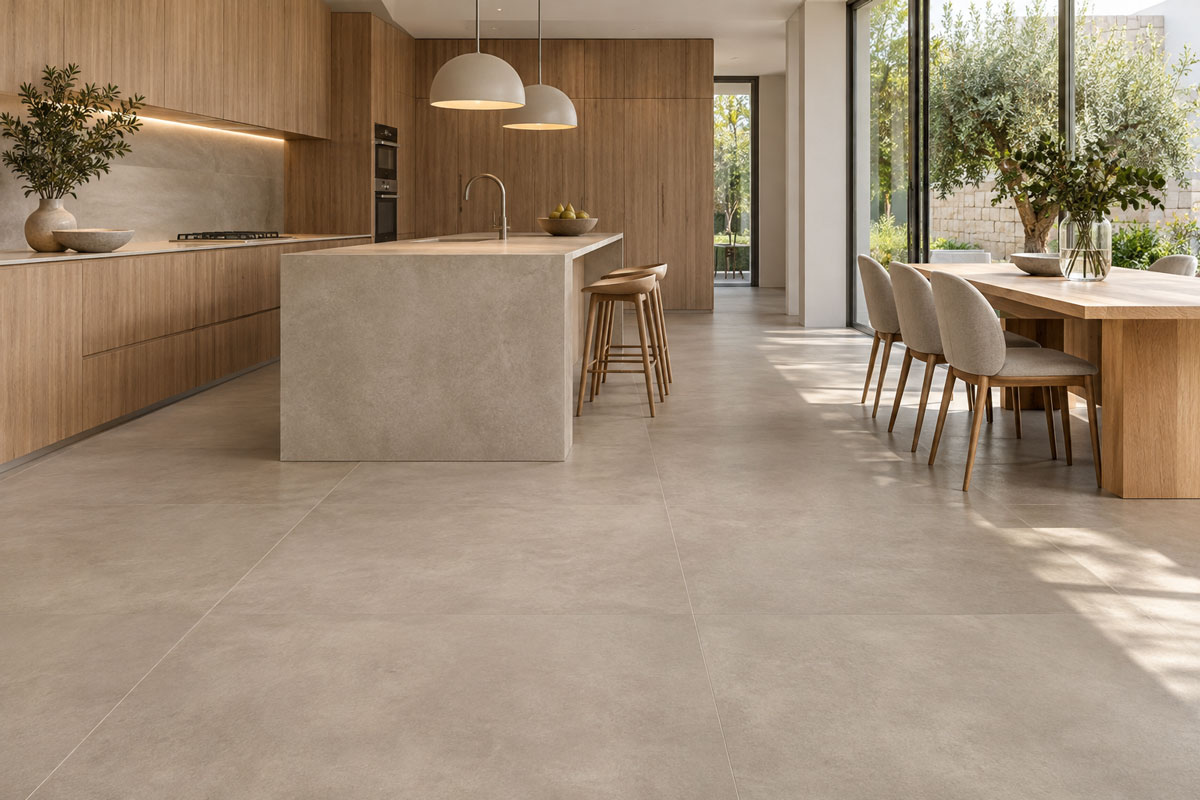
Large-format porcelain creates cleaner, more continuous interior surfaces
These surfaces should be reviewed under actual project lighting because veining and tonal variation can appear differently under direct artificial light and daylight.
How Do Textured and Non-Slip Surfaces Differ?
A textured tile has physical surface variation or relief. A non-slip or slip-rated tile is selected with a specific performance requirement in mind.
For external paths, pool surrounds, ramps or other areas where grip matters, the exact product and application should be checked rather than relying on appearance. Show Tile maintains a dedicated range of external non-slip tile surfaces within its broader collection.
How Is Porcelain Technology Creating More Realistic Tile Surfaces?
Modern porcelain production can reproduce natural materials with greater control over pattern, colour and repeat variation while retaining the consistency of a manufactured tile body.
How Do Stone-Look Porcelain Tiles Reproduce Natural Materials?
Show Tile describes its stone-look porcelain collection as using advanced digital design tools and precision manufacturing to reinterpret limestone, marble, travertine and slate. The result is controlled visual variation and tactile character within a porcelain format.
This gives designers an alternative when a project needs the visual language of natural material with the consistency of architectural porcelain.
Why Should Several Tile Faces Be Reviewed Together?
Stone-look porcelain may use multiple faces so the same graphic does not repeat too frequently across a wall or floor. Several faces give a better understanding of veining, tonal movement and pattern direction than one isolated sample.
Directional patterns should also be reviewed before installation so the completed surface follows an agreed layout.
How Do Concrete-Look Surfaces Expand the Material Palette?
Show Tile’s concrete-look tile collection uses tonal depth and surface texture to create a controlled architectural alternative to poured concrete for residential and commercial interiors.
This can suit projects that need a consistent module and repeatable finish while maintaining a raw or minimal design language.
How Do Large-Format Porcelain Surfaces Change Interior Design?
Large-format porcelain increases tile scale and reduces the frequency of grout joints. The result can be a broader, more continuous architectural plane across bathrooms, feature walls and open interior surfaces.
Why Do Fewer Grout Joints Matter?
Grout forms part of the visual grid. As tile size increases, fewer joints interrupt stone movement or printed graphics.
Show Tile describes its large-format porcelain slabs as oversized architectural surfaces designed to create expansive planes with fewer grout lines and strong material realism.
What Should Be Considered Before Specifying Large Formats?
Project teams should confirm:
- Module and setting-out
- Substrate preparation
- Joint and cut positions
- Transitions to adjoining materials
- Handling and installation requirements
Large scale only works well when those construction details are resolved before ordering.
What Is Softec™ Tile Surface Technology?
Softec™ is Show Tile’s exclusive porcelain surface technology, combining a soft matt stone-inspired feel, 3D surface texture, P3 slip resistance when wet and easy-clean performance. Show Tile currently presents Softec™ through Crema Marfil, Travertino and Bottocino.
How Does Softec™ Combine Surface Character and Performance?
Softec™ brings tactile character, visual relief and practical surface performance into one surface direction rather than treating those goals separately.
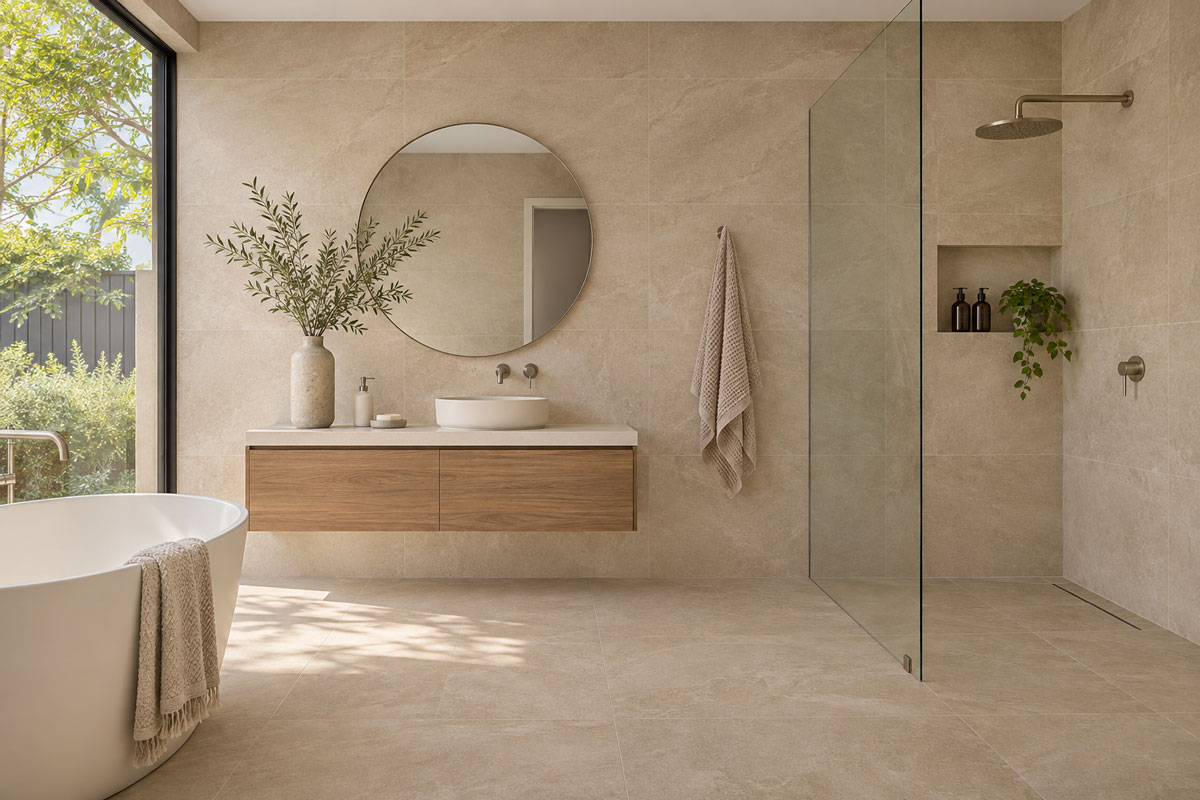
Textured and slip-rated tiles support application-specific design needs
For a local product-selection perspective, the Softec tiles Sydney article places the technology within residential and commercial project applications and the Show Tile showroom context.
Where Can Softec™ Be Used?
Show Tile identifies bathrooms, wet areas, living areas, hospitality spaces, retail environments and other contemporary interiors among relevant applications. Final suitability should still be confirmed for the exact product, finish and project condition.
How Do Modern Tile Surface Technologies Compare?
| Surface direction | Main character | Key design consideration | Main specification question |
| Matt | Low sheen | Light and visual calm | Is restrained reflection part of the design intent? |
| Polished / Gloss | Higher reflection | Veining, light and emphasis | Is a reflective finish appropriate? |
| Honed / Lappato | Controlled sheen | Balance of matt and polish | How much reflection is desirable? |
| Textured / 3D | Physical relief | Shadow, edges and junctions | How will lighting affect the relief? |
| Slip-rated | Performance-focused surface | Application and wet conditions | Which tested rating is required? |
| Softec™ | Soft matt + 3D + P3 | Tactility and wet slip performance | Does the project need these features together? |
| Large-format porcelain | Expansive surface plane | Handling, layout and joints | Does the design benefit from fewer grout joints? |
The table is a comparison framework, not a hierarchy. A stronger texture, higher slip classification or larger format is not automatically better; the correct choice depends on application and design intent.
How Should Architects and Designers Choose Tile Surface Technology?
Start with the application before choosing appearance. Identify whether the tile is for a dry wall, wet floor, feature wall, living-area floor, external surface or commercial zone, then review the finish and technical information relevant to that location.
What Should Be Checked for Wet Areas?
Wet-area selection should consider the exact floor or wall location, slip performance where relevant, drainage, falls, grout, waterproofing and installation details.
A surface that works well on a bathroom wall may not be the correct specification for a shower floor.
What Should Be Checked for Feature Walls?
Review surface relief, tile module, directional lighting, trims, external corners, niches and junctions with cabinetry or tapware.
Dimensional finishes can be highly effective, but unresolved edge details become more visible when light catches the relief.
How Should Physical Samples Support Specification?
Physical samples help confirm colour, sheen, surface feel and pattern variation before a product enters a final material schedule. The Softec sample box for architects and designers is one example of a professional sampling workflow.
Once a surface is approved, the Softec tile specification guide shows how collection, colour, format, finish, location, grout and availability can be carried forward into documentation and procurement.
What Should Builders Consider Before Installing Advanced Tile Surfaces?
Installation planning should protect the design intent established during selection. Tile format, surface relief, pattern direction and joint layout should be resolved before work begins, particularly where several surface types meet within one room.
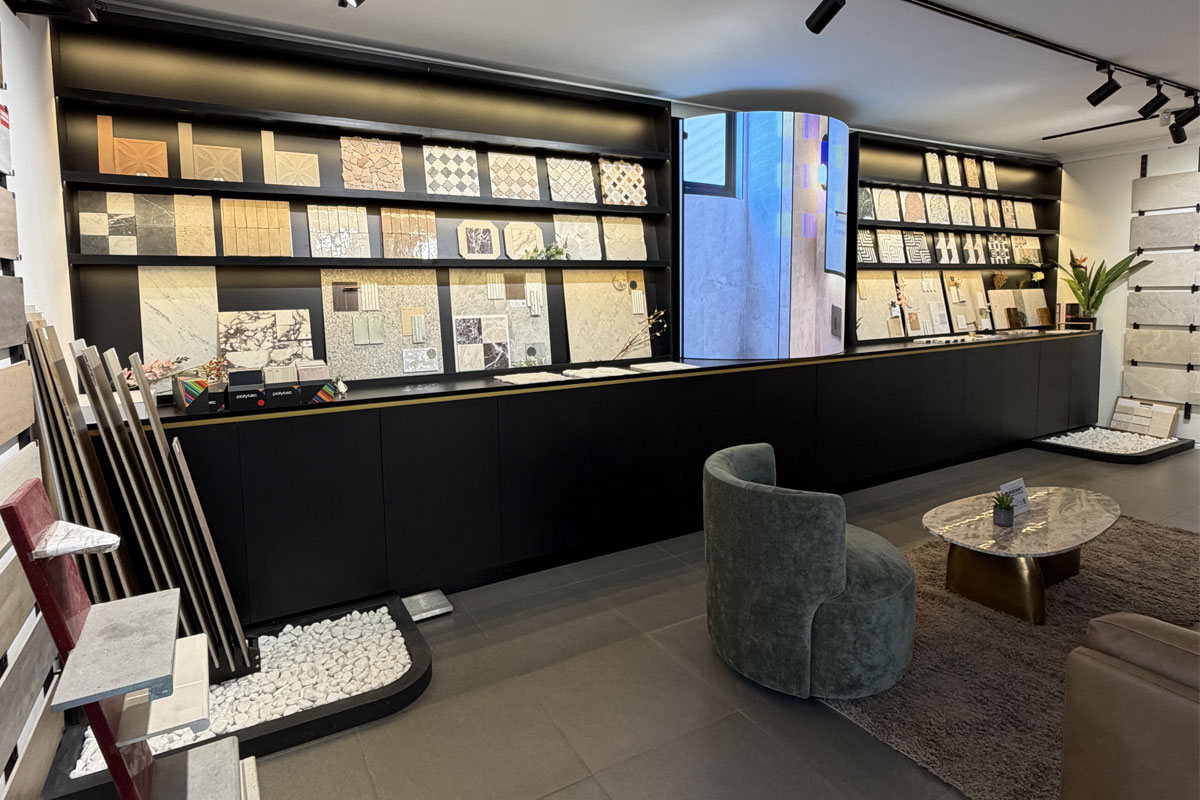
Show Tile brings advanced tile surface technology to premium Australian projects
Large-format slabs require careful handling and setting-out, while structured surfaces need extra attention around trims and penetrations. Directional stone-look graphics should follow an agreed orientation rather than being decided tile by tile during installation.
How Can Homeowners Compare Premium Tile Surfaces More Effectively?
Digital images are useful for shortlisting, but physical review is more reliable when finish and texture matter. Compare samples under daylight and artificial light, then place the tile beside joinery, timber, metal finishes, benchtops and grout.
The wider Show Tile collection can be filtered by material, application, design and surface, helping homeowners and professionals move from a broad aesthetic preference to a more precise shortlist.
Where Can You Explore Tile Surface Technology With Show Tile?
A premium tile selection should connect surface appearance, technical suitability and the wider material palette. Show Tile brings together architectural porcelain, stone-look surfaces, large-format slabs, non-slip finishes and Softec™ within a design-led range for residential and commercial projects.
Compare surface families first, then confirm the exact product, finish, format and application before final specification. This approach keeps the material choice focused on how the tiled surface will actually look, feel and perform in the completed project.
Contact Show Tile
📍 Showroom: 65 Canterbury Road, Bankstown NSW 2200, Australia
📞 Phone: +61 2 9709 5836
✉️ Email: sales@showtile.com.au
🌐 Website: https://showtile.com.au/



