


Soft Touch Tiles Australia: A Guide to Refined Porcelain Surfaces
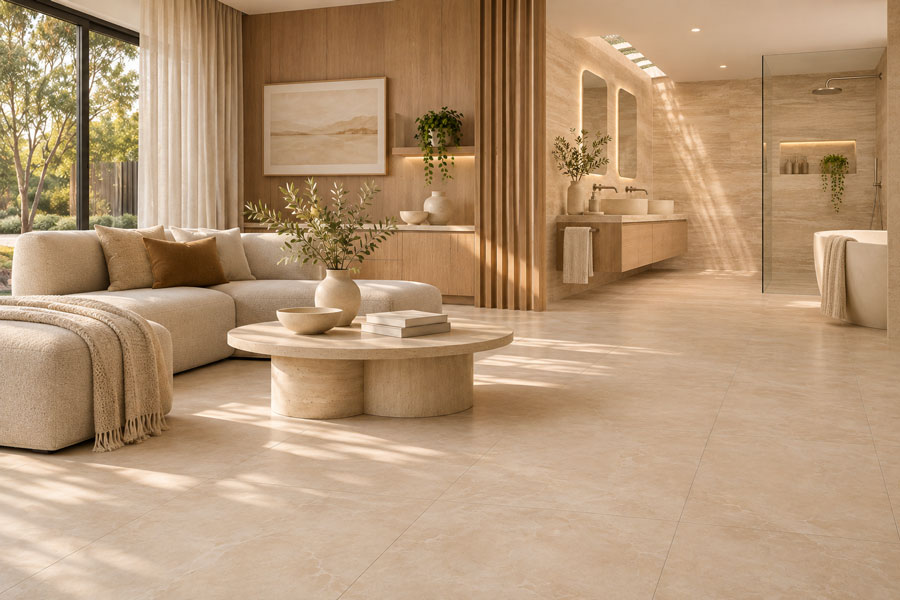
Premium tile selection is increasingly shaped by how a surface feels as well as how it looks. Show Tile offers Softec™, a refined porcelain surface technology that combines a soft matt stone-inspired feel with P3 wet slip resistance, easy-clean performance and dimensional texture. For homeowners, architects, designers and builders researching soft touch tiles Australia, the range provides a considered option for bathrooms, living areas and selected commercial interiors.
What Are Soft-Touch Tiles?
Soft-touch tiles are tiles whose exposed finish is designed to feel smoother and more refined than a conventional flat matt surface. The term describes tactile surface character rather than the physical softness of the tile body.
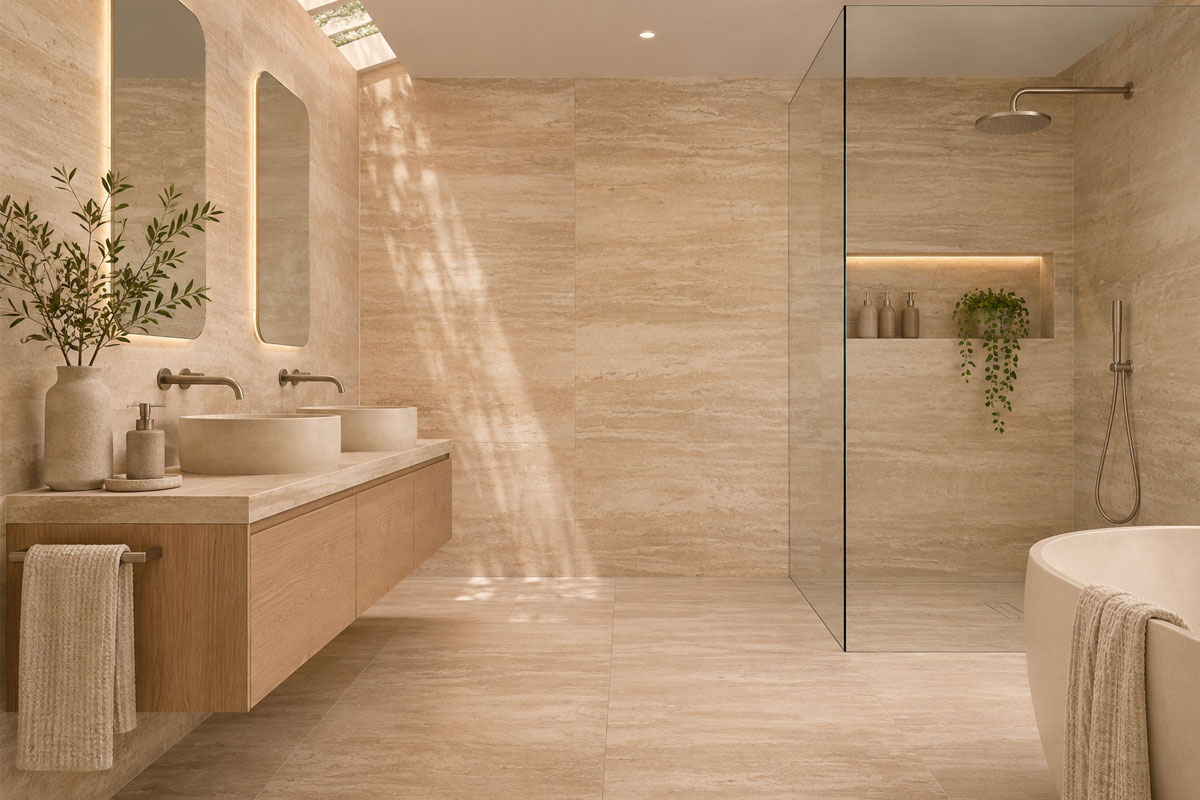
Soft-touch porcelain brings a refined feel to premium interiors
Does “Soft Touch” Mean the Tile Is Physically Soft?
No. A soft-touch porcelain tile remains a hard, rigid porcelain product. “Soft touch” does not mean that the tile is cushioned, flexible or compressible.
The porcelain body defines the material, while the finish, surface texture and relief determine how the tiled surface looks and feels. Show Tile makes the same distinction for Crema Marfil Softec™, where soft touch refers to tactile quality rather than a softer tile body.
Is Soft Touch the Same as a Matt Finish?
Not exactly. Matt generally describes a low-sheen visual finish, while soft touch describes how the surface feels.
Two porcelain tiles can both appear matt but have noticeably different tactile characteristics. Surface feel, wet slip performance and maintenance should therefore be assessed independently rather than assumed from appearance alone.
Why Are Soft-Touch Tiles Used in Premium Interiors?
Soft-touch porcelain works well when a project needs restrained reflection, stone-inspired character and a more refined tactile finish. The approach is particularly relevant to interiors where material quality is expressed through subtle colour, texture and light rather than high gloss.
How Does a Soft Matt Surface Affect the Interior?
A soft matt surface limits strong reflection and allows veining, tonal variation and architectural form to remain visually controlled.
This surface direction can work particularly well with:
- Timber joinery
- Brushed metal fittings
- Neutral benchtops
- Natural material palettes
- Warm bathroom schemes
- Contemporary hospitality interiors
Directional and natural light can still reveal the texture and stone movement without creating the pronounced reflections associated with highly polished surfaces.
Why Does Tactile Character Matter in High-End Design?
Bathrooms, vanity walls, large floor areas and feature surfaces are experienced at close range. Surface quality is therefore not purely visual.
A porcelain finish that looks refined but feels excessively coarse may not support the intended material scheme. Tactile character gives architects and designers another layer to assess alongside colour, scale and pattern.
How Does Softec™ Create a Soft-Touch Porcelain Surface?
Softec™ surface technology is Show Tile’s exclusive porcelain surface system. The technology brings together a soft matt stone-inspired feel, P3 slip resistance when wet, easy-clean performance and 3D surface texture.
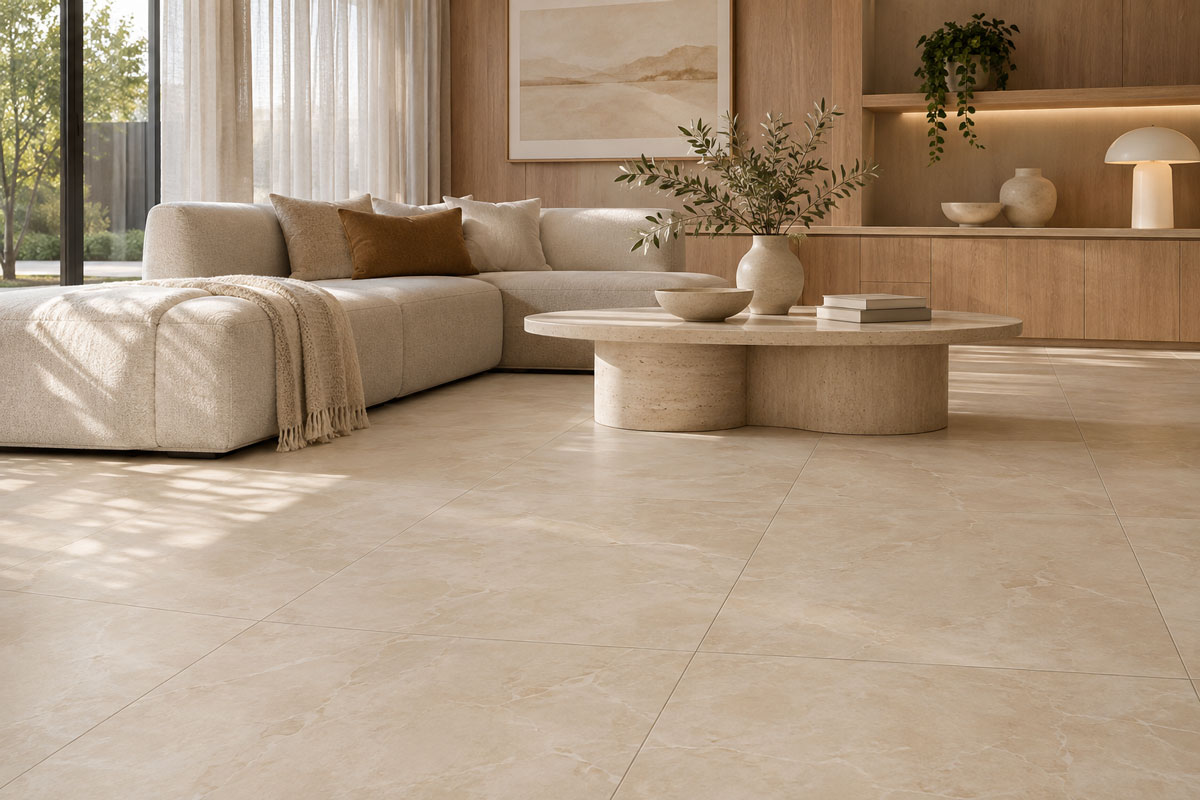
Warm stone-look tiles create a calm, low-sheen surface
What Makes Softec™ Different From a Standard Matt Surface?
Softec™ combines several surface characteristics:
- Soft matt tactile character
- P3 wet slip resistance
- Easy-clean performance
- 3D surface texture
- Stone-inspired visual depth
A standard matt porcelain tile does not automatically provide the same tactile feel, slip classification or dimensional surface character.
For a broader view of how modern matt, polished, textured and slip-rated surfaces relate to one another, the article on tile surface technology Australia places this type of finish within the wider development of architectural porcelain surfaces.
Why Does the Porcelain Body Still Matter?
Softec™ describes the surface technology; porcelain remains the underlying material.
This distinction affects installation, maintenance and specification. A stone-inspired porcelain tile may reproduce the visual language of marble or travertine, but the product should still be documented and treated according to its actual porcelain construction.
Where Can Soft-Touch Tiles Be Used?
Show Tile positions Softec™ for residential and commercial interiors, including bathrooms, wet areas, living spaces, hospitality venues and retail environments. Final suitability should always be checked against the exact product and intended application.
Are Soft-Touch Tiles Suitable for Bathrooms?
Softec™ provides P3 slip resistance when wet, making the surface relevant to bathroom and wet-area specifications where slip performance is part of the design assessment.
However, bathroom specification still needs to consider:
- Exact wall or floor zone
- Falls and drainage
- Waterproofing
- Grout
- Installation requirements
- Project-specific slip requirements
A shower floor, general bathroom floor and bathroom wall are different applications and should not be treated as technically identical.
Can Soft-Touch Tiles Work in Living and Commercial Areas?
Yes. A refined matt porcelain surface can create broad, calm floor planes in living areas without introducing excessive sheen.
Show Tile also identifies hospitality and retail interiors as appropriate Softec™ contexts. For projects requiring a more local buying and specification perspective, the Softec tiles Sydney article expands on how the range can be considered within Sydney residential and commercial projects.
Which Soft-Touch Collections Are Available From Show Tile?
Show Tile’s current Softec™ range includes Travertino, Bottocino and Crema Marfil, giving specifiers three distinct stone-inspired directions.
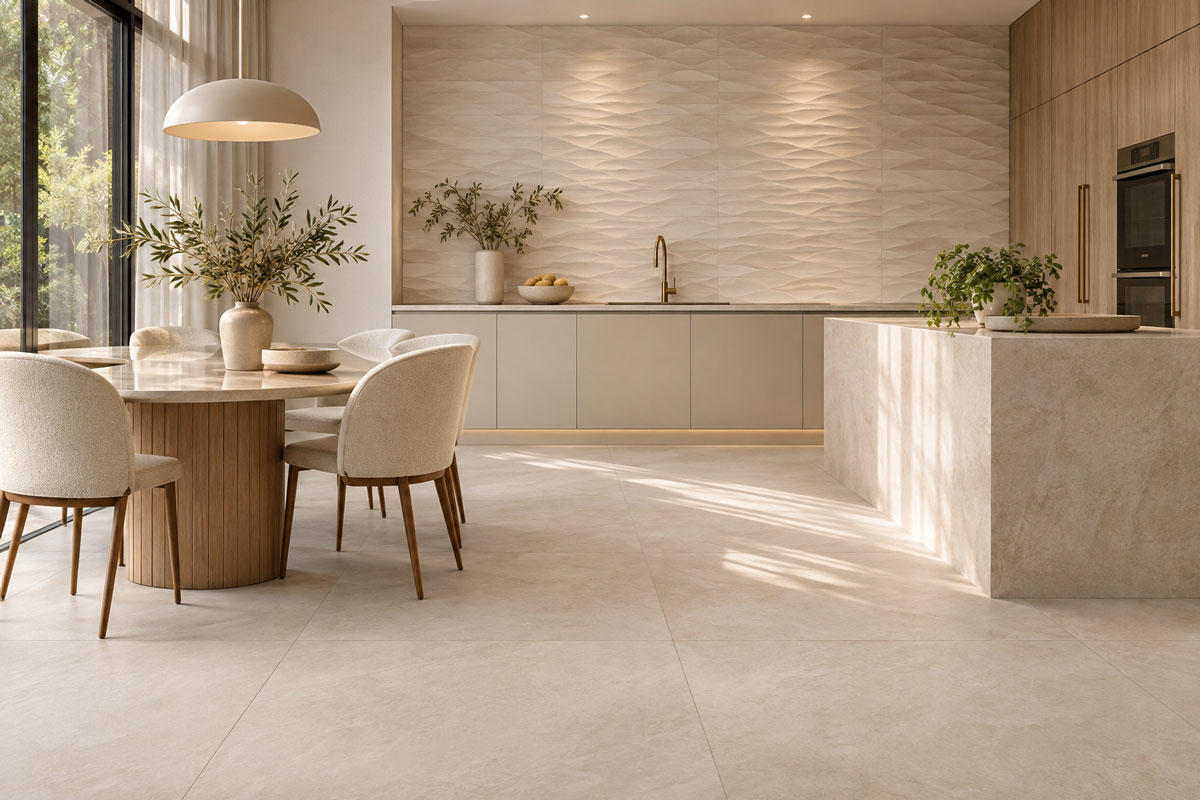
Dimensional textures add depth to feature walls and kitchens
What Does Travertino Softec™ Offer?
Travertino Softec™ is travertine-look porcelain offered in White and Beige with Vein and Cross visual directions.
Show Tile currently lists a 600 × 600 mm Softec™ format for wall and floor applications. The Vein design creates stronger linear movement, while Cross provides a less directional stone pattern.
What Does Bottocino Softec™ Offer?
Bottocino Softec™ uses warm beige tones and delicate stone-inspired veining.
The collection includes 600 × 600 mm and 600 × 1200 mm field tiles together with coordinated strip formats. Show Tile lists Bottocino as 9 mm porcelain for wall and floor applications.
The combination allows a designer to coordinate broad tiled planes with smaller-scale detailing while maintaining a consistent material direction.
What Does Crema Marfil Softec™ Offer?
Crema Marfil Softec™ provides a creamy stone-inspired porcelain direction in Beige and White.
Current Softec™ field formats include 600 × 600 mm and 600 × 1200 mm. A separately listed 3D Concave 600 × 1200 mm option introduces stronger relief for selected wall treatments.
How Do the Main Soft-Touch Collections Compare?
| Collection | Surface Direction | Main Formats | Design Character |
| Travertino | Travertine-inspired Vein or Cross | 600 × 600 mm Softec™ | Calm and architectural |
| Bottocino | Warm marble-inspired movement | 600 × 600, 600 × 1200 + strips | Field and detail coordination |
| Crema Marfil | Cream stone-inspired finish | 600 × 600, 600 × 1200 + 3D option | Warm and dimensional |
The right collection depends on room scale, material palette, pattern direction, tile format and required surface relief. The collection name alone should not determine the final specification.
How Should Soft-Touch Tiles Be Compared With Other Surfaces?
Material, finish, tactile character, slip performance and maintenance should be compared separately. Two low-sheen surfaces can look similar while behaving differently in a project.
How Do Soft-Touch Tiles Differ From Conventional Matt Porcelain?
Both may have low sheen, but soft-touch porcelain places greater emphasis on the tactile experience of the finish.
Standard matt tiles can range from relatively smooth to strongly textured. Slip performance should also remain a separate technical consideration; a tile that looks matt or textured does not automatically carry a specific slip classification.
How Do Soft-Touch Porcelain Tiles Differ From Natural Stone?
Porcelain is manufactured, while natural stone is quarried. Natural stone develops organic variation through geological processes, whereas stone-look porcelain uses controlled graphics, colour variation and surface treatment.
The two materials can create similar visual directions, but installation, sealing and maintenance requirements should follow the actual material rather than the visual inspiration.
How Should Architects Specify Soft-Touch Tiles?
A professional specification should identify the exact collection, colour, finish, format, application and technical requirements rather than relying only on the description “soft touch”.
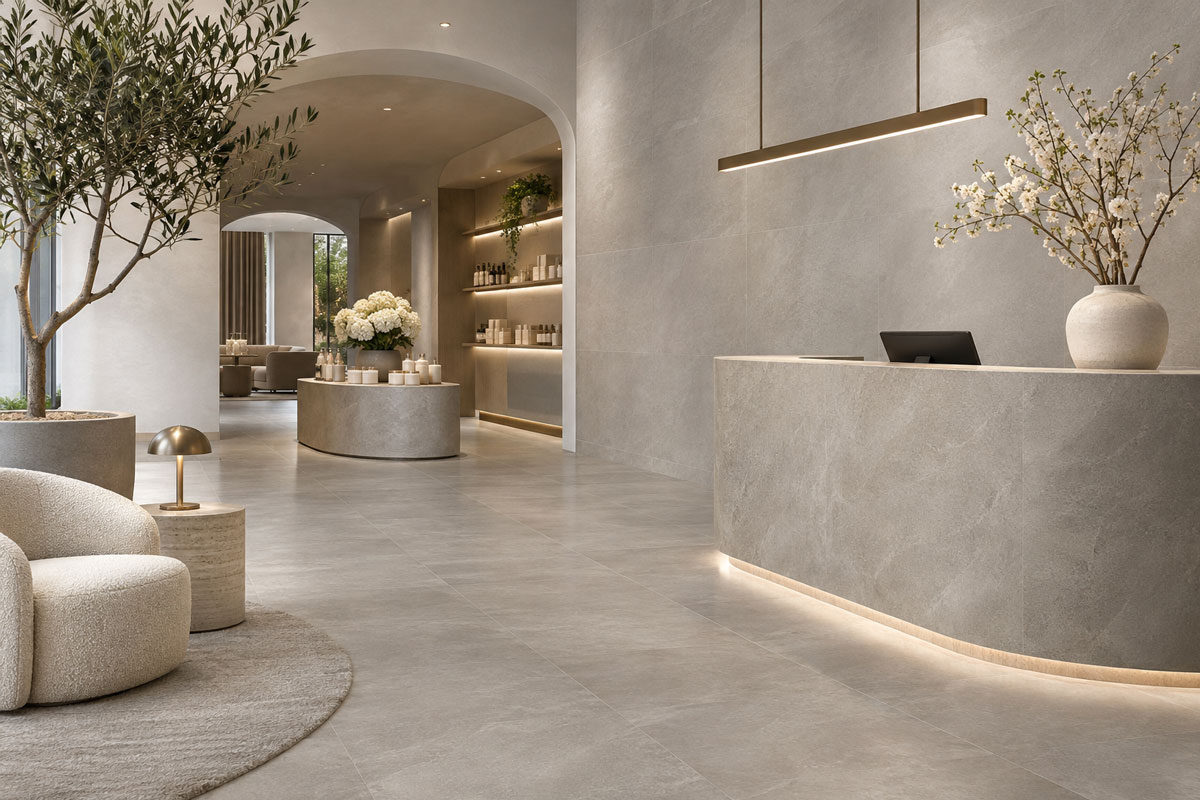
Show Tile Softec™ combines soft matt character with practical performance
What Should Be Included in the Tile Schedule?
A clear schedule should identify:
- Collection and colour
- Surface finish
- Tile format
- Wall or floor location
- Pattern direction where relevant
- Grout selection
- Applicable slip requirement
- Sample approval
- Quantity and current availability
The Softec tile specification guide provides a structured process for carrying these decisions from product selection into documentation, ordering, installation and handover.
Why Should Physical Samples Be Reviewed?
A screen cannot fully communicate surface feel, undertone, sheen or dimensional relief.
Physical review allows architects and interior designers to place the porcelain beside timber, joinery, benchtops, metal finishes and grout before approving the material. The Softec sample box for architects and designers provides a dedicated workflow for this type of professional material evaluation.
What Should Builders Check Before Installing Soft-Touch Tiles?
Installation planning should preserve the design decision established during specification.
Why Do Format and Pattern Direction Matter?
Tile format determines the grout grid, cut positions and setting-out rhythm. Directional graphics also need to follow an agreed layout.
Travertino Vein, for example, produces stronger linear movement than Travertino Cross. Orientation should therefore be documented before installation rather than decided tile by tile on site.
Why Does Surface Relief Require Coordination?
Dimensional tiles require careful planning around:
- Niches
- External corners
- Mirrors
- Tapware
- Cabinetry
- Edge trims
Directional lighting can make surface relief more visible, which also makes unresolved cuts and junctions easier to notice.
Are Soft-Touch Tiles Easy to Maintain?
Show Tile describes Softec™ as an easy-clean surface, but the finish still requires normal porcelain maintenance.
A tactile surface is not automatically an aggressively rough surface. Suitable cleaning products and soft tools should be selected according to the product guidance rather than assuming stronger chemicals or abrasive cleaning are required.
Stone-look porcelain should also not automatically receive natural-stone treatments. Maintenance decisions should begin by identifying whether the material being treated is porcelain, grout or actual natural stone.
How Should Homeowners Choose Soft-Touch Tiles?
Start with the intended room and application, then assess surface feel, colour, format, pattern and technical performance under real lighting.
During sample or showroom review, compare the tile under both natural and artificial light. Check warm or cool undertones, pattern direction, grout relationships and adjoining materials. Where a stone-look collection includes several faces, reviewing more than one tile also gives a better indication of the final installed variation.
Where Can You Explore Soft-Touch Tiles in Australia?
Show Tile offers Softec™ exclusively, with Travertino, Bottocino and Crema Marfil forming the current stone-inspired range. The dedicated Softec™ collection allows architects, designers, builders and homeowners to compare available colours, patterns and surface directions before narrowing the specification.
Experience Softec™ Surfaces Before Final Selection
A premium tile surface should be evaluated as part of the complete material palette rather than selected from colour alone. Compare the soft matt feel, format, pattern direction, grout relationship and dimensional texture before final approval.
Once the preferred surface is selected, record the exact product details and confirm the intended application before ordering. This keeps the approved tactile and visual character connected to the porcelain tile ultimately supplied and installed.
Contact Show Tile
📍 Showroom: 65 Canterbury Road, Bankstown NSW 2200, Australia
📞 Phone: +61 2 9709 5836
✉️ Email: sales@showtile.com.au
🌐 Website: https://showtile.com.au/



