


Garage Floor Tile Designs: A Practical Guide to Performance and Style
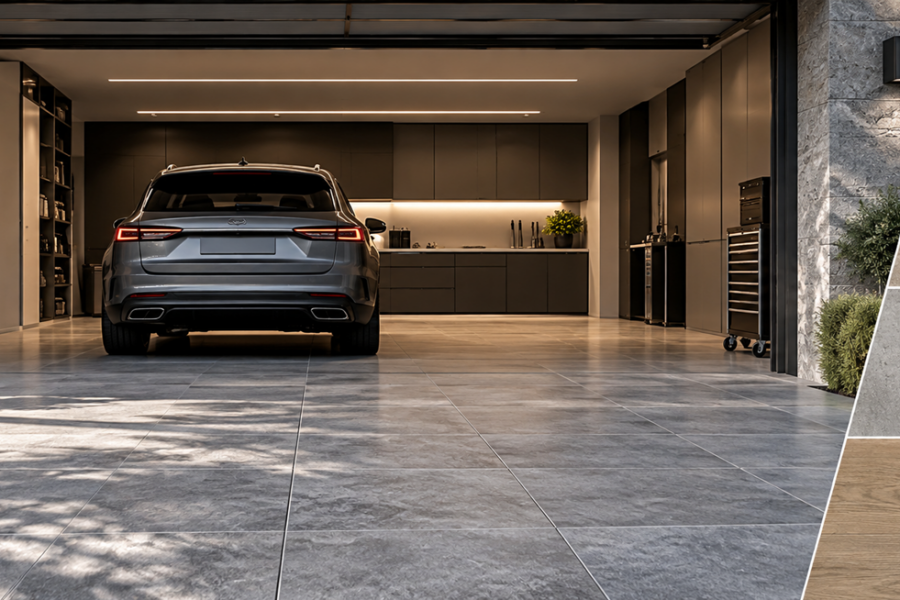
A well-planned garage floor tile designs scheme starts with performance before appearance. Vehicle use, surface grip, drainage, cleaning and installation conditions all influence which flooring solutions are suitable. Showtile helps homeowners, designers and builders compare garage flooring options within a broader architectural palette, so the final surface can feel practical, durable and visually connected to the surrounding home.
What Should Garage Floor Tiles Be Able to Handle?
Garage flooring needs to perform under conditions that are different from normal interior foot traffic. Vehicle movement, tyre contact, grit, water, storage equipment and frequent cleaning can all place additional demands on the floor surface and installation system.
Why Is Vehicle Use Different From Normal Foot Traffic?
A garage floor experiences concentrated contact from vehicle tyres rather than only distributed foot traffic.
The floor may also be exposed to:
- Turning tyres
- Grit carried in from outdoors
- Rainwater
- Dust
- Tools and storage equipment
- Repeated cleaning
- Occasional spills
For that reason, appearance alone is not enough to determine suitability.
The specific product should be confirmed for the intended residential or commercial use before installation.
Why Does the Substrate Matter?
Tile performance depends on the surface below the tile as much as the finish above it.
A garage substrate should be assessed for:
- Stability
- Flatness
- Existing movement
- Cracks
- Moisture
- Floor falls
- Drainage conditions
The adhesive, movement-joint strategy and installation method must also suit the project conditions.
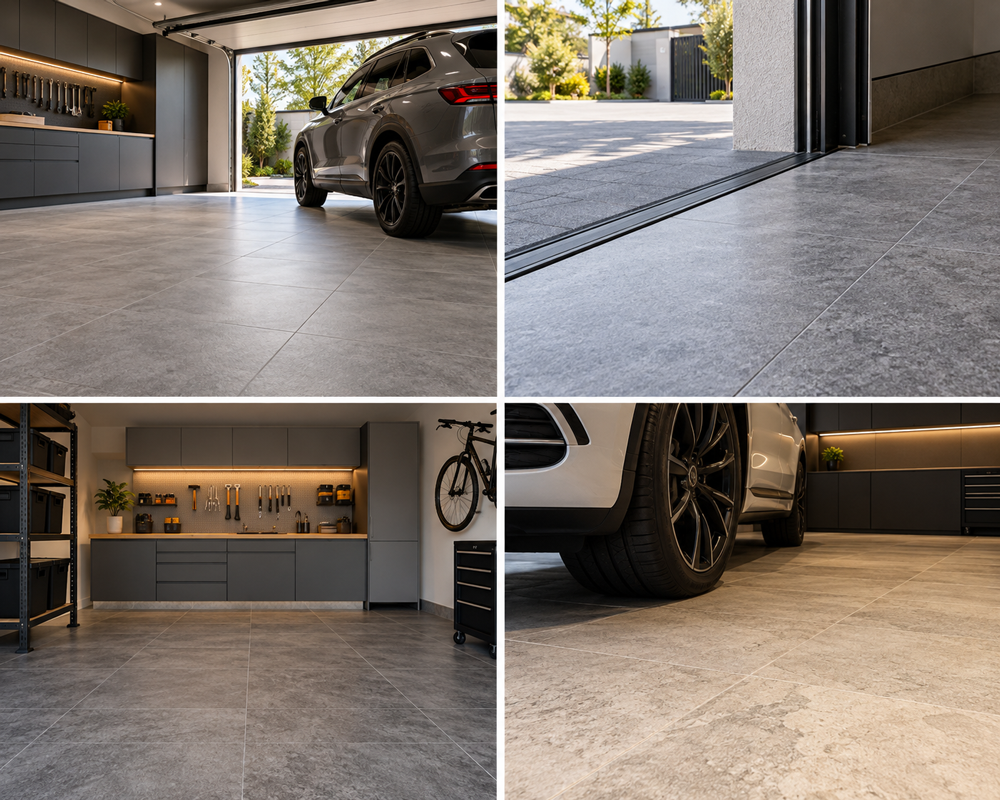
Large-format tiles create a clean garage floor
A premium tile cannot compensate for an unsuitable substrate.
Should Garage Tile Selection Start With Appearance?
No.
A more reliable order is:
- Confirm application suitability
- Review surface finish
- Assess slip requirements
- Consider drainage and floor falls
- Choose tile format
- Select colour and design
This sequence prevents visual preferences from overriding practical requirements.
How Important Is Slip Resistance on a Garage Floor?
Slip resistance becomes particularly important where water, dirt or outdoor exposure can affect the garage floor. The required level of grip depends on the project conditions rather than a single rating that applies to every garage.
When Does a Garage Need More Surface Grip?
Surface grip deserves more attention when:
- Rainwater enters through the garage door
- Cars are washed inside
- The garage connects directly to an exposed driveway
- The floor drains toward an outlet
- Wet footwear is common
- The garage also functions as a workshop
The selected tile should be assessed against the actual conditions in the space.
Are Higher Slip Ratings Automatically Better?
Not necessarily.
More texture can provide additional grip, but stronger surface texture can also change cleaning requirements.
The design therefore needs to balance:
surface grip ↔ cleanability ↔ intended use
A highly textured floor should not be specified solely because the garage is considered a practical area.
Should Polished Tiles Be Used in a Garage?
Highly polished surfaces are generally not the first direction to consider for a garage where water, dust and vehicle entry are frequent.
A matt or more textured finish usually aligns more naturally with this environment.
However, the final choice should still depend on the specific product and project specification.
Which Tile Materials Make Sense for Garage Flooring?
Porcelain is one material worth considering for premium garage floors when the selected product and installation system are suitable for the intended vehicle use. The design advantage comes from combining consistent surface character with architectural finishes that can connect with other parts of the home.
Why Is Porcelain Worth Considering?
Porcelain can offer:
- Consistent colour
- Controlled surface variation
- Large-format options
- Stone-inspired finishes
- Concrete-inspired finishes
- Coordinated indoor and outdoor ranges
This makes porcelain useful when the garage needs to feel connected with the wider architecture rather than treated as a completely separate utility room.
When Do Concrete-Look Tiles Work Best?
Concrete-look tiles are particularly relevant for contemporary garages.
A concrete-inspired floor can coordinate naturally with:
- Grey cabinetry
- Black metal storage
- Concrete driveways
- Minimal architecture
- Industrial detailing
Mid-grey and greige surfaces can also create a practical visual base without introducing a strong decorative pattern.
The floor still needs to be technically suitable for the garage application, regardless of appearance.
When Do Stone-Look Tiles Create a More Architectural Garage?
Stone-look tiles suit garages connected to premium homes where the floor should relate to stone façades, landscaping or adjoining entry spaces.
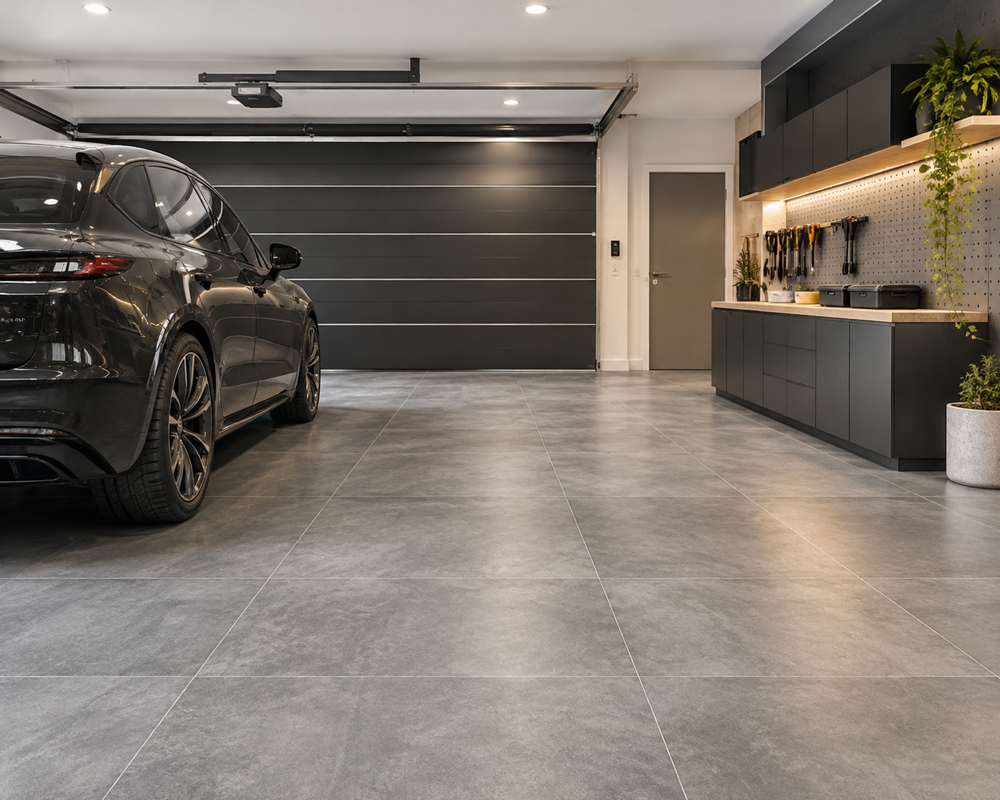
Stone-look surfaces add a refined architectural feel
A quieter stone character can make the garage feel more like part of the architectural composition.
Stone-look porcelain can also provide tonal movement that helps prevent the floor from appearing completely flat under strong garage lighting.
How Should Garage Tile Colour Be Chosen?
Garage flooring colour should consider both the architecture and how everyday dirt will appear against the surface. Very light and very dark floors can create stronger contrast with dust, tyre marks or debris, while mid-tone surfaces often produce a quieter visual field.
Which Colours Work Well for Everyday Use?
Useful directions include:
- Mid grey
- Greige
- Taupe
- Charcoal-grey
- Soft stone variation
- Concrete-inspired tones
These colours are easy to coordinate with garage cabinetry, metal shelving and adjoining external surfaces.
A floor does not need to be dark to feel practical.
Are Very Dark Garage Floors Practical?
They can create a sophisticated, showroom-like appearance.
However, lighter dust and debris may become more noticeable against a very dark uniform surface.
Dark floors work best where:
- Lighting is carefully planned
- Cleaning is regular
- Cabinetry supports the darker palette
- The garage is intentionally designed as a presentation space
Can Light Garage Floors Work?
Yes.
Light stone or pale concrete-inspired surfaces can make a garage feel larger and brighter.
A lighter floor is especially effective in garages with limited natural light, but visible dirt may require more frequent cleaning if the surface has little tonal variation.
How Does Tile Format Affect a Garage Floor?
Tile format changes the visual rhythm of the garage and can also affect installation around falls, thresholds and drains. Large formats create fewer visible joints, while medium formats may adapt more easily to complex floor geometry.
Do Large-Format Tiles Create a Cleaner Garage?
Large-format tiles can create:
- Fewer grout lines
- Broader material fields
- Cleaner visual continuity
- A more architectural appearance
The floor can feel more like a continuous surface rather than a tiled grid.
However, larger tiles place greater importance on substrate preparation and accurate floor planning.
When Are Medium Formats More Practical?
Medium tile formats can be easier to work with where the garage includes:
- Floor drains
- Multiple falls
- Irregular corners
- Door thresholds
- Storage-room transitions
The best format should respond to the actual floor geometry instead of following a trend.
Can Larger Outdoor Formats Help at the Garage Entry?
Potentially.
Where the garage transitions to an external driveway or entry zone, outdoor-format porcelain or paver systems may help create related material character.
The external surface and internal garage floor do not need identical technical finishes even when the visual language is connected.
How Should Garage Grout Be Planned?
Grout has a larger visual role on garage floors because the floor is typically broad and relatively uninterrupted. Colour and joint layout can determine whether the surface feels calm or heavily divided.
Why Does Grout Colour Matter?
Garage floors are exposed to:
- Dirt
- Dust
- Wet tyres
- Cleaning residue
- Outdoor debris
A highly contrasting grout colour can emphasize every joint and make the floor grid visually dominant.
Close-toned grout usually creates a quieter appearance.
Should Grout Match the Tile?
It does not need to match perfectly.
A grout colour close to the main tile tone can help:
- Reduce visual fragmentation
- Keep stone or concrete variation visible
- Create a broader floor field
The final grout should still suit the installation and maintenance requirements.
Can Grout Joints Be Eliminated With Large Tiles?
No.
Larger tiles reduce the number of joints but do not remove the need for proper installation joints.
Joint width and movement accommodation should follow the relevant product and installation requirements.
How Can Garage Flooring Handle Water and Drainage?
Water management should be considered before the final tile format is selected. Floor falls, drains and thresholds can influence tile cuts and installation complexity.
Why Should Floor Fall Be Considered Early?
The direction of floor fall affects:
- Tile cuts
- Joint alignment
- Drain placement
- Surface transitions
- Potential lippage
A large tile that looks ideal on paper may become difficult to install around multiple drainage planes.
Should the Garage Drain Toward the Door or a Floor Drain?
There is no universal answer.
The correct approach depends on:
- Building design
- Drainage system
- Garage location
- Local construction requirements
- Existing slab conditions
The builder, architect or relevant installer should resolve drainage before the floor finish is finalised.
Can Large Tiles Work Around Floor Drains?
Yes, but careful set-out is important.
Where several floor falls meet around a drain, medium or smaller formats may sometimes simplify the geometry.
Tile format should therefore be selected after the floor plan is understood.
How Can a Garage Floor Connect With the Driveway?
Garage and driveway surfaces do not need to match exactly, but they should feel deliberately related where the two areas are visually connected.
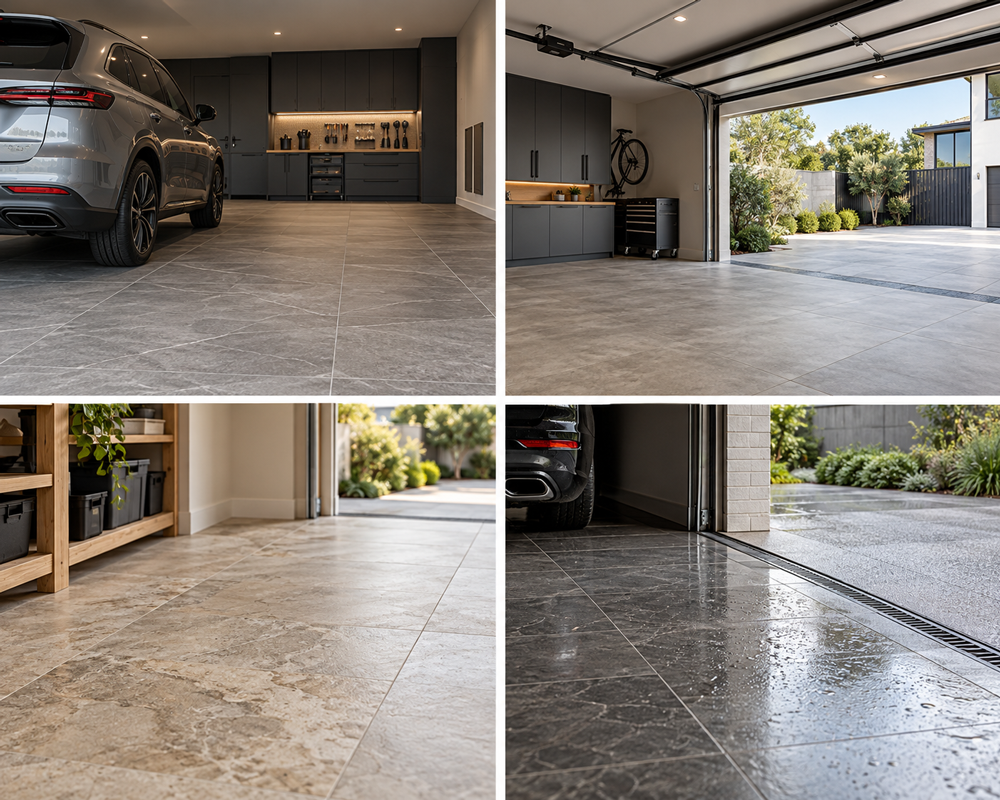
Practical tile finishes support everyday garage use
Should the Garage and Driveway Use the Same Colour?
They can share:
- Similar stone character
- Related grey tones
- Comparable texture
- Consistent architectural language
Different finishes can still be used to respond to indoor and outdoor exposure.
This approach creates visual continuity without forcing one technical specification across different environments.
Can One Material Family Continue From Inside to Outside?
Yes, where a collection offers suitable options for each application.
Related internal and external finishes can help reduce the visual break at the garage entrance.
The broader principle also applies when selecting finishes throughout the home. A colour strategy developed around blue bathroom tiles design may use the same idea: repeat a related material language without requiring every room to use the same exact finish.
How Should the Garage Threshold Be Treated?
The threshold needs coordination between:
- Garage door clearance
- Finished floor levels
- Drainage
- Tile cuts
- External surfaces
- Movement joints
This detail should be resolved before installation rather than treated as an afterthought.
How Can Garage Tiles Support Different Design Styles?
Garage floors can support several architectural directions, but the material should remain visually controlled because the floor already occupies a large uninterrupted area.
What Works for a Minimal Garage?
A minimal garage can use:
- Mid-grey flooring
- Large-format tiles
- Low-contrast grout
- Flush cabinetry
- Integrated lighting
Concrete-inspired surfaces suit this direction particularly well.
What Works for a Luxury Garage?
A premium residential garage may use:
- Restrained stone character
- Larger format flooring
- Dark cabinetry
- Integrated lighting
- Minimal visible storage
The objective is closer to an architectural showroom than a conventional utility space.
What Works for an Industrial Garage?
Charcoal and concrete-inspired surfaces work naturally with:
- Black steel
- Open shelving
- Workshop benches
- Functional lighting
The design should still avoid excessive pattern that competes with equipment and storage.
How Can Garage Flooring Be Easier to Maintain?
Garage flooring should be selected with cleaning frequency and surface texture in mind. A practical garage floor needs enough texture for the conditions without making routine cleaning unnecessarily difficult.
What Surface Makes Everyday Dirt Less Obvious?
A surface with moderate tonal variation may visually soften dust, marks and small debris between cleaning cycles.
This does not make the floor self-cleaning, but the visual contrast can be lower than on a highly uniform black or white surface.
The principle is similar to colour control in black and white bathroom tiles design, where visual contrast determines how strongly individual details appear.
Are Highly Textured Tiles Harder to Clean?
Potentially.
Deep texture can hold dirt differently from smoother surfaces.
For this reason, garage flooring should not be specified purely for maximum texture. Grip and cleaning requirements need to be considered together.
How Should Garage Tiles Be Cleaned?
Routine maintenance will generally depend on the selected product.
A practical approach commonly includes:
- Removing loose grit first
- Using suitable pH-neutral cleaning products
- Cleaning spills promptly
- Avoiding harsh products unless approved for the tile
- Following product-specific care guidance
The final maintenance method should follow the manufacturer or supplier instructions for the selected surface.
How Do Garage Floor Tile Directions Compare?
| Garage Goal | Tile Direction | Main Benefit | Main Consideration |
| Modern residential garage | Concrete-look porcelain | Clean architectural appearance | Product suitability |
| Premium garage | Stone-look porcelain | More refined material character | Surface finish |
| Garage–driveway connection | Related indoor/outdoor finishes | Strong continuity | Different exposure |
| Wet vehicle entry | Slip-conscious textured finish | Added grip | Cleaning |
| Showroom-style garage | Large-format neutral surface | Fewer visual breaks | Substrate preparation |
| Workshop-oriented garage | Mid-tone matt flooring | Practical visual base | Intended use |
The final material should be selected around the way the garage will actually function rather than appearance alone.
What Common Garage Flooring Decisions Should Be Avoided?
The most common mistakes happen when the floor is treated as a decorative surface before technical requirements are resolved.
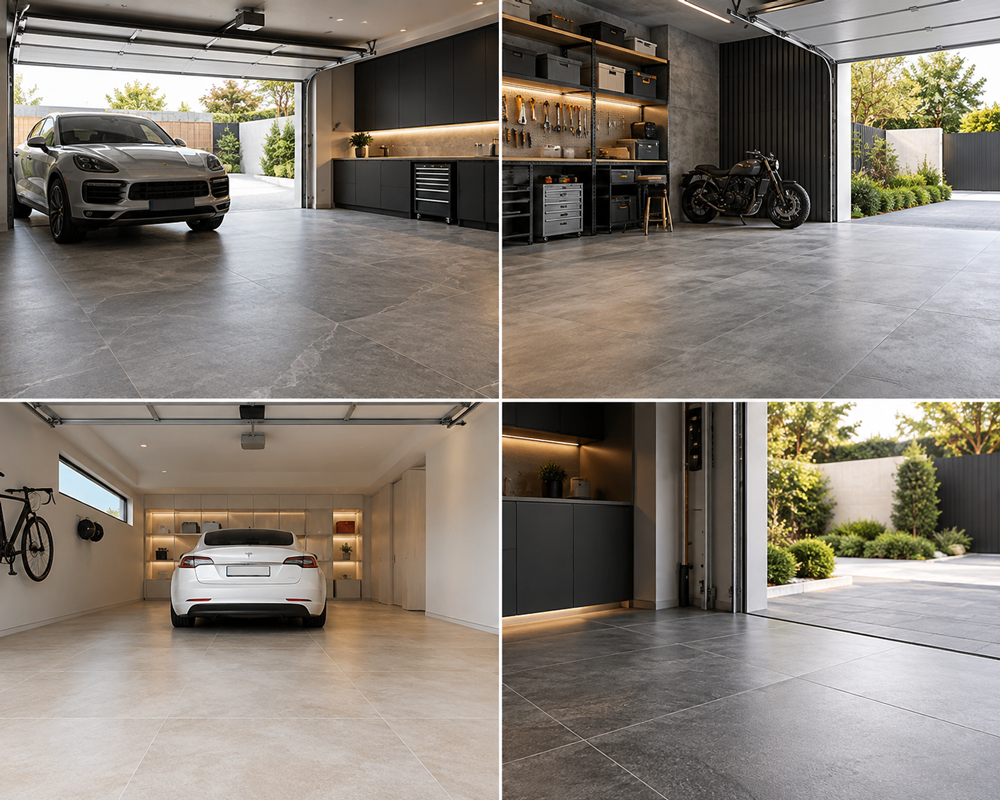
Thoughtful flooring connects the garage with the wider home
Choosing a Tile Only Because It Looks Durable
A stone or concrete appearance does not prove vehicle suitability.
Product specification should be checked first.
Selecting a Reflective Surface Without Considering Water
A glossy floor may suit a showroom concept, but water and dirt exposure need to be considered before a highly reflective finish is specified.
Ignoring Floor Falls Before Choosing Tile Size
Drainage geometry can dramatically affect the final set-out.
Using Too Many Borders or Patterns
The garage usually benefits from one clear floor field.
A more restrained material strategy follows the same logic as simple bathroom tiles design: fewer unnecessary transitions allow the primary surface to feel more intentional.
Assuming Every Outdoor Tile Is Suitable for Vehicle Traffic
Outdoor suitability and garage vehicle suitability are not automatically the same requirement.
The specific product needs to be confirmed for the intended application.
Plan the Garage Floor as Part of the Architecture
A garage floor can be practical without feeling disconnected from the rest of the property. Showtile helps designers, builders and homeowners consider flooring within the wider architectural palette while still giving technical suitability priority.
The broader Showtile collection allows surfaces to be compared by format, finish, application and material direction before the final garage specification is resolved.
A successful garage floor does not need complicated pattern or decorative detail. A stronger result comes from choosing a technically appropriate surface, coordinating the floor with the driveway and surrounding architecture, and allowing colour, format and grout to create a clean, durable visual foundation.
Contact Showtile
📍 Showroom: 65 Canterbury Road, Bankstown NSW 2200, Australia
📞 Phone: +61 2 9709 5836
✉️ Email: sales@showtile.com.au
🌐 Website: https://showtile.com.au/



