


Simple Bathroom Tiles Design: Creating a Calm and Practical Space
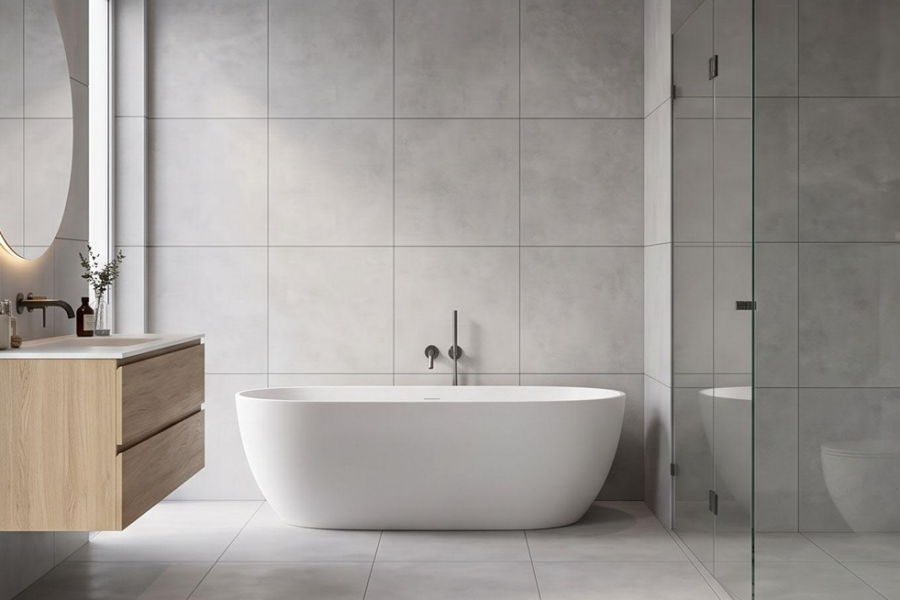
A successful simple bathroom tiles design is built around clarity rather than decoration. Fewer material changes, controlled colours, consistent grout and well-planned surface transitions can make the bathroom feel calmer, easier to maintain and more visually connected. Showtile helps homeowners, designers and builders create simple bathroom schemes that feel considered, practical and cohesive without relying on excessive pattern or unnecessary detail.
What Makes a Bathroom Tile Scheme Feel Simple Rather Than Plain?
A simple bathroom feels considered when repetition, proportion and material restraint replace unnecessary decorative changes. The bathroom may use only a small number of tile surfaces, but each surface should have a clear purpose within the room.
Why Does Material Restraint Matter?
Too many tiles can fragment a bathroom into unrelated visual zones.
A restrained scheme may use:
- One dominant tile
- One compatible wet-zone surface
- One optional textured or decorative accent
- One grout direction
- A controlled colour family
This approach allows the vanity, tapware, mirror and lighting to contribute to the design instead of competing with several patterns.
Material restraint also helps the bathroom age more gracefully because the room is not dependent on one highly specific decorative trend.
How Many Tile Types Does a Simple Bathroom Need?
There is no fixed number, but two or three coordinated surfaces are often enough.
One tile might cover most floors and walls, while a smaller-format tile addresses the shower floor. A third surface can be introduced around the vanity, bath or niche if the room genuinely needs additional texture.
The aim is not to reach the lowest possible tile count. The aim is to avoid changes that do not improve function or composition.
Can One Tile Do Most of the Work?
Yes, especially when the product is suitable for both wall and floor applications.
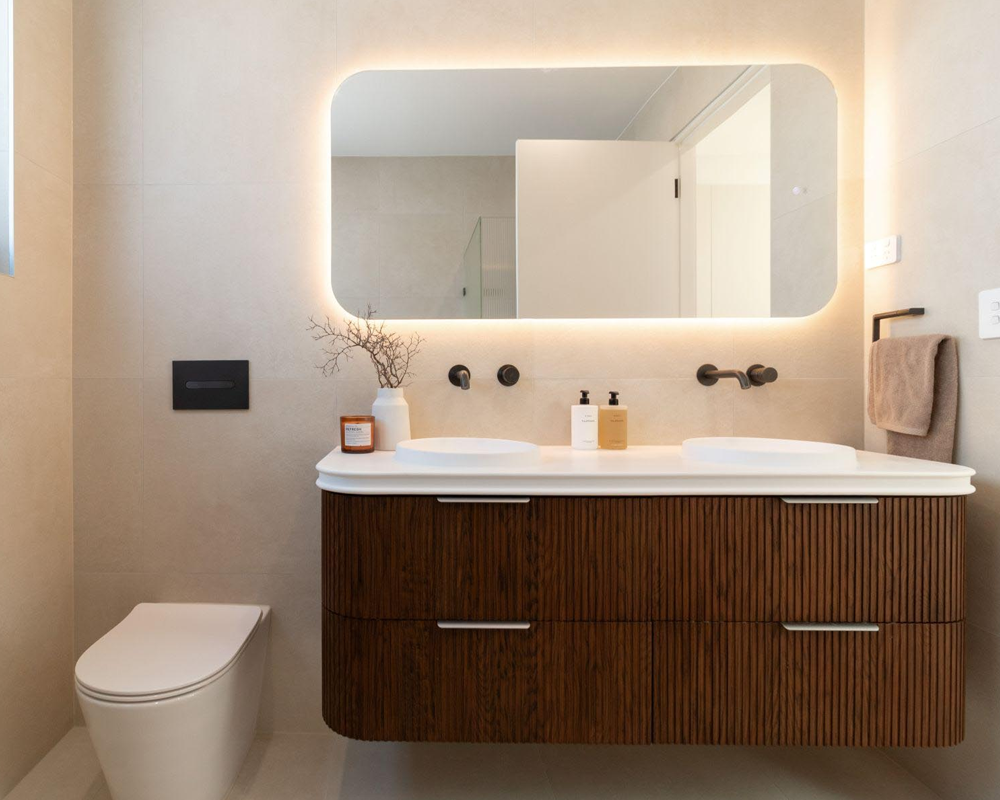
Simple tile choices create a calm bathroom space
Pure Stone is useful for this type of scheme because one stone-inspired material can carry across several bathroom surfaces in larger formats.
A single dominant material reduces abrupt colour changes and allows the bathroom to feel more spacious and composed.
Fewer Surface Changes, Stronger Bathroom Continuity
Surface continuity is one of the easiest ways to make a simple bathroom feel intentional. Instead of assigning a different tile to every wall, related surfaces can move through the room with only functional changes where required.
Should the Same Tile Continue From Floor to Wall?
It can, provided the selected finish is appropriate for each application.
Continuing one tile from floor to wall creates a strong visual connection and reduces the number of competing joints, colours and textures.
The result works particularly well in:
- Compact ensuites
- Apartment bathrooms
- Minimal bathrooms
- Powder rooms
- Bathrooms with strong joinery or feature tapware
The visual continuity also gives furniture-like elements such as floating vanities more space to stand out.
Where Should Tile Changes Actually Happen?
Tile changes work best at natural architectural or functional boundaries.
Good transition points include:
- Shower floor
- Shower niche
- Vanity splashback
- Bath wall
- Recessed shelf
Randomly changing tiles from one full wall to another can make a compact bathroom feel smaller.
How Can One Collection Create Subtle Variation?
A simple bathroom does not require every surface to be identical.
For example, Aria can support a coordinated approach where the base surface remains consistent while a more textured version introduces depth.
Changing texture rather than colour family is one of the most effective ways to add interest without losing simplicity.
Which Colours Keep a Simple Bathroom Calm?
Simple bathrooms usually benefit from controlled colour relationships rather than strong contrast between every surface. Warm white, ivory, beige, greige and soft stone tones create flexible backgrounds for vanity finishes, metals and lighting.
Why Do Warm Neutrals Work Well?
Warm neutrals sit comfortably beside timber, off-white cabinetry and brushed metal finishes.
Beige and limestone-inspired surfaces can also soften the clinical feeling sometimes created by pure white tiles and cool artificial light.
Within the wider stone-look tile collection, softer natural references are particularly useful when the bathroom needs material character without a strongly patterned surface.
Can Grey Still Work in a Simple Bathroom?
Yes, but undertone matters.
Cool grey combined with white cabinetry and cold lighting can feel sterile. A warmer grey paired with oak, walnut or warm lighting feels more residential and balanced.
Concrete-look tiles can also provide a controlled grey direction where the project needs a more architectural but still restrained surface.
When Should White Be Softened?
White bathrooms can benefit from subtle variation.
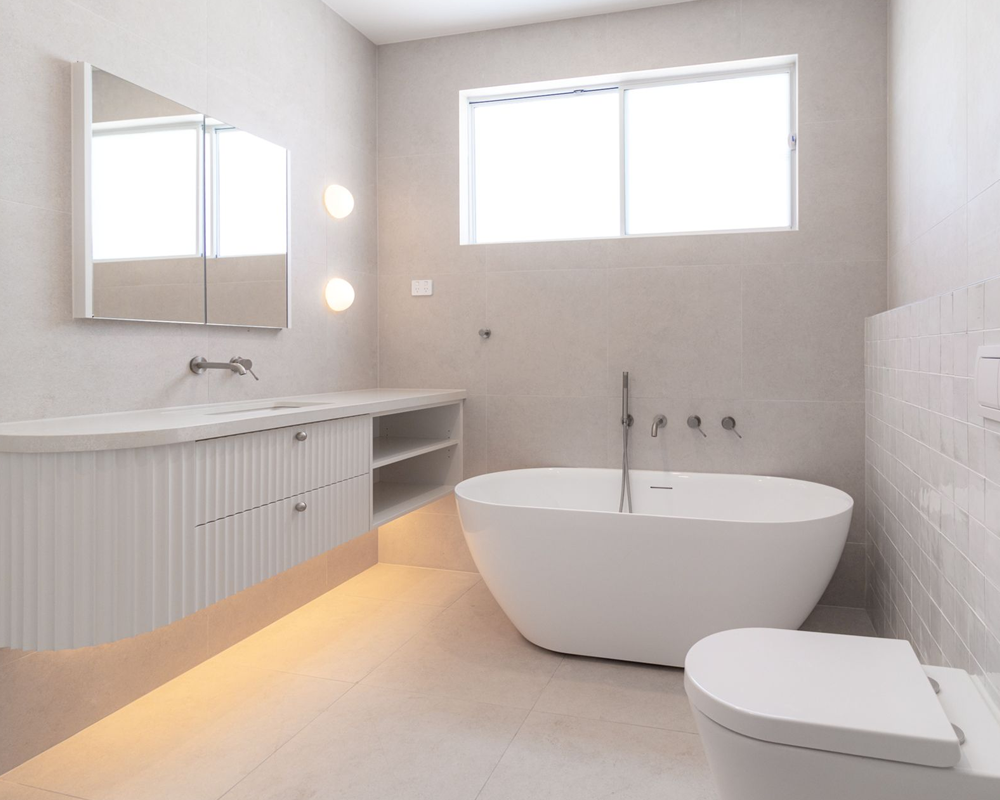
Fewer material changes support a more cohesive look
Instead of using one flat bright white throughout, consider:
- Ivory
- Warm white
- Soft marble movement
- Pale stone
- Timber joinery
T-Marble offers a useful direction where a lighter marble-inspired appearance is needed without turning the entire bathroom into a high-contrast statement.
How Can Tile Format Simplify the Bathroom?
Tile format influences how much visual information appears across a bathroom surface. Larger pieces can reduce the number of grout joints, while medium formats may fit compact walls or shower zones more efficiently.
Do Larger Tiles Reduce Visual Noise?
Generally, yes.
Fewer joints allow the material itself to become more visible and can create a quieter wall or floor plane.
Large formats are particularly useful where the design relies on:
- Stone movement
- Consistent colour
- Minimal transitions
- Broad wall surfaces
For projects seeking an even more continuous surface, porcelain slab tiles can be considered where the format and installation conditions suit the application.
When Is a Medium Format Easier to Use?
Medium formats can be practical in bathrooms with:
- Short wall sections
- Multiple corners
- Compact shower areas
- Niches
- Tight floor geometry
A format should not be oversized simply because large tiles are associated with modern design. The right module is the one that creates the cleanest overall set-out.
How Can Rectified Edges Support a Cleaner Look?
Rectified tiles can support more controlled joint lines where installation requirements allow.
However, grout width should still follow product and installation guidance. The goal is not to eliminate grout but to make the joint pattern feel consistent with the tile scale.
Why Is Grout So Important in a Simple Bathroom?
Grout becomes more noticeable when the bathroom uses fewer materials. Joint colour, width and consistency can either support the tile surface or divide the room into a more graphic grid.
Should Grout Match the Tile?
A close colour match often supports simplicity.
Similar grout and tile tones can:
- Reduce grid contrast
- Make walls feel more continuous
- Keep stone movement visible
- Avoid unnecessary visual interruption
A perfect colour match is not always possible, but keeping contrast controlled usually works well.
When Can Contrasting Grout Work?
Contrasting grout can be effective when the grid is deliberately part of the design.
This may work with subway tiles on a small vanity splashback or selected feature surface.
However, high-contrast grout across an entire bathroom creates a much stronger graphic effect and may move the room away from a simple visual language.
How Does Grout Affect Maintenance?
More joints create more areas that need cleaning attention.
This does not mean small tiles should be avoided completely. Mosaic tiles can be valuable in shower floors, niches or compact feature areas where the smaller scale serves a specific purpose.
The key is using smaller formats selectively rather than covering every surface without functional reason.
How Can Texture Add Interest Without Adding Clutter?
Texture can replace pattern when a simple bathroom needs more depth. Subtle surface relief, natural variation or light stone movement creates interest while keeping the colour palette controlled.
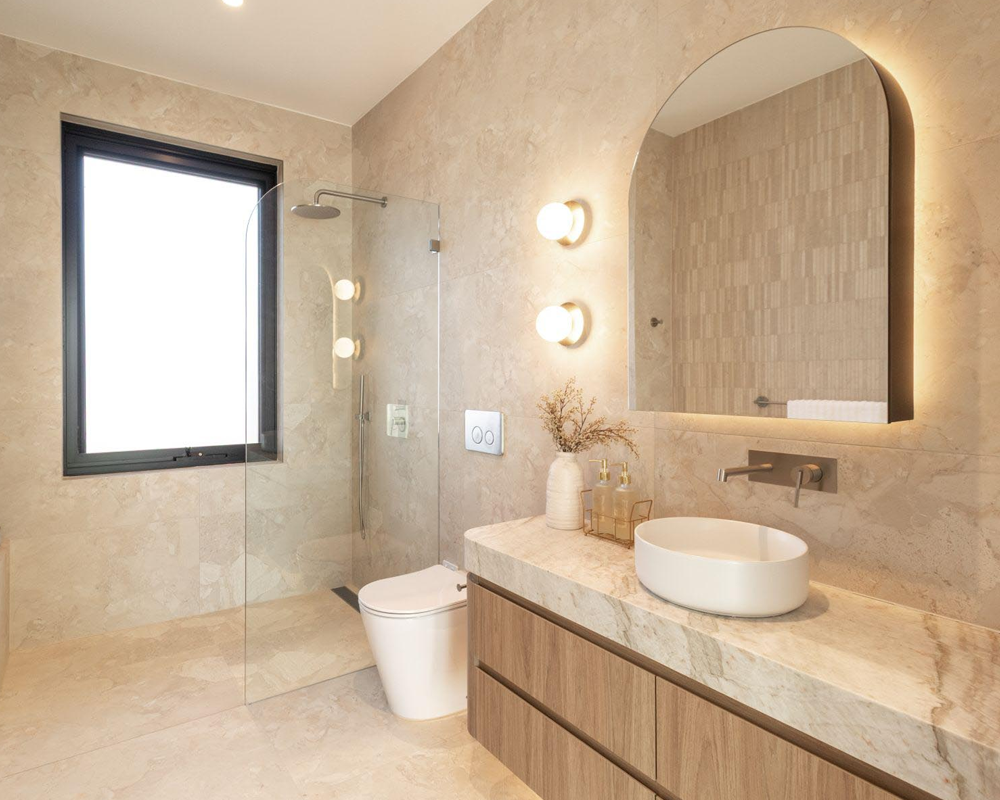
Neutral surfaces keep the bathroom clean and balanced
What Kind of Texture Works Best?
Simple bathrooms generally benefit from quieter textures such as:
- Fine linear relief
- Soft stone movement
- Tumbled edges
- Honed surfaces
- Restrained veining
The texture should complement the room rather than become another independent design theme.
Can a Feature Wall Still Be Simple?
Yes.
A feature wall can remain understated when the feature comes from surface relief rather than a completely different colour.
Romantic Carrara offers a useful example of maintaining a related marble-inspired palette while introducing a stronger textured expression.
A similar approach can be achieved using selected wall cladding tiles where the bathroom architecture calls for more pronounced depth.
Where Should Texture Be Concentrated?
Suitable positions include:
- Behind the vanity
- Behind the bath
- Shower end wall
- Recessed niche
Texture usually has more impact when surrounded by calmer surfaces.
How Can a Simple Bathroom Stay Easy to Maintain?
Simple design should simplify daily use as well as appearance. Surface texture, grout quantity and material maintenance should be considered alongside colour and format.
Why Does Surface Character Matter for Cleaning?
Deep surface relief can collect more soap residue and moisture than a smoother surface.
Highly textured tiles may therefore be better suited to selected walls than to every shower surface.
The choice should reflect both the desired look and the amount of cleaning the homeowner is comfortable maintaining.
Are Porcelain Tiles Practical for Simple Bathrooms?
Porcelain is widely used in bathrooms because many porcelain products combine visual consistency with practical surface characteristics.
The important point is to confirm that the particular tile and finish are suitable for the intended wall, floor or wet-area application.
A simple bathroom often benefits from one porcelain family that can cover several surfaces without unnecessary changes.
Does Natural Stone Need More Care?
Natural stone usually requires more maintenance consideration than porcelain.
The natural stone tile collection can provide authentic tonal variation and texture, but sealing and material-specific care should be factored into the selection.
Athena is therefore better considered as a controlled natural accent where authentic stone character adds value, rather than as the automatic choice for every surface in a low-maintenance bathroom.
How Can a Small Bathroom Feel Simpler and More Spacious?
Compact bathrooms generally benefit from fewer colour changes and clearer surface relationships. The objective is to let the eye move around the room without being interrupted by multiple borders, patterns and material transitions.
Should Small Bathrooms Use Fewer Colours?
Usually, yes.
One dominant neutral with subtle tonal variation can make a compact bathroom feel calmer.
A small amount of contrast can then come from:
- Vanity finish
- Tapware
- Mirror
- Towels
- Lighting
The tile palette does not need to provide all the visual interest.
Can One Tile Cover Most Surfaces?
Yes, and this is particularly effective in small ensuites.
The same material can wrap several walls and the main floor, while a more application-specific surface is introduced only where required.
The same principle of controlled continuity also appears elsewhere in the home. For example, a considered approach to bedroom design tiles can connect an ensuite and sleeping area through related tones without forcing both rooms to use exactly the same finish.
Should Small Bathrooms Avoid Pattern Completely?
No.
A limited amount of pattern can provide personality.
The vivid pattern tile collection may work on a compact feature plane or controlled detail, but strong pattern should have a clear role rather than being repeated across every surface.
What Can Make a Simple Bathroom Look Unfinished Instead of Minimal?
Simple bathrooms depend heavily on proportion and execution because there are fewer decorative elements to disguise poor decisions.
Does Too Little Contrast Make a Bathroom Flat?
It can.
A bathroom where every surface has exactly the same tone, finish and texture may lack depth.
Variation can come subtly from:
- Matt versus textured surfaces
- Timber vanity
- Lighting
- Stone movement
- Different material scale
Can Poor Tile Cuts Ruin a Simple Scheme?
Yes.
Awkward narrow pieces around corners, vanities and niches become particularly visible in restrained interiors.
Set-out should be planned before installation begins.
Does Random Tile Switching Make the Room Feel Smaller?
Often, yes.
Unnecessary tile changes interrupt the visual field and create more boundaries.
This is one reason the idea of controlled transitions also matters when planning stair tile schemes: repeated material relationships usually produce stronger architectural continuity than changing finishes without a clear reason.
Can Too Many Small Details Break the Simple Look?
Yes.
Borders, trims, decorative strips, contrasting grout and multiple feature formats can collectively create more visual noise than expected.
Simple design works best when each detail earns its place.
A Practical Formula for a Simple Bathroom Tile Palette
A clear sequence can keep material selection focused:
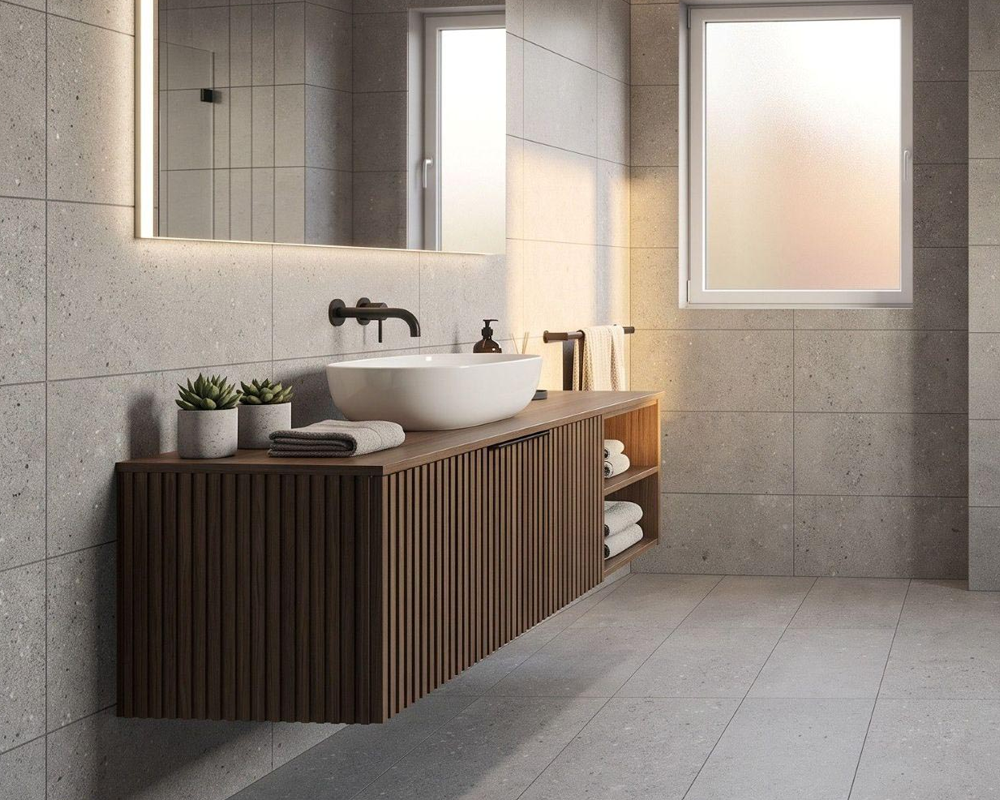
Thoughtful tile layouts make simple bathrooms feel complete
- Choose one dominant tile.
Establish the main colour and surface character. - Keep the colour family controlled.
Coordinate undertones rather than adding unnecessary contrast. - Resolve the wet-zone surface.
Confirm application and floor requirements. - Add texture only where needed.
Use one feature area instead of several competing surfaces. - Keep grout visually quiet.
Coordinate grout with the tile wherever appropriate. - Bring in vanity and tapware finishes.
Use furniture and metals to add controlled contrast. - Review the palette under actual lighting.
Check how tile colour changes throughout the day.
This simplified process can also support broader design tiles for home planning because each room can share a coherent material direction without repeating identical tiles everywhere.
Simplify the Bathroom Material Palette With Showtile
A simple bathroom feels more resolved when the main surfaces, wet-zone requirements and feature details are planned as one coordinated scheme. Showtile helps designers, builders and homeowners approach bathroom finishes with a stronger focus on proportion, continuity and long-term visual balance.
The broader Showtile collection makes it easier to compare different tones, formats and finishes within the wider bathroom palette, allowing each surface to support the overall design rather than compete for attention.
The strongest simple bathrooms are not created by removing every detail. A better result comes from selecting materials with a clear purpose, limiting unnecessary changes and keeping the relationship between floor, walls, joinery and fixtures visually consistent. This approach allows the bathroom to feel calm, practical and complete without becoming overly decorative.
Contact Showtile
📍 Showroom: 65 Canterbury Road, Bankstown NSW 2200, Australia
📞 Phone: +61 2 9709 5836
✉️ Email: sales@showtile.com.au
🌐 Website: https://showtile.com.au/



