


Bedroom Design Tiles: Creating a Calm and Cohesive Interior
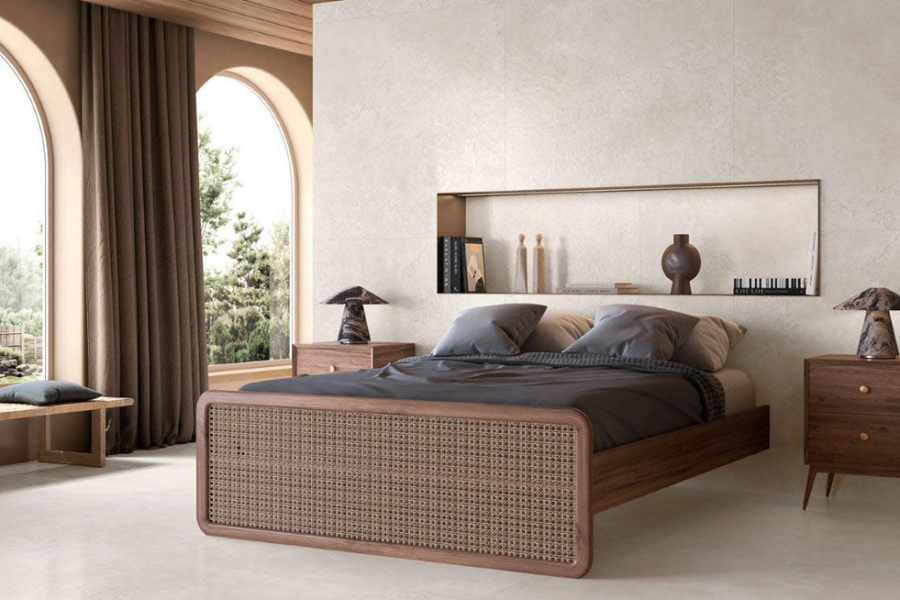
The right bedroom design tiles can give a sleeping space a stronger architectural foundation without making the room feel cold or overly formal. Showtile helps homeowners, designers and builders create bedrooms where flooring, feature surfaces, joinery, lighting and soft furnishings work together as one considered material palette.
What Makes Tiles Feel Comfortable in a Bedroom?
Bedroom tiles feel more comfortable when hard architectural surfaces are balanced with softer materials and warm visual cues. The choice of finish matters, but rugs, curtains, upholstered furniture, timber joinery and lighting are equally important in controlling how the room is perceived.
How Does Visual Temperature Affect Bedroom Tiles?
Visual temperature describes whether a surface feels warm, cool or neutral before physical temperature is considered.
Warm beige, taupe, sand, greige and timber-inspired tones often create a softer base than stark white or blue-grey surfaces. These colours work naturally with linen, wool, oak, walnut and warm artificial lighting.
The goal is not to make every bedroom beige. A cooler stone floor can still feel comfortable when balanced with timber furniture, soft textiles and warmer wall colours.
Can Hard Surfaces Still Make a Bedroom Feel Soft?
Yes. A tiled room can feel calm when surface sheen and surrounding materials are carefully controlled.
A matt floor with subtle movement usually reads more quietly than a highly reflective surface. An area rug under the bed can then soften the central zone, while curtains and upholstered furniture reduce the visual dominance of the floor.
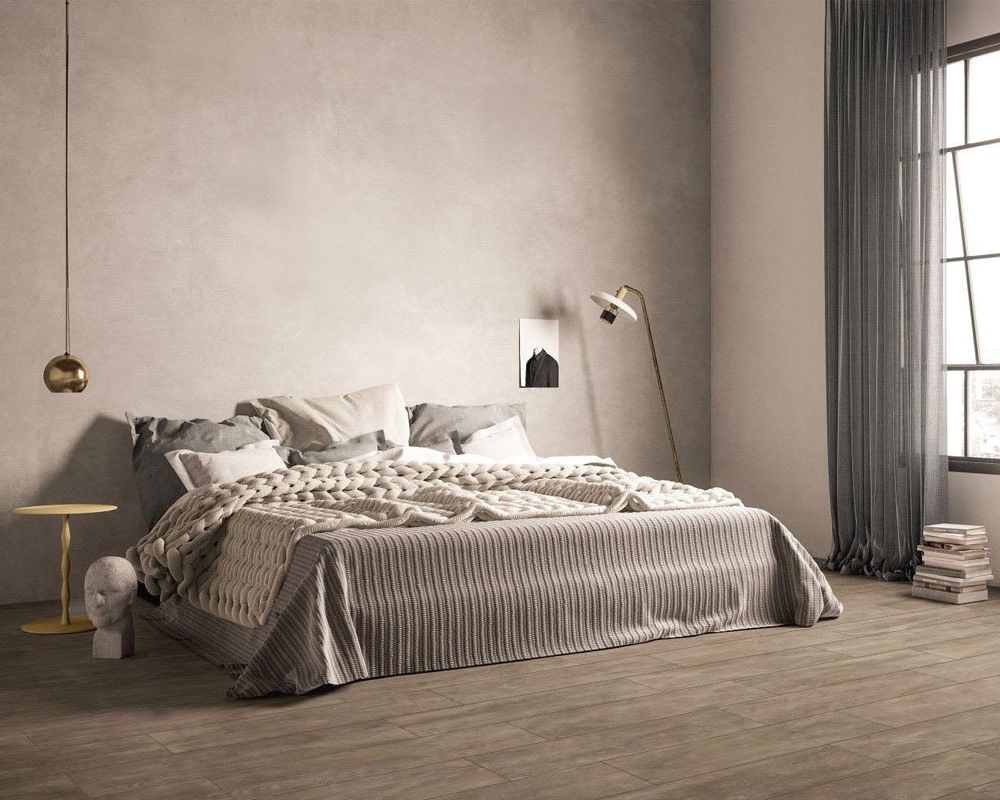
Bedroom tiles create a calm, balanced interior
The bedroom should therefore be designed as a composition of hard and soft materials, not judged by tile alone.
Why Should Bedroom Tiles Be Viewed With Furnishings?
A tile sample can change considerably once it sits beside timber, fabric and paint.
Before final selection, compare bedroom tiles with:
-
Bedding
-
Curtain fabric
-
Area rugs
-
Bedside joinery
-
Wardrobe finishes
-
Wall paint
-
Metal details
This reveals undertones that may not be obvious when the tile is viewed independently.
The Bedroom Floor as the Visual Foundation
The floor establishes the largest continuous material field in most bedrooms. A successful bedroom floor should support furniture and soft furnishings without introducing unnecessary visual noise.
When Do Stone-Look Tiles Work in Bedrooms?
Stone-look porcelain works well in architectural homes, warm minimal interiors and master suites that connect directly to an ensuite.
A restrained stone surface can create visual continuity without demanding attention. Pure Stone is particularly suitable for this direction because the broader formats can create a quieter floor field with fewer visible joints.
Stone-inspired flooring also works well when the same tonal family continues into hallways or adjacent wet areas.
When Are Timber-Look Tiles a Better Direction?
Timber-inspired surfaces introduce grain, linear movement and familiar warmth.
The Timber Look Tiles range at Showtile can be considered where the bedroom needs a wood-like visual language with the durability and maintenance characteristics associated with tile.
For homeowners comparing wood design tiles for floor, the most important factors are not simply grain pattern and colour. Board direction, grout tone, furniture placement and the relationship with surrounding joinery all influence whether the finished floor feels convincing and balanced.
How Can an Area Rug Change a Tiled Bedroom Floor?
An area rug can define the sleeping zone and soften the contrast between the bed and the hard floor.
A rug may extend beneath:
-
The full bed
-
Bedside tables
-
Front two-thirds of the bed
-
A reading chair
The rug should feel deliberately scaled to the furniture rather than placed as a small decorative patch.
This combination allows tile to provide continuity and durability while fabric adds tactile warmth around the bed.
How Should Tiles Frame the Bed Zone?
The bed is normally the main visual anchor in a bedroom, so tile features should reinforce the bed rather than compete with it. Alignment, scale and lighting matter more than simply choosing a dramatic tile.
Can Tile Be Used Behind the Bedhead?
Yes. Tile can create an architectural bedhead wall when the surface has enough texture or material character to justify the change.
Good directions include:
-
Honed stone
-
Ribbed or fluted surfaces
-
Subtle natural variation
-
Restrained linear texture
-
Large-format stone look
Aria is useful where the main surface and a more textured treatment need to feel related rather than completely separate.
Should the Bed Wall Be the Strongest Surface?
Not always.
If the bed already includes an upholstered headboard, integrated joinery, artwork or strong bedding, a highly patterned wall can make the composition feel crowded.
A quieter wall surface may create a stronger overall result because the bed remains the focal point.
How Can Tile Lines Relate to the Bed and Bedside Tables?
Set-out should consider the centreline of the bed before installation begins.
Tile joints, textured panels and feature zones can align with:
-
Bed width
-
Bedside tables
-
Wall lights
-
Joinery edges
-
Ceiling details
This type of alignment makes the room feel designed as a complete composition rather than assembled one finish at a time.
How Can Texture Add Depth Without Making a Bedroom Busy?
Texture works best in sleeping spaces when the variation is subtle enough to remain restful. Strong patterns can become visually tiring, while gentle relief or material movement adds depth without dominating the room.
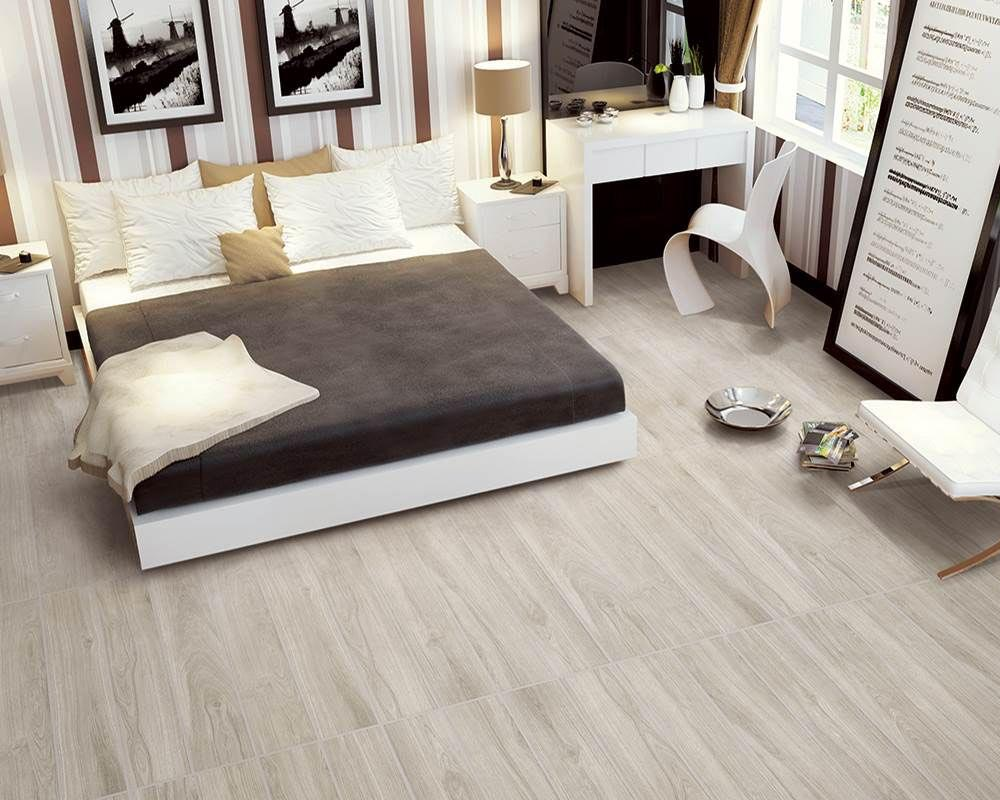
Soft tile tones support a comfortable bedroom atmosphere
Which Textures Feel Calmer in Sleeping Spaces?
Calmer options usually include:
-
Soft matt finishes
-
Honed stone character
-
Fine linear texture
-
Natural grain
-
Subtle tonal variation
The objective is to create shadow and material depth rather than a graphic pattern.
When Should 3D Tiles Be Used?
A 3D surface should normally be concentrated on one architectural plane.
Suitable locations include:
-
Bedhead wall
-
Reading corner
-
Fireplace wall
-
Recessed feature panel
Using the same texture on several walls can reduce the contrast that makes the feature effective.
Why Does Directional Lighting Matter With Texture?
Low-angle lighting reveals surface relief.
Wall lights beside the bed or concealed lighting above a textured panel can create soft shadows across raised surfaces. This makes the feature visible in the evening without requiring stronger colour or pattern.
Texture and lighting should therefore be designed together.
How Does Tile Scale Change Bedroom Proportion?
Tile scale changes how frequently the eye encounters joints and visual breaks. Larger formats generally create broader, calmer surfaces, while smaller modules add more rhythm and detail.
When Do Large-Format Tiles Suit a Bedroom?
Large-format tiles work particularly well in master bedrooms and open bedroom suites.
Benefits include:
-
Fewer grout lines
-
Stronger visual continuity
-
Cleaner furniture placement
-
More visible stone movement
-
A calmer architectural base
New Valley can support this type of understated interior where stone character needs to remain subtle enough for a sleeping space.
Can Large Tiles Work in Smaller Bedrooms?
Yes.
A compact bedroom does not automatically require small tiles. Larger formats may actually reduce visual fragmentation when the layout is well planned.
The critical factors are the room dimensions, wardrobe position, doorway and the cuts around fixed furniture.
How Should Rectangular Tiles Be Oriented?
There is no single correct direction.
Rectangular tiles may follow:
-
The long axis of the room
-
The direction of the bed
-
A window or balcony opening
-
A corridor leading into the bedroom
The selected direction should reinforce the geometry of the room rather than fight against it.
How Can Bedroom Flooring Connect With an Ensuite?
A master suite feels more coherent when bedroom, dressing and ensuite materials share a clear relationship. The rooms do not need identical finishes, but colour temperature and material character should feel connected.
Should the Bedroom and Ensuite Use the Same Tile?
Sometimes, but exact repetition is not required.
The bedroom can use a matt stone-look surface while the ensuite uses the same family in a more appropriate wet-area finish. Another approach is to keep the colour consistent while changing tile size or surface character.
This maintains continuity without ignoring functional differences.
How Can Material Continuity Make a Suite Feel Larger?
Fewer abrupt material changes make the eye travel more easily from one zone to another.
This is particularly effective across:
bedroom → walk-in wardrobe → ensuite
A related strategy can be seen across other architectural areas of the home. When planning outside wall tiles design, for example, repeating colour temperature or stone character from interior spaces can help the building read as one material composition rather than a collection of disconnected surfaces.
Where Should Material Changes Occur?
Changes are most convincing at natural boundaries such as:
-
Doorways
-
Level changes
-
Wardrobe transitions
-
Wet-area thresholds
-
Changes in architectural volume
Random changes within an uninterrupted space can make the suite feel smaller.
How Should Bedroom Tiles Respond to Natural and Artificial Light?
The same tile can appear noticeably different between morning daylight and warm evening lighting. Bedroom materials should therefore be reviewed under the lighting conditions that will actually be used in the room.
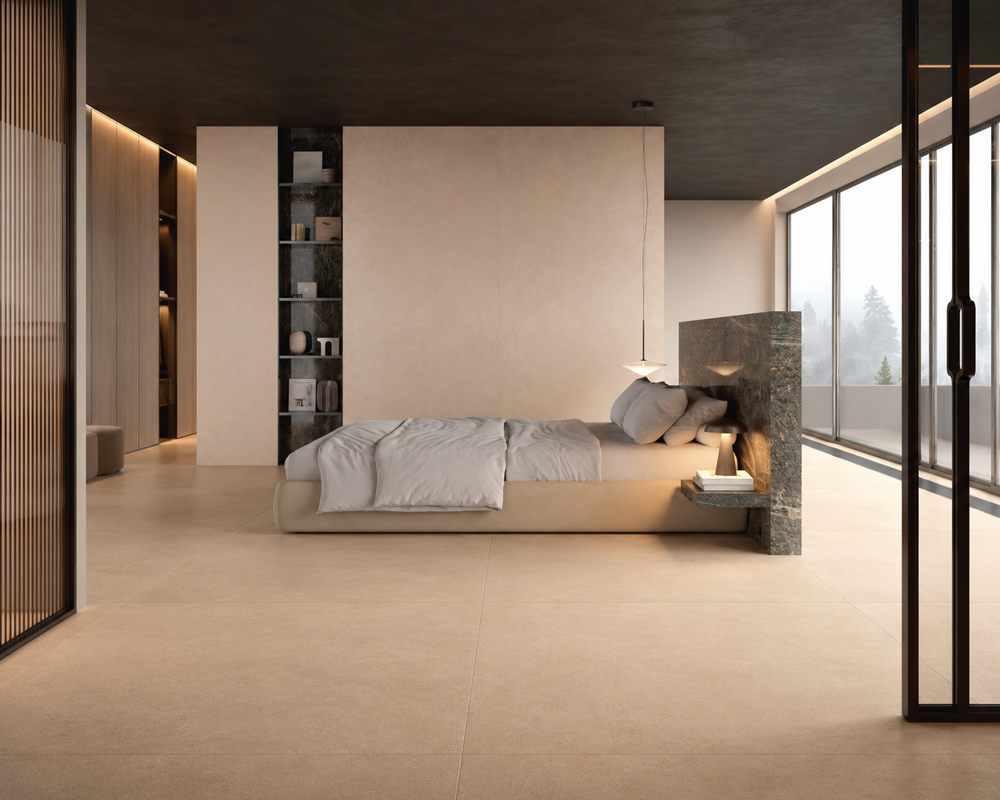
Clean surfaces help the bedroom feel more cohesive
What Happens to Warm Tiles in Morning and Evening Light?
Warm stone, beige and timber tones can appear lighter under strong daylight and deeper under warm artificial lighting.
A tile that looks neutral in a showroom may reveal yellow, pink or grey undertones once installed.
Physical samples should be viewed beside windows and again under bedside lighting.
Do Polished Tiles Belong in Bedrooms?
They can, but polished surfaces create a different mood from matt finishes.
Polished tiles reflect light and may suit more formal or glamorous bedroom interiors. Matt or honed surfaces usually create a quieter base where visual softness is the priority.
The correct choice depends on the architectural concept rather than a rule that one finish is universally better.
How Can Bedside Lighting Change a Feature Tile?
Bedside sconces can highlight the edge of textured tiles and create gentle shadow patterns at night.
This is particularly effective behind a bedhead because the light source sits close to the material plane. The surface becomes more expressive in the evening without needing a strong colour contrast.
Colour Without Over-Styling the Bedroom
Bedroom colour works best when the palette supports rest and allows furniture, bedding and artwork to evolve over time. Neutral does not need to mean flat or colourless.
Why Do Layered Neutrals Work Well?
Layering similar tones creates depth without introducing strong contrast.
A bedroom might combine:
-
Sand floor
-
Warm grey wall
-
Oak joinery
-
Ivory bedding
-
Taupe curtains
The variation comes from texture and material rather than multiple unrelated colours.
Can Dark Tiles Work in Bedrooms?
Yes, particularly in spacious rooms with strong natural light.
Charcoal, deep brown or darker stone tones can create an intimate atmosphere. Lighter bedding, timber and soft wall finishes can prevent the room from becoming visually heavy.
When Should Veining Be Kept Subtle?
Sleeping spaces generally benefit from slower visual movement.
Strong marble veining may work as a small wall feature, but a highly dramatic pattern across the whole floor can compete with furniture and textiles.
Where a designer is comparing broader ranges of designer tiles Australia, bedroom suitability should therefore be assessed through atmosphere and material balance rather than decorative impact alone.
How Should Bedroom Tiles Work With Joinery and Soft Furnishings?
Joinery, rugs and curtains occupy large areas of the finished bedroom, so tile selection should account for these materials early.
What Should Be Matched First: Tile or Joinery?
Neither surface needs to match exactly.
The more important relationship is the undertone. Warm oak works naturally with many sand, limestone and greige surfaces, while dark walnut may benefit from a lighter stone floor.
How Do Rugs and Curtains Affect Tile Selection?
Soft furnishings can significantly change the perception of a tiled room.
A stone floor may feel cooler when left completely exposed, but the same material can feel comfortable once a large rug, layered curtains and upholstered furniture are introduced.
Should Wardrobe Finishes Influence Floor Colour?
Yes.
Floor-to-ceiling wardrobes form a substantial visual surface. Timber, lacquer or coloured cabinetry should therefore be compared with the floor before final tile selection.
How Do Bedroom Tile Directions Compare?
|
Bedroom Direction |
Suitable Tile Approach |
Visual Effect |
Main Consideration |
|
Warm minimal bedroom |
Soft stone-look porcelain |
Calm and understated |
Undertone |
|
Natural bedroom |
Timber-look tile |
Warm visual character |
Grain direction |
|
Luxury master suite |
Large-format stone look |
Architectural continuity |
Set-out |
|
Bedhead feature |
Textured or 3D tile |
Depth and focal emphasis |
Lighting |
|
Bedroom–ensuite suite |
Coordinated tile family |
Strong continuity |
Application finish |
|
Dark contemporary room |
Deep stone tone |
Intimate atmosphere |
Natural light |
The strongest option depends on how the bedroom connects with furniture, adjoining rooms and the overall architecture.
What Makes a Tiled Bedroom Feel Too Hard or Unbalanced?
A tiled bedroom usually feels uncomfortable when too many hard, reflective or highly patterned surfaces compete for attention.
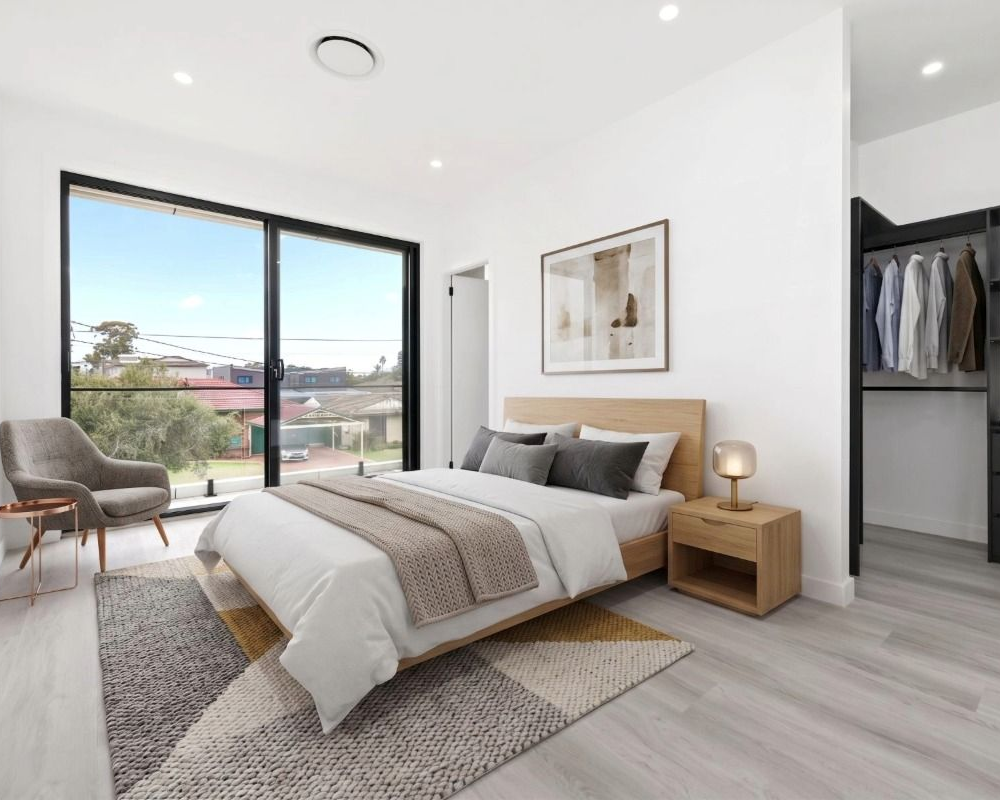
Thoughtful tile choices add depth without visual clutter
Can Too Many Reflective Surfaces Make the Bedroom Feel Formal?
Yes.
A polished floor, mirrored joinery and glossy wall finish together can create excessive reflection. Introducing matt surfaces, fabric and timber helps restore balance.
Does Strong Veining Compete With Bedding and Joinery?
It can.
If the floor already carries pronounced movement, bedding and joinery may need to remain more restrained.
Can Excessive Grout Lines Make the Floor Feel Busy?
Yes.
Smaller formats generate more visible joints. Grout colour also affects how strongly the tile grid appears.
Should Every Surface Use Tile?
No.
Tile should have a clear purpose. Paint, timber, fabric and plaster can provide the visual softness that makes an architectural tile surface more effective.
A More Intentional Way to Build the Bedroom Material Palette
A practical sequence is:
-
Define the atmosphere.
Decide whether the bedroom should feel warm, minimal, natural or more dramatic. -
Choose the floor direction.
Establish stone, timber or another primary material language. -
Coordinate joinery.
Compare flooring with wardrobe and bedside finishes. -
Decide whether the bed wall needs emphasis.
Add texture only if the composition benefits from a focal surface. -
Introduce soft furnishings.
Use rugs, bedding and curtains to balance harder materials. -
Review the palette at night.
Check colour and texture under the actual bedroom lighting.
This process keeps comfort at the centre of tile selection.
From Floor Surface to Bedhead: Building the Bedroom With Showtile
A bedroom feels more complete when flooring, feature surfaces, joinery and soft furnishings are planned as one material story. Showtile supports this approach with design-led surfaces suited to calm, contemporary and architecturally considered interiors.
Designers, builders and homeowners can use the wider Showtile collection to compare tone, texture, format and scale while keeping the overall bedroom atmosphere in focus. The aim is to build continuity between the floor, bed zone, wardrobe finishes and adjoining spaces rather than choosing each element independently.
A successful bedroom does not need excessive pattern or strong contrast. The strongest schemes usually rely on a controlled palette, balanced material transitions and surfaces that support the lighting, furniture and soft furnishings already shaping the room.
Contact Showtile
📍 Showroom: 65 Canterbury Road, Bankstown NSW 2200, Australia
📞 Phone: +61 2 9709 5836
✉️ Email: sales@showtile.com.au
🌐 Website: https://showtile.com.au/



