


Stair Tiles Design: Smart Ideas for Contemporary Homes
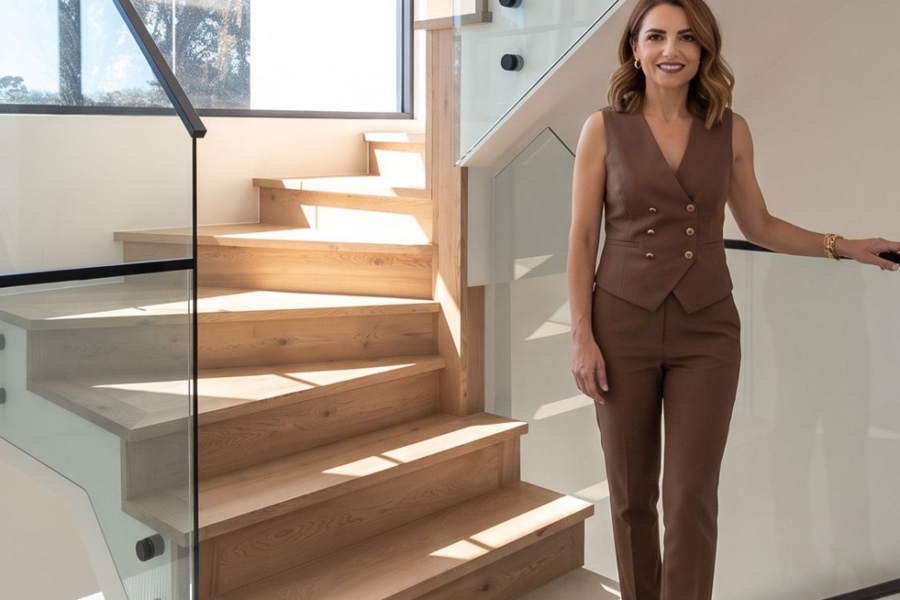
A tiled staircase can become a strong architectural feature when every step is planned as part of the wider interior. With stair tiles design, Showtile helps coordinate tread surfaces, risers, edge details, lighting and adjoining floors so the staircase feels refined, practical and visually connected to the surrounding space.
What Gives a Tiled Staircase a Refined Architectural Character?
A refined staircase begins with geometry rather than pattern. Repeated tread depth, riser height and edge lines create a strong rhythm, so tile selection should reinforce those proportions instead of distracting from them.
Why Should Stair Geometry Lead the Design?
A staircase is viewed as a sequence of repeated horizontal and vertical planes. Small inconsistencies therefore become more noticeable than on a flat floor.
Good stair design should prioritise:
- Consistent tread depth
- Repeated riser height
- Straight edge lines
- Controlled grout placement
- Clean transitions at landings
The tile should support these architectural lines.
Why Should Treads and Risers Be Planned Together?
Treads and risers create one visual unit on every step.
When both surfaces are considered together, designers can coordinate:
- Colour
- Veining
- Texture
- Joint position
- Edge treatment
A tread selected without considering the riser can create awkward pattern changes once the staircase is installed.
How Can a Staircase Avoid Looking Too Decorative?
Limit the number of competing visual elements.
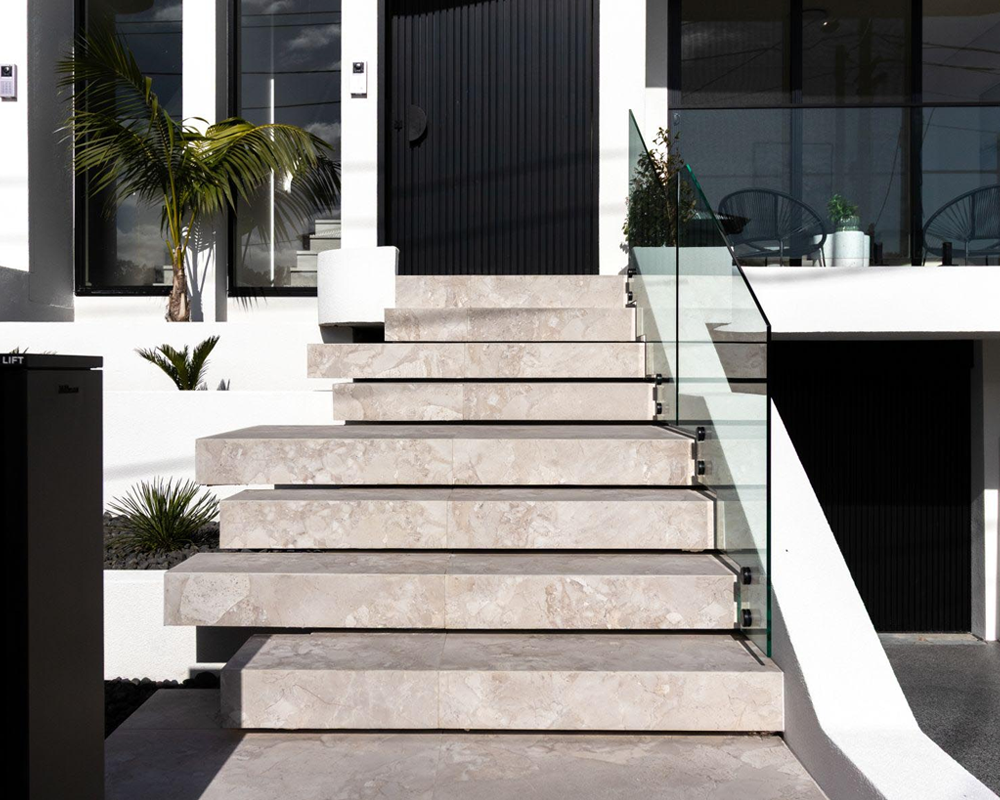
Stone-look stairs create a calm architectural flow
If the tile already has pronounced stone movement, keep grout, risers and balustrade details restrained. If the riser carries pattern, use a quieter tread so every step does not compete for attention.
How Should Stair Tiles Relate to the Floors Above and Below?
A staircase connects two levels, so the tile needs to work with more than one surrounding surface.
When Does Matching the Main Floor Create Better Continuity?
Using the same or closely related material can visually extend the ground-floor surface upward.
This approach works especially well when stairs connect:
- Open-plan living spaces
- Entry halls
- Hallways
- Mezzanines
A related stone tone can make the staircase feel integrated into the floor plan rather than inserted between two unrelated levels.
When Should the Staircase Use a Different Surface?
Contrast is effective when the staircase is intended to become an architectural focal point.
Instead of changing every characteristic, change one:
- A deeper tone
- A stronger stone texture
- A different finish
This creates separation without disrupting the broader palette.
For projects already coordinating several rooms, the wider principles used to design tiles for home can help keep stair materials connected with living areas, kitchens, wet zones and adjoining circulation spaces.
Why Must the Upper Floor Be Considered Early?
The top landing may connect to timber, carpet or another tile.
The stair finish should therefore create a deliberate transition rather than working only with the floor at the bottom of the staircase.
Which Materials Work Well on Premium Tiled Stairs?
Material selection should balance visual character with the requirements of the stair application.
Why Can Stone-Look Porcelain Work Well?
Stone-look tiles can create a calm architectural surface without requiring dramatic pattern.
Stone-inspired porcelain is useful when a staircase needs:
- Neutral colour
- Controlled movement
- Consistent repeatability
- Connection with larger tiled floors
Limestone, greige and muted mineral tones can also coordinate easily with timber, plaster, glass and metal.
When Are Porcelain Slabs Worth Considering?
Porcelain slab tiles can be useful where larger pieces help reduce visible joints.
Large surfaces may provide:
- Cleaner tread lines
- More continuous pattern
- Stronger stone or marble expression
The exact format should still be checked against stair dimensions, fabrication requirements and installation details.
When Does Natural Stone Add More Character?
Natural stone tiles introduce genuine tonal and mineral variation.
Natural stone is particularly suitable when the surrounding interior already uses authentic stone, timber and other tactile materials. Variation should be reviewed carefully because every piece can contribute differently to the repeated stair rhythm.
How Should Treads and Risers Be Combined?
The tread–riser relationship is one of the most important design decisions in a tiled staircase.
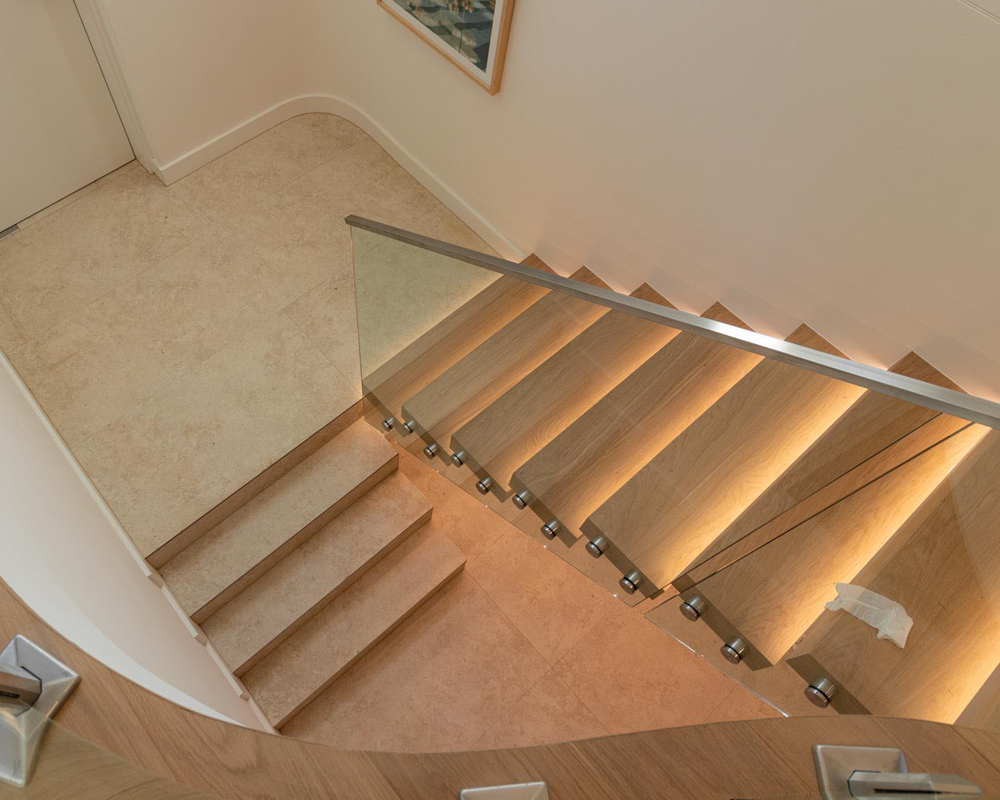
Timber-look tiles bring warmth to modern staircases
Should Treads and Risers Use the Same Surface?
Using the same material on both surfaces creates a more monolithic staircase.
This works particularly well with:
- Limestone looks
- Travertine-inspired surfaces
- Quiet marble effects
- Concrete-inspired tiles
Repeated material keeps attention on the staircase geometry.
When Can a Contrasting Riser Add Interest?
A contrasting riser can introduce controlled detail.
Possible combinations include:
- Pale riser with deeper tread
- Quiet tread with textured riser
- Neutral stone tread with subtle decorative riser
Contrast should remain connected through undertone or colour.
Can Mosaics Be Used on Stair Risers?
Mosaic tiles can work selectively on risers where a smaller scale is desired.
Mosaics generally make more sense as an accent than as the dominant tread material. Repeating intricate mosaics across every step can quickly make the staircase visually busy, particularly beside patterned flooring or detailed balustrades.
How Should Tile Size Be Matched to Stair Dimensions?
Tile format affects both the finished appearance and the amount of cutting required.
Why Are Fewer Joints Often Better on Stair Treads?
A tread with several grout joints can appear fragmented.
Where practical, the tile should allow a cleaner surface across the tread width or depth. Fewer divisions reinforce the strong horizontal line of the staircase.
Can Large Formats Be Used on Stairs?
Yes, when the tile can be fabricated and installed appropriately.
Large-format material can create:
- Fewer joints
- Cleaner edges
- More continuous veining
- A stronger monolithic effect
However, the stair geometry should determine the size rather than using a large format simply because it is fashionable.
When Are Smaller Formats More Useful?
Smaller tiles work best when intentional detail is needed on:
- Risers
- Small landings
- Compact staircases
- Decorative feature zones
The repeated layout should still align consistently from one step to the next.
How Should Veining and Tile Direction Run Across the Staircase?
Directional surfaces need to be planned before cutting begins.
Why Does Vein Direction Matter?
Stone and marble-inspired tiles contain visual movement.
If one tread runs horizontally while the next has an unrelated diagonal vein, the staircase can appear inconsistent.
A planned direction helps the material read as one composition.
Can Veining Continue From Tread to Riser?
Where the format and fabrication process allow, aligning movement across adjoining surfaces can create a more sculptural effect.
The result is especially effective with restrained marble or stone patterns.
What Should Be Avoided?
Avoid random rotation simply to use offcuts.
Material efficiency matters, but visible stair surfaces should still follow an intentional layout.
How Should Stair Edges and Nosings Be Detailed?
The front edge of each tread is one of the most visible details on a staircase.
Why Is Stair Nosing Important?
A stair nosing helps define the edge while influencing both appearance and practical performance.
Possible solutions depend on the tile and construction and can include:
- Fabricated edges
- Mitred details
- Bullnose profiles
- Purpose-made trims
- Metal profiles
The edge system should be resolved before tile cutting begins.
Why Should Every Step Use the Same Edge Detail?
Repeated edge profiles establish rhythm.
Changing nosing thickness, profile or colour between steps immediately makes the installation appear inconsistent.
Should the Edge Contrast With the Tile?
Contrast can improve edge definition, but it should be intentional.
A highly contrasting metal profile may suit industrial interiors, while a quieter edge usually works better in minimal or luxury residential schemes.
How Should Surface Grip Be Considered on Tiled Stairs?
Performance is especially important because stair movement involves repeated transitions at every edge.
Why Does Stair Grip Need Separate Attention?
Users place weight close to the tread edge while moving between levels.
Suitable surface performance should therefore be considered alongside:
- Tread dimensions
- Nosing visibility
- Lighting
- Handrails
Tile selection cannot compensate for poor stair geometry.
Should the Most Textured Tile Always Be Chosen?
No.
Very rough surfaces may affect cleaning and visual refinement. The chosen finish should meet the application requirements without introducing unnecessary texture.
A relevant starting point is Showtile’s range of non-slip tiles, particularly when a project requires greater attention to surface grip.
What Changes on Exterior Stairs?
Outdoor stairs face additional conditions such as:
- Rain
- Surface water
- Weather
- Drainage
- Greater slip exposure
Exterior suitability should always be confirmed separately from indoor use.
Which Colours Help a Staircase Feel Balanced?
Neutral colours often work well because the staircase already contains strong repeated geometry.
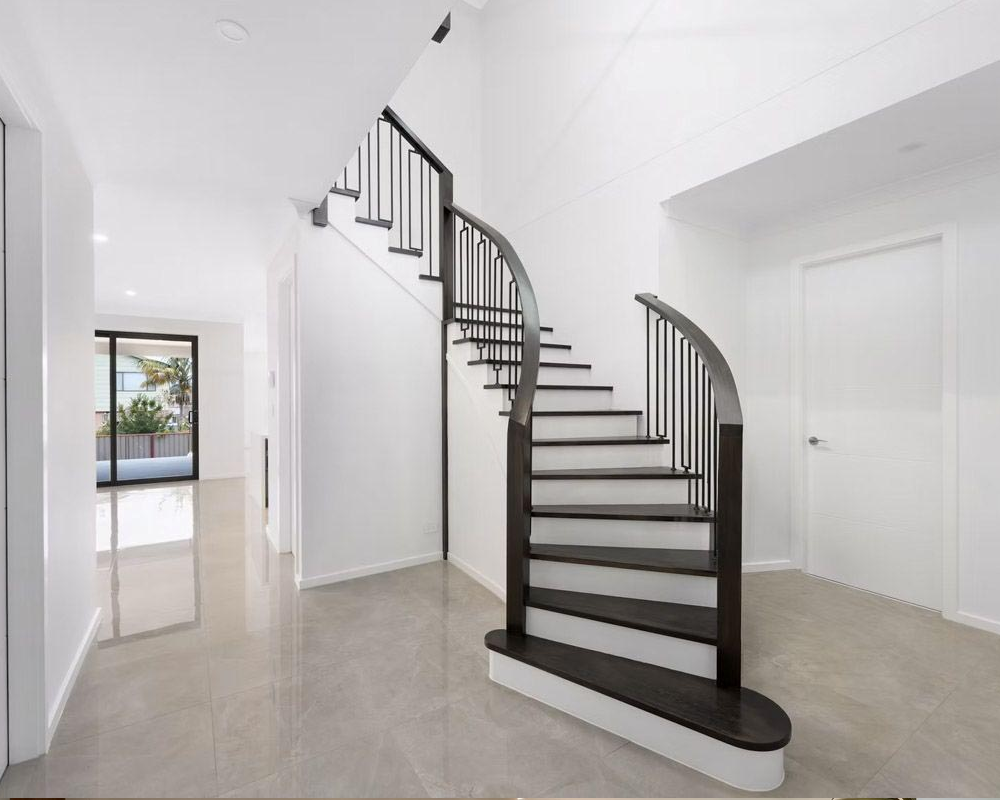
Balanced materials help create a cohesive staircase
Why Are Stone Neutrals Effective?
Versatile directions include:
- Limestone
- Warm beige
- Greige
- Soft grey
- Ivory
- Charcoal
These colours can remain compatible with different furniture, wall colours and balustrade finishes over time.
When Do Dark Stair Tiles Work Best?
Dark stairs can provide strong visual grounding in interiors with:
- Pale walls
- Large windows
- Glass balustrades
- Light timber
Dark tile should be tested under both daylight and artificial lighting.
Can Concrete-Look Tiles Work on Stairs?
Yes. Concrete-look tiles can support modern or industrial interiors where a quieter mineral surface suits the architectural language.
Concrete-inspired finishes pair particularly well with black metal, glass and restrained timber.
How Can Stair Tiles Work With Timber, Glass and Metal?
Most contemporary staircases combine several materials, so tile should be selected as part of that wider composition.
How Does Timber Soften a Tiled Staircase?
Timber can appear through:
- Handrails
- Joinery
- Balustrade details
- Upper-level flooring
Warm wood provides contrast against stone or porcelain and prevents an all-hard-surface palette from feeling too cold.
For projects where the adjoining floor uses a stronger timber direction, the guide to wood design tiles for floor explores grain, plank proportion and undertone coordination in greater detail.
What Changes When the Staircase Uses Glass?
Glass balustrades reveal more of the tread and riser surfaces.
This makes details such as:
- Grout alignment
- Edge finish
- Cut consistency
more visible.
How Can Metal Support the Stair Design?
Black, bronze or brushed-metal details can define the staircase without introducing another patterned material.
Keep the metal finish consistent with handles, lighting or joinery elsewhere in the home.
How Can Lighting Improve a Tiled Staircase?
Lighting can reveal tile character while making the staircase easier to read.
Where Can Stair Lighting Be Positioned?
Useful positions include:
- Wall-mounted step lights
- Under-tread lighting
- Handrail-integrated lighting
- Ceiling lighting
- Landing lights
Why Does Lighting Temperature Matter?
Warm lighting can strengthen beige, travertine and warm stone tones.
Cool lighting may make some grey surfaces appear more blue, so samples should be reviewed under the planned lighting environment.
Can Directional Light Highlight Texture?
Yes.
Side lighting can create subtle shadows across stone or textured surfaces, adding depth without requiring stronger pattern.
How Should Landings Connect the Staircase to Other Rooms?
A landing is both part of the staircase and a transition between spaces.
Should the Landing Continue the Same Tile?
Usually, if visual continuity is the goal.
Continuing the stair material across the landing can make the staircase read as one complete architectural element.
When Should the Landing Change Material?
A change is more successful where the landing leads into a clearly different zone, such as:
- Bedroom level
- Carpeted hallway
- Separate living area
Dedicated bedroom design tiles may follow a softer material direction, so the landing should mediate between the stair finish and the bedroom palette rather than introduce an abrupt contrast.
Which Stair Tile Direction Fits Different Interior Styles?
| Interior Style | Tile Direction | Supporting Materials | Overall Effect |
|---|---|---|---|
| Contemporary | Stone-look porcelain | Glass + black metal | Clean and architectural |
| Quiet luxury | Warm limestone look | Light timber | Soft and refined |
| Minimalist | Low-contrast neutral tile | White walls + glass | Monolithic |
| Organic modern | Natural stone | Timber + plaster | Grounded |
| Luxury | Marble-inspired surface | Brass + glass | Expressive |
| Industrial | Concrete-look porcelain | Black steel | Structured |
| Mediterranean | Warm stone direction | Timber + plaster | Natural and tactile |
What Should Be Checked Before Stair Tiles Are Ordered?
Before finalising the order, confirm:
- Stair width
- Tread depth
- Riser height
- Tile size
- Surface suitability
- Slip requirements
- Tread and riser combination
- Edge or nosing detail
- Vein direction
- Grout colour
- Landing layout
- Ground-floor transition
- Upper-floor transition
- Lighting position
- Cutting requirements
- Wastage allowance
- Installation method
Checking these details before fabrication reduces unnecessary cuts and helps keep every step visually consistent.
Build a Refined Stair Material Scheme with Showtile
The broader Showtile collection allows architects, designers, builders and homeowners to compare stone-inspired porcelain, natural stone, concrete looks, larger formats and other architectural surfaces within the wider project palette.
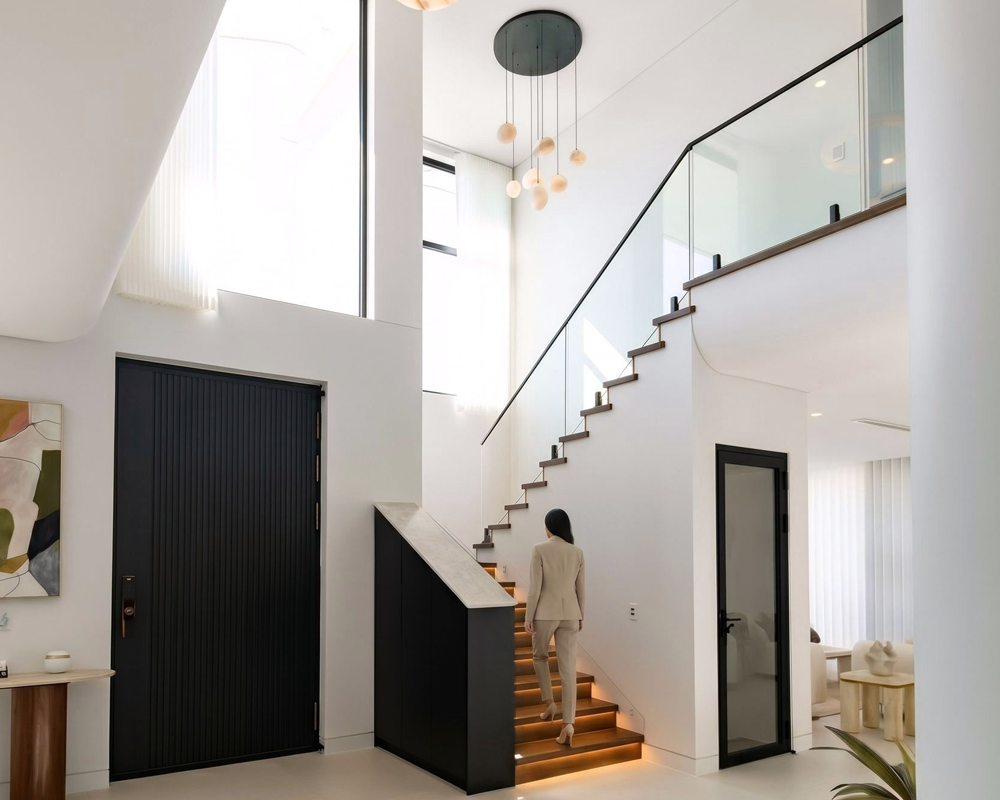
Showtile offers architectural tile options for coordinated stair designs
Rather than choosing the staircase as an isolated feature, compare stair material with main floors, wall finishes, timber, metal details and upper-level surfaces. The same colour family can be adapted across different applications while tread, riser and landing details remain specific to the staircase.
At Showtile, stair surfaces can therefore be considered as part of the architectural composition of the home. Careful coordination of material, scale, edge detail and adjoining floors creates a staircase that feels deliberate rather than simply tiled.
FAQ
What Type of Tile Works Well on Stairs?
Porcelain, natural stone and other suitably specified floor tiles can work on stairs depending on the location, surface finish, substrate and installation requirements.
Can Porcelain Tiles Be Used on Stair Treads?
Yes, provided the selected porcelain surface and edge treatment are appropriate for the staircase application.
Should Stair Treads and Risers Match?
They can match for a continuous architectural appearance. A contrasting riser can also work when the contrast is controlled and connected to the wider palette.
Should Stair Tiles Match the Main Floor?
Exact matching is not required. Similar undertones, stone character or colour can create continuity between the staircase and surrounding flooring.
Can Large Tiles Be Used on Stairs?
Yes. Larger formats can reduce joints and create cleaner surfaces when the dimensions, cutting requirements and installation system suit the staircase.
Are Marble-Look Tiles Suitable for Stairs?
Suitable marble-inspired porcelain may be used where the product meets the project requirements. Veining and edge details should be planned carefully across repeated steps.
Do Indoor Stair Tiles Need Slip Resistance?
The required surface performance depends on the specific project and location. Stair tile selection should consider grip together with tread geometry, lighting and edge visibility.
Can Outdoor Stairs Use the Same Tile as Indoor Stairs?
Not automatically. Exterior stairs have different exposure and slip requirements, so outdoor suitability should be confirmed separately.
Contact Showtile
📍 Showroom: 65 Canterbury Road, Bankstown NSW 2200, Australia
📞 Phone: +61 2 9709 5836
✉️ Email: sales@showtile.com.au
🌐 Website: https://showtile.com.au/



