


Pool Tile Designs: A Guide to Stylish Pool Surfaces
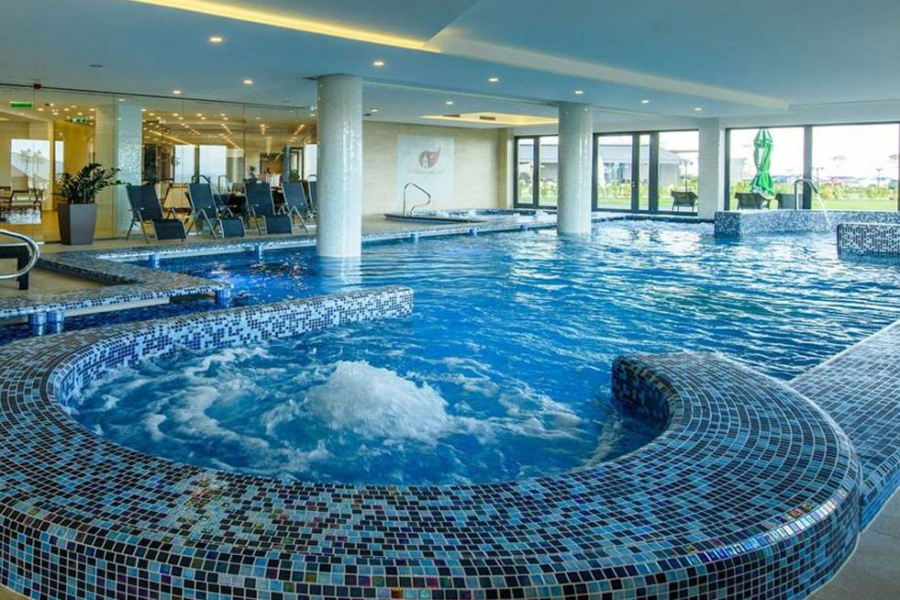
The best pool tile designs balance water colour, surface performance and the relationship between the pool, architecture and landscape. Showtile offers premium tile, paver and coping collections that help homeowners, designers and builders create coordinated pool surrounds with a refined, design-led finish.
What Should You Consider Before Choosing Pool Tiles?
Pool tile selection should begin with the visual effect you want underwater and the technical requirements of the pool interior. Colour, surface character, mosaic size, installation system and compatibility with curves or steps all influence the completed result.
A pool design may need to resolve:
- Pool interior mosaics
- Waterline tiles
- Steps and ledges
- Spa zones
- Curved surfaces
- Pool coping
- Surrounding pavers
- Adjacent feature walls
The pool interior deserves particular attention because water changes how colours and reflections are perceived. A mosaic that looks subtle when dry can become much more luminous once submerged.
Why Are Glass Mosaics Well Suited to Pool Interiors?
Glass mosaic pool tiles combine small scale with strong colour and reflective qualities. Compact mosaic chips can follow pool curves, steps and changes in geometry more easily than large-format surfaces.
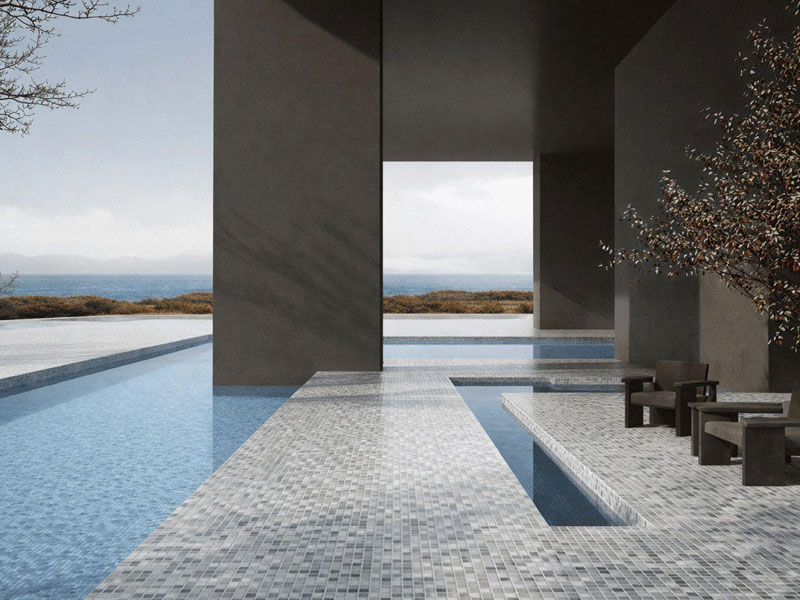
Soft mosaic blends suit refined resort-style pools
Showtile’s Leyla and Ezarri ranges are specifically listed for pool applications. Leyla mosaics use 5.5 mm glass chips with softly rounded edges, while the Ezarri ranges generally use 5 mm glass mosaics in 25 mm chip formats.
Small-format mosaics also create a distinctive grid beneath the water. Grout, tile tone and reflections combine to give the pool interior greater visual depth.
Which Pool Zones Benefit Most From Mosaic Tiles?
Mosaics are particularly useful across:
- Full pool interiors
- Waterlines
- Pool steps
- Spa interiors
- Benches and ledges
- Curved walls
- Rounded corners
- Decorative pool features
Flexible mosaic systems can also make complex pool geometry easier to resolve. Ezarri’s JointPoint system is designed to adapt around curves and shapes while leaving a high percentage of the mosaic backing available for adhesive contact.
How Does Pool Tile Colour Change the Appearance of Water?
The colour seen in a finished swimming pool is influenced by the mosaic tone, water depth and available sunlight. For that reason, choosing a pool tile from a dry sample alone does not tell the entire story.
Ezarri’s own pool guidance explains that white, beige, grey, dark and blue mosaics create distinctly different water effects.
Which Tiles Create Bright Blue or Turquoise Water?
White and very light mosaics typically produce a light blue or turquoise appearance under water. These tones work particularly well where the design aims for a bright, resort-like or coastal atmosphere.
Light pool interiors can coordinate naturally with:
- White render
- Pale limestone
- Travertine
- Light timber
- Neutral paving
- Open landscaping
For pools that need a clean and consistent colour field, Ezarri Lisa provides smooth glass mosaics with restrained variation. The collection uses smooth 5 mm glass mosaics with V1 variation, making Lisa appropriate for pools where visual consistency is more important than pronounced surface movement.
How Can Blue Mosaics Intensify Pool Colour?
Blue mosaics reinforce the traditional blue appearance of swimming pool water. Deeper blue tiles generally make the water feel richer and visually deeper.
Leyla Solid provides a broad selection of solid pool mosaic colours such as Bora Bora, Fiji, Monaco, Mykonos and Venice. Leyla Solid uses glossy glass mosaic chips in 25 mm and 50 mm formats, allowing pool designers to choose between a finer or more pronounced grid.
A solid colour can be particularly effective when surrounding paving, architecture or landscaping already contains substantial visual texture.
What Happens When Grey or Dark Tiles Are Used?
Grey mosaics can produce more subdued blue-grey or green-grey water, while darker tones can create greater depth and a mirror-like appearance.
Dark pool interiors work particularly well with contemporary architecture, charcoal framing, concrete and dense landscaping. However, the final appearance can change significantly depending on sunlight, pool depth and the surrounding environment.
For this reason, samples should be compared in natural light rather than evaluated only under showroom lighting.
Which Pool Tiles Create More Movement and Reflection?
Not every pool needs a uniform colour. Premium glass mosaics can use tonal blending, pearlescent effects, veining or texture to make the water surface feel more dynamic.
This approach is particularly suitable when the pool itself is intended to become an architectural feature.
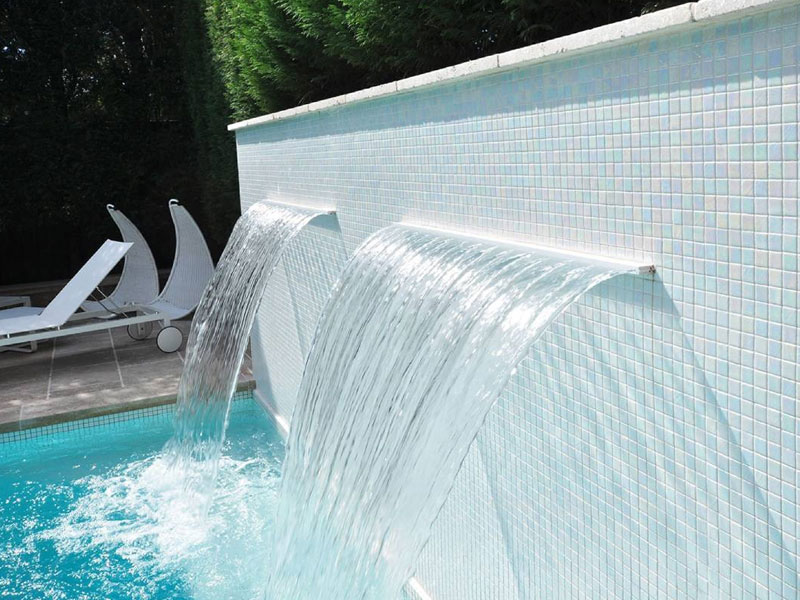
Glass mosaics create vivid colour beneath the water.
How Does a Pearlescent Finish Affect Pool Design?
Pearlescent mosaics interact strongly with changing light.
Leyla Pearl combines glossy glass mosaics with multiple colour options such as Bali, Ibiza, Maldives, Miami, Sydney Mix and Tahiti. The 5.5 mm mosaics use the same softly rounded edge and Silicon System developed for swimming pool applications.
Pearlescent surfaces can be particularly effective for:
- Resort-style pools
- Courtyard pools
- Pools beside large glazing
- Spaces with strong daylight
- Pools designed as a visual focal point
The reflective quality should still be balanced with the architecture around the pool. Highly reflective interiors often work best when surrounding paving remains comparatively restrained.
When Is an Iridescent Pool Mosaic Appropriate?
Ezarri Iris is designed around an iridescent, pearlescent effect. The 5 mm glass mosaics react to light and water movement, creating changing reflections rather than one static colour.
Colour options include Ocean, Azur, Jade, Green Pearl, Zafiro, Perla and several warmer shades.
An iridescent surface is especially suitable when:
- sunlight reaches the pool directly;
- the pool is visible from major living areas;
- water movement should become part of the design;
- the surrounding landscape is relatively simple.
A reflective mosaic does not need additional decorative complexity around the pool edge.
How Can Veining Add Depth to a Pool Interior?
Ezarri Gemma offers a different effect. Gemma combines glass mosaics with distinctive veining and layered reflections inspired by gemstones.
Options including Celestite, Kyanite, Moonstone, Olivine, Quartz and Tanzanite allow the pool interior to feel more varied than a conventional solid mosaic. The collection uses 25 mm glossy glass chips with a 5 mm thickness.
Gemma is useful for projects where the pool surface should appear dynamic and luminous without relying on a conventional pattern.
Which Pool Mosaics Create a More Natural or Textured Look?
Texture and tonal variation can make a swimming pool feel more connected to landscaping and natural materials. This approach works especially well with garden pools, wellness spaces and architecture built around stone, timber or muted finishes.
Two useful directions are subtle tonal movement and stronger textured surfaces.
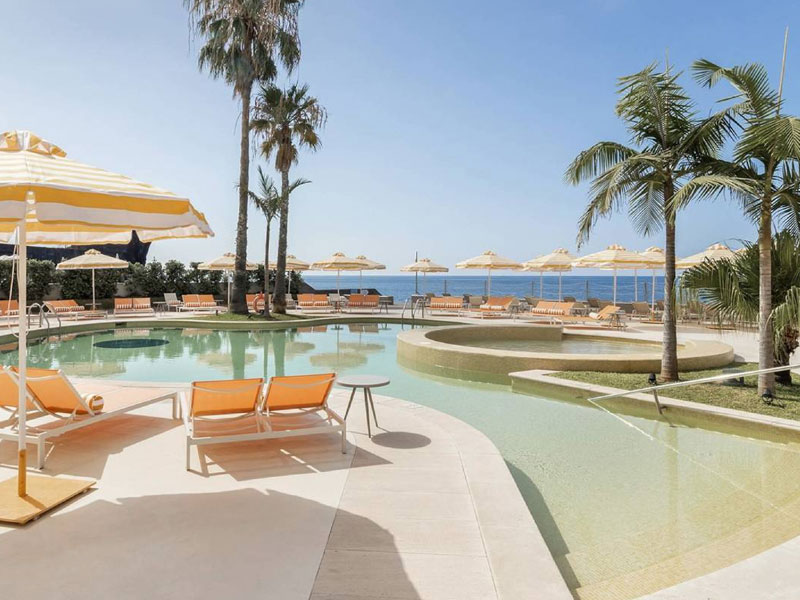
Pearlescent tiles add depth and changing reflections
How Does a Soft Tonal Blend Work With Landscaping?
A softer, more atmospheric result can be created with Ezarri Niebla, which uses subtle variations in light and colour to reduce the appearance of a rigid mosaic grid. Showtile describes the collection as particularly suited to natural landscapes and wellness environments.
The hazy effect can soften the grid normally associated with small mosaics. Niebla therefore suits pool areas where the interior should feel atmospheric rather than sharply graphic.
Niebla can pair well with:
- Natural stone coping
- Dense planting
- Limestone tones
- Timber decking
- Muted outdoor furniture
- Organic landscape design
When Should a Textured Mosaic Become a Feature?
Ezarri Vulcano creates a stronger material statement through a rippled texture and iridescent character.
The collection includes colours such as Fuji, Santorini, Stromboli and Teide, using 5 mm textured glass mosaics specifically for pool applications.
Vulcano works best when the pool needs a distinctive tactile and reflective character. The surrounding deck should generally remain calmer so the textured mosaic has room to become the dominant visual feature.
When Are Mixed-Colour Pool Mosaics More Effective?
Blended mosaics create more complex visual movement than a single solid colour. Multiple tones can break up a large pool interior and create a richer appearance as sunlight changes across the water.
The key is choosing a blend that relates to the landscape and surrounding architecture.
How Can Multi-Tonal Glass Create a Resort Effect?
Ezarri Cocktail mixes shiny, iridescent and textured glass pieces within the same collection. The result is deliberately multifaceted and light-reflective when submerged.
Colours such as Blue Lagoon, Bluemoon, Mojito, Margarita and Gin Fizz provide varied aesthetic directions.
Cocktail is particularly appropriate for:
- Statement pools
- Luxury residential settings
- Resort-inspired landscapes
- Spa areas
- Pools where changing reflections are part of the design brief
Because the mosaic already contains substantial visual variation, coping and surrounding paving can remain more neutral.
When Is a Refined Spanish Glass Mosaic Better?
The Spanish Pool Tile collection provides 25 mm glass mosaics curated specifically for high-end pool lining applications. The range includes options such as Noosa, Palm Beach, Whitehaven, Avalon and Byron Bay.
These glossy mosaics are a useful middle ground when a project requires light reflection and tonal character without the stronger effects of highly textured or mixed-finish ranges.
How Should Pool Interior Tiles Relate to Coping and Surrounds?
Pool interior tiles, coping and surrounding paving do not need to match, but the three surfaces should share a clear visual relationship. The pool interior controls the water effect, while coping and paving connect the water to the architecture and landscape.
A useful design sequence is:
- Choose the desired water colour.
- Select the pool mosaic.
- Identify the dominant tone within the mosaic.
- Coordinate coping with that tone.
- Select surrounding paving that connects the pool to the house.
For example, a blue-green mosaic can sit beside warm limestone coping when the landscape contains greenery and pale natural materials. A dark blue pool may work better with grey stone or concrete-inspired surrounds.
This broader material coordination follows similar principles to those used in ceramica tile and design planning: each surface should be selected in relation to adjacent materials rather than as an independent product.
How Can the Pool Connect With Indoor Flooring?
The pool area often sits directly outside living, kitchen or dining zones. Indoor flooring therefore provides an important reference point for outdoor design.
Homeowners comparing current floor tile design directions can carry a related colour temperature or stone reference toward the alfresco area without using an identical product.
The interior floor, external paving and pool mosaic may use different materials but still feel connected through tone, scale and visual character.
How Do Showtile Pool Mosaic Collections Compare?
The following table helps separate the main design directions within Showtile’s dedicated pool ranges.
| Collection | Surface Character | Best Design Direction | Key Feature |
| Leyla Solid | Clean, glossy colour | Classic and contemporary pools | 25 mm or 50 mm glass chips |
| Leyla Pearl | Pearlescent and reflective | Resort-style pools | 5.5 mm glass with soft edges |
| Ezarri Lisa | Uniform solid colour | Minimal pool interiors | V1 colour consistency |
| Ezarri Niebla | Soft dappled movement | Natural and wellness settings | Hazy tonal variation |
| Ezarri Iris | Iridescent shimmer | Light-focused luxury pools | Pearlescent reflections |
| Ezarri Gemma | Veined and luminous | Architectural statement pools | Gemstone-inspired movement |
| Ezarri Vulcano | Rippled and textured | Dramatic feature pools | Textured iridescent finish |
| Ezarri Cocktail | Multi-tonal blended surface | Resort and statement pools | Gloss, texture and iridescence |
| Spanish Pool Tile | Refined glossy mosaic | Premium pool lining | 25 mm glass mosaic |
All nine groups are designed around pool applications, but the visual result differs considerably. Selection should therefore begin with water effect and design character, not simply with choosing a favourite dry tile sample.
What Pool Tile Design Mistakes Should Be Avoided?
The most common mistake is choosing a pool mosaic without considering how the tile changes underwater. Water depth, sunlight and movement can alter both colour and reflection.
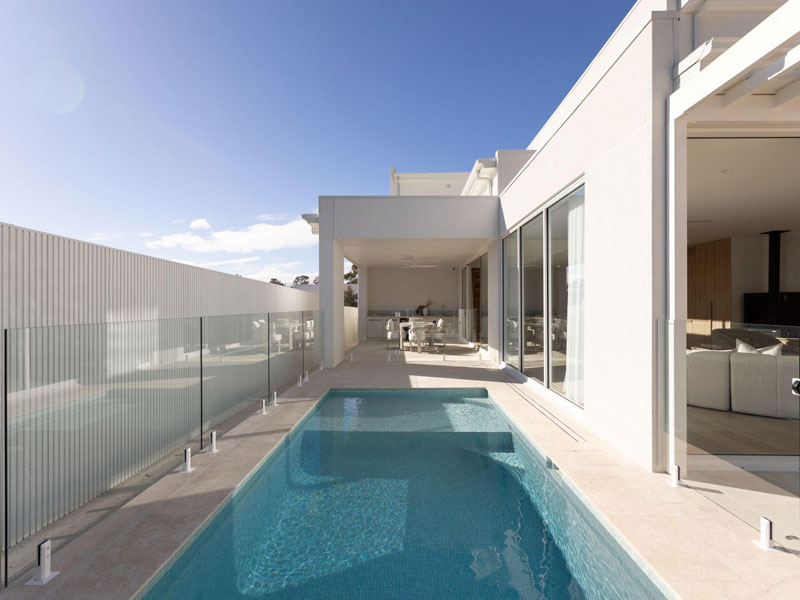
Showtile pool tiles coordinate water, architecture and landscape
Should You Choose a Pool Tile From a Small Dry Sample Alone?
No.
A physical sample is useful, but the final decision should consider:
- Expected water colour
- Pool depth
- Amount of direct sunlight
- Surrounding architecture
- Landscape colours
- Coping material
- Grout colour
A pale tile may appear much bluer underwater, while dark green or black mosaics can create a natural lake-like effect.
Is the Most Decorative Mosaic Always the Best Choice?
No.
Pools already contain constant movement through water and reflected light. A highly iridescent or textured mosaic can be effective when surrounding architecture is restrained, but combining a dramatic pool interior with equally strong coping, paving and feature walls may create unnecessary visual competition.
Should Pool Products Be Selected Independently?
A coordinated specification is usually more successful. Working with a specialist designer tile company can help connect the pool interior with related outdoor materials rather than treating mosaics, coping and paving as unrelated decisions.
How Can You Build a Cohesive Pool Tile Palette?
A premium pool palette should begin with water colour and then move outward toward the landscape.
A practical sequence is:
- Choose the water effect.
Decide whether the pool should feel bright turquoise, classic blue, grey-blue, green or dramatically dark. - Choose the mosaic character.
Select solid, pearlescent, dappled, iridescent, textured or blended glass. - Coordinate the coping.
Use a complementary neutral or repeat a tone found within the mosaic. - Resolve the pool surround.
Connect paving with the architecture and alfresco zone. - Review the complete palette outdoors.
Natural light reveals relationships between water, glass mosaic, stone, landscaping and building materials more clearly than isolated samples.
This sequence keeps the water as the visual centre of the pool design.
Where Can You Compare Pool Mosaics for Different Water Effects?
Choosing a pool mosaic becomes easier when colours and surface effects can be compared according to the atmosphere they create underwater. Showtile brings together dedicated glass mosaic ranges that cover solid colours, subtle tonal variation, pearlescent finishes, iridescent surfaces and more expressive textured blends.
For a clean contemporary pool, Leyla Solid or Ezarri Lisa can create a controlled colour field. Niebla introduces softer tonal movement, while Iris and Leyla Pearl respond more strongly to sunlight and water reflection. Gemma, Vulcano and Cocktail provide progressively more expressive options when the swimming pool is intended to become an architectural focal point.
Architects, pool designers, builders and homeowners can also browse the wider Showtile collection to consider how the pool mosaic relates to coping, outdoor surfaces and adjoining architectural materials.
The final choice should not be based on the most decorative sample. A stronger pool scheme starts with the desired water effect and then coordinates mosaic character, surrounding surfaces and landscape materials around that decision.
Contact Showtile
📍 Showroom: 65 Canterbury Road, Bankstown NSW 2200, Australia
📞 Phone: +61 2 9709 5836
✉️ Email: sales@showtile.com.au
🌐 Website: https://showtile.com.au/



