


Grey Bathroom Tiles Design: How to Create a Refined Modern Space
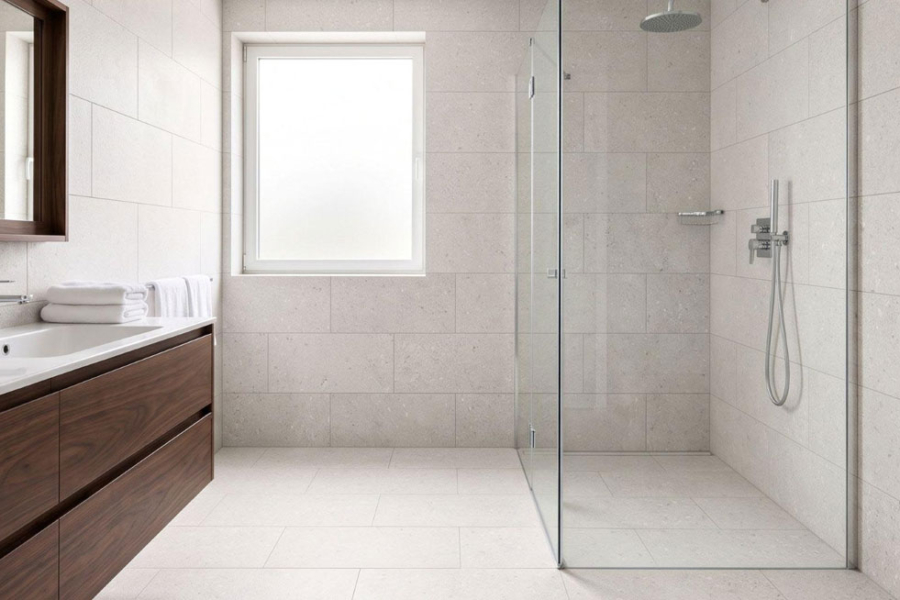
A thoughtful grey bathroom tiles design can create a bathroom that feels calm, modern and visually balanced. Showtile offers premium stone-look porcelain, terrazzo-inspired and concrete-look surfaces that help homeowners, designers and builders coordinate grey undertones, lighting, grout and adjoining materials with confidence.
What Makes a Grey Bathroom Feel Refined Rather Than Cold?
A refined grey bathroom uses tonal depth, texture and material contrast to prevent the space from feeling flat. The most successful schemes establish one dominant grey undertone and then introduce warmth or contrast through timber, lighting, tapware and selected secondary surfaces.
Why Does Grey Undertone Matter So Much?
Grey is not one universal colour. Different grey tiles may contain blue, green, beige, taupe or charcoal undertones, and those undertones affect how the tile works with nearby materials.
Common directions include:
- Warm grey tiles with beige or taupe undertones
- Cool grey tiles with blue or silver undertones
- Greige tones that sit between grey and beige
- Charcoal for deeper, more dramatic interiors
- Pale silver-grey for lighter contemporary bathrooms
Warm grey often coordinates naturally with timber and cream, while cooler grey works well with white, chrome and black.
How Can a Grey Bathroom Avoid Looking Flat?
The easiest way to create depth is to vary texture rather than introduce several competing colours.
Useful methods include:
- Pairing matt and honed surfaces
- Combining large-format tiles with one smaller feature format
- Adding timber cabinetry
- Using stone or terrazzo movement
- Introducing brushed metal finishes
- Layering wall, vanity and mirror lighting
A bathroom can remain almost entirely grey while still feeling rich if surface variation is carefully controlled.
How Much Grey Should a Bathroom Use?
Grey can cover most surfaces, but the room still needs visual relief.
A practical starting point is:
- 60% dominant grey surface
- 30% supporting neutral or natural material
- 10% accent through fittings, joinery or decorative details
This is not a strict formula, but it helps prevent a monochrome scheme from becoming visually heavy.
Should a Bathroom Use Warm Grey or Cool Grey Tiles?
The better choice depends on natural light, cabinetry, metal finishes and the desired atmosphere. Warm grey generally feels softer and more relaxed, while cool grey creates a sharper contemporary character.
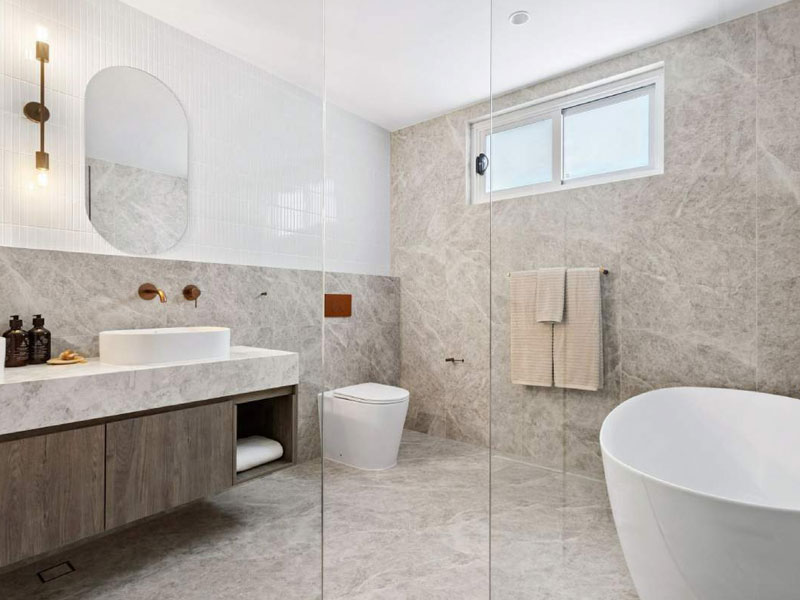
Tundra Grigio Tile brings soft stone movement to a refined grey bathroom palette
When Do Warm Grey Tiles Work Best?
Warm grey tiles are effective in bathrooms designed around natural materials.
They pair particularly well with:
- Oak
- Walnut
- Cream
- Travertine tones
- Brushed brass
- Warm white paint
- Beige stone benchtops
This combination suits spa-inspired bathrooms, contemporary homes and softer minimalist interiors.
When Do Cool Grey Tiles Work Better?
Cooler grey shades create a more urban or monochrome effect.
They coordinate well with:
- Crisp white
- Chrome
- Matte black
- Stainless steel
- Cool marble
- Charcoal cabinetry
Cool grey works especially well when natural light is strong enough to prevent the space from feeling overly cold.
Can Warm and Cool Grey Be Combined?
Yes, but one undertone should remain dominant.
A blue-grey floor combined with a strongly beige-grey wall can create an unintended clash. Keeping both greys within a related tonal family produces a more controlled result.
Which Grey Tile Materials Work Best in Bathrooms?
Grey can appear very different depending on whether the surface imitates limestone, concrete, terrazzo or another natural material. Material character is therefore just as important as colour.
When Do Grey Stone-Look Tiles Work Best?
Grey stone-look tiles are ideal when the bathroom needs natural movement without a highly decorative pattern.
Tundra Grigio can support this direction with a refined stone-inspired appearance suitable for both walls and floors.
Stone-look grey works especially well when paired with:
- Timber vanity units
- Soft neutral walls
- Minimal tapware
- Large mirrors
- Subtle grout
The material can continue across multiple surfaces to create stronger continuity.
When Is a Softer Grey Stone Look Better?
Lighter grey is useful when the room needs to feel calm and spacious.
Valencia offers a softer stone-look direction that can work across floors and broad wall surfaces.
This type of grey is suitable for:
- Ensuite bathrooms
- Larger family bathrooms
- Open, light-filled interiors
- Neutral contemporary schemes
A softer grey base also gives more flexibility when selecting timber, brass or painted cabinetry.
When Do Grey Terrazzo Tiles Add More Character?
Terrazzo introduces pattern and movement through aggregate-like detail.
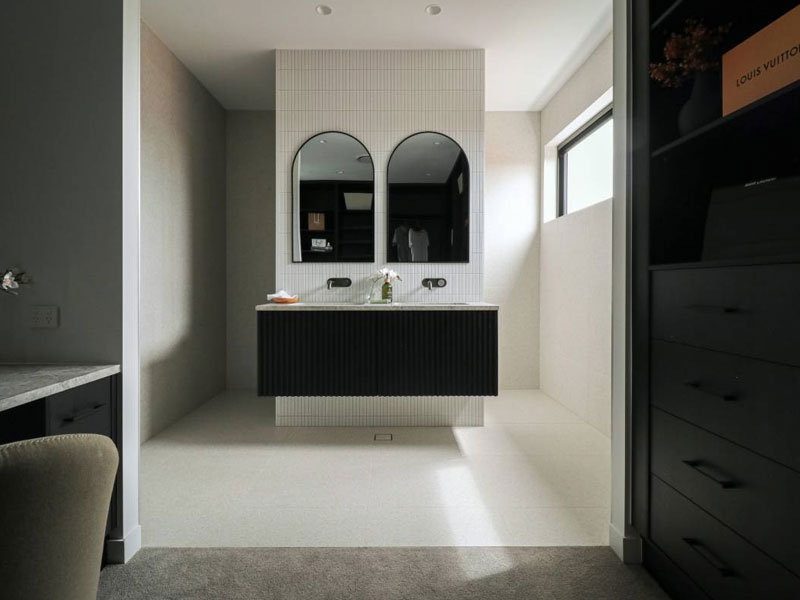
Terra Terrazzo adds subtle texture while keeping the overall space balanced and contemporary
Terra Terrazzo can create a more expressive grey surface without relying on strong colour contrast.
Grey terrazzo works particularly well on:
- Bathroom floors
- Shower zones
- One feature wall
- Vanity backdrops
Because terrazzo already contains visual movement, surrounding surfaces should usually remain quieter.
When Does Concrete-Look Grey Work Better?
Concrete-look grey creates a more architectural and urban feel.
Urban Concrete is suitable for bathrooms where the design calls for restrained texture rather than obvious stone veining.
Concrete-inspired surfaces coordinate naturally with black fittings, minimal cabinetry and simple rectangular forms.
Should Grey Tiles Be Used on the Floor, Walls or Both?
Grey can be used selectively or across multiple surfaces. The decision should depend on room size, lighting and how much visual continuity the project needs.
When Does Grey Flooring Work Best?
A grey floor provides a neutral visual anchor.
It can be combined with:
- White wall tiles
- Warm beige walls
- Handmade ceramic tiles
- Timber vanities
- Natural stone details
For homeowners or designers developing a more complete floor strategy, Showtile’s guide to floor designer tiles explores how premium flooring relates to scale, finish and material selection.
When Should Grey Continue From Floor to Wall?
Using the same or closely related grey surface across floor and wall can make the bathroom feel more unified.
Benefits include:
- Fewer visual breaks
- Stronger material continuity
- More architectural character
- A calmer premium appearance
This approach works especially well with large-format stone-look porcelain.
When Should Grey Be Limited to One Surface?
Limit grey when the bathroom already contains dark cabinetry, strong veining or limited natural light.
Using grey only on the floor or one wall can create enough depth without making the space feel enclosed.
How Can Light and Dark Grey Tiles Change the Bathroom?
Light grey and dark grey create very different spatial effects.
Do Light Grey Tiles Make a Bathroom Feel Larger?
Often, yes.
Light grey reflects more light and creates softer contrast between surfaces. The effect becomes stronger when grout colour remains close to the tile tone.
For particularly compact bathrooms, the principles in small bathroom tiles design can help balance tile scale, grout density and visual continuity without repeating the broader grey palette strategy covered here.
When Do Dark Grey Tiles Work Well?
Dark grey works best when used deliberately.
Suitable locations include:
- Bathroom floor
- Shower wall
- Lower wall section
- Vanity backdrop
- Powder room feature
Dark grey usually benefits from a lighter ceiling, strong mirror placement and layered lighting.
Can Charcoal Grey Work in a Small Bathroom?
Yes, but area matters.
A charcoal floor or one feature wall can add depth without dominating the room. Covering every surface in deep charcoal may make a poorly lit bathroom feel more enclosed.
How Should Grey Bathroom Tiles Be Combined With Other Materials?
Grey becomes more refined when it interacts with warm, tactile or contrasting materials.
Why Does Timber Work So Well With Grey?
Timber adds warmth and natural grain.
Useful pairings include:
- Warm grey + oak
- Charcoal + walnut
- Pale grey + ash timber
The timber should usually appear in a controlled area such as the vanity, shelving or joinery.
Should Grey Be Paired With White or Cream?
Both work, but they create different moods.
White produces a cleaner and sharper contrast, while cream creates a softer transition. Warm grey generally sits more naturally beside cream, while cool grey tends to pair more easily with crisp white.
Which Metal Finishes Work Best With Grey?
| Metal Finish | Effect With Grey |
| Brushed brass | Warm and refined |
| Chrome | Clean and contemporary |
| Brushed nickel | Soft and understated |
| Matte black | Strong and graphic |
| Gunmetal | Tonal and sophisticated |
The metal finish should reinforce the grey undertone rather than introduce an unrelated colour temperature.
Which Grey Bathroom Tile Layout Works Best?
Layout affects how grey surfaces are perceived just as much as colour.
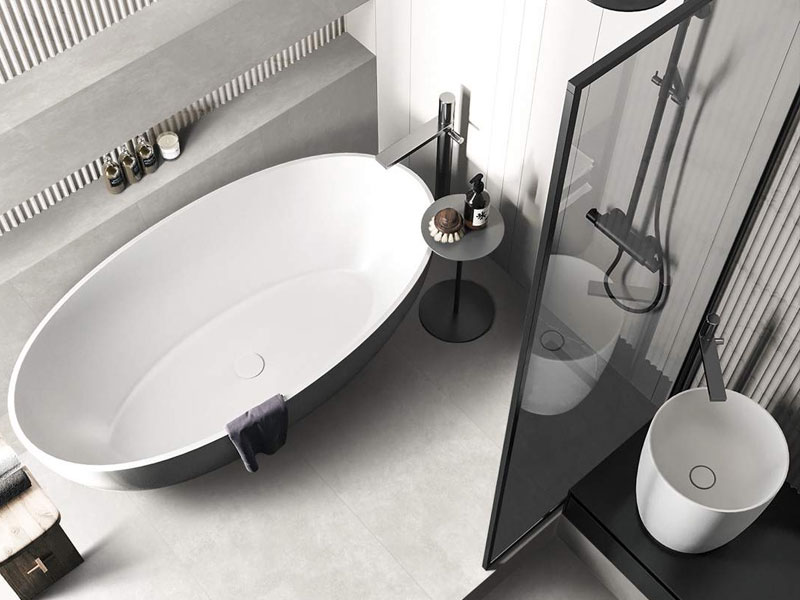
Urban Concrete creates a clean architectural backdrop for minimalist bathroom interiors
Do Large-Format Grey Tiles Create a More Seamless Look?
Yes, especially across larger wall and floor areas.
Large formats reduce grout frequency and allow stone or concrete movement to read more clearly. The result can feel calmer and more luxurious when the set-out is carefully planned.
When Should Smaller Grey Tiles Be Used?
Smaller formats work best where detail or flexibility is needed.
Useful areas include:
- Shower floors
- Niches
- Vanity splashbacks
- Feature walls
Using small grey tiles across every surface can introduce too many grout lines and reduce visual calm.
Does Vertical Layout Work With Grey Tiles?
Yes.
Vertically stacked rectangular tiles can emphasise height, especially on narrow walls or behind vanities.
Where the grey bathroom also includes a WC feature wall, Showtile’s guide to toilet wall tiles design provides more specific guidance on feature placement and wall hierarchy.
How Should Grout Be Chosen for Grey Bathroom Tiles?
Grout can either soften the tiled surface or emphasise every joint.
Should Grey Grout Match the Tile?
A similar grey usually creates the most seamless effect.
Benefits include:
- Reduced grid effect
- Stronger stone-like continuity
- Calmer walls
- More cohesive flooring
This works particularly well with stone-look and large-format tiles.
When Should Contrasting Grout Be Used?
Contrast grout works best when the tile pattern should become more visible.
Suitable applications include:
- Subway tiles
- Geometric layouts
- Selected feature walls
Highly varied grey stone usually needs less grout contrast because the tile already contains natural movement.
Can the Wrong Grout Change the Grey Undertone?
Yes.
A warm grout beside a cool grey tile can make both tones appear more different. Tile and grout samples should be reviewed together before installation.
Which Grey Bathroom Style Best Fits the Project?
| Design Direction | Recommended Grey | Supporting Material | Overall Effect |
| Warm minimal | Greige / warm grey | Oak, cream | Soft and natural |
| Contemporary | Mid grey | White, chrome | Clean and balanced |
| Luxury stone | Grey stone-look | Timber, brass | Refined and tactile |
| Industrial | Concrete grey | Black, metal | Architectural |
| Spa-inspired | Light warm grey | Timber, off-white | Calm and relaxing |
| Dramatic | Charcoal grey | Light stone, mirror | Strong and moody |
| Mid-century | Grey terrazzo | Timber, muted colour | Textured and expressive |
What Technical Details Matter With Grey Bathroom Tiles?
Appearance should never override wet-area performance.
Why Does Slip Performance Matter on Grey Floors?
Bathroom flooring should be selected according to the wet-area requirements of the project.
The colour grey does not determine suitability. Surface finish, slip performance, drainage and floor fall all need to be considered independently.
New Terrazzo can provide a grey terrazzo direction for projects where the selected finish is appropriate to the intended bathroom application.
Why Should Tile Samples Be Checked Under Bathroom Lighting?
Grey changes noticeably under different light temperatures.
Review samples under:
- Natural daylight
- Warm LED lighting
- Cool LED lighting
- Vanity lighting
A tile that looks neutral in a showroom may appear blue, green or beige under the final bathroom lighting.
Why Does Shade Variation Need to Be Reviewed?
Stone-look and terrazzo surfaces can contain multiple faces and tonal shifts.
Viewing several pieces together gives a more accurate impression of the finished floor or wall than evaluating a single sample.
What Should Be Checked Before Ordering Grey Bathroom Tiles?
Before confirming quantities:
- Choose warm or cool grey undertone.
- Confirm wall and floor applications.
- Review wet-area suitability.
- Check tile finish.
- Test the tile under bathroom lighting.
- Compare tile colour with the vanity.
- Review the benchtop undertone.
- Select tapware finish.
- Test grout colour.
- Confirm tile size.
- Identify any feature wall.
- Review variation.
- Add wastage.
- Keep spare tiles where practical.
These checks help ensure the grey palette remains consistent from sample selection through to installation.
Which Showtile Collections Suit Grey Bathroom Designs?
Showtile’s tile collection includes multiple grey directions, from softer stone-inspired porcelain to terrazzo and concrete-look surfaces.
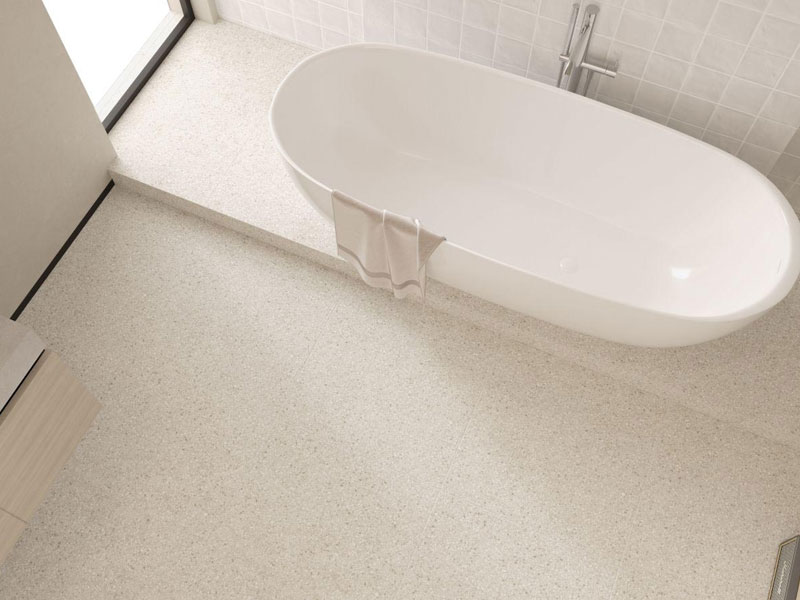
Create a refined grey bathroom with Showtile
Useful options include:
- Tundra Grigio for refined stone movement
- Valencia for softer grey stone character
- Terra Terrazzo for patterned grey flooring
- Urban Concrete for architectural grey
- New Terrazzo for compact terrazzo applications
- Other neutral porcelain options for quieter wall and floor surfaces
The strongest selection should begin with undertone and material character rather than choosing a tile simply because it is labelled grey.
Create a Refined Grey Bathroom With Showtile
A sophisticated grey bathroom is built around undertone, material balance and lighting rather than colour alone. Stone-inspired surfaces, terrazzo, concrete-look tiles and carefully coordinated finishes can all create different interpretations of grey.
Explore Showtile to compare premium grey tiles and develop a bathroom palette that feels refined, balanced and appropriate to the wider interior.
Contact Showtile
📍 Showroom: 65 Canterbury Road, Bankstown NSW 2200, Australia
📞 Phone: +61 2 9709 5836
✉️ Email: sales@showtile.com.au
🌐 Website: https://showtile.com.au/



