


Modern Front Wall Tiles Design: How to Create a Refined Facade
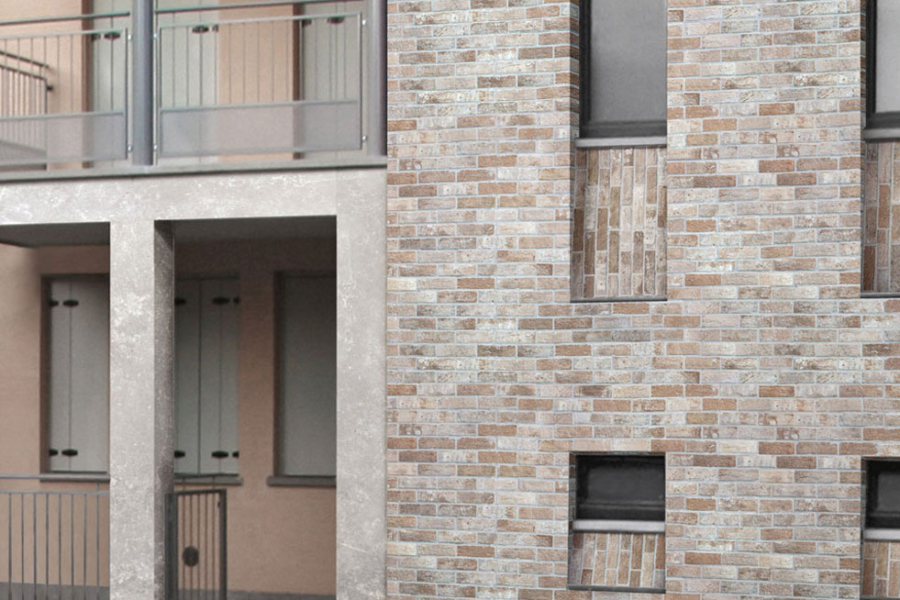
A thoughtful modern front wall tiles design can strengthen a home’s façade by highlighting the entrance, defining architectural volumes and creating a cohesive exterior palette. Showtile offers premium stone-look, travertine-inspired and concrete-look surfaces that help architects, builders and homeowners create refined contemporary front elevations.
What Makes a Modern Front Wall Tile Design Feel Refined?
A refined façade has a clear material hierarchy. Tile should reinforce an entrance, projecting volume, blade wall or other architectural element instead of appearing as disconnected decorative patches.
Why Should Front Wall Tiles Follow the Architecture?
Tile layout should respond to the major lines already established by the building.
Important references include:
- Front door height
- Window heads and sills
- Garage opening
- Balcony edges
- Roofline
- Projecting walls
- Entry canopy
- Landscape walls
When tile joints and material changes relate to these lines, the façade feels integrated rather than decorated after construction.
How Many Materials Should a Modern Façade Use?
A restrained palette usually produces stronger results.
A practical combination is:
One dominant background + one feature material + one supporting accent
For example, warm render can form the primary surface, stone-look porcelain can identify the entry volume, and timber can add warmth around the front door.

Textured wall tiles add depth to modern architecture
Using stone, marble, brick, timber, concrete and multiple tile patterns together can weaken the architectural hierarchy.
Where Should the Strongest Tile Feature Be Positioned?
The first priority is usually the entrance.
Other suitable locations include:
- A double-height front wall
- A projecting architectural box
- A blade wall beside the entry
- Garage piers
- A courtyard wall visible from the street
The feature should guide attention toward the architecture rather than compete with every elevation element.
Should the Entire Front Wall Be Tiled or Only Selected Areas?
Both approaches can work, but feature tiling is often easier to control on residential façades.
When Does Full Façade Tiling Work?
Full-height or full-plane tiling works best on simple architectural forms with large uninterrupted surfaces.
A broader tiled plane benefits from:
- Restrained pattern
- Consistent colour
- Larger tile proportions
- Well-planned joints
- Limited competing materials
The tile becomes part of the building mass rather than a decorative accent.
When Is a Feature Wall Better?
A feature wall is useful when the façade already contains render, glass, timber or metal.
Good locations include:
- Around the front door
- A projecting entrance volume
- A tall wall beside glazing
- One garage pier
- A courtyard-facing front wall
Feature tiling creates visual focus while allowing quieter surfaces to provide balance.
Can Tile Wrap Around an Exterior Corner?
Yes. Continuing tile around a corner can make the material appear integrated with the architectural volume.
Corner detailing should be planned early so installers can resolve:
- Tile returns
- Mitres
- Trims
- Joint alignment
- Exposed edges
A clean corner transition often has more influence on perceived quality than adding another decorative material.
Which Tile Materials Work Best on a Modern Front Wall?
Material character should reflect the architectural style and surrounding landscape. Stone, travertine and concrete references each create a different front-elevation language.
When Do Stone-Look Porcelain Tiles Work Best?
Stone-look wall tiles suit contemporary façades where natural character is desirable but the surface should remain visually controlled.
New Valley is a useful direction for projects seeking a coordinated stone-inspired material language across exterior areas. Showtile currently offers the collection with wall/floor and exterior options, supporting continuity between architectural and landscape surfaces.
Stone-inspired porcelain pairs naturally with:
- Warm render
- Timber doors
- Black aluminium frames
- Neutral paving
- Simple landscaping
The resulting façade can feel natural without becoming rustic.
When Does Travertine-Look Tile Create a Softer Façade?
Travertine-inspired surfaces work particularly well on warm contemporary and Mediterranean-influenced homes.
Marvel Travertine offers porcelain interpretations of travertine with vein-cut, cross-cut and decorative options, including an external format in the current range.
Travertine tones coordinate well with:
- Oak or timber-look doors
- Cream render
- Bronze details
- Warm white walls
- Natural planting
The soft linear movement can add depth without creating a highly patterned frontage.
When Does Concrete-Look Tile Work Better?
Concrete-inspired surfaces suit minimalist or urban architecture.
Urban Concrete provides a more restrained material expression through greige, mid-grey and darker grey tones. Showtile currently lists the range as porcelain for wall and floor applications with a matt finish.
Concrete looks work especially well with:
- Black window frames
- Dark roofing
- Metal cladding
- Minimal landscaping
- Strong rectilinear forms
The result is more architectural than decorative.
When Is Natural Stone Worth Considering?
Natural stone can create unique variation and tactile depth that manufactured surfaces intentionally control more closely.
Natural stone is suitable where authentic weathering and individual character are desirable, but projects should consider:
- Sealing
- Weight
- Fixing systems
- Maintenance
- Edge treatment
- Natural colour variation
Showtile’s Natural Stone Tiles collection can be considered when genuine stone character forms part of the design concept.
Which Colours Work Best for Modern Front Wall Tiles?
Colour should relate to the architecture, roof, windows, driveway and surrounding landscape rather than being selected independently.
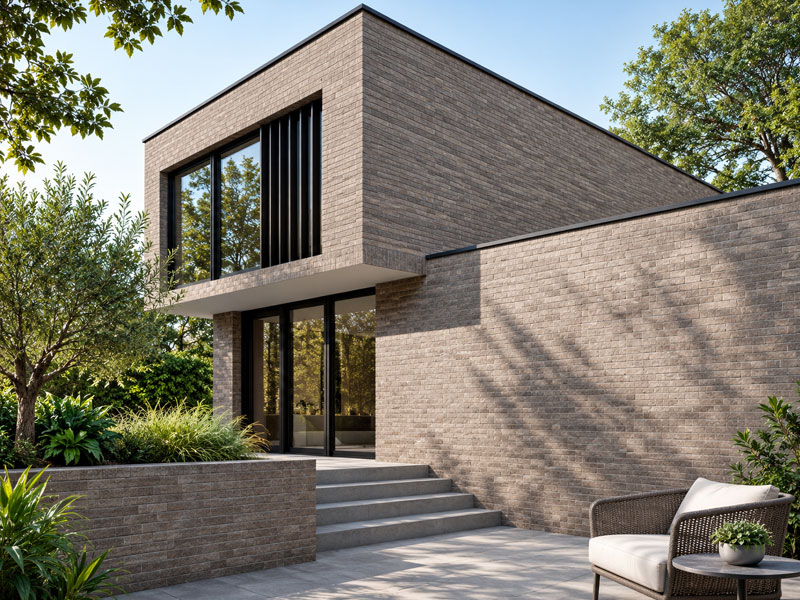
Warm terracotta tiles create a natural exterior finish
Why Are Warm Neutrals Effective on Modern Façades?
Sand, taupe, limestone, beige and warm grey provide a versatile base for premium residential exteriors.
These tones work particularly well with timber and landscaping because they create softer transitions than stark black-and-white schemes.
Warm neutrals are also effective for large wall planes where stronger colours might visually dominate the entire frontage.
When Do Grey and Charcoal Tiles Work Well?
Grey and charcoal suit urban contemporary architecture.
They pair naturally with:
- Black metal
- Concrete
- Dark roof finishes
- Clear glazing
- Structured planting
For a deeper understanding of how grey undertones respond to timber, metals and lighting, the principles discussed in grey bathroom tiles design can also inform material coordination, even though exterior performance must be specified separately.
Can Pale Tiles Work on a Front Façade?
Yes. Light stone, ivory and soft white surfaces can create a bright coastal or contemporary appearance.
Pale façades work particularly well with:
- Dark window frames
- Timber entry doors
- Layered planting
- Warm exterior lighting
Maintenance and local exposure should still be considered because very light surfaces can make dirt and weathering more visible.
How Should Front Wall Tiles Coordinate With Other Exterior Materials?
The strongest modern façades rarely rely on tile alone. Tile should form part of a wider material composition.
How Should Tiles Be Combined With Render?
Render works well as the visual background, while tile identifies one or two important architectural planes.
A balanced combination might use:
- Warm-white render
- Beige stone-look entry wall
- Black aluminium windows
- Timber front door
This creates hierarchy without requiring every surface to compete for attention.
Why Does Timber Pair Well With Stone-Look Tiles?
Stone provides mass and texture, while timber contributes warmth and linear grain.
Useful combinations include:
- Travertine-look tile + timber door
- Grey stone porcelain + warm battens
- Beige façade tile + dark timber
- Concrete-look wall + natural oak entry
The relationship between cool mineral surfaces and warmer timber often creates more visual depth than using several tile patterns.
How Should Metal and Glass Be Balanced With Tile?
Metal frames create crisp architectural lines, while glass reduces visual mass.
Where a façade already uses large areas of black metal and glazing, a warm or textured tile can prevent the frontage from feeling overly hard.
The same principle applies to interior specification. A specialist designer tiles company can help evaluate tile alongside adjoining architectural finishes rather than treating the surface as an isolated selection.
Which Tile Orientation Works Best on a Front Façade?
Orientation affects how the eye reads the building.
When Does a Vertical Layout Work Better?
Vertical placement can emphasise height and works particularly well on:
- Tall entry walls
- Double-height volumes
- Narrow blade walls
- Vertical windows
- Entrance towers
A long, narrow format can reinforce these existing architectural proportions.
When Does a Horizontal Layout Work Better?
Horizontal layouts emphasise width.
They suit:
- Low contemporary houses
- Wide garage walls
- Long entrance planes
- Strong horizontal rooflines
The tile direction should support the building form rather than introduce an unrelated visual axis.
Should Tile Joints Align With Doors and Windows?
Where practical, alignment can significantly improve the finished elevation.
Important lines include:
- Window heads
- Window sills
- Door tops
- Garage openings
- Balcony slabs
Careful set-out reduces awkward narrow cuts around major façade elements.
How Should Tile Size Be Chosen for a Front Wall?
Tile format should relate to wall scale, viewing distance and architectural proportion.
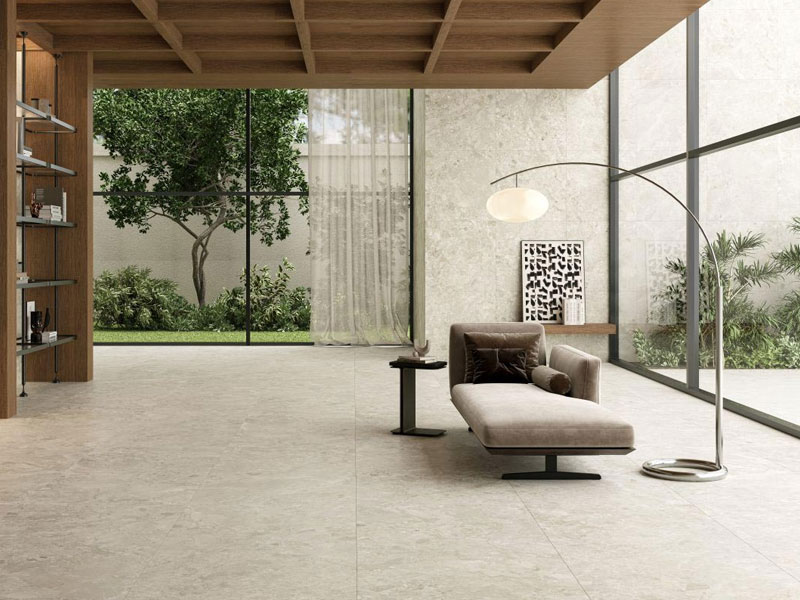
Neutral outdoor tiles complement greenery and timber
Do Large-Format Tiles Make a Façade Look More Modern?
Large formats often create a cleaner architectural character because fewer joints interrupt the wall plane.
They work especially well on:
- Large entrance walls
- Broad projecting volumes
- Double-height surfaces
However, external suitability, substrate preparation, fixing requirements and movement joints remain essential.
When Do Smaller Formats Work Better?
Smaller tiles can create deliberate texture around an entrance or narrower wall.
Brick-format products are particularly effective when a façade needs a crafted rhythm rather than a continuous stone plane.
The goal is not to select the largest tile possible. Scale should match the dimensions and detail level of the building.
How Can the Front Entrance Be Highlighted With Tiles?
The entrance should usually have greater visual hierarchy than the garage or secondary walls.
Should the Front Door Wall Use a Different Surface?
Often, yes.
A tiled entry wall can:
- Frame the doorway
- Make the entrance easier to identify
- Connect the path with the building
- Introduce tactile detail close to eye level
The selected tile should still relate to the broader façade palette.
Can Entry Tiles Connect With Exterior Flooring?
Yes, but each product must be suitable for its particular application.
A related wall and floor palette can create an architectural sequence from driveway or garden path to front door.
For broader principles around premium horizontal surfaces, the article on floor designer tiles provides additional guidance on material character, format and visual continuity.
How Should Lighting Work With the Entry Wall?
Directional lighting can reveal the texture of stone or dimensional tiles after dark.
Useful approaches include:
- Wall grazing
- Downlights
- Uplights
- Concealed lighting
Lighting should reveal texture rather than create excessive glare.
How Should the Garage Be Integrated Into the Front Elevation?
Garage doors often occupy a large percentage of Australian residential frontages, so the surrounding materials need careful control.
Should the Garage Wall Match the Entry Wall?
Not always.
The same material can be repeated in smaller proportions, but the entrance should generally remain the stronger focal point.
Using identical feature treatment around both garage and entry can weaken hierarchy.
How Can Tile Reduce the Visual Dominance of a Garage?
Place the stronger tile on an adjacent entry volume rather than automatically surrounding the garage door.
Other techniques include:
- Darker garage recesses
- Vertical tiled blade walls
- Landscaping near garage edges
- Repeating the feature material only on selected piers
The garage then becomes part of the overall composition instead of the dominant feature.
How Should Front Wall Tiles Connect With Landscaping?
A premium façade should relate to the driveway, path, retaining walls and planting.
Can the Same Stone Character Continue Outdoors?
Yes, when suitable finishes are available for each location.
Twilight is one example of a stone-look porcelain family that currently includes wall/floor formats, textured options and external pavers, supporting a related visual language between architectural and outdoor surfaces.
This does not mean every surface should match exactly. Related colour and stone character are often enough.
How Should Exterior Tile Colour Respond to Landscaping?
Useful relationships include:
- Beige stone + native planting
- Grey tile + structured architectural planting
- Light stone + coastal landscapes
- Travertine tones + Mediterranean planting
The landscape and façade should feel part of one material environment.
Which Modern Front Wall Tile Style Best Fits the House?
| Architectural Direction | Recommended Surface | Best Location | Overall Effect |
| Warm contemporary | Travertine-look tile | Entry / feature volume | Soft and premium |
| Minimalist | Concrete-look porcelain | Large wall plane | Clean and architectural |
| Natural luxury | Stone-look porcelain | Entry / blade wall | Refined and timeless |
| Coastal modern | Light stone-look tile | Entry / courtyard | Bright and relaxed |
| Urban modern | Charcoal or grey tile | Feature volume | Strong and contemporary |
| Crafted contemporary | Small architectural format | Entrance | Tactile and detailed |
| Resort-inspired | Natural stone | Entry / landscape connection | Organic and textured |
What Technical Requirements Matter for Front Wall Tiles?
Exterior aesthetics should always be supported by appropriate specification.
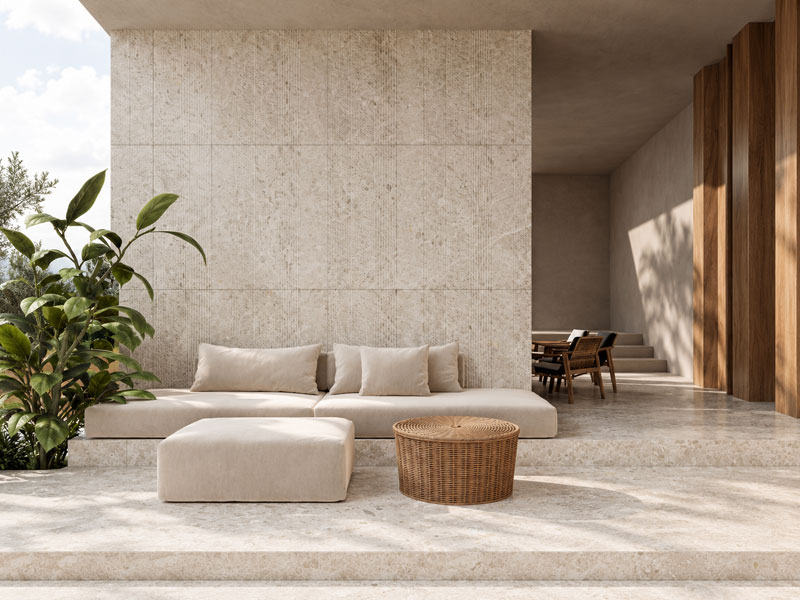
Showtile offers versatile tile options for stylish indoor and outdoor spaces
Why Must Tiles Be Suitable for Exterior Conditions?
Front walls are exposed to rain, sunlight, temperature changes and movement.
The selected tile, adhesive or fixing system, substrate and detailing all need to suit the project conditions.
For broader exterior-wall considerations beyond the front elevation, Showtile’s guide to outdoor wall tiles design covers material selection and outdoor applications in more detail.
Why Do Edges and Corners Need Early Planning?
Exposed corners can reveal whether a façade has been carefully detailed.
Plan:
- Mitres
- Trims
- Returns
- Wall caps
- Movement joints
- Junctions with render
These details should be resolved before tiles are ordered.
What Should Be Checked Before Ordering Front Wall Tiles?
Use this checklist before confirming a façade selection:
- Identify the main feature wall.
- Confirm exterior suitability.
- Choose the material family.
- Test tile size against the elevation.
- Review colour outdoors.
- Check texture in direct light.
- Decide tile orientation.
- Align major joints with openings.
- Plan corners and returns.
- Compare entry and garage materials.
- Coordinate render colour.
- Review landscaping materials.
- Confirm the installation system.
- Include appropriate wastage.
- Keep spare tiles where practical.
How Can Showtile Tiles Be Applied Across a Modern Front Elevation?
A modern façade works best when each tiled surface has a clear architectural role. Instead of selecting materials by appearance alone, compare how colour, texture and format can support the entrance, main wall plane, garage zone and surrounding landscape.
For a warmer front elevation, Marvel Travertine can introduce softer stone movement around an entrance or projecting volume. New Valley suits projects that need a more natural stone character and stronger continuity between vertical surfaces and exterior areas.
Where the architecture is more minimal, Urban Concrete can create a restrained backdrop in grey or greige tones. Twilight is another option when the design calls for a cohesive stone-inspired language between the façade and nearby landscape surfaces.
Natural stone can be introduced more selectively where authentic variation and tactile depth are important, particularly around entry features or smaller architectural details.
Rather than repeating one finish across the entire frontage, use the Showtile tile collection to compare materials according to their role within the elevation:
- Entry wall: warmer or more tactile feature surface
- Main façade plane: quieter stone or concrete look
- Garage zone: restrained supporting material
- Landscape connection: related exterior tone or finish
- Architectural accent: smaller-format or natural stone detail
This approach keeps the façade visually controlled while allowing each material to contribute to a clear overall composition.
For projects that also use marble indoors, the principles in bathroom marble tiles design can help maintain a consistent premium material language between interior and exterior spaces without copying the same finish across both.
Explore Showtile to compare premium architectural surfaces for entrances, feature walls and contemporary residential façades.
Contact Showtile
📍 Showroom: 65 Canterbury Road, Bankstown NSW 2200, Australia
📞 Phone: +61 2 9709 5836
✉️ Email: sales@showtile.com.au
🌐 Website: https://showtile.com.au/



