


Design Tiles for Home: Creating a Cohesive Interior Palette
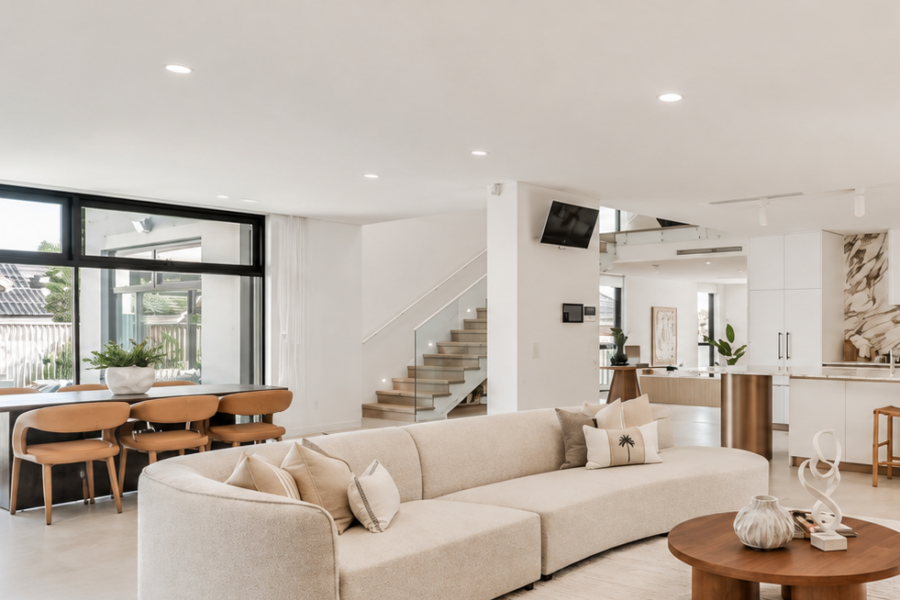
A well-designed home feels connected when every surface contributes to the same visual language. With design tiles for home, Showtile helps bring floors, walls, wet areas and outdoor zones together through coordinated colour, scale, finish and material character, creating interiors that feel considered without making every room look the same.
How Should Tiles Be Planned Across the Whole Home?
A whole-home tile strategy starts with hierarchy. One dominant material direction should establish continuity, while secondary and accent surfaces respond to individual rooms without breaking the overall palette.
Which Tile Decisions Should Be Made First?
Begin with surfaces that occupy the largest visual areas:
- Main living floor
- Kitchen floor
- Large bathroom walls
- Entry flooring
- Outdoor paving
- Major architectural feature walls
These choices influence every smaller tile decision that follows.
If the main floor uses warm stone character, for example, bathroom tiles, kitchen surfaces and entry materials should respond to the same undertone rather than introduce unrelated colours.
How Many Tile Families Should One Home Use?
There is no fixed number, but a useful structure is:
- One dominant material family
- One complementary material direction
- One or two accent finishes
A premium home generally feels more resolved when a limited number of surfaces repeat in different ways.
Why Should Rooms Not Be Designed Independently?
Open-plan architecture creates long sightlines.
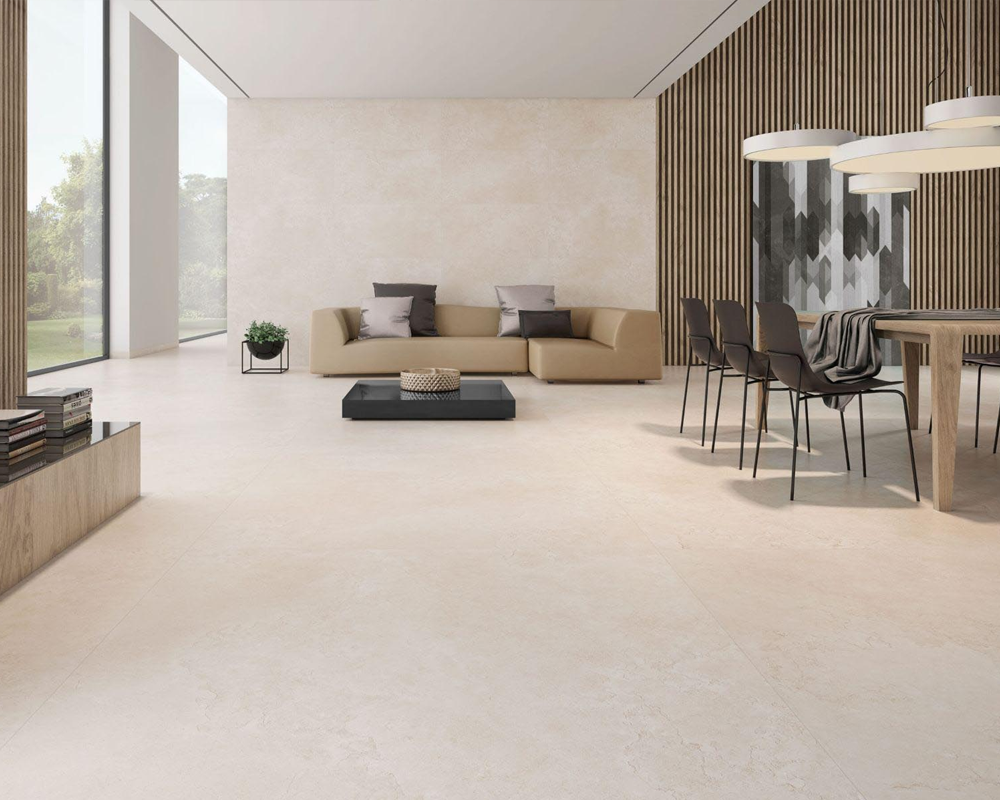
Cohesive tile choices for refined homes
A living room may look directly into the kitchen, hallway or courtyard, while bedroom corridors connect back to the main floor. Selecting each space in isolation can therefore produce unnecessary colour and texture changes.
What Creates a Cohesive Tile Palette?
Cohesion does not mean repetition. The objective is to build relationships between materials.
Why Are Undertones More Important Than Exact Colour Matches?
Two tiles can look different while still belonging to the same palette.
For example:
- Warm beige stone + cream terrazzo
- Greige porcelain + neutral timber
- Cool grey stone + charcoal feature tile
- Warm travertine + soft ivory wall tile
The shared undertone creates connection.
How Should Texture Be Distributed?
Texture should follow visual importance.
A useful hierarchy is:
- Main floors = relatively quiet
- Large walls = controlled movement
- Feature zones = stronger texture
If every surface has pronounced texture, the home can feel visually busy.
How Can Contrast Be Added Without Breaking Continuity?
Change one variable at a time.
Use contrast through:
- Colour
- Format
- Texture
- Finish
A large neutral floor with a smaller textured wall tile can feel more refined than changing colour, shape, texture and pattern all at once.
Which Materials Work Well Across Multiple Rooms?
Different materials can serve different rooms while still supporting one architectural direction.
Why Is Porcelain Useful for Whole-Home Planning?
Porcelain provides flexibility because the material can interpret:
- Stone
- Marble
- Timber
- Concrete
- Terrazzo
The wider Showtile collection allows these surface directions to be compared within the same project rather than room by room.
Porcelain also makes it easier to maintain related tones across floor, wall and exterior applications where suitable products are available.
When Should Natural Stone Be Introduced?
Natural stone works best when genuine variation is part of the concept.
Consider natural stone for:
- Entry walls
- Fireplace surrounds
- Bathroom feature areas
- Selected floors
- Courtyard walls
Natural stone usually has greater visual variation, so surrounding materials should remain more controlled.
Where Does Terrazzo Add Character?
Terrazzo can introduce pattern without relying on decorative motifs.
Good applications include:
- Bathrooms
- Entries
- Laundries
- Powder rooms
- Selected kitchen areas
A broader terrazzo tile collection can bring aggregate texture into a neutral palette while still working with stone-inspired finishes elsewhere.
How Should the Main Floor Set the Direction for the Home?
The main floor usually has the greatest visual influence because the surface runs across large connected areas.
Why Should Large Floor Areas Stay Relatively Quiet?
A floor that covers the living room, dining area and kitchen needs to remain comfortable over many square metres.
Strong directions include:
- Stone-look porcelain
- Soft concrete-inspired surfaces
- Restrained terrazzo
- Timber-look porcelain
Stone-look tile collections can support a stone-led palette where the main floor needs natural character without excessive pattern.
When Do Large Formats Work Well?
Large-format tiles can provide:
- Fewer grout lines
- Stronger continuity
- Cleaner geometry
- Greater material presence
Large formats suit open-plan areas where uninterrupted floor planes support the architecture.
When Should Timber-Look Flooring Be Considered?
Timber-inspired flooring can introduce warmth when stone would make the interior feel too cool.
For projects comparing plank scale, grain variation and laying direction, the guide to wood-look tile floor design explores these decisions in greater detail.
How Can Living Spaces Feel Refined Rather Than Over-Tiled?
Living areas need balance because flooring competes visually with furniture, rugs, lighting and joinery.
What Makes a Living-Room Floor Feel Comfortable?
Prioritise:
- Warm undertones
- Controlled grain or veining
- Matt surfaces
- Moderate grout contrast
- Appropriate scale
A quiet floor creates a stronger backdrop for furniture.
How Can Soft Materials Balance Tiled Flooring?
Use:
- Rugs
- Curtains
- Upholstery
- Timber cabinetry
- Natural fabrics
These elements soften acoustics and visual hardness while allowing the tile to remain an architectural foundation.
When Does a Living-Room Feature Wall Make Sense?
Use feature tiles where the architecture already identifies a focal point:
- Fireplace
- TV wall
- Double-height wall
- Entry wall adjoining the living area
Avoid adding a feature wall simply because an empty surface is available.
How Should Kitchen Tiles Relate to the Main Material Palette?
The kitchen should feel connected to adjacent living spaces while maintaining its own functional requirements.
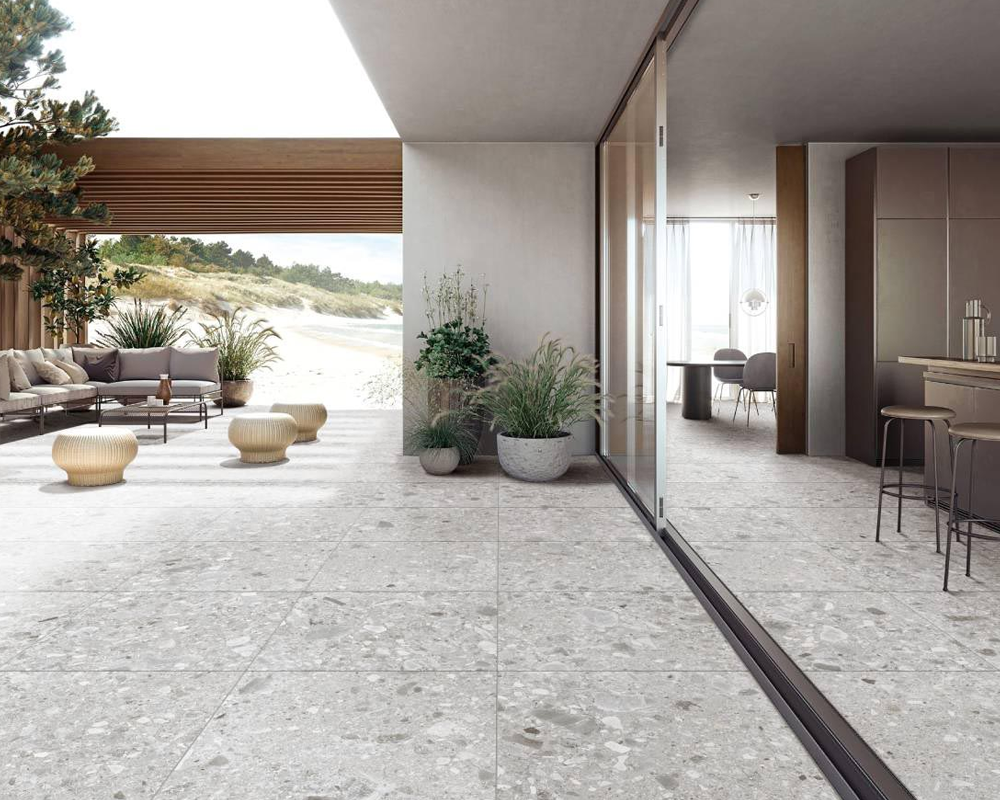
Balanced surfaces create a connected interior
Should the Kitchen Floor Change From the Living Floor?
Not usually in open-plan layouts.
Continuous flooring can make:
- Kitchen
- Dining
- Living
feel like one larger architectural zone.
A floor change works better when there is a clear threshold or room boundary.
How Should Splashback Tiles Be Chosen?
Compare the splashback with:
- Cabinet colour
- Benchtop
- Main floor
- Metal finishes
If the floor and stone benchtop already carry strong movement, a quieter splashback often creates better balance.
When Can Smaller Formats Add Detail?
Smaller tiles work particularly well on limited vertical areas such as:
- Splashbacks
- Shelving niches
- Bar surrounds
The smaller scale can introduce texture without disrupting whole-home continuity.
How Can Bathrooms Feel Distinct but Still Connected?
Bathrooms can have stronger texture and material layering because the spaces are typically smaller and more contained.
What Should Connect the Bathroom to the Rest of the Home?
Repeat at least one design cue:
- Undertone
- Stone reference
- Timber colour
- Metal finish
- Grout direction
A bathroom does not need to repeat the main floor exactly.
Can Bathrooms Use More Expressive Surfaces?
Yes.
Consider stronger character on:
- Vanity wall
- Shower wall
- Bath surround
- Mosaic detail
Large surrounding surfaces should remain quieter so the feature area retains importance.
Why Should Floor and Wall Tiles Play Different Roles?
Bathroom floors need to respond to:
- Slip performance
- Drainage
- Scale
Bathroom walls respond more to:
- Light
- Visual height
- Texture
- Material composition
This distinction is also useful when reviewing current bedroom tile design ideas through dedicated room-specific guides such as bedroom design tiles, where the material priorities shift again toward comfort, warmth and proportion.
How Can Bedrooms Fit Into a Whole-Home Tile Scheme?
Bedrooms should feel calmer than high-activity communal spaces.
Should Bedroom Flooring Repeat the Main Floor?
It can, particularly when continuity through hallways is important.
Alternatively, the bedroom can move toward:
- Timber-look porcelain
- Warmer neutral tones
- Softer visual texture
The transition should still reference the wider palette.
How Can Bedroom Tiles Avoid Feeling Too Cold?
Pair tile with:
- Rugs
- Upholstered furniture
- Timber joinery
- Layered curtains
- Warm lighting
The material balance matters as much as the tile itself.
When Can a Bedroom Feature Wall Use Tile?
Only when the wall has a clear architectural purpose.
Possible applications include:
- Bedhead wall
- Fireplace wall
- Integrated vanity zone
Keep texture and colour controlled so the bedroom remains restful.
How Can Entries and Hallways Strengthen the Overall Design?
Circulation zones help connect otherwise separate rooms.
Should an Entry Use a Different Material?
A change can work when the entry needs stronger identity.
Suitable directions include:
- Stone
- Terrazzo
- Large-format porcelain
- Natural stone accent
The entry should still share an undertone with the main floor.
Why Does Tile Direction Matter in Hallways?
Tile orientation can reinforce movement.
Long formats can:
- Lengthen the corridor visually
- Guide sightlines
- Connect adjoining rooms
Can the Entry Carry More Pattern Than the Living Area?
Yes.
Because the entry is smaller, stronger pattern can create a memorable first impression without dominating the entire house.
How Should Feature Tiles Be Controlled Across the Home?
Feature tiles work best when they reinforce hierarchy rather than create visual competition.
Where Should Feature Tiles Be Concentrated?
Useful locations include:
- Powder room
- Kitchen splashback
- Fireplace
- Entry niche
- Vanity wall
How Many Feature Directions Should One Home Use?
Fewer is usually better.
Repeated design logic creates greater sophistication than introducing a completely different tile in every room.
What Makes a Feature Surface Feel Connected?
Repeat an element from the main palette:
- Colour
- Material tone
- Shape
- Finish
- Grain direction
This creates contrast without disconnection.
How Can Indoor and Outdoor Tiles Work as One Material Story?
Indoor-outdoor continuity is especially valuable where living spaces open directly onto alfresco or courtyard areas.
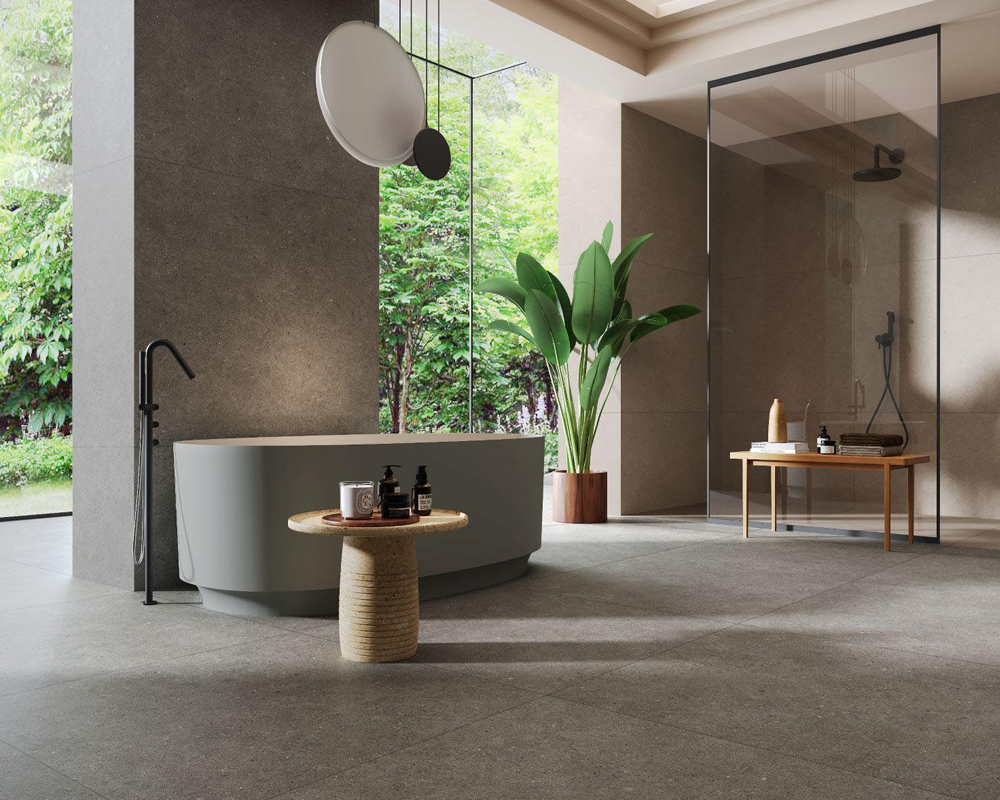
Thoughtful materials bring every space together
Do Interior and Exterior Tiles Need to Match Exactly?
No.
Visual continuity can come from:
- Related colour
- Similar stone character
- Compatible scale
- Consistent joint rhythm
The exact products can differ.
Why Might Exterior Finishes Need to Change?
Outdoor areas may require:
- Greater slip resistance
- More texture
- Weather suitability
- Different thickness
Visual matching should not override technical requirements.
Which Transitions Benefit Most From Coordination?
Important connections include:
- Living → alfresco
- Kitchen → courtyard
- Entry → front terrace
- Bathroom → private courtyard
Selected natural stone tiles can provide a useful material reference when indoor and outdoor areas need to share a related material direction.
How Should Surface Finish Change Throughout the Home?
Finish affects both visual character and light response.
Where Do Matt Finishes Work Best?
Matt surfaces suit:
- Main living floors
- Large wall areas
- Contemporary interiors
Matt finishes reduce glare and allow stone or timber character to remain more natural.
When Does Honed Add More Refinement?
Honed finishes can work well for:
- Stone-led bathrooms
- Feature floors
- Selected walls
The gentle reflectivity adds depth without the strong shine of polished tile.
When Should Polished Surfaces Be Used Selectively?
Polished surfaces can add formality, particularly with marble-inspired materials.
Limit polished tile where glare or strong reflection would compete with furniture and natural light.
Which Tile Direction Fits Each Area of the Home?
| Home Area | Tile Direction | Main Priority | Intended Effect |
| Entry | Stone / terrazzo | First impression | Refined |
| Living | Stone-look / timber-look | Continuity | Calm |
| Kitchen | Porcelain + wall detail | Coordination | Cohesive |
| Bathroom | Stone / terrazzo / textured tile | Layering | Refined |
| Bedroom | Warm neutral / timber look | Comfort | Soft |
| Powder room | Feature tile | Character | Expressive |
| Hallway | Continuous floor tile | Direction | Connected |
| Alfresco | Exterior porcelain | Transition | Seamless |
What Makes a Whole-Home Tile Scheme Feel Timeless?
Long-term design usually comes from material character rather than novelty.
Which Tile Directions Tend to Age Well?
More enduring choices include:
- Limestone-inspired surfaces
- Travertine
- Natural stone
- Neutral terrazzo
- Timber look
- Restrained marble
These materials can adapt as furniture and paint colours change.
What Can Make a Home Feel Dated Faster?
Use caution with:
- Too many patterns
- Extreme colour changes between rooms
- Strong novelty motifs
- High-contrast grout everywhere
- Multiple unrelated tile shapes
How Can Trends Still Be Used?
Place stronger trends on smaller areas:
- Splashback
- Powder room
- Vanity wall
- Small niche
Keep permanent large surfaces more controlled.
When comparing broader premium surface options, the guide to designer tiles in Australia provides another useful framework for evaluating material quality, scale, finish and whole-project suitability.
Build a Connected Home Palette with Showtile
The broader Showtile collection allows architects, designers, builders and homeowners to compare surfaces by material, scale, colour, finish and application rather than selecting each room independently.
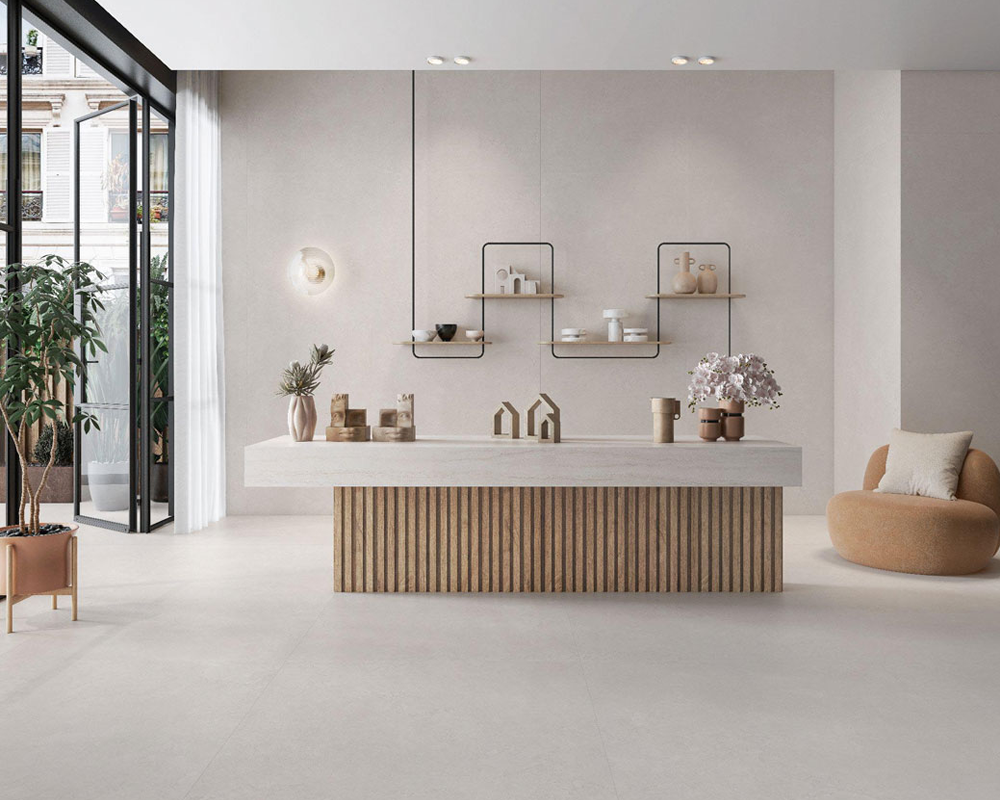
Showtile helps shape a unified home palette
Stone-inspired porcelain can provide a calm foundation, while terrazzo, natural stone, timber-look surfaces and feature formats can introduce different levels of texture and character where the design requires them.
Working with a specialist designer tile company can also make it easier to coordinate flooring, wet areas, wall finishes and exterior surfaces within one project rather than resolving every category separately.
At Showtile, the aim is to create relationships between materials so living spaces, kitchens, bathrooms, bedrooms and outdoor areas feel deliberately connected. A whole-home approach gives each room enough individuality while maintaining a consistent architectural identity.
FAQ
Should the Same Tile Be Used Throughout the Whole House?
No. A cohesive home needs related surfaces rather than one identical tile everywhere. Shared undertones, materials or finishes can connect different rooms while allowing each space to respond to its own function.
How Many Different Tile Styles Should a Home Use?
There is no universal number. One dominant material family with a small number of complementary and feature surfaces usually creates clearer visual hierarchy.
What Tile Colours Are Easy to Coordinate Across a Home?
Warm neutrals, limestone tones, beige, greige and muted grey are versatile because the colours pair easily with timber, stone, furniture and cabinetry.
Should Kitchen and Living Floors Match?
Continuous flooring usually works well in open-plan layouts because the shared surface strengthens visual flow. A material change is more effective where a clear architectural threshold exists.
Can Bathrooms Use Different Tiles From the Main Living Areas?
Yes. Repeat an undertone, material reference or finish so the bathroom feels connected without copying the living-area flooring.
Can Timber-Look and Stone-Look Tiles Be Used in the Same Home?
Yes. Timber-inspired porcelain can introduce warmth while stone-look surfaces provide a more mineral architectural character. Coordinating undertones helps both materials feel intentional.
Should Indoor and Outdoor Tiles Be the Same Colour?
They do not need to match exactly. Related stone character, undertone and scale can create continuity while allowing each zone to use a technically suitable finish.
What Makes a Tile Scheme Feel Premium?
A premium scheme usually relies on controlled material variation, considered scale, appropriate finishes and consistent transitions rather than a large number of decorative surfaces.
Contact Showtile
📍 Showroom: 65 Canterbury Road, Bankstown NSW 2200, Australia
📞 Phone: +61 2 9709 5836
✉️ Email: sales@showtile.com.au
🌐 Website: https://showtile.com.au/



