


Floor Designer Tiles: Choosing Premium Tiles for Refined Interiors
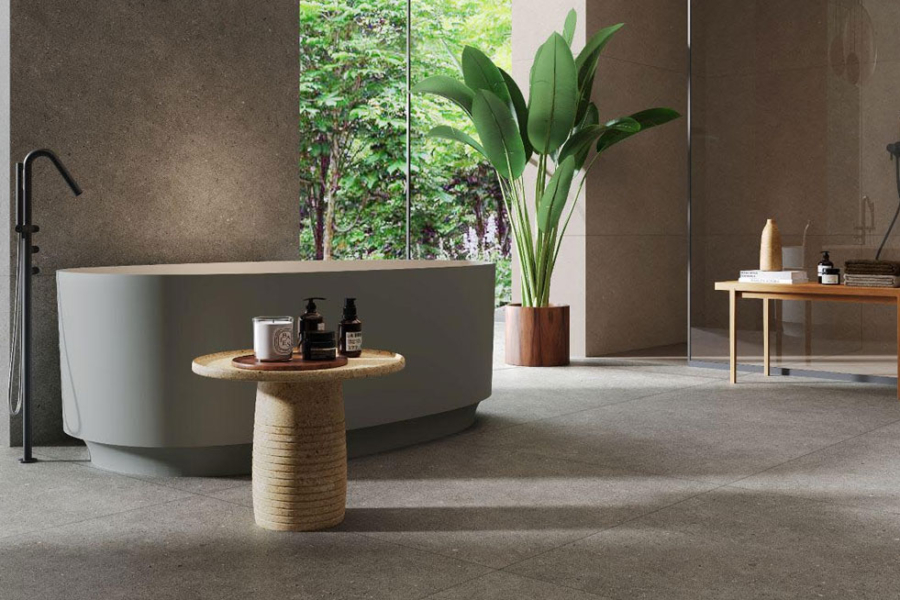
Choosing floor designer tiles is about balancing material character, scale, finish and performance with the wider interior scheme. Showtile offers premium porcelain, stone-look and terrazzo-inspired surfaces that help designers, builders and homeowners create refined floors with stronger visual continuity and long-term practicality.
What Makes a Floor Tile Feel Designer Rather Than Ordinary?
A designer-led floor combines visual quality with proportion, application and detailing. Premium flooring does not depend on decorative patterns alone. A quiet stone-look porcelain surface can feel more sophisticated than a highly patterned floor when format, grout, lighting and adjoining finishes are carefully coordinated.
Why Does Material Character Matter in Designer Flooring?
Every surface creates a different visual impression. Stone-inspired porcelain introduces natural movement, terrazzo creates aggregate-based texture, while timber-look tiles bring linear rhythm and warmth.
The strongest designer floor tiles generally offer:
- Controlled tonal variation
- Convincing material character
- A finish suited to the surrounding interior
- Appropriate tile scale
- Well-planned grout joints
- Compatibility with cabinetry and wall finishes
- Technical suitability for the intended floor
Material should support the broader interior concept rather than compete with furniture, stone benchtops and architectural features.
How Do Format and Edge Detail Change the Finished Floor?
Tile size determines how frequently grout lines cross the room. Large-format floor tiles can produce broad, visually calm planes, while medium and smaller formats create more visible rhythm.
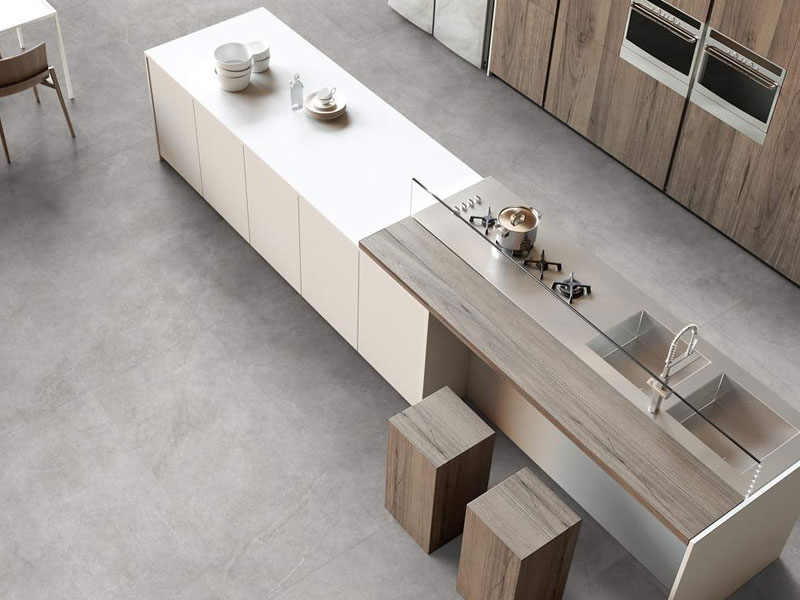
Designer floor tiles for refined modern interiors
Rectified edges can support cleaner joint lines, but good results still depend on set-out and installation. Doorways, cabinetry, kitchen islands and major sightlines should be considered before the first tile is laid.
Why Must Technical Performance Support the Design?
A premium appearance is only successful when the surface performs correctly.
Before specification, confirm:
- Floor suitability
- Internal or external use
- Wet-area requirements
- Slip performance
- Tile thickness
- Surface finish
- Substrate condition
- Cleaning requirements
- Installation method
Technical requirements should guide the product shortlist before colours and patterns are finalised.
Which Materials Work Best for Designer Flooring?
There is no single material suitable for every premium project. Stone-look porcelain, terrazzo tiles, natural stone and timber-inspired surfaces each create a different relationship with furniture, light and architecture.
When Do Stone-Look Porcelain Tiles Work Best?
Stone-look porcelain is particularly useful when an interior needs natural visual movement without making the floor overly decorative.
Valencia can support this direction with a restrained stone-inspired aesthetic that works across contemporary living areas, kitchens and connected spaces. Showtile currently offers the collection in 600 × 600 mm and 600 × 1200 mm formats with several finish options.
Stone-inspired flooring works especially well with:
- Timber cabinetry
- Neutral upholstery
- Natural stone benchtops
- Soft plaster finishes
- Minimal joinery
- Warm metal details
The floor becomes a visual foundation instead of the dominant feature.
When Should Terrazzo-Look Flooring Be Used?
Terrazzo introduces greater visual activity through aggregate-style pattern. This makes terrazzo floor tiles useful for entries, kitchens, bathrooms and commercial spaces where the floor should contribute more character.
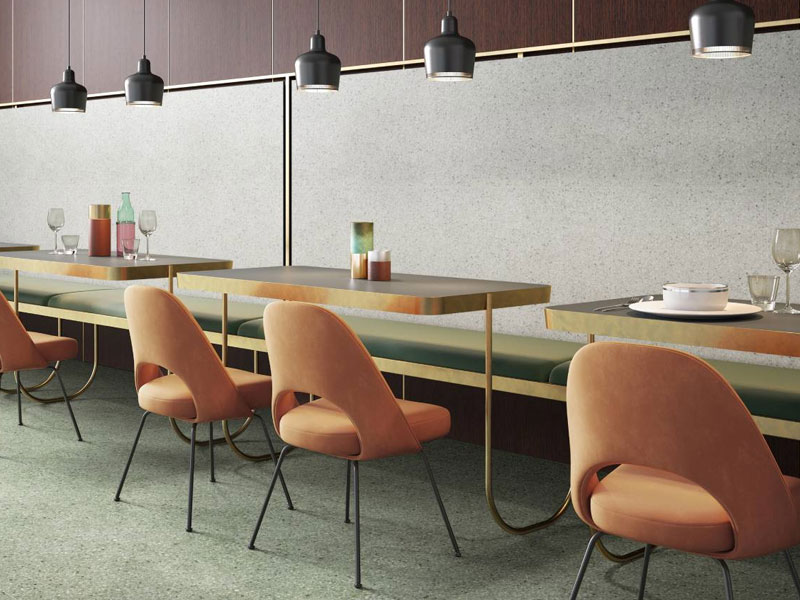
Terrazzo tiles bring texture and character
Terra Terrazzo offers porcelain terrazzo-look surfaces across matt, honed and external finishes, allowing the design language to extend through different applications.
When terrazzo is selected, surrounding surfaces usually work best when they are more restrained. Simple cabinetry and quieter walls allow the aggregate pattern to remain intentional rather than competing with another strong material.
When Does Large-Scale Terrazzo Create a More Premium Effect?
Large terrazzo-inspired tiles can make pattern feel more architectural because fewer grout joints interrupt the surface.
Grande Ceppo Terrazzo uses a 1200 × 1200 mm porcelain format with a honed finish, making the collection particularly relevant to broad residential or commercial interiors where floor scale is part of the design concept.
The larger format needs careful substrate preparation and layout planning. Premium results depend as much on installation quality as on the tile itself.
When Do Timber-Look Tiles Make Sense?
Timber-look tiles can introduce warmth and linear movement where porcelain performance is preferred.
The plank direction becomes a significant part of the design. Running tiles along the dominant sightline can lengthen a room visually, while changing direction unnecessarily between connected spaces can interrupt continuity.
Timber-inspired surfaces are particularly useful where a warmer flooring language needs to continue into areas that would be more demanding for natural timber.
How Should Floor Tile Size Be Chosen?
Tile size should relate to room proportion, architecture and set-out rather than a simple rule that larger tiles always look more luxurious.
Do Large Tiles Always Look More Premium?
No. Large-format tiles can reduce grout frequency and create expansive floor planes, but oversized products are not automatically the best option for every room.
Large formats work best when:
- The room has clear sightlines
- The substrate is appropriately prepared
- Cuts around cabinetry can be controlled
- The tile proportion suits the floor dimensions
- Grout lines can align logically with architectural elements
Poorly positioned cuts can undermine the visual benefit of an expensive large-format product.
When Are Medium Formats More Practical?
Formats such as 600 × 600 mm often offer greater flexibility in bathrooms, kitchens and medium-sized rooms.
Medium formats can simplify:
- Floor set-out
- Changes in direction
- Smaller room dimensions
- Cutting around fixtures
- Transitions between zones
The appropriate format is the one that creates the cleanest finished composition, not necessarily the largest available size.
Which Floor Finish Best Suits the Interior?
Surface finish changes both visual character and practical performance. Matt, honed and textured surfaces respond differently to light, traffic and moisture.
When Should Matt Floor Tiles Be Used?
Matt floor tiles create a restrained appearance with less reflected light. This quality works particularly well in contemporary interiors where floors should provide a quiet foundation.
Matt surfaces commonly suit:
- Living areas
- Kitchens
- Bathrooms
- Entries
- Minimal interiors
The exact finish should still be checked against slip and maintenance requirements.
When Does a Honed Finish Feel More Refined?
Honed surfaces can create a softer visual depth than highly reflective finishes. This makes honed stone-look or terrazzo surfaces useful for sophisticated interiors where texture should be visible without strong gloss.
Honed flooring pairs naturally with timber, stone, textured fabrics and muted paint finishes.
When Are Slip-Rated Surfaces Important?
Wet and external areas require more than visual consistency.
Bathroom floors, laundries, entrances and outdoor surfaces need finishes selected according to their exposure and project requirements. A similar colour or stone character can often be retained while the technical finish changes between interior and exterior zones.
How Should Designer Flooring Be Selected for Different Rooms?
Each room places different demands on the floor. Rather than selecting a different decorative tile for every space, start with a coherent material language and adjust finish or format where practical performance changes.
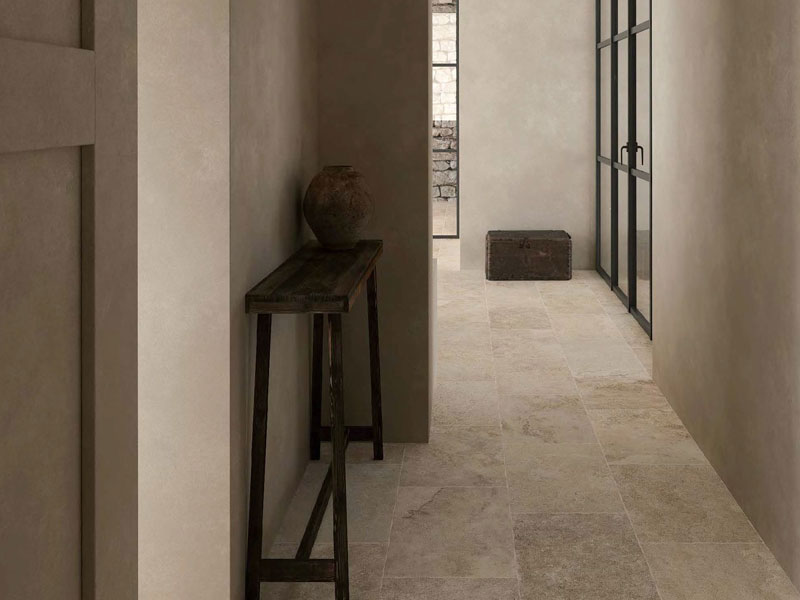
Choose designer flooring to suit each room’s function and style
What Works Best in Living and Open-Plan Areas?
Living spaces benefit from visual continuity because floors are often visible across long distances.
A restrained stone-look or neutral porcelain surface can connect:
- Living room
- Dining area
- Kitchen
- Hallway
- Entry
For more detailed discussion of floor composition and layout, Showtile’s guide to tiles on floor design provides broader context around how tiled surfaces interact with room proportions and adjoining materials.
Which Floor Tiles Suit Kitchens?
Kitchen flooring should complement the cabinetry and benchtop rather than duplicate their strongest features.
If the benchtop has pronounced veining, a quieter floor can balance the composition. When cabinetry is restrained, terrazzo or more varied stone-look porcelain may introduce additional visual interest.
Durability and cleaning should also remain central because kitchen floors experience frequent foot traffic and spills.
What Should Be Prioritised on Bathroom Floors?
Bathrooms require a balance between design continuity and wet-area performance.
New Terrazzo is one option for introducing controlled terrazzo character while retaining a porcelain floor surface. Showtile currently lists the range in 300 × 600 mm and 600 × 600 mm sizes with a P4 slip rating.
For compact bathrooms where scale, grout density and visual perception become especially important, the guide to small bathroom tiles design explores those spatial considerations in more detail.
How Should Bathroom Floors Relate to Toilet Walls?
Floor and wall tiles do not need to match exactly. A strong approach is to repeat an undertone while changing scale or texture.
For example:
- Quiet stone floor + tonal ceramic wall
- Terrazzo floor + plain wall tile
- Neutral porcelain floor + textured feature wall
Where the wall behind a toilet or vanity becomes a separate feature, the principles covered in toilet wall tiles design can help establish a clearer hierarchy between floor and vertical surfaces.
How Can Floor Tiles Create Better Visual Continuity?
Continuity comes from repeating relationships rather than making every surface identical.
Should the Same Floor Continue Through Open-Plan Spaces?
Often, yes.
One continuous flooring material can:
- Reduce thresholds
- Make connected rooms feel larger
- Strengthen long sightlines
- Simplify the overall material palette
- Create a stronger architectural foundation
The product still needs to suit each application. A change in finish may be necessary where moisture or external exposure increases.
How Should Grout Colour Be Selected?
Low-contrast grout generally creates a calmer floor because individual tile boundaries become less prominent.
Contrasting grout makes the grid more visible and should therefore be selected intentionally. For highly varied stone or terrazzo surfaces, understated grout often lets the tile itself provide enough movement.
How Should Flooring Coordinate With Joinery and Walls?
Samples should be compared alongside:
- Cabinetry
- Benchtops
- Wall tiles
- Paint
- Timber
- Metal finishes
- Upholstery
A specialist designer tiles company can help designers, builders and homeowners evaluate surfaces as part of a complete material palette rather than making isolated product decisions.
How Can Indoor and Outdoor Flooring Feel More Connected?
Australian homes frequently connect internal living areas with terraces, courtyards and entertaining spaces. The strongest transition usually repeats colour or stone character while adapting surface performance for each environment.
Should Indoor and Outdoor Tiles Be Identical?
Not necessarily.
The visual language may remain consistent while the finish changes to satisfy external performance requirements. This approach creates continuity without ignoring safety and exposure.
New Valley is designed around this type of coordinated application, with internal/in-out and external formats alongside paver and coping options.
How Should Floors Align Across Large Openings?
Before installation, review:
- Sliding door position
- Main internal grout lines
- Terrace dimensions
- Floor levels
- Thresholds
- Major sightlines
Even when different technical finishes are used, thoughtful alignment can make indoor and outdoor areas feel more connected.
Which Designer Floor Tile Style Best Fits the Project?
| Design Direction | Recommended Surface | Suitable Areas | Main Character |
| Minimal contemporary | Large neutral porcelain | Living, kitchen | Calm and seamless |
| Warm modern | Beige stone-look tile | Open-plan spaces | Soft and natural |
| Mid-century inspired | Terrazzo-look porcelain | Entry, kitchen | Expressive but controlled |
| Natural luxury | Stone-look or natural stone | Living, entry | Organic movement |
| Coastal interior | Light stone-look porcelain | Living, indoor-outdoor | Bright and relaxed |
| Industrial scheme | Concrete-inspired tile | Living, commercial | Restrained and architectural |
| Warm linear design | Timber-look tile | Living, transitional areas | Directional and inviting |
The strongest floor style is the one that supports the complete interior rather than attracting attention independently from every other surface.
What Should Be Checked Before Ordering Designer Floor Tiles?
Before confirming the order, review both appearance and performance.
- Confirm floor application.
- Check wet or external requirements.
- Review slip performance.
- Confirm tile thickness.
- Select the appropriate finish.
- Measure room dimensions.
- Establish tile direction.
- Plan main grout lines.
- Review shade variation.
- Check the substrate.
- Calculate wastage.
- Keep spare tiles where practical.
- Compare samples with cabinetry and wall finishes.
A final sample review in the actual space is valuable because daylight and artificial lighting can significantly affect undertones and surface texture.
Which Showtile Collections Suit Designer Flooring?
The Showtile tile collection provides multiple flooring directions, including stone-look porcelain, terrazzo-inspired surfaces and products designed for different internal and external applications.
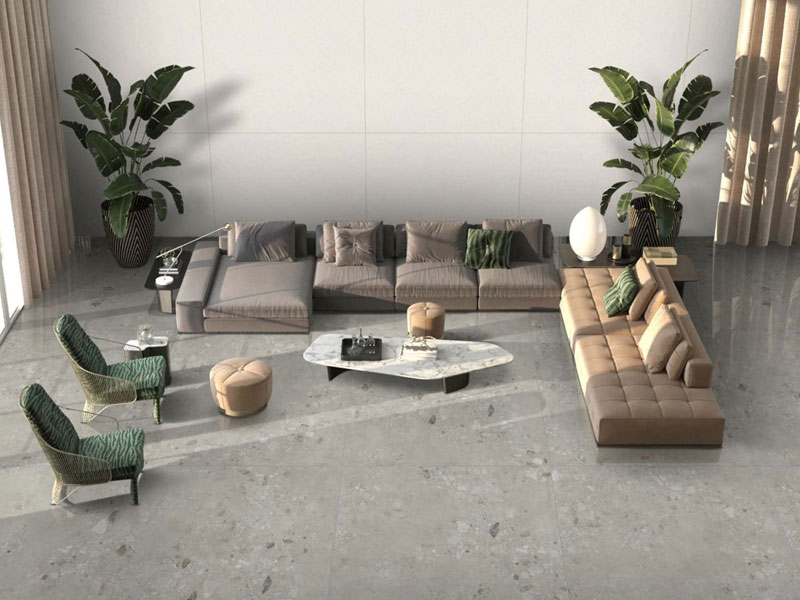
Stone-look flooring adds natural sophistication
A practical shortlist might include:
- Valencia for restrained stone-inspired interiors
- Genesis for broad contemporary stone-look surfaces
- Terra Terrazzo for expressive but controlled aggregate character
- Grande Ceppo Terrazzo for large-format statement floors
- New Terrazzo for bathrooms and other spaces requiring a compact terrazzo format
- New Valley for indoor-outdoor coordination
The final selection should be based on the role of the floor within the complete project rather than appearance alone.
Create a Refined Flooring Scheme With Showtile
Premium flooring works best when every decision, from format and finish to grout and adjoining materials supports the wider architecture. A successful floor creates continuity, withstands the demands of its application and gives furniture, joinery and feature surfaces a balanced foundation.
Explore Showtile to compare design-led porcelain, terrazzo-inspired and stone-look surfaces for refined residential and commercial projects.
Contact Showtile
📍 Showroom: 65 Canterbury Road, Bankstown NSW 2200, Australia
📞 Phone: +61 2 9709 5836
✉️ Email: sales@showtile.com.au
🌐 Website: https://showtile.com.au/



