


Toilet Wall Tiles Design: How to Create a Refined and Practical Space
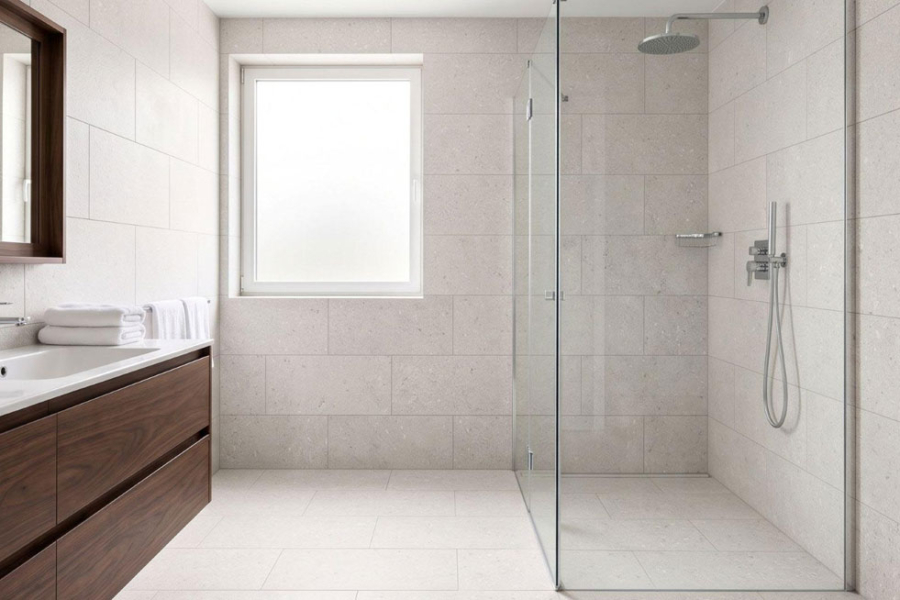
A thoughtful toilet wall tiles design can make a compact WC or powder room feel cleaner, more balanced and visually refined. Showtile offers premium ceramic, porcelain, natural stone and decorative wall tiles that help homeowners, designers and builders coordinate colour, texture, grout and feature placement with greater confidence.
What Makes a Good Toilet Wall Tile Design?
A refined toilet wall scheme needs a clear visual hierarchy. One wall should carry the strongest material or pattern, while the remaining surfaces provide balance. This approach helps compact spaces feel more intentional and prevents grout lines, colour changes and decorative details from competing with each other.
Which Wall Should Lead the Visual Design?
The focal wall should usually be the surface that receives the most attention when entering the room.
Common choices include:
- The wall behind the toilet
- The vanity wall
- The wall opposite the entrance
- A concealed cistern wall
- A recessed wall or niche
A compact toilet usually benefits from one dominant surface rather than multiple feature walls. This keeps the visual composition controlled and allows tile texture or colour to have greater impact.
Why Does Wall Proportion Matter in a Compact Toilet?
Narrow walls and short viewing distances make tile joints, cuts and changes in scale more noticeable.
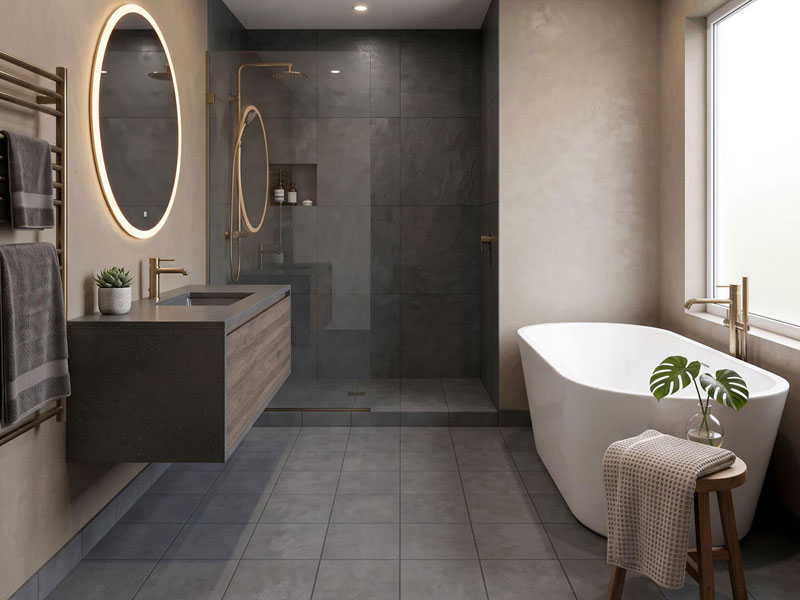
Refined wall tiles for modern toilet spaces
The design should therefore consider the relationship between:
- Toilet centreline
- Vanity width
- Mirror size
- Window location
- Flush plate position
- Ceiling height
- Tile dimensions
Careful set-out can prevent narrow tile slivers around fixtures and create cleaner alignment between grout lines and architectural elements.
Should Toilet Walls Be Fully or Partially Tiled?
Both approaches can work. Full-height tiling creates stronger continuity and easier maintenance, while partial tiling introduces more contrast between tile and painted surfaces.
The right choice depends on the room style, exposure to moisture and desired visual effect.
When Does Full-Height Tiling Work Best?
Full-height wall tiling suits contemporary interiors where continuity and simplicity are priorities.
Benefits include:
- Fewer transitions between materials
- Easier cleaning
- Stronger visual height
- Better integration with large-format tiles
- More consistent moisture protection
Full-height finishes work particularly well behind concealed cisterns or vanities where one uninterrupted wall plane can become part of the architectural composition.
When Is Half-Height Tiling More Appropriate?
Half-height tiling works well when paint colour is intended to contribute to the design.
The transition line should align with an architectural reference such as:
- Vanity height
- Mirror edge
- Window sill
- Wall shelf
- Existing datum line
A random stopping point can make the room feel unresolved, while an aligned transition looks deliberate.
How Should Tile Height Be Chosen?
Tile height should respond to the room rather than follow one universal measurement.
Important references include basin position, mirror size, toilet suite height, window openings and the overall wall proportion. The objective is to create a clean visual break rather than simply cover as much wall as possible.
Which Tile Types Work Best on Toilet Walls?
Ceramic, porcelain and natural stone can all work on toilet walls. The best material depends on the desired finish, maintenance expectations and how strongly the wall should contribute to the room.
When Are Ceramic Subway Tiles a Good Choice?
Ceramic subway tiles are especially effective on vanity walls and compact feature surfaces because their smaller scale introduces rhythm without dominating the room.
Age Subway offers a handcrafted appearance with an organic edge and glossy surface. This type of finish can add texture to a simple toilet scheme while remaining easy to coordinate with neutral floors and minimal fittings.
Subway tiles work well in:
- Vertical stack
- Horizontal stack
- Traditional brick bond
- Limited feature zones
When Do Multi-Tonal Tiles Create Better Depth?
A tonal tile can add interest without relying on a strong pattern.
Charm Subway introduces subtle shifts in colour and surface character, making the wall feel layered while remaining relatively restrained.
Multi-tonal finishes suit:
- Powder rooms
- Vanity walls
- Concealed cistern walls
- Compact commercial washrooms
The surrounding floor and joinery should remain comparatively quiet so the tonal variation can remain the focal detail.
When Does Natural Stone Add More Character?
Natural stone can introduce authentic variation and a stronger tactile quality.
Subway Tumbled Natural Stone can be used selectively on a dry feature wall where texture is an important part of the design.
Natural stone works best when the rest of the palette is controlled. Because genuine stone contains colour and surface variation, surrounding finishes should reinforce rather than compete with those characteristics.
When Are Zellige-Inspired Tiles Suitable?
Zellige-inspired surfaces are useful when the design needs subtle variation, reflectivity and handmade character.
Zellige Subway can create a visually rich wall because colour and tone shift across individual pieces.
This type of tile works particularly well behind a vanity or toilet suite where artificial light can reveal changes in surface depth throughout the day.
How Should Toilet Wall Tile Colour Be Chosen?
Colour influences how large, bright and calm the room feels. The most successful schemes usually use a limited palette with one dominant tone and one controlled accent.
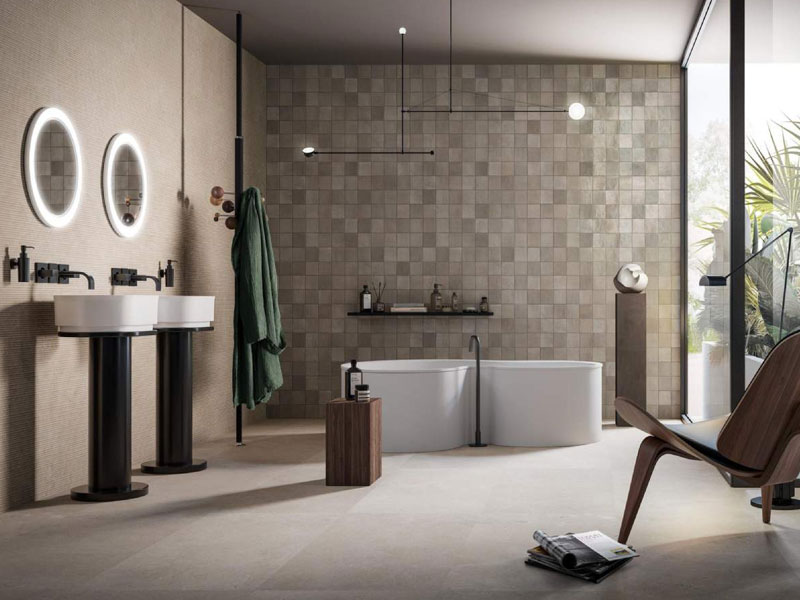
Feature wall tiles create a stylish focal point
Which Colours Make a Small Toilet Feel Lighter?
Warm white, soft beige, pale grey and muted stone tones are useful when the goal is visual openness.
These colours also coordinate easily with:
- Timber vanity finishes
- Brushed brass
- Chrome
- Black fittings
- Natural stone benchtops
- Soft painted walls
A light scheme can still feel sophisticated when surface texture and grout detailing provide enough depth.
Can Dark Tiles Work in a Small Toilet?
Yes. Dark tiles can create a strong powder-room effect when supported by appropriate lighting and simpler surrounding materials.
Deep green, charcoal and dark blue can work well on:
- The wall behind the toilet
- The vanity wall
- A lower wall section
- A recessed feature area
A large mirror and layered lighting can prevent the room from feeling visually heavy.
How Many Colours Should a Toilet Tile Scheme Use?
A simple approach is usually enough:
- One dominant tile colour
- One supporting material tone
- One accent through fittings or joinery
Introducing several unrelated whites, stone imitations and feature tiles can make a compact toilet feel fragmented.
Which Wall Should Become the Feature Surface?
The feature wall should be selected according to sightline and room geometry rather than decoration alone.
Should the Wall Behind the Toilet Become a Feature Wall?
The wall behind the toilet is a strong candidate when the toilet suite is centred and the surface is visible directly from the entrance.
A concealed cistern can make this wall particularly effective because flush plates and fixtures sit within a cleaner architectural plane.
Suitable materials include:
- Subway tile
- Zellige-inspired ceramic
- Natural stone
- Textured porcelain
- Tonal handmade-look tile
When Should the Vanity Wall Become the Main Feature?
The vanity wall is often the better option when the mirror, basin and lighting create the strongest visual composition.
Murcia Subway can suit this type of treatment because its compact format works well around mirrors and fittings.
A detailed vanity wall works best when the toilet wall and floor remain visually quieter.
Should More Than One Wall Use a Feature Tile?
Usually not in a compact toilet.
One focal wall creates clear hierarchy. Two or three strong surfaces can compete for attention and reduce the sense of order.
For users planning an especially compact WC, the principles covered in small bathroom tiles design can provide additional guidance on visual continuity and scale without repeating the toilet-wall-specific decisions covered here.
Which Tile Layout Makes Toilet Walls Look Better?
Tile orientation influences how the eye reads the room. Vertical layouts emphasise height, while horizontal layouts reinforce width.
When Does a Vertical Layout Work Best?
Vertical placement works well on narrow walls and behind concealed cisterns.
Benefits include:
- Stronger sense of height
- Cleaner relationship with tall mirrors
- More contemporary appearance
- Good use of elongated tile formats
Vertical stack is particularly effective when grout colour remains close to the tile colour.
When Should Horizontal Tiles Be Used?
Horizontal layouts suit wider walls and more traditional subway compositions.
They can help emphasise:
- Long vanity walls
- Wider wall planes
- Horizontal shelving
- Lower-ceiling rooms
The layout should respond to room proportions rather than follow one standard rule.
Is Herringbone Too Busy for a Toilet?
Not when used selectively.
Herringbone works best on one restrained feature area, especially when the tile and grout are similar in tone. Using the same pattern on several walls can create too much visual activity within a small room.
How Should Grout Be Used in Toilet Wall Design?
Grout is part of the visual design, not simply an installation detail. In compact rooms, joints are viewed closely, so contrast and spacing have a strong effect.
Should Grout Match the Tile?
Low-contrast grout creates a softer and more continuous surface.
This approach works well with:
- Small subway tiles
- Tonal handmade finishes
- Zellige-inspired surfaces
- Neutral porcelain
Contrasting grout can be used when the objective is to emphasise geometry, but the stronger grid should remain limited to one focal area.
Why Does Tile Variation Affect Grout Choice?
Highly varied tiles already contain natural movement.
A neutral grout allows those tonal differences to remain the primary visual feature. Strong grout contrast can make the surface excessively busy, especially when several shades appear within the same collection.
How Can Toilet Wall Tiles Be Easier to Maintain?
Maintenance should influence material choice from the beginning, especially around basins and high-use areas.
Which Wall Finishes Are Easier to Clean?
Smooth glazed ceramic and porcelain are generally straightforward to wipe down.
Larger formats also reduce grout density, which can simplify maintenance.
More textured surfaces may require additional attention, so they are often better suited to dry feature walls rather than splash-prone areas.
Where Are the Main Splash-Prone Zones?
Common areas include:
- Behind the basin
- Beside the basin
- Lower wall areas
- Wall sections beside the toilet suite
- Shower walls in combined toilet-bathroom layouts
These locations benefit from surfaces that balance texture with practical cleaning.
How Should Toilet Wall Tiles Coordinate With the Floor?
The wall and floor should feel related without necessarily using the same tile.
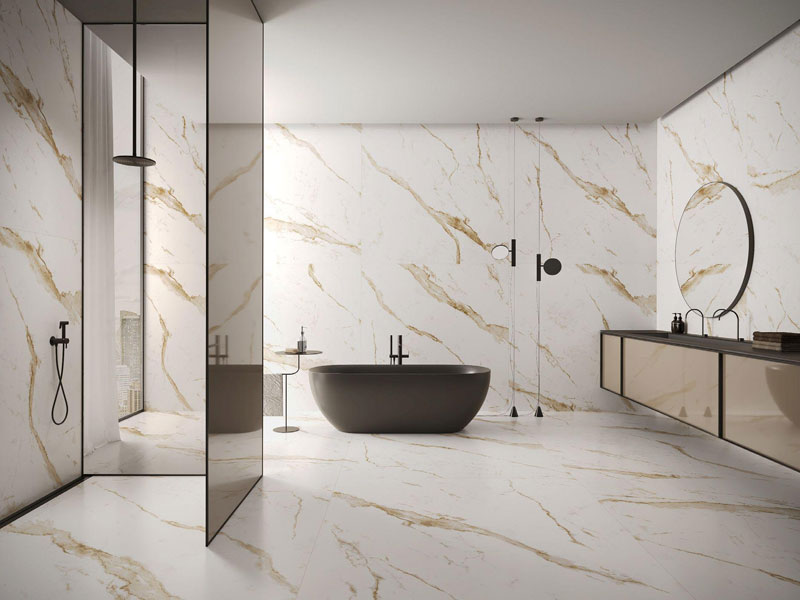
Neutral wall tiles keep compact toilets calm
Should Wall and Floor Tiles Match?
Not necessarily.
Useful combinations include:
- Neutral floor with textured wall
- Terrazzo floor with plain ceramic wall
- Stone-look floor with tonal subway tile
- Dark feature wall with light porcelain floor
For broader wet-area coordination, the article on tiles design for washroom provides additional guidance on linking wall, floor and functional zones across a larger bathroom environment.
Can the Same Tile Continue From Floor to Wall?
Yes, provided the product is technically suitable.
Using one material across both surfaces can create:
- Strong continuity
- Fewer material transitions
- A more architectural appearance
- A calmer compact space
Different finishes or orientations can still create subtle variation.
Which Toilet Wall Tile Style Best Fits the Space?
| Design Goal | Recommended Wall Tile | Best Location | Main Effect |
| Create more height | Vertical subway tile | Behind toilet or vanity | Draws attention upward |
| Keep the room calm | Large neutral wall tile | Main walls | Reduces visual interruption |
| Add handmade character | Age Subway | Vanity wall | Adds subtle irregularity |
| Create tonal colour | Charm Subway | Feature wall | Adds soft visual depth |
| Introduce natural texture | Tumbled stone | Dry feature wall | Brings authentic variation |
| Create artisanal movement | Zellige-inspired tile | Powder room feature | Adds surface variation |
| Simplify cleaning | Smooth glazed ceramic | Splash-prone areas | Easier wipe-down |
What Technical Details Should Be Checked Before Installation?
A successful wall layout should begin with fixtures rather than tile joints.
Why Should Tile Set-Out Start With Fixtures?
Check the positions of:
- Toilet centreline
- Flush plate
- Vanity
- Basin
- Mirror
- Tapware
- Window
- Niches
- Corners
The goal is to avoid narrow tile cuts and misaligned grout lines around visually important fixtures.
Why Do Tile Thickness and Edge Details Matter?
Exposed wall edges require careful finishing.
Consider:
- Tile trims
- Mitred corners
- Niche returns
- Wall junctions
- Different tile thicknesses
Premium-looking surfaces depend on these small details as much as the tile itself.
What Should Be Checked Before Ordering Toilet Wall Tiles?
Use this checklist before confirming quantities:
- Measure all wall surfaces.
- Select the focal wall.
- Decide between full-height and partial tiling.
- Confirm wall suitability.
- Review tile finish.
- Check undertones.
- Choose orientation.
- Select grout colour.
- Review toilet and vanity alignment.
- Confirm flush plate position.
- Decide edge treatment.
- Review variation.
- Add wastage.
- Check tile samples under actual lighting.
Working with a specialist designer tiles company can also make it easier to compare material, finish, scale and application before the final specification is confirmed.
Which Showtile Collections Suit Toilet Wall Projects?
Showtile’s tile collection includes ceramic wall tiles, natural stone, handcrafted-look surfaces and decorative formats that can support both contemporary toilets and more expressive powder rooms.
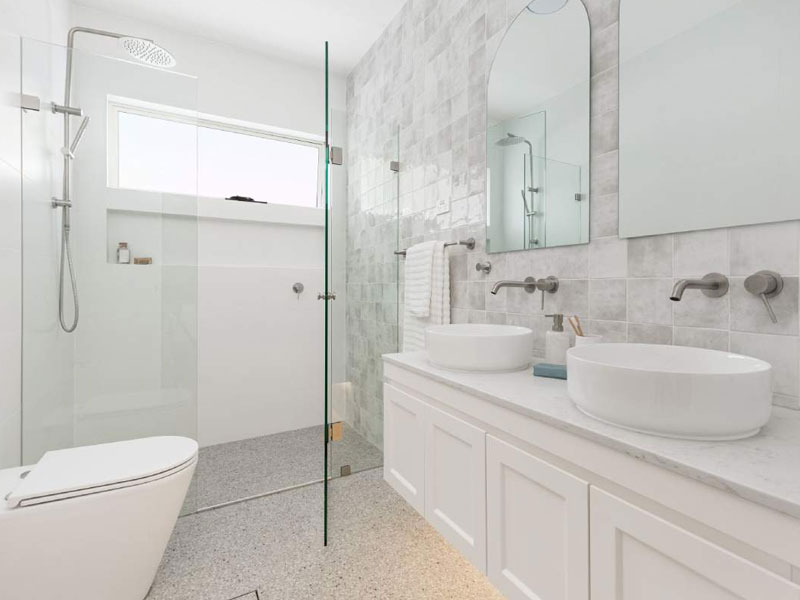
Textured wall tiles add subtle character to compact toilets.
Useful directions include:
- Age Subway for handcrafted ceramic texture
- Charm Subway for soft tonal variation
- Murcia Subway for compact vanity walls
- Zellige Subway for richer artisanal movement
- Subway Tumbled Natural Stone for natural character
- Larger neutral porcelain surfaces for calm wall planes
The best product should match the visual role of the wall rather than simply provide the strongest pattern.
Create a Refined Toilet Wall Scheme With Showtile
A well-designed toilet does not need multiple feature tiles or complicated patterns. Strong results come from selecting the right focal wall, controlling colour and grout, coordinating the floor and wall surfaces, and aligning the tile layout with key fixtures.
By combining practical planning with carefully selected materials, homeowners, designers and builders can create compact WCs and powder rooms that feel intentional, refined and easy to maintain. Explore Showtile to compare premium wall tiles, natural stone and decorative surfaces for residential and commercial projects.
Contact Showtile
📍 Showroom: 65 Canterbury Road, Bankstown NSW 2200, Australia
📞 Phone: +61 2 9709 5836
✉️ Email: sales@showtile.com.au
🌐 Website: https://showtile.com.au/



