Architectural Applications of Terrazzo Tiles in Premium Builds
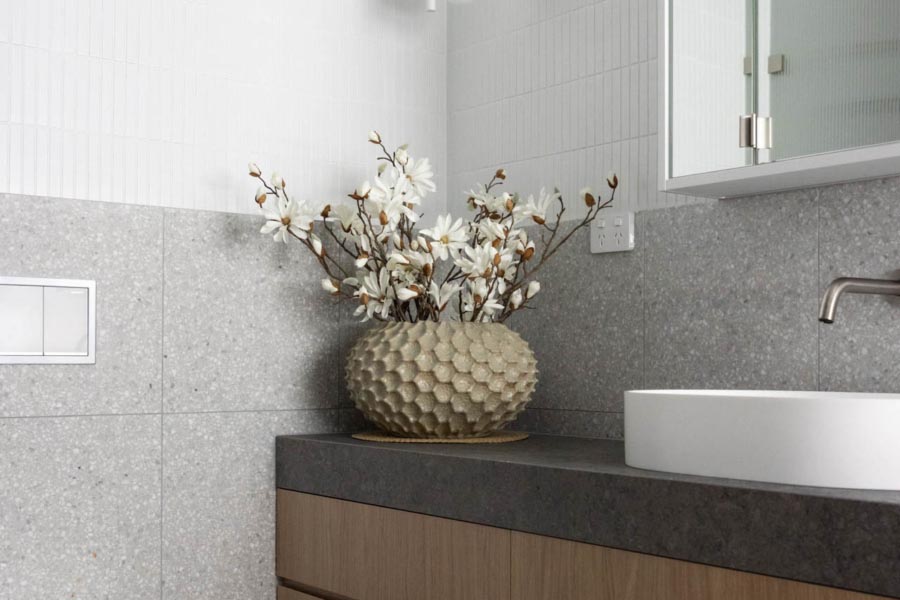
Terrazzo tiles have re-emerged as a defining material in contemporary architecture. Their appeal is not driven by nostalgia, but by their ability to balance movement with control. Within premium builds, terrazzo tiles offer a refined surface that introduces tonal variation without disrupting spatial clarity. At scale, terrazzo tiles behave differently from more uniform finishes. They carry visual interest through aggregate distribution, yet maintain cohesion through consistent base tones. This balance allows them to operate across large surfaces without overwhelming the architecture. At Showtile, terrazzo tiles are curated for this precise quality. Each surface is selected for how it contributes to continuity, proportion, and long-term material relevance.
Terrazzo tiles as a spatial anchor
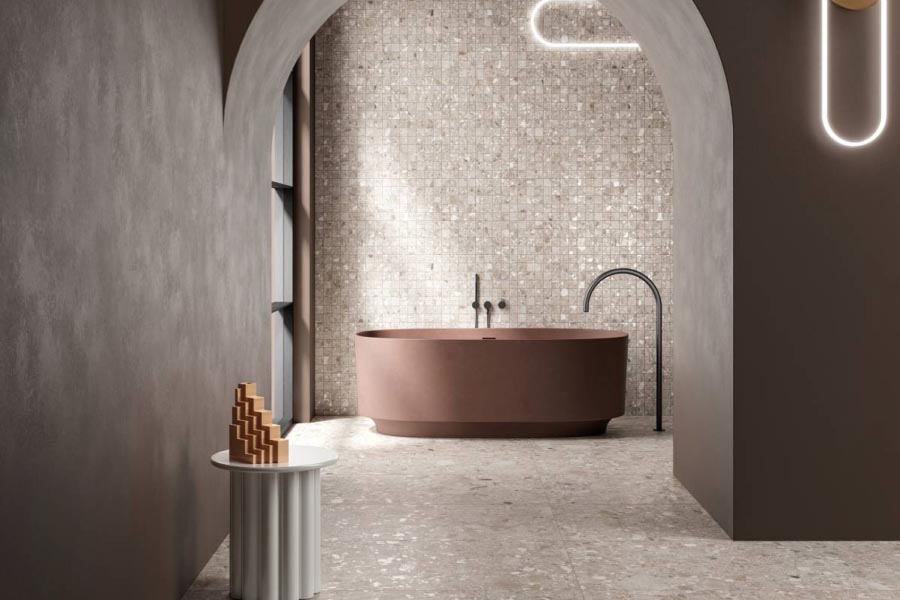
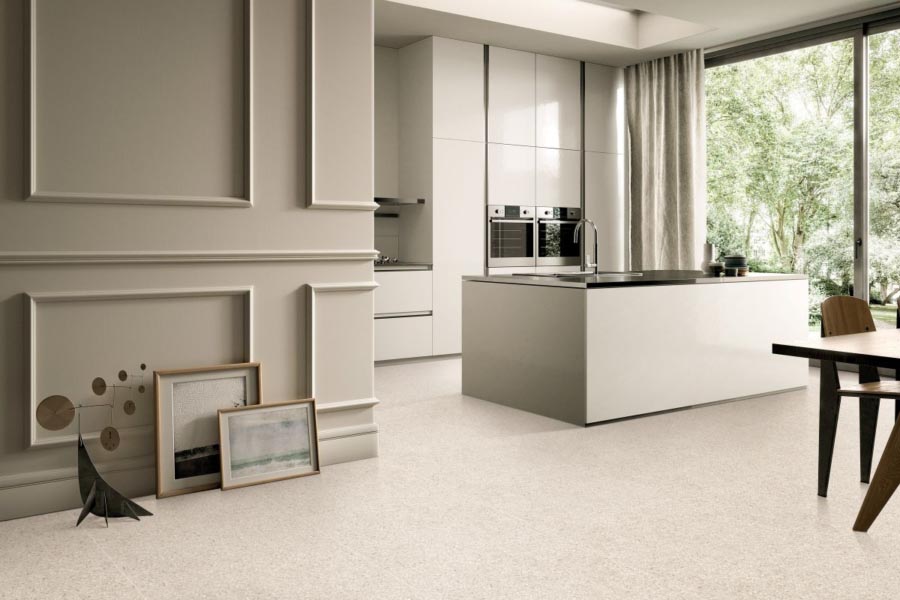
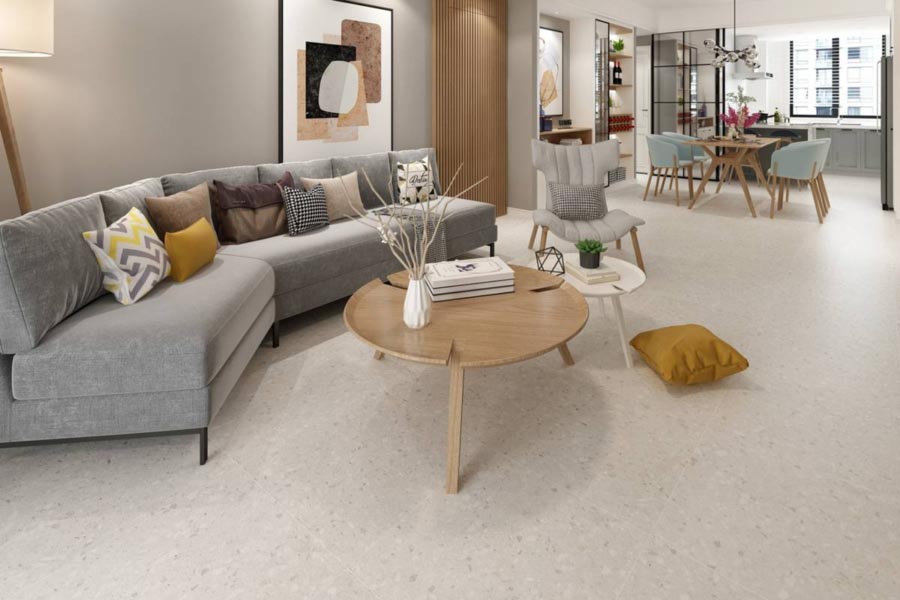
Terrazzo tiles establish a grounded base while introducing subtle movement. In open plan interiors, they are often used as a unifying surface that supports circulation and spatial flow. The aggregate pattern creates depth, but when restrained in tone, it allows furniture and joinery to remain the focal point.
In premium builds, terrazzo tiles are rarely treated as feature finishes. Instead, they function as a quiet anchor. Floors, walls, and even joinery surfaces can align through the same material, creating a continuous visual language. When used across multiple planes, terrazzo tiles reinforce architectural intent. They connect zones without relying on contrast or segmentation.
Material composition and tonal control
Terrazzo tiles derive their character from their composition. Natural stone chips are embedded within a cement or resin base, creating a surface that carries variation within a controlled framework.
The scale of aggregate, the spacing between fragments, and the tone of the base all influence how the tile reads within a space. In refined interiors, restraint is key. Smaller aggregates with balanced distribution create a more subtle surface. Larger fragments can be used selectively, but only when the surrounding palette remains controlled.
Colour selection plays an equally important role. Neutral bases allow the aggregate to introduce variation without dominating the composition. Darker bases can create depth, particularly in spaces where a more grounded tone is required. The result is a material that feels layered without appearing busy.
Surface finish and light interaction
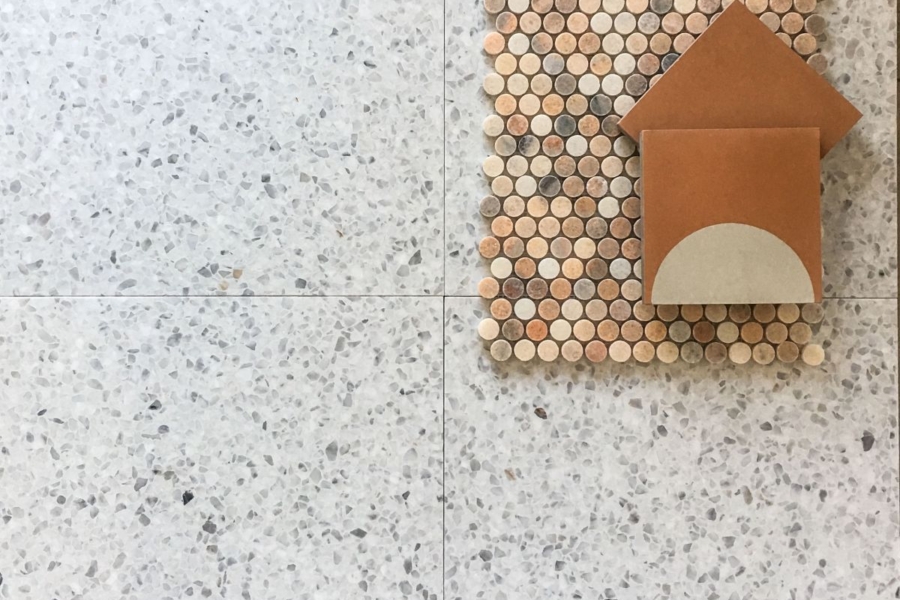
Terrazzo tiles respond to light through both finish and composition. Matt and honed finishes soften reflection, allowing the surface to read as calm and consistent. These finishes are often specified in living areas and bedrooms, where the focus is on comfort and visual clarity. Polished finishes introduce a higher level of reflectivity. In controlled applications, such as powder rooms or feature surfaces, this can enhance the perception of depth.
Light moves across the surface, highlighting the aggregate and creating subtle variation throughout the day. The interaction between finish and light should always align with the intended atmosphere of the space. A softer finish supports enclosure and calm. A more reflective surface introduces energy and contrast.
Applications across premium residential spaces
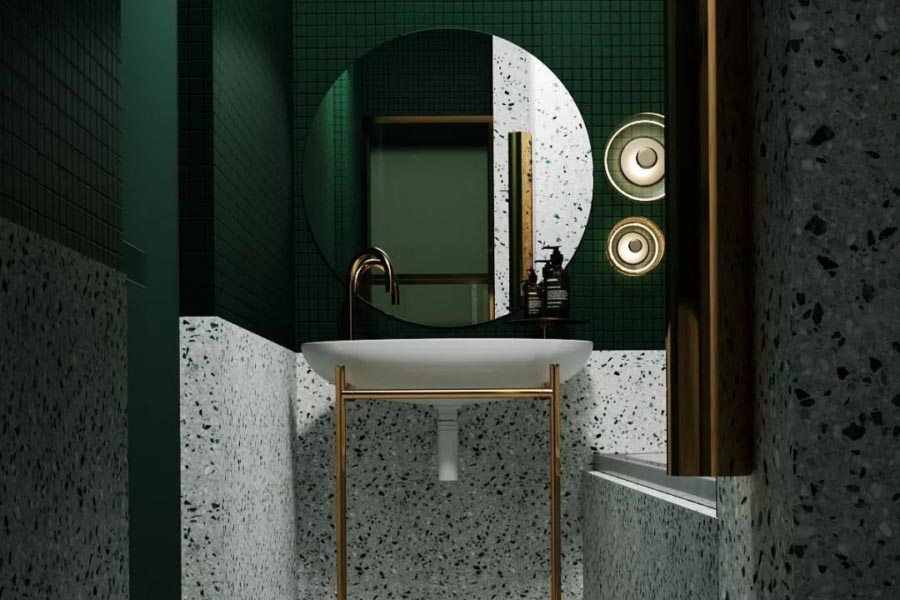
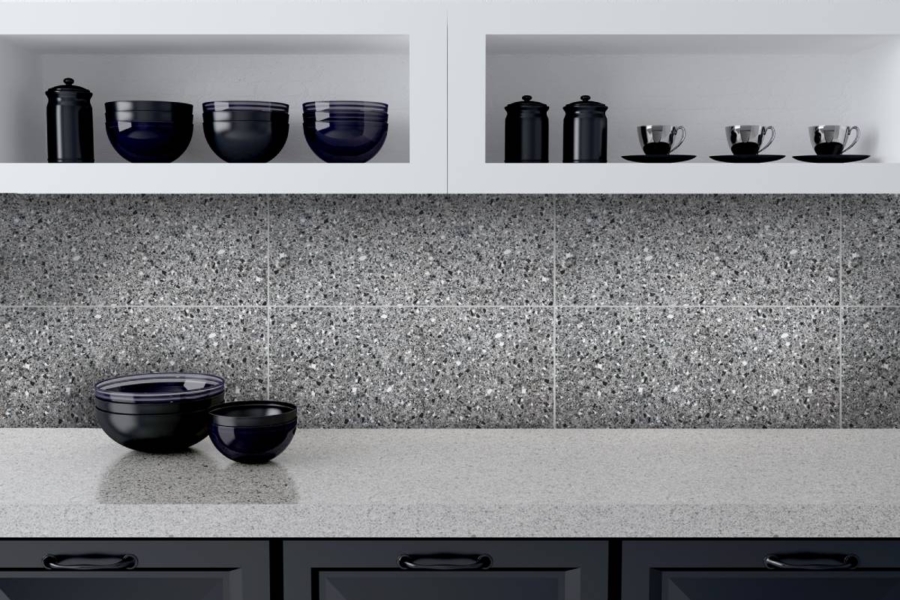
Terrazzo tiles adapt across a range of interior applications when used with intention. In bathrooms, terrazzo tiles provide a cohesive surface that integrates floors and walls. When applied across multiple planes, they create enclosure and continuity. This approach works particularly well in en-suites, where a consistent material palette reinforces a sense of retreat. In kitchens, terrazzo tiles can extend beyond flooring. Splashbacks and benchtop surfaces can align through the same material, creating a unified composition that supports both function and visual clarity.
Fireplace surrounds offer another opportunity for application. Terrazzo tiles can frame the fireplace as an architectural element, using tonal variation to introduce depth without relying on contrasting materials. Across these spaces, the key is restraint. Terrazzo tiles should be used to support the architecture, not define it. For a cohesive material approach across surfaces, explore our curated range of floor tiles to align finishes and tonal balance throughout the project.
Balancing terrazzo with other materials
Terrazzo tiles perform best when integrated within a broader material palette. Their inherent variation pairs well with more uniform surfaces. Stone look porcelain tiles, timber finishes, and matte painted walls provide contrast without competing for attention. The goal is balance. Terrazzo introduces movement. Other materials provide stillness. When combined carefully, this creates layered materiality that feels considered and resolved. Each surface contributes to the overall composition without overpowering it.
Scale also influences this balance. Larger terrazzo tiles reduce visual interruption, allowing the material to read as a continuous plane. Smaller formats introduce more rhythm, which may suit transitional spaces or areas requiring finer detail.
Detailing terrazzo tiles with restraint
The success of terrazzo tiles often depends on detailing. Grout colour, tile format, and edge alignment all influence how the surface is read. A closely matched grout tone helps the material feel continuous, allowing the aggregate to carry visual movement without interruption. Strong contrast in the joints can make the surface feel busy, especially across larger floor areas. In premium builds, terrazzo tiles are most effective when their layout responds to architectural lines.
Aligning joints with thresholds, cabinetry, and wall junctions creates a sense of order. This is particularly important in open plan spaces, where the floor must support circulation without drawing unnecessary focus. Edge conditions should also be considered carefully. Around fireplaces, steps, or wet area transitions, clean junctions preserve the material’s refined character. Terrazzo performs best when the detailing feels quiet, precise, and integrated.
Why designers specify terrazzo tiles in premium builds
Terrazzo tiles offer a rare combination of visual depth and material control. Designers specify them for their ability to introduce variation within a disciplined framework. They provide texture without relying on applied pattern, allowing spaces to feel layered while maintaining clarity. At Showtile, our terrazzo tile collection is selected for tonal consistency and aggregate balance. Each product is curated to ensure it integrates seamlessly within refined interiors. We provide architectural samples to support specification and material coordination. This ensures terrazzo tiles align with surrounding finishes and perform as intended across different lighting conditions.
The focus remains on materials that support architecture over time. Terrazzo tiles that contribute to spaces that feel composed, grounded, and enduring. To explore our collection or request architectural samples, contact the Showtile team at sales@showtile.com.au or call (02) 9709 5836.