


Softec Tiles Sydney: A Guide to Soft-Touch Porcelain Surfaces
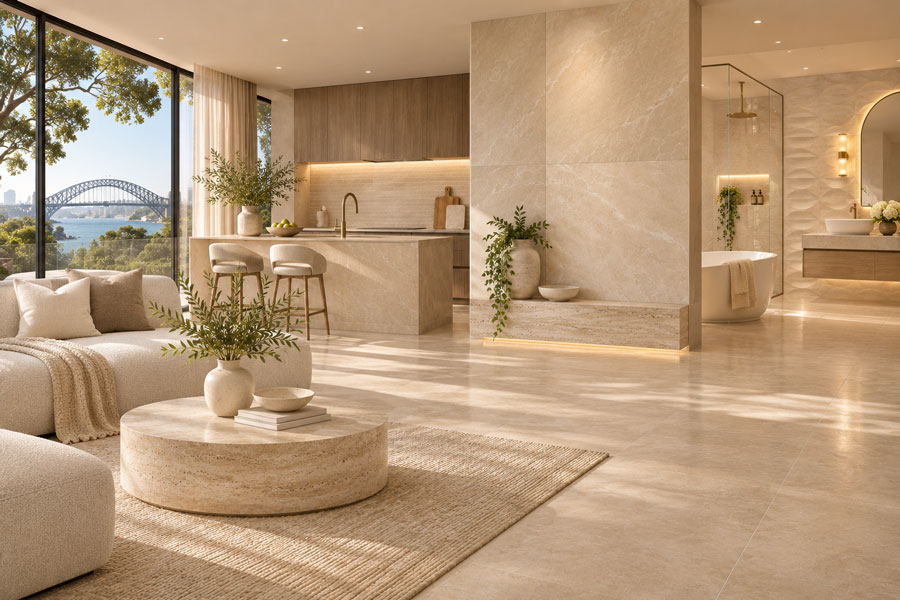
Premium tile selection involves more than choosing colour or pattern. Show Tile offers a refined Softec™ range for Sydney projects where soft matt surface character, stone-inspired design and practical porcelain performance need to work together. For homeowners, architects, designers and builders considering Softec tiles Sydney, the collection provides options for bathrooms, living areas, feature surfaces and selected commercial interiors.
What Are Softec™ Tiles for Sydney Projects?
Softec™ is a porcelain tile surface technology rather than a separate raw material. The technology brings several surface characteristics together within selected porcelain collections, allowing designers to achieve a refined stone-inspired appearance without treating performance and tactile quality as separate decisions.
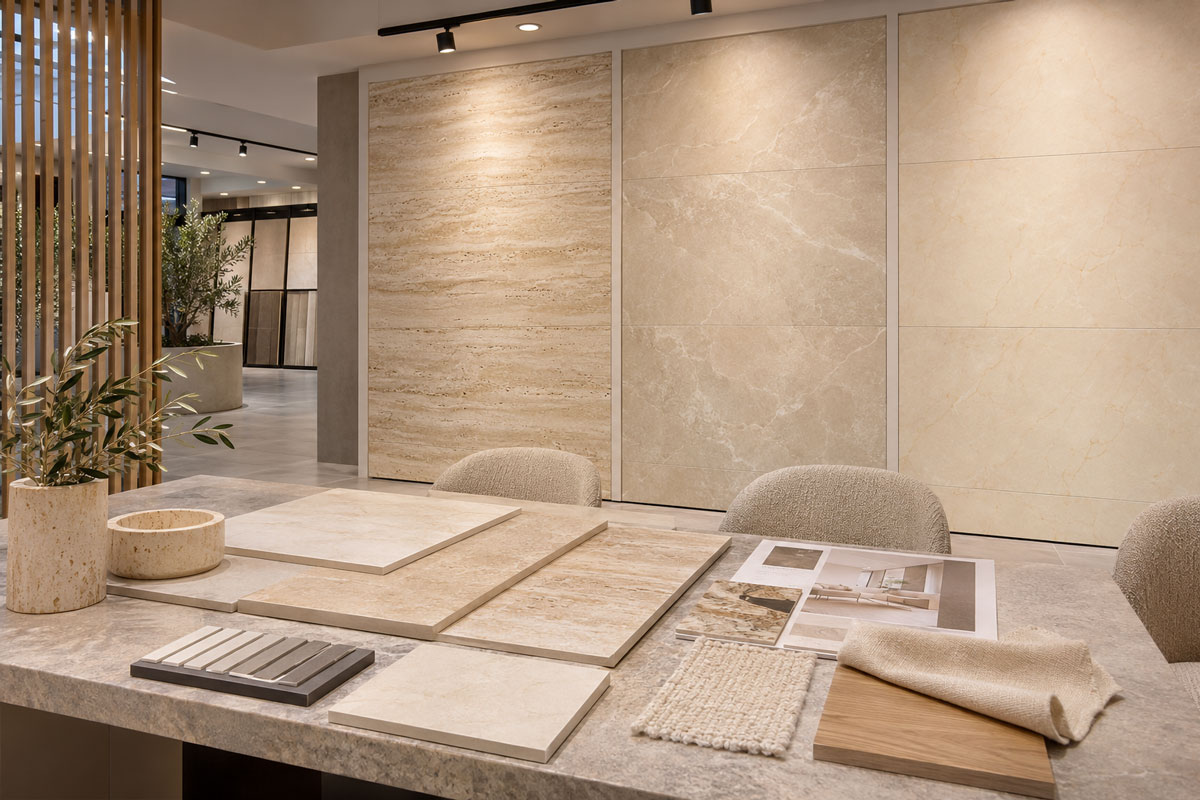
Softec™ surfaces bring refined stone character to Sydney interiors
What Makes the Softec™ Surface Different?
Show Tile identifies four core characteristics:
- Soft matt tactile feel
- P3 slip resistance when wet
- Easy-clean performance
- 3D surface texture and visual depth
The combination gives Softec™ a different surface character from conventional matt porcelain. Softec™ is designed to retain the visual and tactile qualities associated with natural stone while using the consistency and versatility of porcelain.
Are Softec™ Tiles Porcelain?
Yes. The current Travertino, Bottocino and Crema Marfil products listed by Show Tile use porcelain tile bodies.
That distinction matters when planning installation, maintenance and material coordination. A stone-inspired design does not make the tile natural stone; the porcelain body remains the relevant material specification.
Why Can Softec™ Work for Sydney Residential and Commercial Interiors?
Softec™ is suited to projects that need stone-inspired aesthetics, a refined matt surface and practical performance within one coordinated porcelain specification. Show Tile positions the technology for both residential and commercial applications.
How Can Softec™ Support Residential Interiors?
In premium residential projects, Softec™ can form part of a coordinated material palette across:
- Bathrooms and ensuites
- Living spaces
- Feature walls
- Entry areas
- Other internal wall and floor zones
The restrained stone character works particularly well when tile needs to sit beside timber joinery, metal fixtures, benchtops and neutral architectural finishes without becoming overly decorative.
Where Can Softec™ Work Commercially?
Show Tile identifies hospitality, retail and contemporary commercial interiors among relevant Softec™ applications.
For architects and designers, the advantage is the ability to specify a consistent porcelain surface while still achieving tactile depth and stone-inspired visual movement.
Where Can Softec™ Tiles Be Used?
Current Softec™ products are listed for wall and floor applications, while individual project conditions should determine the final specification.
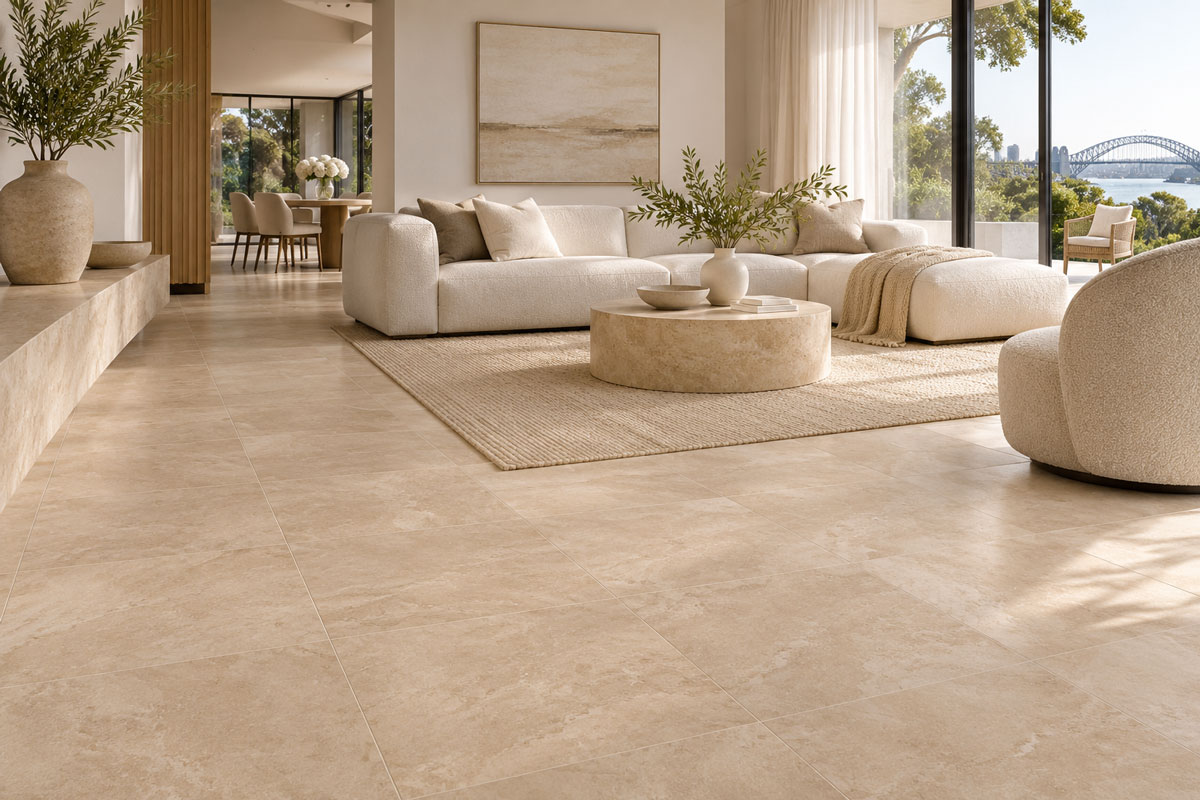
Travertino Softec™ creates a calm, architectural floor finish
Are Softec™ Tiles Suitable for Bathrooms?
Show Tile states that Softec™ provides P3 slip resistance when wet and identifies bathrooms and wet areas among suitable applications.
A bathroom specification should still consider the complete assembly, including:
- Exact floor or wall location
- Falls and drainage
- Grout selection
- Waterproofing
- Installation system
- Project-specific slip requirements
A slip classification should therefore be treated as technical information rather than universal approval for every wet-area location.
Can Softec™ Be Used on Both Walls and Floors?
Current product information for Travertino, Bottocino and Crema Marfil lists wall and floor applications.
This creates opportunities to coordinate vertical and horizontal surfaces while adjusting format, pattern direction or texture to suit each zone.
Which Softec™ Collections Can Sydney Projects Consider?
The Softec™ surface collection currently highlights Travertino, Bottocino and Crema Marfil. Each collection has a different stone reference and format structure, so selection should start with project intent rather than choosing solely by colour.
When Does Travertino Softec™ Work Well?
Travertino Softec™ interprets travertine through porcelain.
Current options include:
- White and Beige
- Vein and Cross visual directions
- 600 × 600 mm Softec™ format
- Wall and floor application
The Vein version produces a more linear, directional surface, while Cross creates a less directional stone movement. This makes the collection useful when the tile pattern needs to reinforce the geometry of an architectural scheme.
When Does Bottocino Softec™ Work Well?
Bottocino Softec™ is a warm stone-look porcelain collection available in larger field tiles and coordinated strip formats.
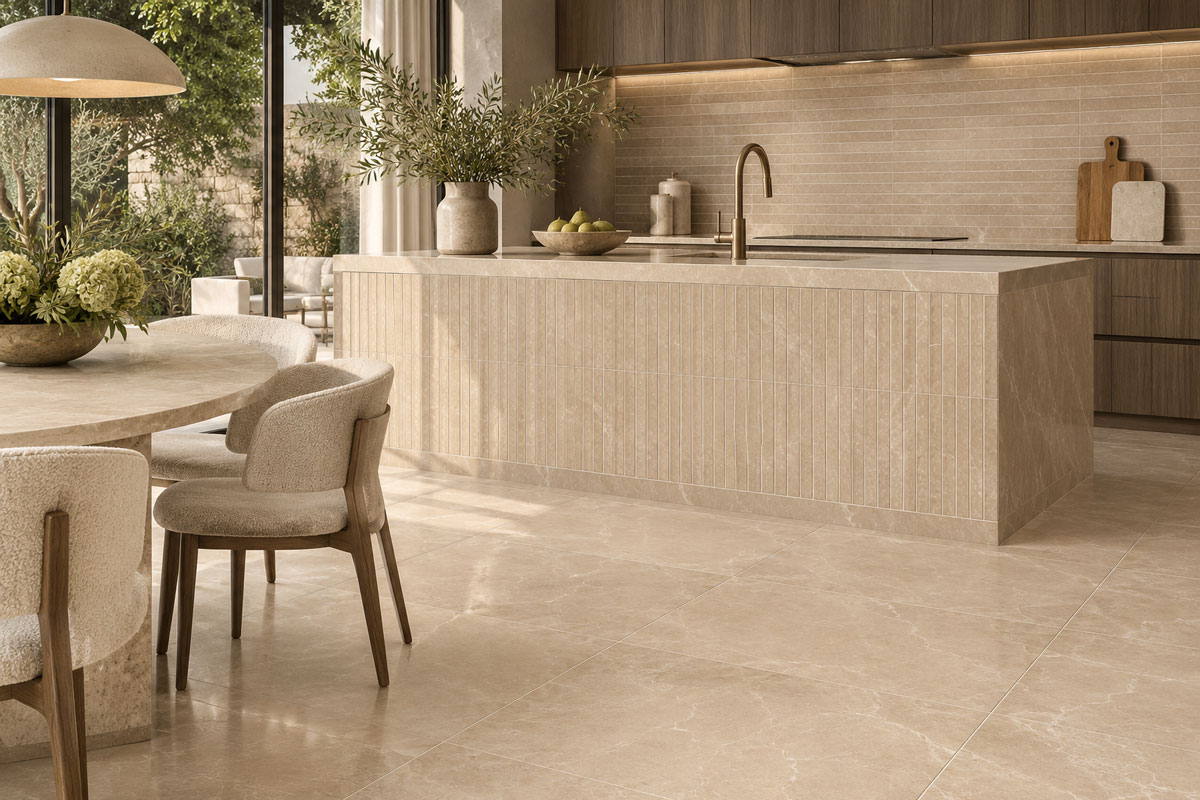
Bottocino Softec™ coordinates field tiles with detailed strip formats
Show Tile currently lists:
- 600 × 600 mm
- 600 × 1200 mm
- 23 × 148 mm chips on a 300 × 300 mm sheet
- 28 × 600 mm chips on a 300 × 600 mm sheet
- 9 mm thickness
The combination allows designers to shift scale within the same material language—for example, using field tiles across broad planes and smaller formats for selected architectural details.
When Does Crema Marfil Softec™ Work Well?
Crema Marfil Softec™ provides a softer creamy stone direction in Beige and White.
The field formats currently include 600 × 600 mm and 600 × 1200 mm, while a separately listed 3D Concave 600 × 1200 mm option introduces sculpted relief.
For projects considering stronger dimensional detail, the guide to Crema Marfil Softec tiles explains why the field surface and 3D Concave option should be specified as distinct finishes rather than treated as interchangeable products.
How Do the Main Softec™ Collections Compare?
| Collection | Surface Direction | Main Format Direction | Useful Design Approach |
| Travertino | Travertine-inspired Vein or Cross | 600 × 600 mm | Architectural, directional stone character |
| Bottocino | Warm beige stone movement | 600 × 600, 600 × 1200 + strips | Coordinated field and detail surfaces |
| Crema Marfil | Creamy stone-inspired finish | 600 × 600, 600 × 1200 + 3D option | Refined field surfaces and feature walls |
The right choice depends on the desired pattern direction, room scale, adjoining finishes and how prominently the tile should read within the overall material scheme.
How Should Sydney Homeowners Choose a Softec™ Surface?
Begin with the intended room and application, then compare colour, pattern direction, format and surface texture.
Which Tile Format Suits the Space?
In tile specification, the field tile usually establishes the main surface grid. Larger rectangular formats can reduce the visual frequency of grout joints, while square formats create a different module and setting-out rhythm.
Smaller strips introduce more grout joints and should therefore be assessed as a detail rather than simply a smaller version of the field tile.
When Should 3D Texture Be Introduced?
A dimensional surface can work well on:
- Vanity walls
- Feature panels
- Selected bathroom walls
- Hospitality focal points
- Other controlled architectural zones
3D texture should be planned with lighting, edges, niches, fixtures and cabinetry. Directional lighting can emphasise shadows and make surface relief more prominent.
How Should Architects and Designers Specify Softec™?
A complete specification should identify the exact product rather than relying on a collection name alone.
A tile schedule should record:
- Collection
- Colour
- Softec™ finish
- Exact format
- Wall or floor location
- Pattern orientation where applicable
- Grout
- Relevant technical requirements
- Quantity and ordering details
The Softec tile specification guide provides a useful workflow for carrying the approved material from design selection through documentation and procurement.
Why Should Physical Samples Be Reviewed?
Digital photography cannot fully represent:
- Soft matt tactility
- True colour temperature
- Stone movement
- Surface relief
- Interaction with project lighting
For professional projects, the Softec sample box for architects and designers explains how physical samples can be compared with grout, joinery, metals and other materials before an approved finish is entered into the schedule.
What Should Builders Consider Before Installation?
Setting out, pattern direction and junction detailing should be resolved before installation begins.
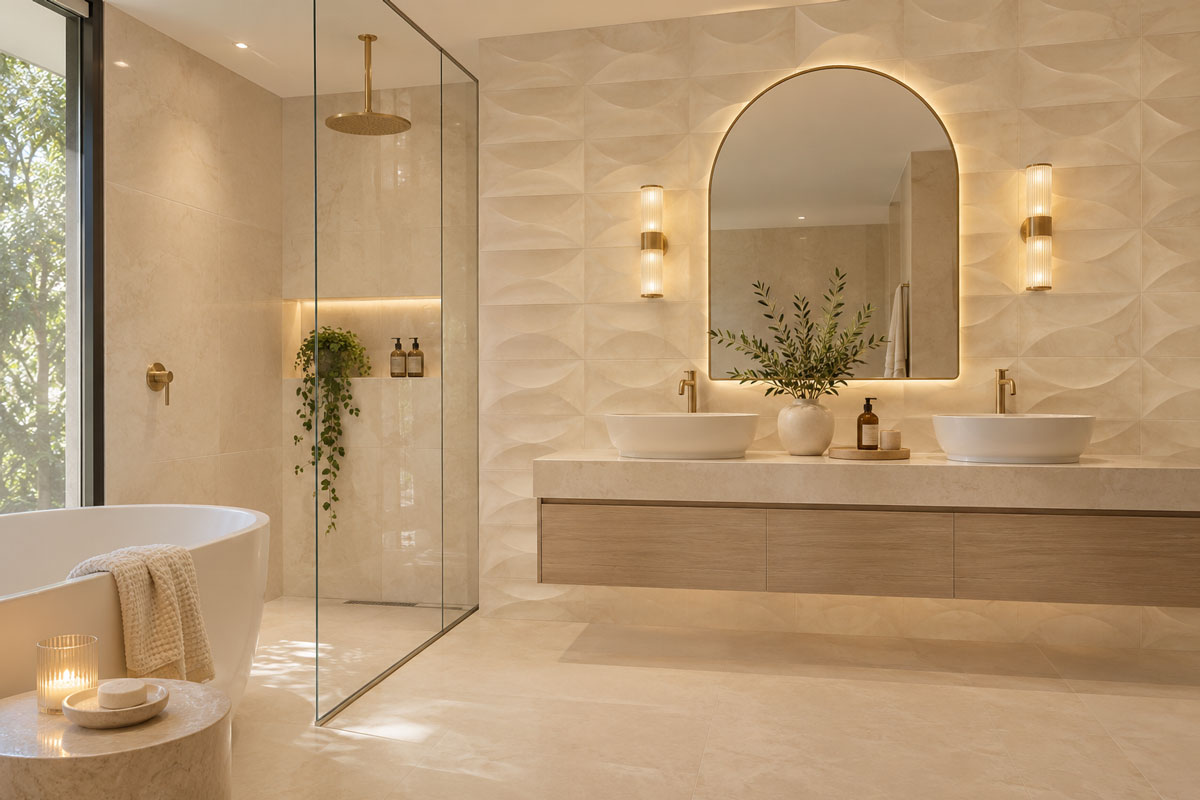
Crema Marfil Softec™ adds soft stone tones and dimensional texture
For directional products such as Travertino Vein, confirm orientation before laying. For larger field formats, review cut positions, grout joints and alignment with walls, cabinetry and openings.
Dimensional surfaces require additional attention around:
- Niches
- Edge trims
- Mirrors
- Tapware
- Cabinetry
- Surface transitions
Resolving these details early reduces the chance of awkward cuts interrupting a premium tile composition.
Are Softec™ Tiles Easy to Maintain?
Show Tile describes Softec™ as an easy-clean surface, but routine porcelain maintenance is still required.
Everyday care should focus on removing loose grit, using suitable cleaning products and avoiding unnecessary abrasive treatment. Stone-inspired porcelain should also not automatically receive the same sealing or maintenance routine as quarried natural stone.
Where Can You See Softec™ Tiles in Sydney?
Show Tile’s showroom is located at 65 Canterbury Rd, Bankstown NSW 2200. Current published opening hours are Monday to Friday from 8:00 am to 5:00 pm and Saturday from 9:00 am to 3:00 pm.
Viewing Softec™ in person is particularly useful for comparing:
- Surface feel
- Warm and cool undertones
- Vein or Cross direction
- Large and small formats
- 3D relief
- Grout options
Architects and designers can also request physical samples before final specification.
Compare Softec™ Surfaces in Sydney Before You Specify
A premium porcelain surface should be reviewed as part of the complete architecture rather than selected from an isolated digital image. Show Tile allows Sydney homeowners, architects, designers and builders to compare Softec™ colours, formats and tactile character before finalising a project.
Visiting the Bankstown showroom or reviewing physical samples can make pattern direction, soft matt feel, grout relationships and dimensional texture easier to assess. Once the preferred surface is selected, document the exact product and confirm the technical requirements before ordering so the installed finish remains aligned with the approved material scheme.
Contact Show Tile
📍 Showroom: 65 Canterbury Road, Bankstown NSW 2200, Australia
📞 Phone: +61 2 9709 5836
✉️ Email: sales@showtile.com.au
🌐 Website: https://showtile.com.au/



