Designer Tiles Company for Premium Architectural Projects
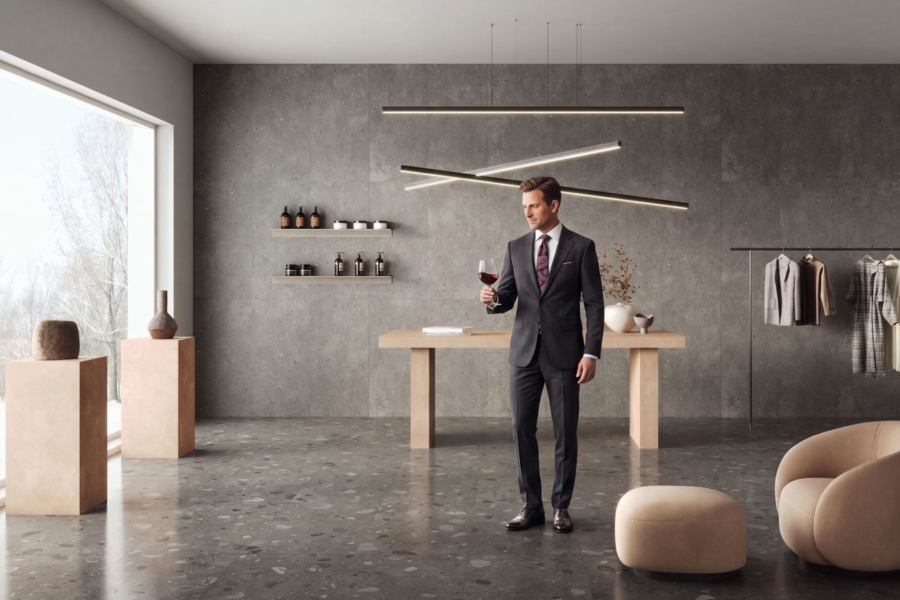
A designer tiles company does more than supply attractive floor and wall coverings. The right supplier helps architects, interior designers, builders and homeowners select surfaces according to architectural intent, technical performance, installation requirements and long-term use.
For premium residential and commercial projects, tile selection affects how light moves through a room, how materials connect and how the finished space feels. Showtile provides curated premium tile collections for Australian projects that require visual refinement, practical performance and a consistent material language.
What Does a Designer Tiles Company Provide?
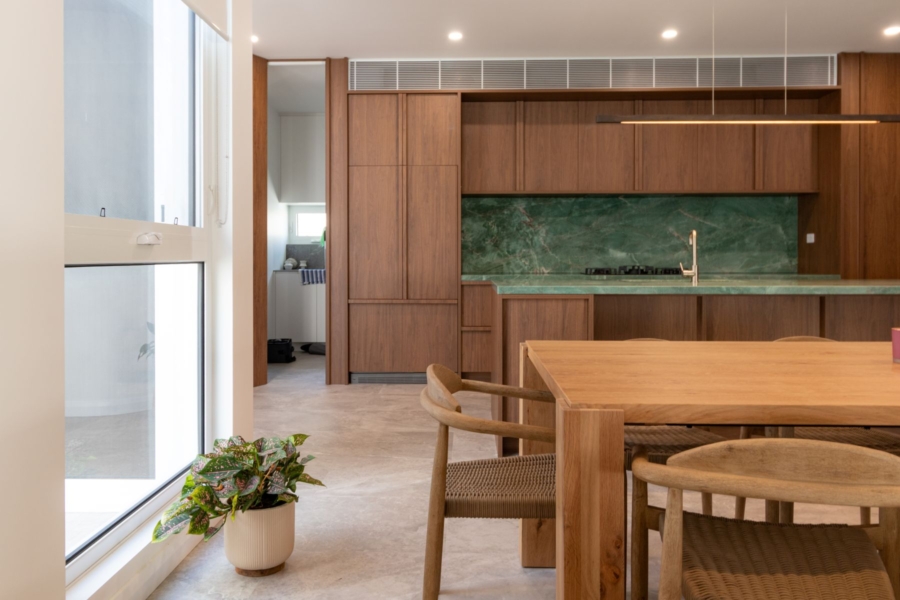
A designer tiles company supplies carefully selected architectural tiles and supports decisions involving colour, texture, size, finish and application. The service connects creative ideas with products that can be specified, installed and maintained successfully.
A standard tile retailer may organise products mainly by colour, size or price. A specialist supplier considers how a surface will interact with joinery, natural stone, timber, lighting, adjoining rooms and outdoor areas.
The difference becomes especially important when a project includes:
- Custom architectural details
- Large tiled areas
- Wet rooms and pool surrounds
- Indoor and outdoor transitions
- Bespoke material palettes
- Commercial performance requirements
- Multiple finishes from one collection
Showtile has supplied builders, developers, architects and designers since 2012 and sources curated products from more than 15 countries. This combination of industry experience and international sourcing allows the company to support projects at different scales.
Architects, designers and builders can begin by exploring the complete Showtile tile collection.
Who Benefits Most From Working With a Designer Tile Supplier?
A specialist tile supplier is most valuable to clients who need to balance aesthetics with construction, maintenance and project delivery. The main audience is not limited to luxury homeowners.
Why do architects and interior designers need specialist tile support?
Architects and interior designers require more than a visually appealing sample. They need to understand how surface texture, edge treatment, thickness, tonal movement and grout placement will affect the finished composition.
Specialist support helps design professionals:
- Translate a concept into an achievable material palette
- Compare matt, polished, honed and textured finishes
- Coordinate tile thickness with adjacent flooring
- Check whether a surface is suitable for walls, floors or wet areas
- Review shade variation across a larger sample
- Find matching mosaics, pavers or coping pieces
- Specify products with appropriate technical documentation
The objective is not to add more decorative elements. The objective is to select surfaces that strengthen the architecture.
What do builders and developers need from a tile company?
Builders and developers focus on buildability, availability and delivery as well as appearance. A well-designed tile that cannot be supplied in the required quantity or installed within the construction programme creates unnecessary risk.
Important considerations include:
- Current stock and lead time
- Batch consistency
- Recommended wastage
- Tile thickness and substrate preparation
- Layout complexity
- Delivery sequencing
- Replacement stock
- Installation requirements
A premium tile supplier should help identify these issues before the tiling stage rather than after materials arrive on site.
When should a homeowner choose designer tiles?
Homeowners benefit from designer tiles when renovating a complete home, building a custom residence or investing in a significant bathroom, kitchen or outdoor upgrade.
The value comes from making fewer, better-coordinated decisions. Instead of selecting each room independently, homeowners can create a connected scheme based on colour temperature, texture, scale and natural light.
What Makes a Tile Suitable for a Premium Project?
A tile is suitable for a premium project when its appearance, technical characteristics and intended application support the design. A high price alone does not make a product appropriate for luxury architecture.
The following qualities should be evaluated together:
| Design factor | Why the factor matters |
| Material | Determines performance, maintenance and visual character |
| Format | Influences scale, grout frequency and cutting |
| Finish | Changes reflection, texture and underfoot grip |
| Variation | Controls movement and natural-looking differences |
| Edge type | Affects joint width and layout precision |
| Thickness | Influences transitions and installation |
| Slip rating | Supports safety in wet and external areas |
| Available pieces | Helps coordinate floors, walls, mosaics and edges |
How does the tile finish affect a room?
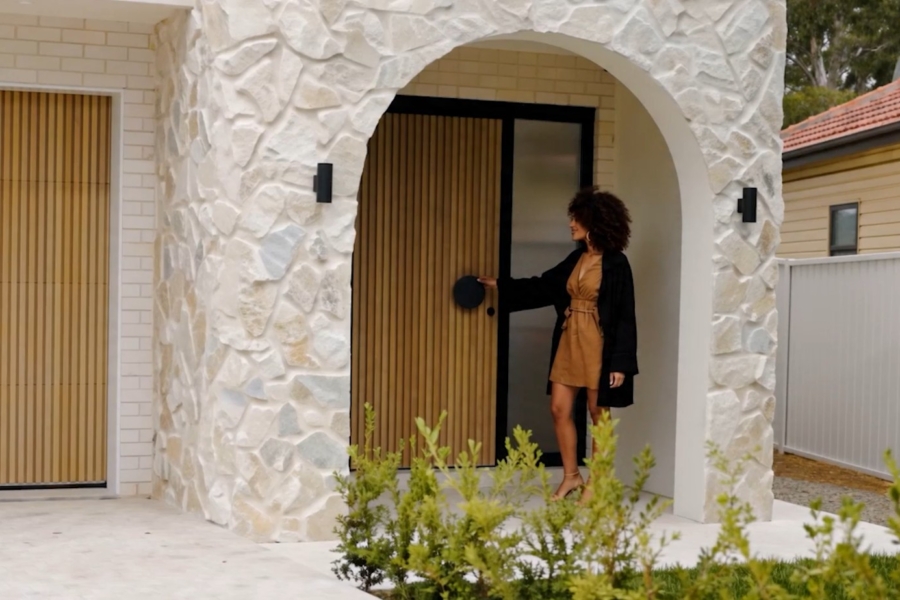
Finish determines how a surface responds to light and touch.
A matt tile finish absorbs more light and often produces a quiet, grounded appearance. Polished surfaces create stronger reflection and can make veining or colour more prominent. Honed finishes offer a softer tactile quality, while textured surfaces introduce shadow and depth.
No finish is automatically better than another. The correct choice depends on the room, lighting, cleaning requirements and intended mood.
Why is tonal variation important?
Tonal variation gives stone-inspired, terrazzo-inspired and handcrafted products visual movement. Variation can make a large floor feel natural, but the same variation may appear busy when paired with highly patterned joinery or feature stone.
Clients should review several pieces rather than judging a collection from one tile. Products with stronger variation should also be dry-laid before installation so the installer can distribute tones and markings across the surface.
How does tile size influence architecture?
Tile size changes the perceived scale of a room.
Large-format tiles reduce the number of grout joints and can create broad, uninterrupted planes. Smaller formats introduce rhythm and are useful for niches, curved walls, feature zones and detailed transitions.
The most suitable format depends on:
- Room dimensions
- Floor falls
- Door and window positions
- Drain locations
- Pattern direction
- Tile weight
- Required cuts
A large tile is not always the right choice for a small or complex wet area. Layout and substrate conditions must be considered before specifying the format.
Which Designer Tile Collections Suit High-End Interiors?
Premium interiors do not require one particular material. The most successful surface depends on the architectural concept and the demands of the room.
Showtile’s range includes porcelain tiles, porcelain slabs, stone-look tiles, terrazzo-look tiles, mosaics, subway tiles, natural stone-inspired surfaces and outdoor products.
When should porcelain tiles be used?
Porcelain tiles are suited to projects that need durability, controlled variation and a wide range of formats.
Porcelain can reinterpret marble, travertine, limestone, concrete and timber while offering more predictable maintenance than many natural surfaces. Designers often use porcelain as a calm foundation across bathrooms, living areas, kitchens and external zones.
The material works particularly well when a project needs:
- Consistent tones across large areas
- Coordinating floor and wall products
- Low-maintenance surfaces
- Indoor and outdoor continuity
- Multiple formats within one collection
Where do porcelain slabs work best?
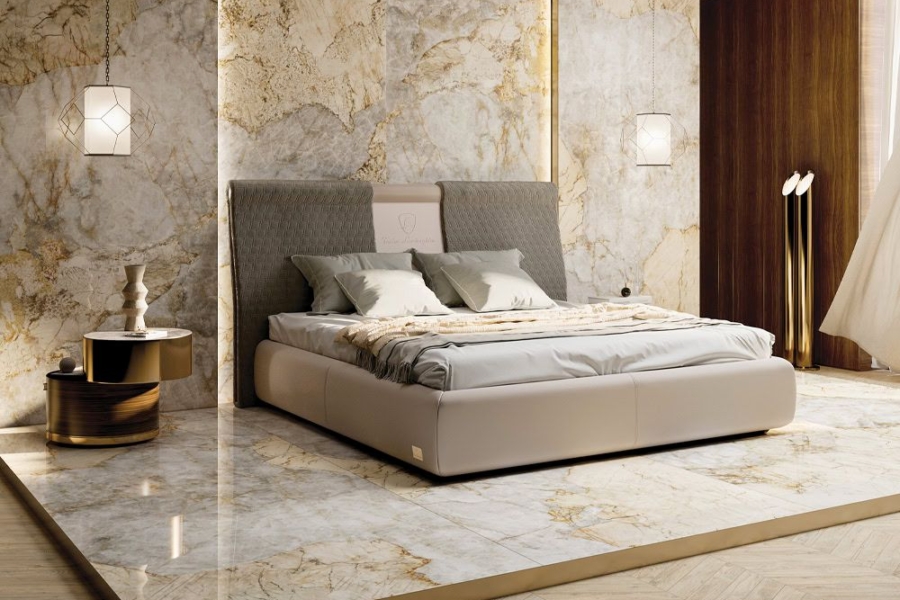
Large-format porcelain slabs create strong visual continuity on shower walls, kitchen surfaces, fireplaces and feature walls.
The expanded scale allows veining and mineral patterns to be read as one architectural surface rather than a collection of small tiles. Porcelain slabs are also non-porous and resistant to common stains, making selected products practical for demanding residential and commercial applications.
Porcelain slabs are especially effective in:
- Luxury bathroom walls
- Kitchen splashbacks
- Fireplace surrounds
- Reception areas
- Feature walls
- Open-plan floors
Large slabs require experienced handling, suitable substrates and careful planning around joints, corners and penetrations.
Are stone-look tiles suitable for luxury homes?
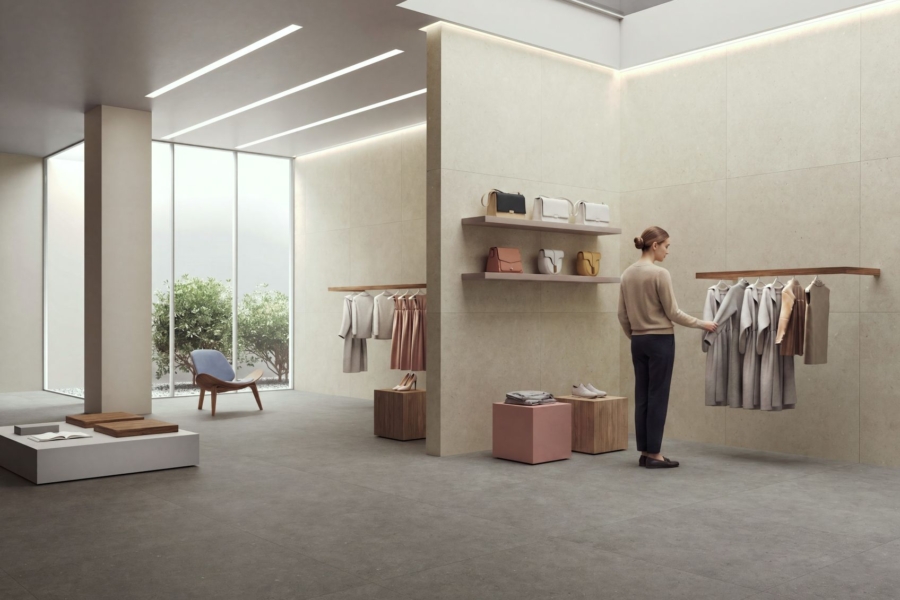
Stone-look tiles provide the warmth and movement associated with limestone, travertine, marble or slate while retaining the technical control of porcelain.
The category is useful where the design requires natural materiality without the sealing, staining or structural considerations associated with some genuine stone products.
The Artisan collection demonstrates how stone-look porcelain can connect internal floors with outdoor areas. The collection includes in-and-out, silk, paver and coping options, with selected surfaces carrying P4 or P5 slip ratings.
The range allows designers to maintain a consistent tone while adapting the finish and thickness to each application.
How can terrazzo-look tiles be used?
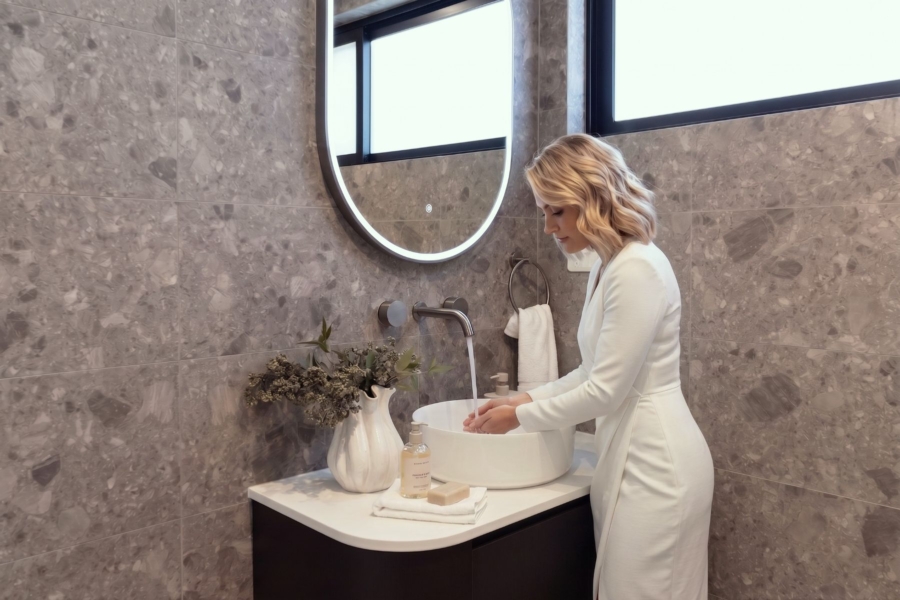
Terrazzo and terrazzo-look tiles introduce pattern through aggregate-like chips rather than strong directional veining.
These surfaces can add energy to bathrooms, hospitality interiors, kitchens and commercial spaces without requiring a separate feature pattern. The size and density of the chip should be chosen according to the scale of the room.