Herringbone Tiles: Directional Pattern, Refined Movement
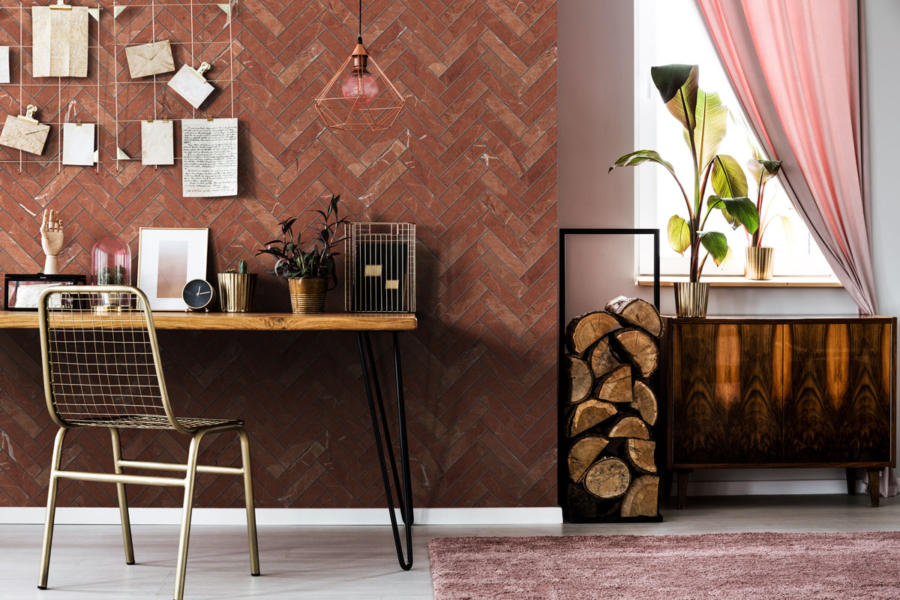
Herringbone tiles bring movement into a space through proportion and rhythm. Their appeal lies in the way each tile shifts direction, creating a surface that feels structured but never static. In refined interiors, herringbone tiles are used to guide the eye, frame architectural lines, and add subtle detail without relying on strong colour or ornament. The herringbone format has a long design history, but its strength in contemporary interiors comes from restraint. When specified in a controlled palette, it creates texture through layout rather than decoration. Chevron tiles offer a sharper, more continuous point, while herringbone tiles create a staggered rhythm that feels softer and more tactile. At Showtile, herringbone and chevron tiles are selected for their ability to bring pattern into architecture with clarity and balance.
Herringbone or chevron
Herringbone and chevron tiles are often grouped, but they create different effects. Herringbone uses rectangular tiles in a broken zigzag, giving the surface a softer, more layered rhythm. Chevron forms a sharper point, creating a cleaner and more directional line. Herringbone suits spaces where movement should feel textured and natural. Chevron suits interiors that need stronger symmetry and architectural precision. Both rely on careful tone, grout, and finish to feel refined rather than decorative.

Outdoor and floor applications
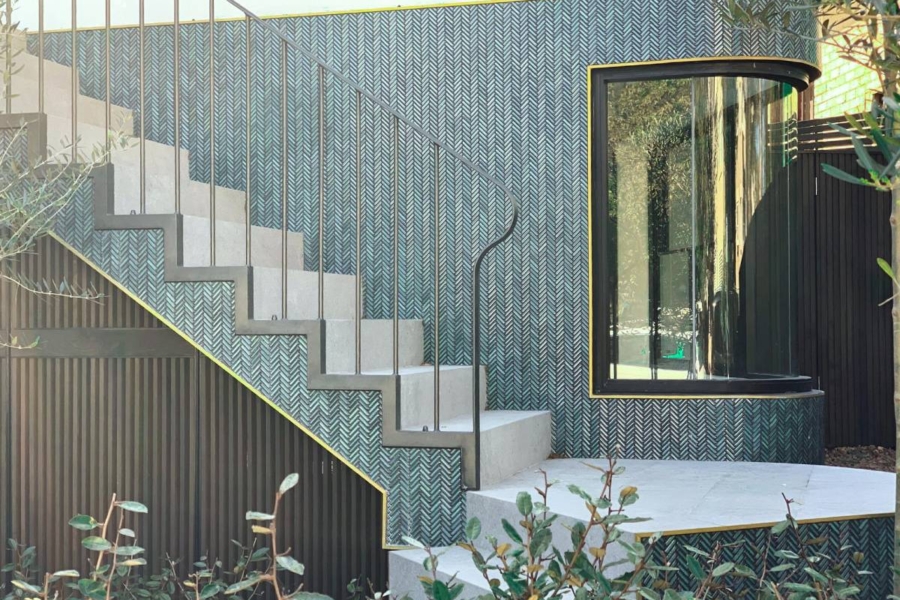
Herringbone and chevron tiles can be effective in covered outdoor areas, courtyards, and external wall applications when the product is suitable for exposure. For outdoor floor applications, slip resistance, durability, and maintenance must guide selection. In external spaces, these layouts can subtly direct pathways, alfresco zones, or feature walls. Herringbone creates a softer sense of movement, while chevron introduces a more deliberate line. The pattern should remain calm and integrated with surrounding materials such as stone, render, concrete, or timber. Indoors, herringbone and chevron floor tiles can define entryways, powder rooms, and kitchen zones. The key is scale. Smaller tiles create more movement. Larger formats produce a quieter rhythm with fewer interruptions.
Pattern as architectural direction
Herringbone and chevron tiles are most effective when the layout responds to the room’s proportions. In kitchens, herringbone kitchen tiles can define a splashback while connecting benchtops, cabinetry, and wall finishes. Chevron kitchen tiles can create a cleaner directional line, especially when the design calls for stronger symmetry or a more formal surface. In bathrooms, herringbone bathroom tiles can elongate shower walls, frame vanity zones, or add rhythm to recessed niches. Chevron bathroom tiles can achieve a sharper, more tailored effect when used behind mirrors, vanities, or within feature walls.
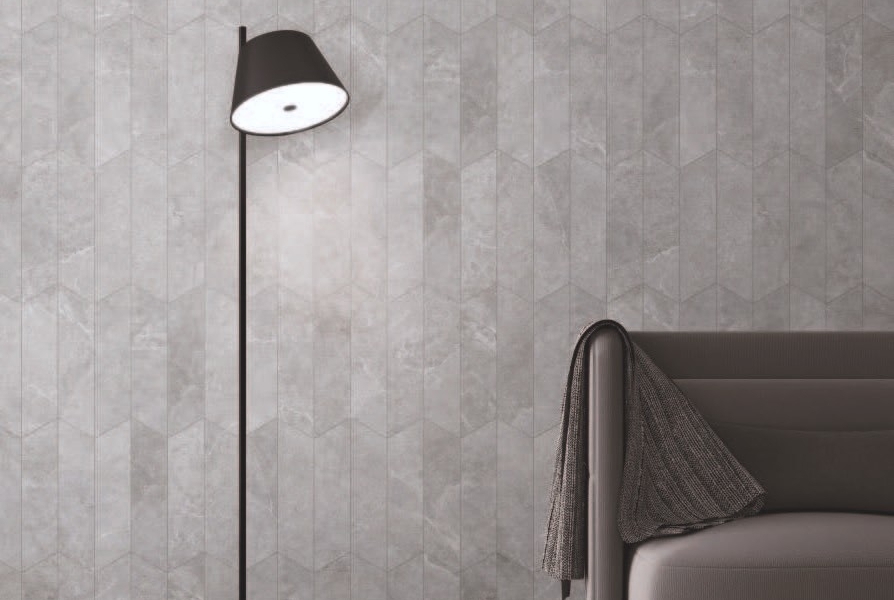
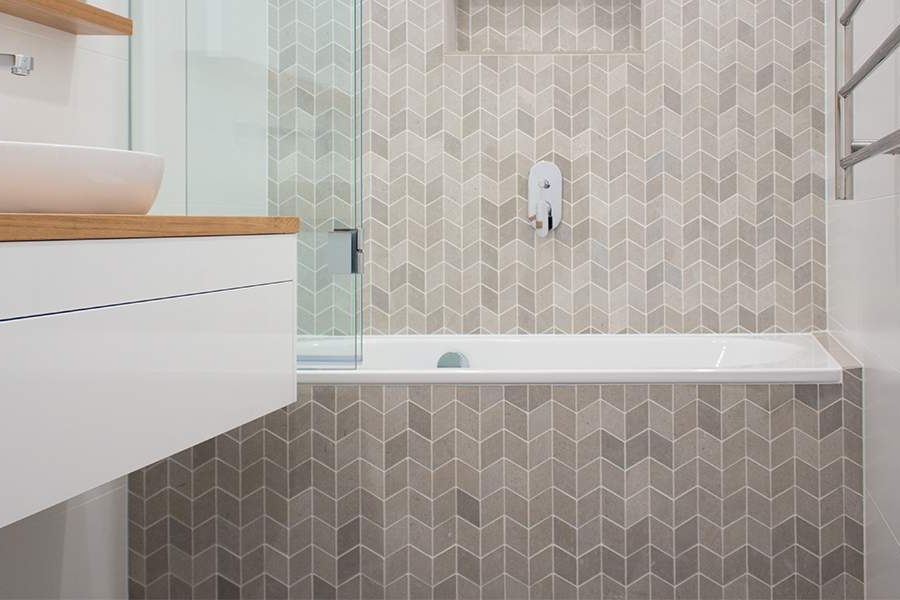
Herringbone and chevron wall tiles are often used where close detail matters. Both formats reward careful alignment, especially around corners, mirrors, joinery, and ledges. The final effect can feel precise or relaxed depending on the grout tone, finish, and tile edge. Floor applications require more restraint. On floors, patterns carry greater visual weight. Soft neutrals, stone-inspired finishes, or timber-look porcelain can help herringbone and chevron floor tiles feel grounded rather than busy.
Material and scale
The character of herringbone and chevron tiles changes significantly with material, scale, and finish. Chevron tiles create a more formal geometry. Their pointed alignment produces a continuous directional line, making them suited to spaces where symmetry and precision are desired. Herringbone feels more layered and textural. Its staggered rhythm creates movement without the same level of sharpness. Both formats should be selected according to architectural intent, not simply visual preference.
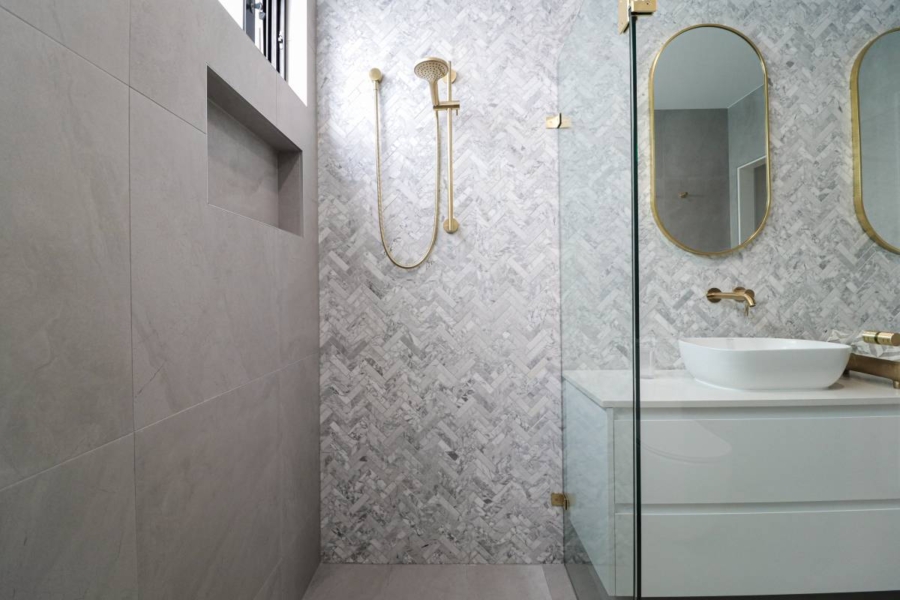
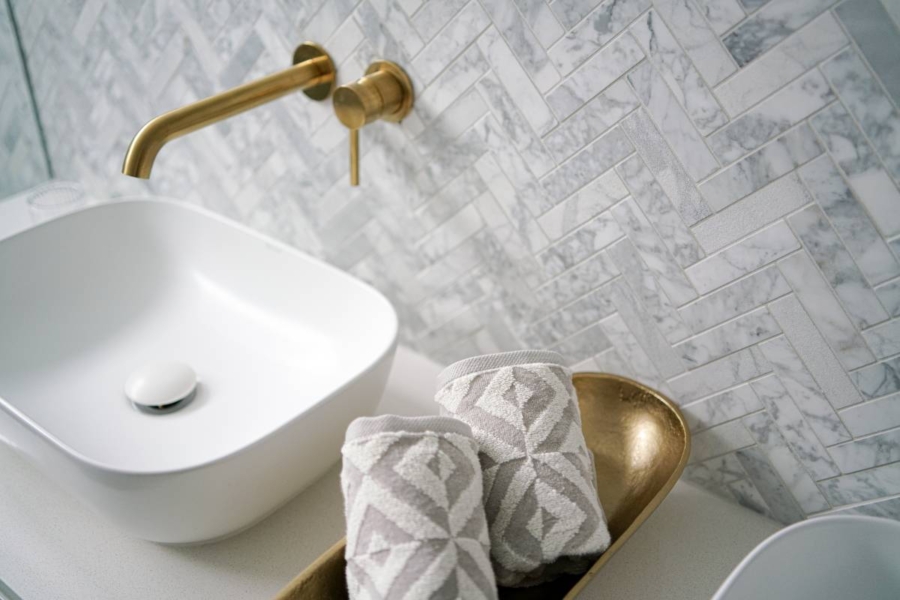
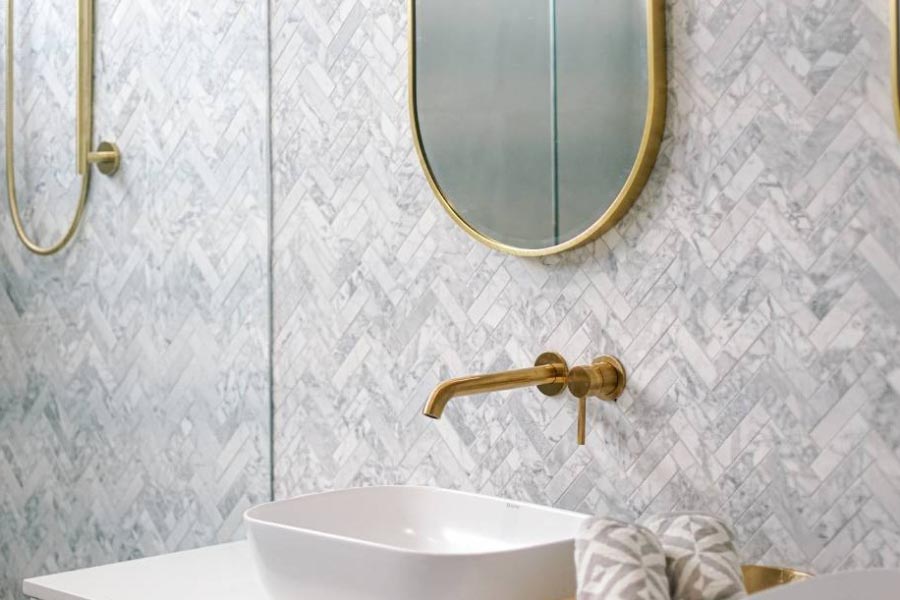
Herringbone Tiles: Finish
Gloss ceramic herringbone or chevron tiles create a sense of light movement across splashbacks and feature walls. Matt porcelain options offer a quieter architectural effect, absorbing light and reducing contrast. Textured finishes add tactility, especially in bathrooms and transitional spaces where surface depth matters.
Stone look herringbone and chevron tiles bring tonal variation to the pattern without sharp graphic contrast. Timber look porcelain can create warmth and familiarity while retaining the durability of tile. Green, black, or deep-glazed tiles can create a more expressive interior when used as a focused surface within a restrained palette. The key is to let the layout carry the movement, while tone and finish remain controlled.
Why designers specify Showtile herringbone and chevron tiles?
Designers choose herringbone and chevron tiles when a space needs movement, detail, and architectural rhythm. They bring refinement through pattern. When used with restraint, they create interiors that feel composed, tactile, and quietly expressive. At Showtile, our herringbone and chevron tile selections are curated for finish quality, tonal balance, and material integrity. We consider how each surface performs under light, how the pattern aligns with built elements, and how grout tone affects the final composition. Architectural samples are available to support material selection and layout planning. To explore our collection or request architectural samples, contact the Show Tile team at Email: sales@showtile.com.au, phone: 02 9709 5836