


Limestone vs Travertine: A Guide to Choosing the Perfect Luxury Tile
TLDR
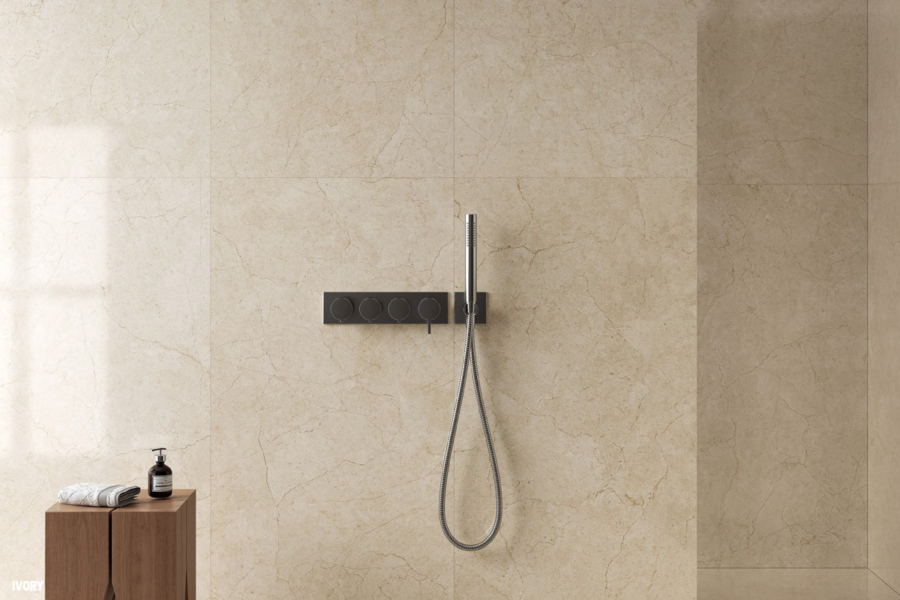
When comparing limestone vs travertine tiles, limestone offers calm, understated elegance with fine texture and muted tones, ideal for minimalist or modern spaces. Travertine provides warmth, character, and natural movement, making it perfect for rustic, Mediterranean, or nature-inspired designs. Both are durable, timeless, and luxurious, with the choice depending on whether you want subtle uniformity or expressive natural variation.
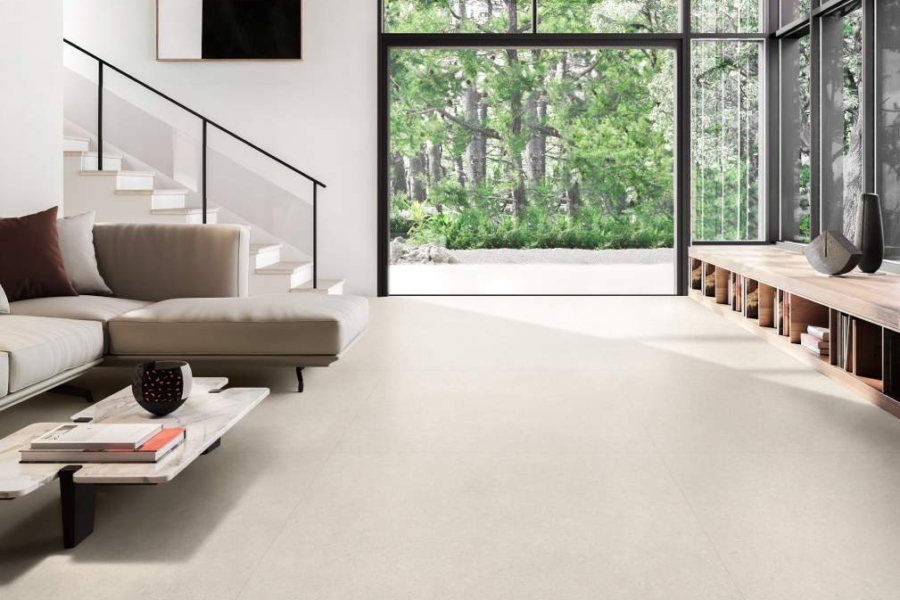
In refined interior design, natural stone defines mood and architecture alike. Limestone and travertine have long been the preferred choices for spaces that demand calm, texture, and timeless appeal. Both stones share a geological link yet express different characters through tone, pattern, and surface movement. At Showtile, we see them not as rivals but as two expressions of the same architectural language. One defined by restraint. The other by vitality. Our Show Tile experts understand the subtle distinctions, assisting design teams, architects, and clients in choosing materials that not only look luxurious but also perform in harmony with spatial intent.
The Character of Limestone
Limestone tiles embody quiet confidence. Formed over millions of years from compacted marine sediment, its fine grain and muted colour palette give it a naturally honed appearance. Soft greys, creams, and beige undertones lend limestone a calm, almost architectural neutrality that pairs effortlessly with modern or classical interiors. The stone’s subtle movement reads as texture rather than pattern, making it ideal for large-format floor or wall tiles where continuity is crucial. Honed limestone tiles create a consistent matte finish that gently absorbs light, reducing glare while adding a sense of grounded luxury, warmth and visual stability. In contemporary living areas or hallways, it draws an atmosphere of understated elegance, where materiality supports the form rather than competing with it.
The Character of Travertine
Travertine tiles share limestone’s organic composition but carry greater surface expression. Formed by mineral-rich springs, it develops distinctive voids and linear veining that convey depth and tactility. When left unfilled, these pores add authentic texture and rustic charm. When filled and honed, travertine tiles become sleek and versatile while retaining their natural movement. Its tonal range spans from ivory and biscuit to golden beige and silver grey. Designers value its quality when creating interiors that balance softness with visual interest, as it reflects light differently from limestone, often appearing more dynamic as the day changes. Travertine’s visual warmth makes it an enduring favourite for Mediterranean-inspired projects or spaces that seek connection with nature.
Surface Finish and Light Interaction
The finish applied to either stone transforms its behaviour in space. Honed limestone diffuses light evenly, creating a velvety surface ideal for tranquil rooms. Brushed or tumbled travertine adds micro-relief, introducing gentle shadow play that enhances natural tactility. Polished finishes reflect more sharply and can elevate formal areas such as foyers or bathrooms, though they require greater care. Surface variation also influences tone perception. A limestone floor tile may appear warmer under indirect light, while travertine’s open grain tends to capture highlights and produce visual contrast.
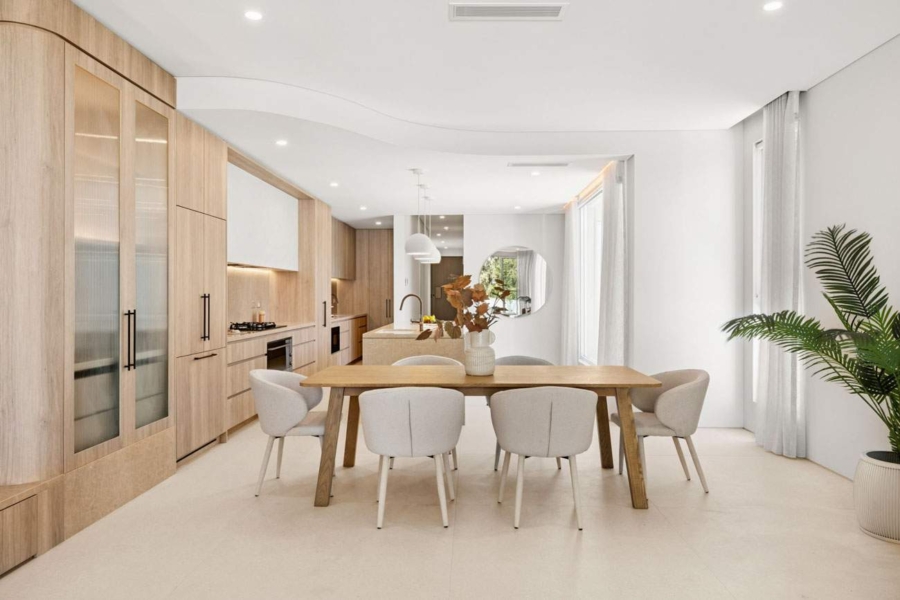
ShowTile Expertise: Consider how light is intended to move through the architecture when choosing your finish.
Colour, Tone and Veining
Limestone tiles express tone through subtle gradients rather than bold veining. Its delicate sediment layers create a cloudy, continuous texture that complements minimal palettes. Travertine, by contrast, carries more pronounced linear banding. In cross-cut formats, this pattern softens into organic swirls, ideal for spa-style bathrooms or feature walls. In vein-cut layouts, the striations align in parallel lines, producing a sleek, directional aesthetic perfect for hallways or outdoor facades. When designing with either stone, tone continuity matters as much as hue; warm greys and light taupes pair well across both materials. While creamy limestone tiles can be balanced by silver travertine for a nuanced contrast.
Durability and Functionality
Both limestone and travertine tiles offer durability suited for interior and exterior applications when correctly sealed. Limestone’s dense composition makes it particularly strong underfoot, ideal for high-traffic living areas. Travertine’s natural pores require sealing, but reward maintenance with longevity and patina. Travertine’s slightly higher porosity adds comfort under bare feet and slip resistance in outdoor settings. For contemporary projects demanding the same look with easier upkeep, Showtile’s porcelain stone look tiles replicate both materials with remarkable fidelity while eliminating natural stone’s porosity. These collections deliver the same depth and tonal variation without compromising performance. Explore options from our stone tiles collection.
Applications in Design
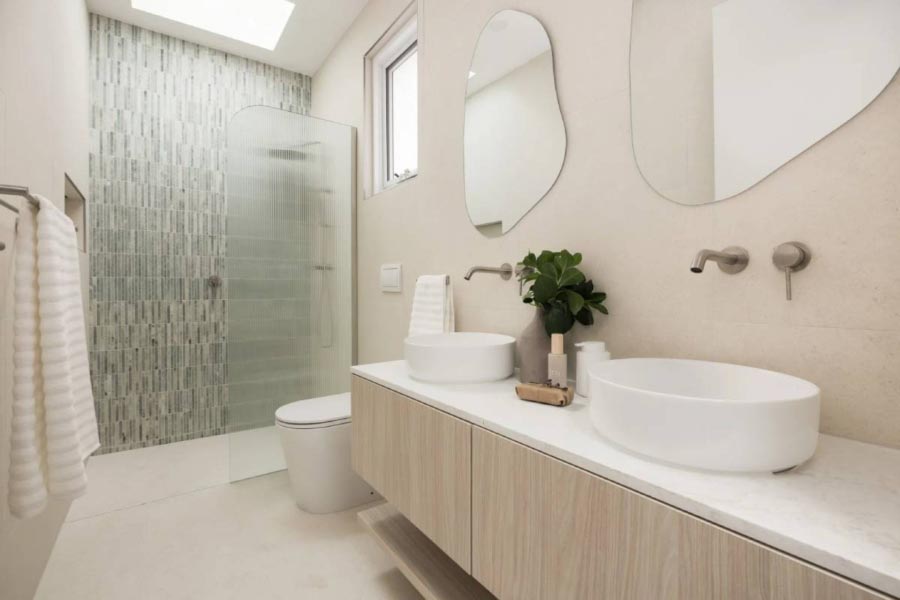
Bathrooms and En-suites
Limestone floors as bathroom tiles in a honed finish create a calm, spa-like atmosphere, especially when paired with brushed-metal fixtures or soft, neutral walls. Travertine feature walls behind baths or within walk-in showers introduce texture and movement while maintaining natural warmth.
Kitchens
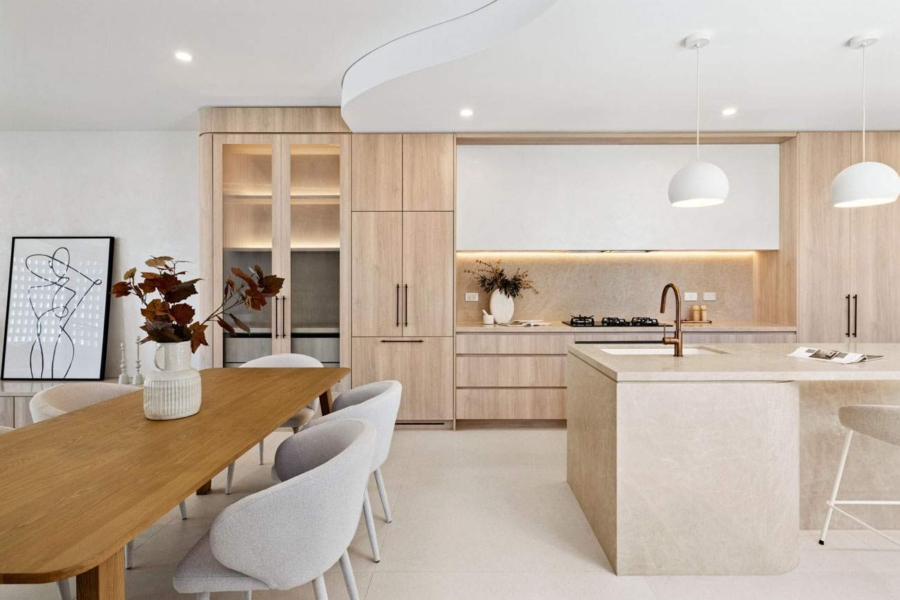
Travertine splashbacks and benchtop cladding bring character and visual depth, balancing matte cabinetry and metallic accents. Limestone tiles on adjacent floors create continuity and balance through their even tone and restrained grain.
Living Areas
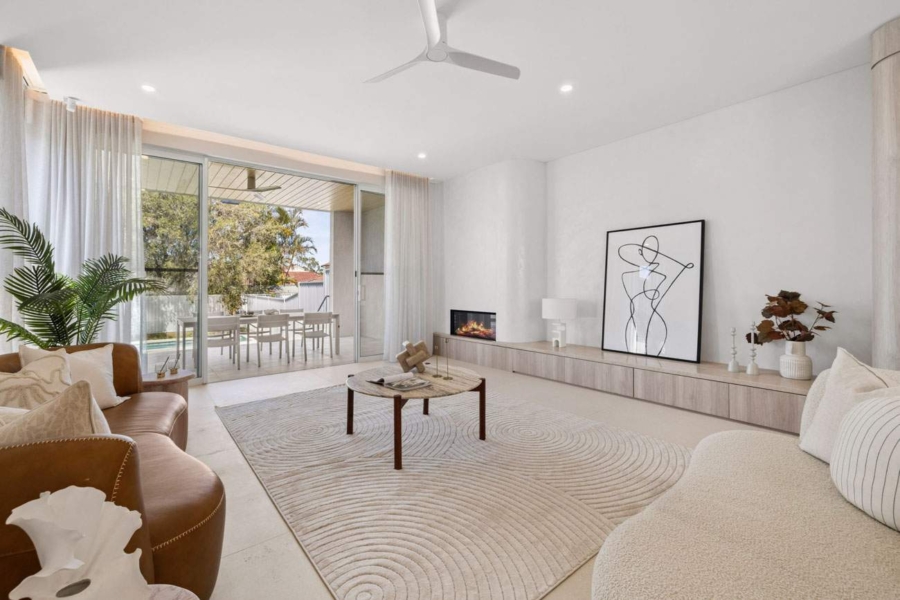
Large-format limestone tiles visually expand open spaces and enhance spatial flow. Travertine in vein-cut form adds rhythm and subtle contrast when used as a fireplace surround or vertical panel.
Outdoor Zones
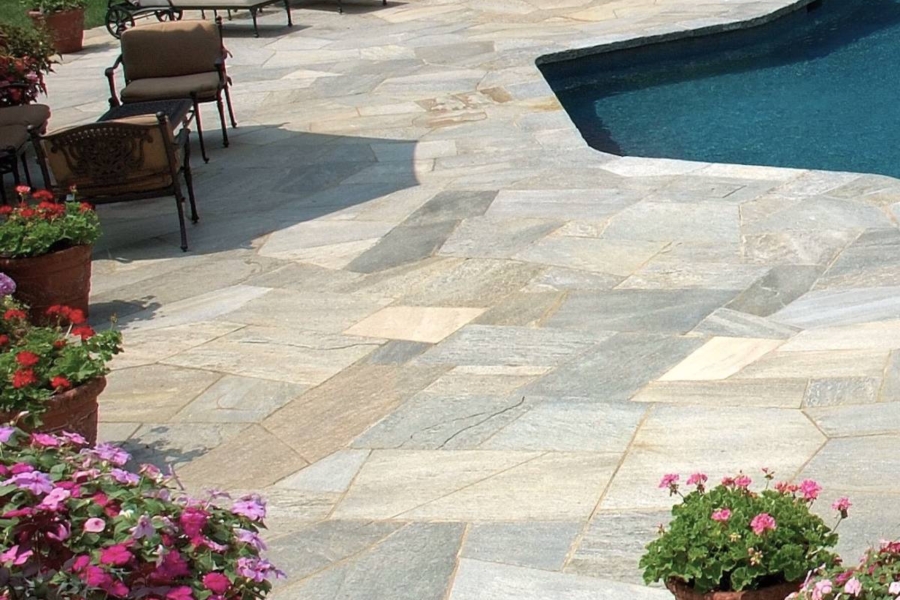
Both stones perform well outdoors when sealed, though travertine’s slip-resistant texture makes it ideal for pool surrounds and terraces. Limestone’s cooler colour palette complements light-toned facades and contemporary landscaping.
Maintenance and Longevity
Caring for either stone begins with proper sealing and the use of gentle cleaning agents. The beauty of both materials lies in their graceful aging, revealing subtle tonal shifts that add authenticity. Limestone benefits from regular resealing in moisture-prone zones to prevent staining. Travertine’s filled or unfilled surfaces each offer distinct aging qualities; unfilled travertine develops patina and tactile softness over time, while filled travertine retains a smoother appearance. Designers should consider whether they want a surface to evolve into a pristine or lived-in appearance.
Pairing Limestone and Travertine Together
Sophisticated interiors often combine stones within a single palette. The shared mineral composition ensures harmony even when the texture varies. Limestone tiles can serve as the foundation. Smooth, neutral, and consistent. In contrast, travertine introduces gentle contrast and layered tactility. Using limestone for flooring and travertine for feature cladding can produce a cohesive look defined by tone rather than pattern. Maintaining a consistent grout colour across both helps achieve continuity.
Modern Interpretations in Porcelain
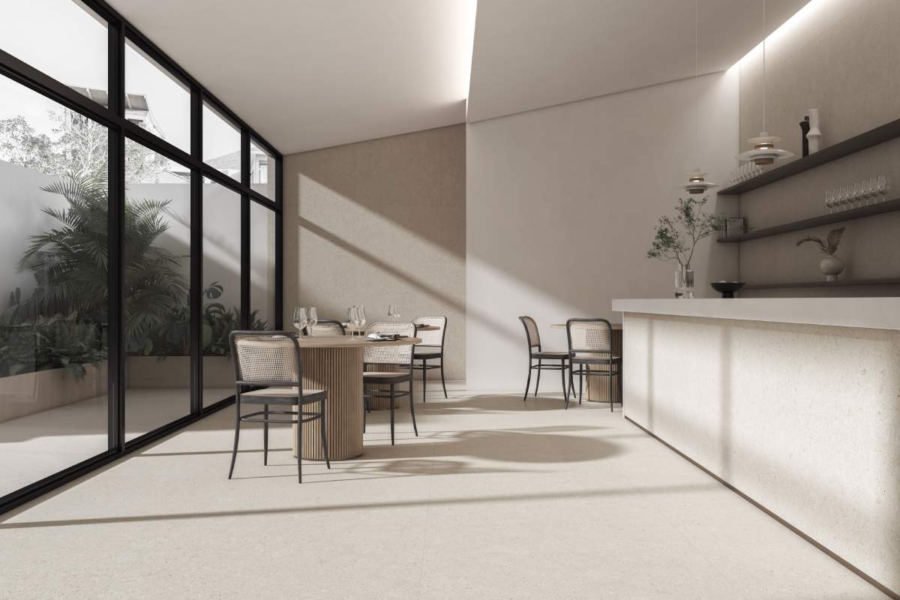
Advances in porcelain tile technology have redefined how limestone and travertine aesthetics appear in design. Porcelain reproductions capture the same movement, pore structure, and tone as the originals, but offer practical benefits through durability and ease of care. They allow designers to achieve the essence of natural stone in spaces where moisture, temperature, or traffic might otherwise pose challenges. Matte finishes mimic honed limestone, while textured porcelain replicates travertine’s tactile surface. These options allow visual continuity between indoor and outdoor areas, supporting modern architecture’s desire for seamless flow.
Architectural Context and Material Selection
Choosing between limestone and travertine should align with spatial intent. For calm, minimalist architecture, limestone delivers quiet uniformity and visual grounding. For spaces seeking warmth and natural expression, travertine provides organic variation and texture. Both stones respond to scale and proportion, working equally well in grand foyers or compact powder rooms when detailed thoughtfully. The distinction is not about superiority but about narrative and the story a designer wishes the material to tell.
A Balanced Approach to Natural Stone
Luxury lies in proportion and restraint. Limestone and travertine each embody these qualities in distinct ways… one through purity, the other through pattern. Together, they define a design language built on authenticity and tactility. At Showtile, our curated selection of limestone, travertine, and stone-look porcelains allows designers to craft cohesive palettes that balance tone, materiality, and spatial flow. Whether used for feature walls, expansive floors, or outdoor living areas, these surfaces bring timeless depth to any architectural setting.
To explore our collection or request architectural samples, contact the Showtile team at sales@showtile.com.au or call (02) 9709 5836.



